[...]we ever imagined.
[...]
...................................
(Wietske Maas)
materiality that is specific to the eye
similar to a plant, the eye is not a simple aperture to absorb light, but a filter to mitigate external stimuli.
unveil vision as a process of chemical contamination and digestion stemming from plants. vision is rooted in the materiality of digestion.
the human eye is an organ complicit with plant photosynthesis.
in fact, seeing is a process of photosynthesis. as much as plant photosynthesis absorbs excessive light and turns it into the carbon structures of sugar molecules, the human eye has to mitigate light and turn it into the neural structure of vision, cognition, and memory. in this process the eye protects itself from the corruptive metabolism of light, tapping into some ancestral mechanism shared with plants.
if human eye protects itself like a plant, we can think of photosynthesis itself as a sort of primeval organ of vision spread out across the skin of the vegetable kingdom.
material commonality (worth exploring)
incarnate an external organ of vision
our tie with the general metabolism of light
correlations between human vision and the organic world
using a technique to record the surface of reality or using to reveal the internal chemical composition of matter
in the chromatogram, a light reaction reveals the inner chemistry and transforms matter composition into visual patterns
different regime of visibility
light is not just a stream of waves to be passively refracted and recorded but an active and autonomous medium of image-making
mineral kingdom -- forces that drive the becoming of both organic and inorganic matter
drive to formation (Bildungstrieb)
“Runge's willingness to attribute a life force to chemicals is a continuation of Romantic natural philosophy but meshed with Geothean morphology and experiment.” (Leslie)
chromatogram is an image, which discloses it's own bodily formation
here our focus should shift from the eye as a globular organ in the head of a vertebrate animal to the eye as an epidermic lens, a light-mitigating organ that attenuates the visceral contamination of radiation.
our inseparable alliance with plants
our eyes are immersed within a vegetative metabolism of a kind. we look at plants, but plants have already cannibalized our gaze as they become part of us looking back at them.
complex architecture of light:
plant photosynthesis is probably the most abused metaphor and analogy of life, widely quoted across a diverse spectrum of schools of thought to justify naturalist ideologies. it is believed that photosynthesis is behind a process of energy accumulation central to natural equilibrium and the food chain. however, there are various ways the process of light metabolism could be understood. it could also be understood as a process towards cosmic corruption and fermentation, or as a process towards more “complex architecture of light”.
...................................
[...]
(Ilana Halperin)
corporeal mineralogy
we are autobiographical trace fossils
what constitutes life in the world of geology?
microbes feasting on the mineral bodies of stones
more animal than mineral
...................................
big bang, first second of existence, second second, what is going on with the materiality
...................................
the dark matter, in Caecilian Kircher, we don't know what it is
...................................
[...]
[Gholam Hossein Rahimi + Abd Al-Rasul Emadi, 79113902605.pdf]
it is “proven” that location is not hayula (nor apparition)
hayula is anything that can have many faces [this is greek]
according to Aristotle: matter cannot separate itself from hayula (bzw. its apparition) but it can from its location.
in another sense, location is sometimes close to the notion of ‘face’ (surat صورت) of the matter, because it constitutes where the matter ends and where does it begins.
Avicenna: location is separate from located
‘location is the limitation of matter’
location and causality? ‘there’ (hamanja همانجا) is not ‘the reason’ (elat علت)
for him: ‘makan chizi joz nahayat-e jesm-e havi nist’ (مکان چیزی جز نهایت جسم حاوی نیست)
(location/place is nothing but the limits/ends/finalities of the holder or the comprising thing)
two locations meeting each other
Avicenna disagrees that hayula could be location, because he argues that hayula only accepts the significant apparition and not any.
some has believed that the location is the face of matter, because the matter is at its face/apparition the same way it is at its place/location.
the matter/jesm/ جسم doesn't move out of its face rather it moves within its face.
water -to-> air [this is apparition]
location -to-> located [this cannot be!]
هیولای ثانی hayulaye sani (secondary hayula) : it has act/ also is able to its “next level”
[they haven't thought about the notion of gravity.]
جسم jesm: body, object, substance, matter, corpus, flesh
when the matter/jesm/جسم leaves the space it takes orientations/coordinations/ab'ad/ ابعاد with itself away from that locality/place/makan/مکان
location/makan/ مکان : when matter is in location, the location is.
void/khala’/ خلاء: when location is emptied of matter, it is void.
for Avicenna, matter/jesm/جسم (can) have mental (zehni ذهنی) and hallucinative (vahmi وهمی) derivatives that are accessible in all its axis/directions (ab'ad ابعاد).
[we have to consider that here hallucination/vahm/وهم is a strong category of thought, it opposes reason/aghl/عقل, it is a device that Avicenna regularly uses in his research.]
for Pythagoras, void/khala’/خلاء is hole through which the universe breathes.
for them void was that which is between the natural numbers; 1, 2, 3, etc.
(they didn't distinguish between numbers and matters)
گسست/Gosast/rupture can only happen in corporal matter
[porosity, has social and material meanings: a measure of the void, the “accessible void”. and a sorting algorithm, ability to absorb fluids, and volume of bodies] [relates to Aristotle's notion of matter that which resists---the resistance of matters]
for Avicenna, the extension of admixtures is as follows:
•two matter from two different corporalities mix
•two dimensions mix
•one dimension and one matter mix
ذات zat: being, essence, substance, nature, the very core self of, same, identity of, spontaneousness, material object,
-the Zat/essence...
what is when apparition enters void?\
زمان سمتی zaman-e samti : directional time (?) [#archive]
for Avicenna location and located are inseparable, location is holder or an exterior or outer surface of the located.
for him, void has two problems: (1) the void's dimensions will mix with the matter's dimension. (2) void is infinite, therefore movement is impossible, since there is part of the universe that is not void therefore there can't be void in the universe since it has to be infinite.
Hayula has no resistance to different apparitions/surat/صورت
surathaye jesmani صورتهای جسمانی
...................................
[...]
pandora’s complexity
purely (?) material objective agent (evolving?)
Hayula--the first principle of everything material
bi-surat بی صورت
اشکال تن ashkal-e tan***
virtual proto-humanity (to different corporalities) --> pre-organic / anthropo*morphic* --> inter-corporal predation --> (sets post-mythic relations between species) --> trans-ontological intentionalities
hayula is a state of latency or potentiality --> possibility of metamorphosis in interpersonal relations...
every apparition demands a recipient
(مولوی) Rumi wants to be able to read the return-state to the hayula:
تبدیل شدن به tabdil shodan:
...be arkan (ارکان instrument)
...be heyvan (حیوان animal)
...be jan (جان aliveness? liveliness of artifacts? --?--> agency)
...be hilat (حيله, tech---means & ways) [tech? #ruse]
(in Rumi:) ruse ==> قید صید gheid-e seyd
Hafez is all about farib (فریب ruse)
material agents: {//complex forms of movement //affiliation into space}
stones, a substance indigenous to every place. (those who give up or try to stop or turn back become stones.)
the meta-fall of the material (in hayula هیولا)
apparition/surat/صورت (essence/mahiyat/ماهیت)?
matter/madeh/ماده (hast/هست/being/is-there)?
--(surat)-->--(surat)-->
animal---flora---inanimate---hayula
<--(madeh)--<--(madeh)--
in Sohrevardi, he removes the light as projection and ray-tracing, and proposes a theory of light (of theory of being) as “Filter” (veril?, hejab حجاب). (there is no filter between the sphere of the eye and the sphere of the planet Mars.)
apparition is essential or part of the essence or itself the essence
Hayula: mojude mobham o bi-ta'ayon, joz ghove-e mahz va este'dad-e serf nist. (jesme basit)
هیولا: موجود مبهم و بی تعین, جز قوه محض و استعداد صرف نیست
(جسم بسط)
[...]
...................................
(Delanda)
we are taking “real history” as starting-point
-to capture the dynamics of human historical processes, we must allow the nonhuman physics to infiltrate the human society---complex materials that form human culture. --> (for example) water in its several distinct states (solid, liquid, gas) in phase transition (intensity of temperature)---that which human society “see” as material-change
example of spontaneous structural generations are coherent waves:
*solitons* - forming in many different types of materials, from tsunamis (ocean waves) to lasers. --> *attractors* {stable states, which can sustain coherent cycles activity {periodic / chaotic}}
*monsoon* - a wind circuit that has powered all sail ships in Asian waters for centuries---in those urban centers in contact with monsoon, knowledge of its dynamical behavior and skills in tapping its energy accumulated.
“materials” are {-energetic -genetic -linguistic} --> the flow of human and the animal gene we have domesticated
the specific dynamic pattern of turbulent urban evolution in (European) towns should not be view as the result of “progress” but as the result of certain dynamics that intensify the accumulation of knowledge and technologies, and of certain institutional norms and organization. for instance, the 11th century industrial revolution can be viewed in terms of reciprocal stimulation between technologies and institutions, fueled by: -solar energy (agricultural) -gravitational energy (water) --> to power grain wills --> intensified by the flow of money.
*story of the bone*
(organism never forgot its mineral origins)
in organic world, soft tissue (gels and aerosols, muscle and nerve) reigned supreme until 500 million years ago. at that point, some of the conglomerations of fleshy matter-energy that made up life underwent a sudden mineralization, a new material for constructing living creatures emerged: bone. it is almost as if the mineral world that had served as a substratum for the emergence of biological creatures was reasserting itself...
genes as sorting algorithms, are themselves sorted out by selection pressures such as: -climates -predators -parasites
structure-generating processes sort things (1) take heterogeneity [collection of materials---pebbles, genes, roles, etc.] (2) homogenize them [through sorting operations] (2) consolidate them (into more permanent state)
catalyst: a chemical substance capable of “recognizing” specific material and altering that material's molecular state --> now it reacts with certain substances with which it would not normally react.
catalyst provokes a meeting of two substances
autocatalytic loops
superposition (interconnection of diverse overlapping elements),
catalysts,
stable patterns,
spatial intervals,
sedimentation,
cooling magma,
threshold of crystallization,
vicious fluid,
molten materials,
bifurcation,
densification,
intensification,
reinforcements,
injection,
nucleation events,
dislocations,
endogenous,
endogenous stable states,
chemical clocks,
aggregate,
consistency,
elementary atoms,
stratified structures,
interlocking (matching temporally),
species --> (gene pool of a ...) = an organic stratified structure
stratifies structures involve simple form of causal relations---one arrow from cause to effect [we can see this modality in the creation of institutions]
coal is the product of one of several types of mineralization that organic matter can undergo, and submitted by “civilizations” to deposit intensive exploitation --> flow of nonhuman energy ==> fuel its industrial revolution
industrial age = the crossing of a bifurcation where previous autocatalytic dynamics come to form a self-sustaining autocatalytic loop.
(both) industrial revolution and biological evolution, they lack [rpgressive direction nor consistent drive toward complexification---some species complexity while others simplify
cities as real transformers of matter and energy
cities are open or dissipative (esraf اسراف) systems, with matter-energy flowing in and out continuously
(in autocatalytic loops) the trigger-flow interactions: interlocks a series of separately reproductive systems into a single interactive reproductive system
antimarket ---money--> mining regions ==> intensified coa extraction ==> iron production ---> [steam] mechanical energy ---> cotton textiles ---> flow of profits ===money==> experimentation with coal, iron, steam
skill / know-how = catalytic info
(info capable of bringing together and amplifying flow of energy and materials)
economies of agglomeration (anbashtegi انباشتگی)
the law of diminishing returns (bazdeh nozuli بازده نزولی)
a point at which the level of profits or benefits gained is less than the amount of money or energy invested. (image)
illumination --> coal gas
motorization --> steam
knowledge is an input of production which exacts high transaction costs. only where patents are perfectly enforceable will information be allowed to flow through markets, else antimarkets will prefer to internalize it into their hierarchies. one way a corporate hierarchy may internalize knowledge is by funding a research laboratory.
at some point urban societies would have reached a point of saturation, and the intensification would have ceased. but electricity simultaneously increased the flow of energy and the potential uses of that energy.
automated formal systems ==> victory of analytical over embodied knowledge (the self-taught inventor of the 19th century)
--> unbalance of power between informal and formal knowledge
(factory = planned autocatalytic loop)
the science of centralization
-powerful computers allow the centralized control of geographically dispersed activities---coordinate and monitor compliance with central plans ==> internalization of antimarket institutions
the fully coexistence of the autocatalytic loops:
the digital / the energetic / the material
==> accumulation of hierarchical structures
are computers evolving in the direction of routinization?
-eroding the combinatorial richness of knowledge and making flows of information ever more sterile?
future turns out to belong to hierarchies?
-human history is a narrative of contingencies, not necessities, of missed opportunities to follow different routes of development, not of a nonlinear succession of ways to convert energy, matter, and information into cultural products.
![ice fire eye [source: https://commons.wikimedia.org/wiki/File:Greenland_Kangerlussuaq_icesheet.jpg]](images/ajayeb/0013.jpg "--> f
ice fire eye
[source: https://commons.wikimedia.org/wiki/File:Greenland_Kangerlussuaq_icesheet.jpg]")
![world cosmology [source: The Gods of the Egyptians Vol. II]](images/ajayeb/0106.jpg "--> r
world cosmology
[source: The Gods of the Egyptians Vol. II]")
![technology dictionary encyclopedia navigation rhetorics [source: Le Larousse pour tous: nouveau dictionnaire encyclopédique 1907]](images/ajayeb/0132.jpg "--> o
technology dictionary encyclopedia navigation rhetorics
[source: Le Larousse pour tous: nouveau dictionnaire encyclopédique 1907]") [...]
[...]
![Triassic ecosystem marine reptiles system time relationship history [source: Henry De la Beche 1830. University of Bristol]](images/ajayeb/0123.jpg "--> o
Triassic ecosystem marine reptiles system time relationship history
[source: Henry De la Beche 1830. University of Bristol]")
![Stromatolite stone rock fire media [source: Boston University 1984, NASA Environmental Science. Snapshot of video]](images/ajayeb/0128.jpg "--> o
Stromatolite stone rock fire media
[source: Boston University 1984, NASA Environmental Science. Snapshot of video]")
![drawing human anthrop community sociality flow object affect media [source: Hanno Demuth]](images/ajayeb/0146.jpg "--> o
drawing human anthrop community sociality flow object affect media
[source: Hanno Demuth]")
![ajayeb rigs existence hierarchy snake world donya [source: Sina Seifee]](images/ajayeb/0028.jpg "--> o
ajayeb rigs existence hierarchy snake world donya
[source: Sina Seifee]")
![ajayeb angel type future [source: Cambridge Online University Library]](images/ajayeb/0022.jpg "--> f
ajayeb angel type future
[source: Cambridge Online University Library]") ...................................
...................................
![rig sort algorithm machine language series leg arm line map connect [source: stackoverflow.com/questions/18840088/advanced-sorting-algorithm]](images/ajayeb/0150.jpg "--> o
rig sort algorithm machine language series leg arm line map connect
[source: stackoverflow.com/questions/18840088/advanced-sorting-algorithm]")
![rigs diagram moon finger Sa'di yar fish nakhshab reflection [source: Sina Seifee]](images/ajayeb/0005.jpg "--> o
rigs diagram moon finger Sa'di yar fish nakhshab reflection
[source: Sina Seifee]")
![cartography body image map Shiraz place [source: ]](images/ajayeb/0172.jpg "--> o
cartography body image map Shiraz place
[source: ]")
![nature things Serres philosophy universe atom writing world [source: De rerum natura by Lucretius (c. 99 BC – c. 55 BC) / ibiblio.org/]](images/ajayeb/0121.jpg "--> o
nature things Serres philosophy universe atom writing world
[source: De rerum natura by Lucretius (c. 99 BC – c. 55 BC) / ibiblio.org/]") the gene tells the flesh: “you are a human” or “you are a...”
the gene tells the flesh: “you are a human” or “you are a...”
**the flesh does not know any organs, continues pulsing to its own rhythms
![anthropos wonder body human monster marvel [source: Ambroise Pare - On Monsters and Marvels]](images/ajayeb/0062.jpg "--> o
anthropos wonder body human monster marvel
[source: Ambroise Pare - On Monsters and Marvels]") (how to understand) activities of processes in other spheres of reality
(how to understand) activities of processes in other spheres of reality
![moon index Iran Sa'di world refraction poiesis poetics [source: Sina Seifee]](images/ajayeb/0067.jpg "--> o
moon index Iran Sa'di world refraction poiesis poetics
[source: Sina Seifee]")
![kinetic kinect machine vision glitch Amazon rain forest nature culture technology interface enfold digital travel journey perception tactile reality dream surface 3D motion mimesis [source: Sina Seifee]](images/ajayeb/0114.jpg "--> o
kinetic kinect machine vision glitch Amazon rain forest nature culture technology interface enfold digital travel journey perception tactile reality dream surface 3D motion mimesis
[source: Sina Seifee]") living creatures and their inorganic counterparts
living creatures and their inorganic counterparts
![ajayeb form tiger animal snake [source: Cambridge Online University Library]](images/ajayeb/0024.jpg "--> o
ajayeb form tiger animal snake
[source: Cambridge Online University Library]")
![attention frigatebird media sea anthropology information [source: wikimedia, photograph by Mario Müller]](images/ajayeb/0173.jpg "--> format
attention frigatebird media sea anthropology information
[source: wikimedia, photograph by Mario Müller]") (G. Simmons:) “the flow of energy and mineral nutrients through an ecosystem manifest themselves as actual animals and plants of a particular species.”
(G. Simmons:) “the flow of energy and mineral nutrients through an ecosystem manifest themselves as actual animals and plants of a particular species.”
![text writing reading note index structure space [source: Abu Rayhan Al-Biruni Institute of Oriental Studies]](images/ajayeb/0047.jpg "--> o
text writing reading note index structure space
[source: Abu Rayhan Al-Biruni Institute of Oriental Studies]") biomass = circulation of flesh
biomass = circulation of flesh
![time scale model [source: Nick Strobel]](images/ajayeb/0063.jpg "--> o
time scale model
[source: Nick Strobel]")
![Margerie glacier and Mount Fairweather fire ice [source: https://commons.wikimedia.org/wiki/File:Margerie_Glacier_and_Mount_Fairweather_2.jpg]](images/ajayeb/0015.jpg "--> o
Margerie glacier and Mount Fairweather fire ice
[source: https://commons.wikimedia.org/wiki/File:Margerie_Glacier_and_Mount_Fairweather_2.jpg]") plants biting into the system of solar radiation---capturing its sugars
plants biting into the system of solar radiation---capturing its sugars
![Persia native scene scenic oriental frontispiece monument architecture curtain paradise [source: ]](images/ajayeb/0163.jpg "--> o
Persia native scene scenic oriental frontispiece monument architecture curtain paradise
[source: ]") in a sense “higher” animals are just fancy decorations in an ecosystem
in a sense “higher” animals are just fancy decorations in an ecosystem
(decorative large predators)
![scale model planet cosmology [source: Nick Strobel]](images/ajayeb/0064.jpg "--> o
scale model planet cosmology
[source: Nick Strobel]")
![ajayeb animal leopard [source: unkown]](images/ajayeb/0021.jpg "--> o
ajayeb animal leopard
[source: unkown]") ecosystem = succession of plant assemblages ==> stable states ==> climax
ecosystem = succession of plant assemblages ==> stable states ==> climax
![wood grain form techne invention art fiber arrangement poiesis [source: https://commons.wikimedia.org/wiki/File:Plain_quarter_sawn.png]](images/ajayeb/0068.jpg "--> o
wood grain form techne invention art fiber arrangement poiesis
[source: https://commons.wikimedia.org/wiki/File:Plain_quarter_sawn.png]") ecosystem = a blind groping from stable state to stable state in which each plant assemblage creates the conditions that stabilize the next one.
ecosystem = a blind groping from stable state to stable state in which each plant assemblage creates the conditions that stabilize the next one.
![polaritons layered two-dimensional materials [source: http://www.nature.com/nmat/journal/v16/n2/full/nmat4792.html]](images/ajayeb/0010.jpg "--> o
polaritons layered two-dimensional materials
[source: http://www.nature.com/nmat/journal/v16/n2/full/nmat4792.html]")
![elephant seal baby water body assemblage camera [source: Jane Dawson]](images/ajayeb/0147.jpg "--> o
elephant seal baby water body assemblage camera
[source: Jane Dawson]") continental forest <--- stability {the capacity to maintain a state with relatively minor internal fluctuations}
continental forest <--- stability {the capacity to maintain a state with relatively minor internal fluctuations}
islands <--- resilience {the capacity to absorb major external and internal fluctuations by switching between several alternative stable states}
![leonardo da vinci water flow physics [source: Leonardo da Vinci]](images/ajayeb/0001.jpg "--> o
leonardo da vinci water flow physics
[source: Leonardo da Vinci]") cities interaction with microorganisms
cities interaction with microorganisms
![Eocene mammalian selves self minor celestial impact world now time species storytelling [source: Esther van Hulsen]](images/ajayeb/0061.jpg "--> o
Eocene mammalian selves self minor celestial impact world now time species storytelling
[source: Esther van Hulsen]") medieval cities ---islands--> {-concentration of energies -low degree of species heterogeneity (mainly humans)}
medieval cities ---islands--> {-concentration of energies -low degree of species heterogeneity (mainly humans)}
![snake serpent person reptile limb assemblage body [source: hiveminer.com]](images/ajayeb/0076.jpg "--> o
snake serpent person reptile limb assemblage body
[source: hiveminer.com]")
![snake person assemblage semiotics [source: https://en.wikipedia.org/wiki/File:Northern_Water_Snake.jpg]](images/ajayeb/0077.jpg "--> o
snake person assemblage semiotics
[source: https://en.wikipedia.org/wiki/File:Northern_Water_Snake.jpg]") medieval European towns ----> isolated islands {/heat /food-web /cultural}
medieval European towns ----> isolated islands {/heat /food-web /cultural}
cattle as storage devices
process of shortening and redirecting food chains
![world multi species contingency assemblage human animal dog space society place [source: Peter Westenberg / constantvzw.org]](images/ajayeb/0091.jpg "--> o
world multi species contingency assemblage human animal dog space society place
[source: Peter Westenberg / constantvzw.org]") biomass ["natural” state] ---> cooked biomass ---> processed through the “civilizing” power of fire*
biomass ["natural” state] ---> cooked biomass ---> processed through the “civilizing” power of fire*
{raw =/= cooked} ==> legend/myth
--> the cultural materials that accumulated unconsciously, sorted out by the pressure of the parasites themselves---germs and humans formed a meshwork
![wedge space mathematics strata Manuel Delanda data plot [source: Laura Moriarty]](images/ajayeb/0071.jpg "--> o
wedge space mathematics strata Manuel Delanda data plot
[source: Laura Moriarty]") food ~ flow of flesh
food ~ flow of flesh
![animating power footnote feeling metamorphic transformation desire think imagine attention difference worlding interruption story [source: Adilnor Collection - al-Jawahir al-Khams]](images/ajayeb/0100.jpg "--> format
animating power footnote feeling metamorphic transformation desire think imagine attention difference worlding interruption story
[source: Adilnor Collection - al-Jawahir al-Khams]")
![jackdaw world learning fable story partridge future [source: https://en.wikipedia.org/wiki/File:Western_Jackdaw_on_Inisheer_(perched).jpg]](images/ajayeb/0081.jpg "--> o
jackdaw world learning fable story partridge future
[source: https://en.wikipedia.org/wiki/File:Western_Jackdaw_on_Inisheer_(perched).jpg]") culture is not a completely separate sphere of reality, but instead mixes and blends with flows of organic (and even mineral) materials.
culture is not a completely separate sphere of reality, but instead mixes and blends with flows of organic (and even mineral) materials.
flow of genetic materials
![sky destiny logic influence inflow intra-action environment [source: tumblr]](images/ajayeb/0122.jpg "--> o
sky destiny logic influence inflow intra-action environment
[source: tumblr]") gene / ecosystem
gene / ecosystem
| \
homogeneous =/= heterogeneous
![movement worlding passing technology network life survive house detour translate device metamorphic [source: Jono Podmore]](images/ajayeb/0112.jpg "--> o
movement worlding passing technology network life survive house detour translate device metamorphic
[source: Jono Podmore]") *genes tease out a form out of an active flesh
*genes tease out a form out of an active flesh
(genes ~) replicators began not only merely to exist, but to construct for themselves containers, vehicles for their continues existence.
-how these “replicators” created constructs out of flesh and bone ---> then how did ‘self’ emerged in this?
![optic visuality system Enlightenment measurement phenomenon [source: physics.kenyon.edu]](images/ajayeb/0006.jpg "--> o
optic visuality system Enlightenment measurement phenomenon
[source: physics.kenyon.edu]") (layers)
(layers)
genotype .../.../.../.../... phenotype
| | |
info coded | self organizing | adaptive traits
into genes | processes (stable) | of a plant / animal
![nature material computation dell science knowledge representation microscope zoom [source: http://www.nature.com/]](images/ajayeb/0066.jpg "--> o
nature material computation dell science knowledge representation microscope zoom
[source: http://www.nature.com/]") human gene is variable du to: {1-ecosystem 2-taboos}
human gene is variable du to: {1-ecosystem 2-taboos}
![Fascia body tissue matter animal heyvan hayula terrestrial locomotion flex jell [source: anatomytrains.com]](images/ajayeb/0148.jpg "--> o
Fascia body tissue matter animal heyvan hayula terrestrial locomotion flex jell
[source: anatomytrains.com]") (ancient) migrations : vehicle for the mechanism of evolution that today is producing the greatest evolutionary effect, allowing the incorporation of new genes into established gene pools, enhancing intrapopulation and reducing interpopulation variability.
(ancient) migrations : vehicle for the mechanism of evolution that today is producing the greatest evolutionary effect, allowing the incorporation of new genes into established gene pools, enhancing intrapopulation and reducing interpopulation variability.
[leas normative and binding] to other cultures <-- culture --> to the same culture [central to society]
![fire wilderness deer heyvan animal [source: https://commons.wikimedia.org/wiki/File:Deerfire_high_res.jpg]](images/ajayeb/0026.jpg "--> al
fire wilderness deer heyvan animal
[source: https://commons.wikimedia.org/wiki/File:Deerfire_high_res.jpg]") strata = reproductive niche
strata = reproductive niche
(niche : adjusted timing and quality)
![optics reflection mirror sun knowledge metaphore vision raytracing model animal image [source: Opticae Thesaurus]](images/ajayeb/0152.jpg "--> o
optics reflection mirror sun knowledge metaphore vision raytracing model animal image
[source: Opticae Thesaurus]")
![life earth transcendence chasing Acacia facsiculifera seedling process form endosymbiosis [source: https://commons.wikimedia.org/wiki/File:Acacia_facsiculifera_seedling.jpg]](images/ajayeb/0105.jpg "--> o
life earth transcendence chasing Acacia facsiculifera seedling process form endosymbiosis
[source: https://commons.wikimedia.org/wiki/File:Acacia_facsiculifera_seedling.jpg]") hierarchy building = {-homogenization (by a sorting process) -consolidation (through coding into legal, religious, and other formal regulations)}
hierarchy building = {-homogenization (by a sorting process) -consolidation (through coding into legal, religious, and other formal regulations)}
limits of bounded rationality (عقل معاش aghle ma'ash?)
(Bounded rationality is the idea that in decision-making, rationality of individuals is limited by the information they have, the cognitive limitations of their minds, and the finite amount of time they have to make a decision.)
--> for example soil loss, due to careless exploitation of the forests’ resources has been a constant threat to urban centers throughout history. most urban civilization were able to pass their genes for only seventy generations before they ran out of soil ---> although some material and energy flows can be “socialized” (submitted to cultural control), in practice many are not.
![european union communicative process [source: europa.eu, Frank Toussaint]](images/ajayeb/0177.jpg "--> o
european union communicative process
[source: europa.eu, Frank Toussaint]") (my interest and work on hayula is about:) the creative morphologies that have always resided outside the (west versus east) homoestatic text of the self and other
(my interest and work on hayula is about:) the creative morphologies that have always resided outside the (west versus east) homoestatic text of the self and other
![Culebra viperina snake lake forest trickster wonder intra-action human anthropos assemblage plot [source: depaseoporlanaturaleza.blogspot.be]](images/ajayeb/0075.jpg "--> ion
Culebra viperina snake lake forest trickster wonder intra-action human anthropos assemblage plot
[source: depaseoporlanaturaleza.blogspot.be]") ...................................
...................................
contemporary US film bestiary <==
•EC comics --> popular weird fantasy, horror science fiction
•creepy magazine
•the twilight zone --> horror, science fiction, suspense, comedy
•film noir --> flawed character hero <== german expressinonist cinematography
•cryptozoology (adventure)
![Delphinus surgeon monster marvel encyclopedia curiosity human animal nature figure fish [source: On Monsters and Marvels by Ambroise Paré 1510]](images/ajayeb/0133.jpg "--> o
Delphinus surgeon monster marvel encyclopedia curiosity human animal nature figure fish
[source: On Monsters and Marvels by Ambroise Paré 1510]") ...................................
...................................
division's of life
![interference animal jewellery treasure ganj mountain force intensification material plane intra-action percept media data plot [source: https://commons.wikimedia.org/wiki/File:Prachtk%C3%A4fer_aus_der_Grube_Messel.JPG]](images/ajayeb/0094.jpg "--> o
interference animal jewellery treasure ganj mountain force intensification material plane intra-action percept media data plot
[source: https://commons.wikimedia.org/wiki/File:Prachtk%C3%A4fer_aus_der_Grube_Messel.JPG]")
![wonder ray light water mechanism knowledge image diagram [source: Athanasius Kircher]](images/ajayeb/0153.jpg "--> o
wonder ray light water mechanism knowledge image diagram
[source: Athanasius Kircher]") -monolithic notion of the mind has been challanged by psychology and phenomenology
-monolithic notion of the mind has been challanged by psychology and phenomenology
![Platinum crystal hayula gas material movement harkat [source: commons.wikimedia]](images/ajayeb/0088.jpg "--> o
Platinum crystal hayula gas material movement harkat
[source: commons.wikimedia]") biology has been previously essentially zoocentric --> monolithic notion of the body --> medically proper animal body =/= if we zoom in the living canvas, organisms blend into a pointillist landscape in which each dot of paint is also alive --> symbiosis, gaia, prokaryotic sex (omnisexuality)
biology has been previously essentially zoocentric --> monolithic notion of the body --> medically proper animal body =/= if we zoom in the living canvas, organisms blend into a pointillist landscape in which each dot of paint is also alive --> symbiosis, gaia, prokaryotic sex (omnisexuality)
gaia --> biosphere und understood not as environmental home but as body (physiological process)
bacterial omnisexuality --> fluid genetic transfers = sexual
=/= unitary self assumed in the zoocentric model
![cat ass morality animal erect [source: Bestiary, England 15th century (København, Kongelige Bibliotek, GkS 1633)]](images/ajayeb/0035.jpg "--> o
cat ass morality animal erect
[source: Bestiary, England 15th century (København, Kongelige Bibliotek, GkS 1633)]") medieval microcosmic
medieval microcosmic
correspondences among prokaryotic, eukaryotic, zoological and geophysiological (gaian) levels
--> holonomic continuum --> *a type of individuality that is spatially and temporally more inclusive* [-my research on ajayeb has been more tended on the temporal inclusivity]
==> (in new biology) chimerical body: hybrid of bacterial species --Sagan--> like that many headed beast, the microbeast of the animal cell combines into one entity bacteria that were originally freely living, self-sufficient and metabolically distinct
![lexicon global architecture interpreter translator standard language international diplomacy vocabulary [source: LexiconUSA]](images/ajayeb/0158.jpg "--> o
lexicon global architecture interpreter translator standard language international diplomacy vocabulary
[source: LexiconUSA]") •when respirers entered and did not kill but, rather, were incorporated by larger anaerobic archaebacteria
•when respirers entered and did not kill but, rather, were incorporated by larger anaerobic archaebacteria
•mitochondria are the descendants of bacteria that had be come lodged within the cells of animals and plants
bacteria ==> eukaryotic cell
![world multi species contingency assemblage human animal dog space society place [source: Peter Westenberg / constantvzw.org]](images/ajayeb/0090.jpg "--> o
world multi species contingency assemblage human animal dog space society place
[source: Peter Westenberg / constantvzw.org]") (the fable of) [Spencer's] animal world as a “gladiator's show” --> evidence for parasitism and competition (~ social progress in 19th century)
(the fable of) [Spencer's] animal world as a “gladiator's show” --> evidence for parasitism and competition (~ social progress in 19th century)
the grass-green photosynthetic organelles of all plants may be the descendants of a single, wildly successful bacterium, now shackled, albeit gently, in its cytoplasmic prison
-Sagan
![astronomy geography celestial cosmology tail sea water body collect abyss Andromeda Perseus beast [source: Joachim Wtewael (1566–1638) - towerweb.net]](images/ajayeb/0165.jpg "--> o
astronomy geography celestial cosmology tail sea water body collect abyss Andromeda Perseus beast
[source: Joachim Wtewael (1566–1638) - towerweb.net]")
![stone energy field matter hayula story nunhuman agency [source: Emanuel Swedenborg]](images/ajayeb/0144.jpg "--> o
stone energy field matter hayula story nunhuman agency
[source: Emanuel Swedenborg]") *all cells with nuclei (a unicellular amoeba or amultibillion-cell anaconda) <== orgiastic encounters (eating, infecting, engulfing, feeding on, having sex with and so on) among quite different types of bacteria*
*all cells with nuclei (a unicellular amoeba or amultibillion-cell anaconda) <== orgiastic encounters (eating, infecting, engulfing, feeding on, having sex with and so on) among quite different types of bacteria*
![wonder story assemblage composition affect tale report whirlpool animal media techne waterbody fish [source: NOAA]](images/ajayeb/0102.jpg "--> o
wonder story assemblage composition affect tale report whirlpool animal media techne waterbody fish
[source: NOAA]") (plant cell) chimera = protective anaerobic host cell + internally multiplying photosynthetic bacterium + respiring bacteria
(plant cell) chimera = protective anaerobic host cell + internally multiplying photosynthetic bacterium + respiring bacteria
metabolic waste product of the mutation ==> atmospheric oxygen --> catastrophic --> energetic catalyst --> ...
![bird ajayeb wonder existance taxon species [source: Qazwini - https://www.nlm.nih.gov/hmd/arabic/natural_hist4.html]](images/ajayeb/0040.jpg "--> o
bird ajayeb wonder existance taxon species
[source: Qazwini - https://www.nlm.nih.gov/hmd/arabic/natural_hist4.html]") fermenting bacteria (like trolls or elves in a cosmic fairy tale) dwelling underground --> stromatolite
fermenting bacteria (like trolls or elves in a cosmic fairy tale) dwelling underground --> stromatolite
![cosmic order world soul woman panpsychism psyche intensity conscious potential Sadra [source: Robert Fludd]](images/ajayeb/0155.jpg "--> o
cosmic order world soul woman panpsychism psyche intensity conscious potential Sadra
[source: Robert Fludd]") army of mutants that evolved in the aftermath of the oxygen infusion (the greatest pollution crisis the earth) ==> human beings
army of mutants that evolved in the aftermath of the oxygen infusion (the greatest pollution crisis the earth) ==> human beings
chimerical eukaryotic system:
*spirochete* [...] at the edge of larger cell, sites of leakage supplying a constant flow of food [...] renounced their former freedom of movement in order to permanently attach ==> a means of locomotion and food acquisition
•spirochete and mad talent, lyrical drive, (tubercle patients were orators or grandios liars)
![medicine writing footnote animate feeling awareness knowledge tool story [source: Kitāb al-Raḥmah fī al-ṭibb wa-al-ḥikmah (The Book of Mercy Concerned with Medicine and Wisdom) by Muḥammad al-Mahdawī ibn ‘Alī ibn Ibrāhīm al-Ṣanawbarī (d. 1412/ 815) / nlm.nih.gov]](images/ajayeb/0119.jpg "--> o
medicine writing footnote animate feeling awareness knowledge tool story
[source: Kitāb al-Raḥmah fī al-ṭibb wa-al-ḥikmah (The Book of Mercy Concerned with Medicine and Wisdom) by Muḥammad al-Mahdawī ibn ‘Alī ibn Ibrāhīm al-Ṣanawbarī (d. 1412/ 815) / nlm.nih.gov]") [*]human body: an architectonic compilation of millions of agencies of chimerical cells
[*]human body: an architectonic compilation of millions of agencies of chimerical cells
eukaryotic cells leveling cytoplasmic calcium concentrations ==> [our] calcium phosphate of bone (mineral infrastructure of our bodies):
because seawater concentrations of calcium are often four orders of magnitude higher than [one in ten million], ocean-dwelling cells must exude calcium to avoid poisoning. in the full-fathomed sea did the bones of our ancestors and the shells of their eukaryote relatives evolve. skeletons dramatize an ancient waste, whispering a ghostly testimony to the useful internalization of hazardous waste sites. this givesa good indication of how life within the general economy evolves to deactivate, sacrifice and eventually incorporate the dangerous excesses that accrue from its solar growth. -Sagan
--> the body is multiple (even if orchestrated by vicissitudes and the need for harmony over evolutionary time
--> *nature is chimerical through and through*
![model home Heidegger pigs house building Bildung Dasein being wedge space mathematics data plot hierarchy wolf death architecture line [source: De Agostini / Getty Images]](images/ajayeb/0136.jpg "--> o
model home Heidegger pigs house building Bildung Dasein being wedge space mathematics data plot hierarchy wolf death architecture line
[source: De Agostini / Getty Images]") intraorganismic genetic transfers
intraorganismic genetic transfers
*health = matter of maintaining an ecology =/= matter of defending a unity*
![animal build [source: thinkfreesa.com]](images/ajayeb/0176.jpg "--> al
animal build
[source: thinkfreesa.com]")
![constellation category [source: NASA; ESA; G. Illingworth, D. Magee, and P. Oesch]](images/ajayeb/0041.jpg "--> o
constellation category
[source: NASA; ESA; G. Illingworth, D. Magee, and P. Oesch]") [*]body: ornately elaborated mosaic of microbes in various states of symbiosis
[*]body: ornately elaborated mosaic of microbes in various states of symbiosis
![Lucretius Nature of Things ray enlightenment index influence finger language animal bestiary anthrop [source: Michael Burghers 1682 (commons.wikimedia)]](images/ajayeb/0166.jpg "--> o
Lucretius Nature of Things ray enlightenment index influence finger language animal bestiary anthrop
[source: Michael Burghers 1682 (commons.wikimedia)]") the fiction of the self
the fiction of the self
**self is not only corporal but corporate**
-Sagan
telescopic technologies ==> Earth as a living entity ~= gaia: (a species of noble lie) biosphere behaives as a body
-temperature, pH and the distribution of reactive gases have remained extraordinarily stable for hundreds of millions of years
![wonder child animal ocean assemblage species camera media photography spiderman leg strange [source: lolzhumor.com]](images/ajayeb/0156.jpg "--> o
wonder child animal ocean assemblage species camera media photography spiderman leg strange
[source: lolzhumor.com]") animal body --> exposed to natural selection =/= living Earth
animal body --> exposed to natural selection =/= living Earth
•gaian worldview
•animism
•native Americanism
•deep ecologism
--> inhabits the responsive tissues of a planet-sized complex organism
--threatening--> into the muck of planetary personification New Age joy [---> go to the latest godzilla film industrial apologetics and ecological satanism --> tales of human accountability]
--> *biocentrism* [of our time 2019] ~=> noble fictions
![travel Hafez aesthetics Spain decorative influence path way frontispiece [source: Johann August Corvinus - Die Anlandung Konigs Caroli in Catalonien, und Erfolgter Einzung in Barcelona - raremaps.com]](images/ajayeb/0084.jpg "--> o
travel Hafez aesthetics Spain decorative influence path way frontispiece
[source: Johann August Corvinus - Die Anlandung Konigs Caroli in Catalonien, und Erfolgter Einzung in Barcelona - raremaps.com]") cross-disciplinary science
cross-disciplinary science
mythopoetic
atmospheric chemistry
![Andromeda Perseus killing beast ocean form abyss tail [source: Piero di Cosimo - Liberazione di Andromeda / commons.wikimedia.org]](images/ajayeb/0129.jpg "--> o
Andromeda Perseus killing beast ocean form abyss tail
[source: Piero di Cosimo - Liberazione di Andromeda / commons.wikimedia.org]") earth: organized, self-contained look of a live creature, full of information, marvelously skilled in handling the sun
earth: organized, self-contained look of a live creature, full of information, marvelously skilled in handling the sun
-Lovelock
--depending--> on the forever unfinished and eroticized nature of human symbolization
gaia <== narrative integration of cosmology and morality (<-- can we do without it?)
![monkey animal urban city travel personhood border boundary [source: Jon Rafman]](images/ajayeb/0086.jpg "--> o
monkey animal urban city travel personhood border boundary
[source: Jon Rafman]") eukaryote made from prokaryotes and of the mesocosmic level of animal and plant bod-ies made from reproducing eukaryotes
eukaryote made from prokaryotes and of the mesocosmic level of animal and plant bod-ies made from reproducing eukaryotes
(three billion years ago, the oldest type of sex on the planet:)
bacterial omnisexuality --> promiscuous: not delimiting sexual exchanges with species barriers (+ it needs intermediaries such as plasmids or viruses to do so)
--> lateral transfer
![fire rigs darkness black box fossil beyond tool [source: Sina Seifee]](images/ajayeb/0030.jpg "--> o
fire rigs darkness black box fossil beyond tool
[source: Sina Seifee]") omnisexuality: a means of genetically “locking” together once-diverse groups (of prokaryotes)
omnisexuality: a means of genetically “locking” together once-diverse groups (of prokaryotes)
bacterial crowding ==> life on earth
![snake skin assemblage river organism environment Barad [source: Sean Gagnon (commons.wikimedia)]](images/ajayeb/0164.jpg "--> o
snake skin assemblage river organism environment Barad
[source: Sean Gagnon (commons.wikimedia)]")
![moon indexicality finger drawing diagram moon finger Sa'di yar fish nakhshab reflection wonder [source: Sina Seifee & many others]](images/ajayeb/0011.jpg "--> o
moon indexicality finger drawing diagram moon finger Sa'di yar fish nakhshab reflection wonder
[source: Sina Seifee & many others]") endosymbiosis: one organism swallow another without digesting it ==> origin of new species [<=/= gradual accumulation of mutations]
endosymbiosis: one organism swallow another without digesting it ==> origin of new species [<=/= gradual accumulation of mutations]
![landscape cartography mapping affect architecture narrative space heaven paradise sky God environment embodiment technique [source: Sina Seifee]](images/ajayeb/0097.jpg "--> o
landscape cartography mapping affect architecture narrative space heaven paradise sky God environment embodiment technique
[source: Sina Seifee]") cancer <== rampant multiplication of the occasionally vampiric mitochondria
cancer <== rampant multiplication of the occasionally vampiric mitochondria
bacteria's bodies are so genetically open, that the very concept of species falsjfies their character as a unique life form
![magnetic protein biocompass [source: http://www.nature.com/nmat/journal/v15/n2/full/nmat4484.html]](images/ajayeb/0008.jpg "--> o
magnetic protein biocompass
[source: http://www.nature.com/nmat/journal/v15/n2/full/nmat4484.html]") Sagan
Sagan
this zoological “I” [is open to radical revision?]
model of zoocentrism: encased self
![cosmology world [source: https://fineartamerica.com/]](images/ajayeb/0050.jpg "--> o
cosmology world
[source: https://fineartamerica.com/]") (?what are ajayeb) bestiary's aesthetic model of a difference (=/=? zoocentric model)
(?what are ajayeb) bestiary's aesthetic model of a difference (=/=? zoocentric model)
--Burgess--> interference patterns generated by a series of symbiotically living form ==> artist
as an organism's connections to the external envimnment grow, that environment becomes its body [=/= Sina]
![cosmology world [source: https://fineartamerica.com/]](images/ajayeb/0034.jpg "--> o
cosmology world
[source: https://fineartamerica.com/]") snail
snail
snail whose house is carried on his back, the “case” of the “self” has been moved, through an incorporation of what once would have been called inanimate matters--organically worked and reworked
![water dynamic architecture space solid rigid soft flow fluid liquid society sociality heyvan [source: Der Jungbrunnen by Lucas Cranach 1472–1553]](images/ajayeb/0151.jpg "--> o
water dynamic architecture space solid rigid soft flow fluid liquid society sociality heyvan
[source: Der Jungbrunnen by Lucas Cranach 1472–1553]") -subjective identities always already und ergoing active (de)composition
-subjective identities always already und ergoing active (de)composition
-(relations of) physiological identity and psychological subjectivity link up
Sagan trying to relativize that zoocentric bedrock of “self”
![ocean rigs rigging soft body rigid ware construction name [source: Christian Schnellhammer]](images/ajayeb/0149.jpg "--> o
ocean rigs rigging soft body rigid ware construction name
[source: Christian Schnellhammer]") ...................................
...................................
political chimeras
chiefs’ talk
fluent in a verbal genre
formalized speeches directed either to leaders of other groups (Southern Amazon in multiethnic and multilingual system of Upper Xingu) or to their own people, depending on the context in which they are delivered
--Guerreiro--> both the chief and his audience are symbolically constructed as “paradoxical” subjects characterized by contradictory predicates
•*how uncertainty can enact an exchange of perspectives* (through which the identities of the group and the chief are produced)
(from a gift-theory perspective) chief: donator of goods and words, and a receiver of spouses <-- unilateral direction ==> “chieftaincy کدخدايى: a place of nonexchange” [~ signs are deprived of their circulation value + reciprocity is denied under the demand that society make visible the foundations of power, maintaining them under the control of the collective body] --> ‘creditor position of chief’ would imprison power and assume control of the place where it could emerge =/= society of the state
![vision subject object optics visuality position apparatus organism media [source: Athanasius Kircher / Deutsche Fotothek]](images/ajayeb/0103.jpg "--> o
vision subject object optics visuality position apparatus organism media
[source: Athanasius Kircher / Deutsche Fotothek]") ritual polity
ritual polity
public rituals are the main motor of collective life / @apass
![woman horse text dragon assemblage [source: Gottingen University Library]](images/ajayeb/0107.jpg "--> o
woman horse text dragon assemblage
[source: Gottingen University Library]")
![ajayeb book fish species face head body magnetism island [source: Tusi, ʿAjā'ib al-makhlūqāt wa gharā'ib al-mawjūdāt]](images/ajayeb/0056.jpg "--> o
ajayeb book fish species face head body magnetism island
[source: Tusi, ʿAjā'ib al-makhlūqāt wa gharā'ib al-mawjūdāt]") chieftaincy <--> ritual
chieftaincy <--> ritual
ritual condensation: the simultaneous enactment of nominally contrary modes of relationship:
•affirmations of identity are at the same time testimonies of difference
•displays of authority are also demonstrations of subordination
•the presence of persons or other beings is at once corroborated and denied
•secrets are simultaneously dissimulated and revealed
•
==> combination of contradictions ==> distinctive context of communication
![animal pig wolf dog nature ajayeb matter becoming articulation people [source: Harmen Jansz. Muller ca. 1540 - metmuseum.org]](images/ajayeb/0072.jpg "--> o
animal pig wolf dog nature ajayeb matter becoming articulation people
[source: Harmen Jansz. Muller ca. 1540 - metmuseum.org]") ritual efficacy of images and objects
ritual efficacy of images and objects
ritual relation to mnemonic technologies
relations between images and words
--Severi--> concept of chimera helps (an indigenous mode?) in understanding power and dealing with it
(Severi and Lagrou + Guerreiro)
[*]chimera: every image that, by designating a plural being by means of a single representation, mobilizes its invisible parts, by purely optical means or by a set of inferences
-chimerical image associates, in a single visual form, indexes from different beings (a bird and a human being, a serpent and a jaguar, a wolf and a sea lion etc.), provoking a projection by the eye, which gives rise to an image implying at the same time the presence of these different beings
-evokes something that is implicit or absent to the observer
-chimerical images present a specific link between iconic representation (by imitation and convention) and indexical indication (visual, tactile or other) of a presence whose mode of existence, especially mental, is not realized materially
--> game between:
•perception & projection
•iconic representation & indexical indication
==> intensification (of the efficacy of chimeric images) : “capture the eye = capture the imagination” + demand that by projection [the observer] mentally “complete” the image
![fire rigs darkness black box fossil beyond list [source: Sina Seifee]](images/ajayeb/0029.jpg "--> o
fire rigs darkness black box fossil beyond list
[source: Sina Seifee]") indexical signs have a causal contiguity (spatiotemporal contiguity) with what they signify
indexical signs have a causal contiguity (spatiotemporal contiguity) with what they signify
ritual action and artistic creation --Severi--> synesthetic
![ajayeb wonder world past [source: https://de.wikipedia.org/wiki/Datei:SevenWondersOfTheWorld.jpg]](images/ajayeb/0055.jpg "--> o
ajayeb wonder world past
[source: https://de.wikipedia.org/wiki/Datei:SevenWondersOfTheWorld.jpg]") (my lecture-performances? ~ chimeric image of chiefs’ talk [khotbe خطبه fluent at combining different aesthetic resources] -->) linguistic + extralinguistic media in ritual performance (working/producing visual + mental images)
(my lecture-performances? ~ chimeric image of chiefs’ talk [khotbe خطبه fluent at combining different aesthetic resources] -->) linguistic + extralinguistic media in ritual performance (working/producing visual + mental images)
--> combining of indexical signs in communication acts ==> poetry of identities-in-motion (capable of projecting complex images of a nonvisual kind)
[*]image: an abstract portrait of identity fashioned out of cumulating patterns of congruence across all manner of indexical signs--including visual ones--that addressees and audiences can imaginatively experience, like a hologram
(Silverstein > Guerreiro)
~~--> ***relation between poetics and the production of identities***
chimerical representation: an art of ambiguity
![fish ajayeb river water world life species [source: https://standrewsrarebooks.wordpress.com]](images/ajayeb/0042.jpg "--> o
fish ajayeb river water world life species
[source: https://standrewsrarebooks.wordpress.com]") (Strauss's Amazonian ethnology -->) dualism in perpetual disequilibrium: centripetal forces of centralization + centrifugal forces of dispersion
(Strauss's Amazonian ethnology -->) dualism in perpetual disequilibrium: centripetal forces of centralization + centrifugal forces of dispersion
![wind raind text rewriting fold structure footnote palimpsest description poetry architecture stories [source: On Numerology attributed to Zosimos (d. 1100/493) / nlm.nih.gov]](images/ajayeb/0118.jpg "--> o
wind raind text rewriting fold structure footnote palimpsest description poetry architecture stories
[source: On Numerology attributed to Zosimos (d. 1100/493) / nlm.nih.gov]") @apass ==> “societies against the state”
@apass ==> “societies against the state”
complex relations between hierarchy and counterhierarchy
(--> Renan's notion of monologue)
[Clastres's model rooted in Western language ideology looking at Amerindian language:]
metahistorical bond between *power & speech* cannot be conceived of separately
•state societies --> the word is a ‘right’ to power (that may be used to command)
•societies against the state --> the word is a ‘duty’ of the chief (an indigenous leader must be capable of offering society the words that it ‘demands’)
◾Amerindian chief: a voice preaching in the wilderness (literally says nothing, a repetition of “edifying discourse”) <-- his speech is not spoken in order to be listened to (~ ritualized act [=/= act of communication]) ==> chief's speech is transformed into pure value (~= poet's speech for whom words are values before they are signs) --> (for Clastres) language =/= violence: a facet of coercive power
![interaction urban distance measurement vision percept organism Ihde responce environment [source: galileo.rice.edu]](images/ajayeb/0110.jpg "--> o
interaction urban distance measurement vision percept organism Ihde responce environment
[source: galileo.rice.edu]") denotative قوه تفکيک ()
denotative قوه تفکيک ()
predicative (Dickensian aspect)
referential (the efficacy of its context and meaning depends on something else)
enunciation (pragmatic) ==> effects on the enunciator + audience ~~Silverstein--> [*]politics: the dynamic arrangement and rearrangement of people as subjects within structures of actual and potential action of all sort --comprises--> poetics <== everything experienced as effective practice is formed semiotically (~ through sign)
*political oratory [=/= informing the content of a message] uses poetical resources that allow interlocutors to have their identities mutually constructed by means of indexical signs* (that connect the message's form to extralinguistic contextual facts) --> *message ascribes to me [=/= message describes my reality]*
Ali's use of political oratory in the context of ordinary interactions with me --> i forgot that the symbolic procedures that separate ritual speech from ordinary interactions are not necessarily intended to mean something
-what was the pragmatic conditions that define the kind of ‘language game’ Ali was playing?
![planet, cyber, robot species, transform, interface, partial digestion, moon, 3�*�'�1�G� (�.�*� [source: The Transformers The Movie 1986]](images/ajayeb/0182.jpg "--> o
planet, cyber, robot species, transform, interface, partial digestion, moon, 3�*�'�1�G� (�.�*�
[source: The Transformers The Movie 1986]") [*]formalization: reduction of combinatory and creative possibilities of language by the use of formulas, archaic vocabulary, syntactic and stylistic patterns {--> distancing the
[*]formalization: reduction of combinatory and creative possibilities of language by the use of formulas, archaic vocabulary, syntactic and stylistic patterns {--> distancing the
discourse from its semantic content ==> attention to its context and performance ==> effects}
ritual action --Severi--> reflexivity: definition of its own meaning and effectiveness within the context of ritual communication
![Qazwini ajayeb fish mermaid [source: Princeton University Library]](images/ajayeb/0020.jpg "--> is
Qazwini ajayeb fish mermaid
[source: Princeton University Library]") (@apass's) performative and poetic structure
(@apass's) performative and poetic structure
[Guerreiro -->] chief = consanguine kin ابى & potentially dangerous enemy [---> go to transference]
(chief's fellows's both as children & prey)
ritual speech ==> ***complex enunciator*** [~= #feedback]
ambiguity of duality of gestural and verbal [==> exchange of perspectives (=/= exchange of words)] --?--> paradoxical construction of identities
+
chimerical representation --> presence of counterparts (of percepted fragmentary signs) to its audience
![crossing technology detour existence space psychology urbanism Latour [source: https://en.wikipedia.org/wiki/File:Bnot_Ya%27akov_Bridge_1912.jpg]](images/ajayeb/0095.jpg "--> o
crossing technology detour existence space psychology urbanism Latour
[source: https://en.wikipedia.org/wiki/File:Bnot_Ya%27akov_Bridge_1912.jpg]") beautiful and strong body
beautiful and strong body
serene and generous behavior
linguistic abilities (“made to discourse”)
(we are living with) mythical, aesthetic, and ritual elaboration
guiding them with “good speech”
pleasing them by sponsoring rituals
welcome messengers (“made in order to greet messengers”)
relational and possessive
![sheep horn form social evolution sign meaning hand twist [source: 2011 - S&P Weaver - Saltmarsh Ranch]](images/ajayeb/0134.jpg "--> o
sheep horn form social evolution sign meaning hand twist
[source: 2011 - S&P Weaver - Saltmarsh Ranch]") (possessed form of) asymmetrical relationship between a denominated (individualized) person and an undifferentiated collective
(possessed form of) asymmetrical relationship between a denominated (individualized) person and an undifferentiated collective
![technology machinery hall rocket cabinet wonder wunder transportation poetry religion [source: Hall of the Rocket Machinery at Tsiolkovsky State Museum of the History of Cosmonautics in Kaluga - https://commons.wikimedia.org/wiki/File:Zal_raketnoi_techniki.JPG]](images/ajayeb/0083.jpg "--> n
technology machinery hall rocket cabinet wonder wunder transportation poetry religion
[source: Hall of the Rocket Machinery at Tsiolkovsky State Museum of the History of Cosmonautics in Kaluga - https://commons.wikimedia.org/wiki/File:Zal_raketnoi_techniki.JPG]")
![system cosmology hierarchy matter being planet Venus Mars Luna moon [source: Eudes Picard]](images/ajayeb/0007.jpg "--> o
system cosmology hierarchy matter being planet Venus Mars Luna moon
[source: Eudes Picard]") agglutinate
agglutinate
enunciated in the same tone with no pauses to breath
+
expletive ah
+
set of particles
+
deictic ige (evidential [devaluating?] particle that indicates proximity, presence, or existence, fixed to the copula --> piece of advice?)
expletive and particles with no lexical element --> self-derogatory forms of speech (the “humbling effect”)
![nature crystal matterial [source: http://www.nature.com/]](images/ajayeb/0033.jpg "--> al
nature crystal matterial
[source: http://www.nature.com/]") it's common for men to emit long high-pitched and melodic screams as soon as they wake up ==> to wake the whole village up with joy
it's common for men to emit long high-pitched and melodic screams as soon as they wake up ==> to wake the whole village up with joy
present is nothing more than an impoverished form of a previous age idealized as grandiose <-- (chief) to “work on his children” like an ancestor, he must state that he could never do so
![cartography globe [source: tucoo.com]](images/ajayeb/0178.jpg "--> o
cartography globe
[source: tucoo.com]") *parallelism*
*parallelism*
enchainment of repeated verses and themes ==> the shaman is symbolically identified as a paradoxical character (human & nonhuman, here & there, in the present time & in the mythic time)
--> transfer properties from one being to another
(formal =/=) ‘performative parallelism’ between the actual chief and those before him ==> attenuate past & present
-he speaks about ancestors, as an ancestor (using their language), and on ancestors’ behalf (since they are gone)
![Anaplastic astrocytoma Glial fibrillary acidic protein process philosophy device language [source: https://commons.wikimedia.org/wiki/File:Anaplastic_astrocytoma_-_gfap_-_very_high_mag.jpg]](images/ajayeb/0089.jpg "--> o
Anaplastic astrocytoma Glial fibrillary acidic protein process philosophy device language
[source: https://commons.wikimedia.org/wiki/File:Anaplastic_astrocytoma_-_gfap_-_very_high_mag.jpg]") (antonymic affirmation of) “past =/= present” ~=> shame in the listeners ==> act as the ancient chiefs’ own children
(antonymic affirmation of) “past =/= present” ~=> shame in the listeners ==> act as the ancient chiefs’ own children
--Austin--> illocutionary force ==gives==> capacity to perform an act in saying something
*hyperbole (contrast) ==> the audience could be aesthetically and morally compelled
to act in some way (perlocutionary acts)
that which had once been human (--> mythical human origin of the plant corn)
![Sohrevardi cosmology angel vector animal movement evolution harkate johari rouge field force divine Islam flow mortality excess [source: Sina Seifee & many others]](images/ajayeb/0059.jpg "--> o
Sohrevardi cosmology angel vector animal movement evolution harkate johari rouge field force divine Islam flow mortality excess
[source: Sina Seifee & many others]") chief is weakened ==> people tend to be more egoistic --> “go crazy” + forget about their relatives = (the first step in) producing a witch
chief is weakened ==> people tend to be more egoistic --> “go crazy” + forget about their relatives = (the first step in) producing a witch
(Pir ~= chief's) foundations of kinship = thinking about kin =/= forgetting kin :
•generating and raising children
•producing food
•avoiding witchcraft
==> fabrication of a collective body of kin
![mineral karibibite oumlil stone fire [source: minfind.com]](images/ajayeb/0016.jpg "--> o
mineral karibibite oumlil stone fire
[source: minfind.com]") imperfections of the present + ideal of social life ==encourage==> people to behave like kin (<-- needs to be actively produced)
imperfections of the present + ideal of social life ==encourage==> people to behave like kin (<-- needs to be actively produced)
[we have to be carefull in art with performances of] words hold within them the positive moral and creative element of power; and contain meaningfulness, value, artistry and affective mass (--> carrying the weight of an order without appearing as such) =/= authoritarian discourse
@Inga
![fire ice Parinacota volcano geology time [source: https://commons.wikimedia.org/wiki/File:Parinacota_volcano.jpg]](images/ajayeb/0014.jpg "--> o
fire ice Parinacota volcano geology time
[source: https://commons.wikimedia.org/wiki/File:Parinacota_volcano.jpg]") --> ***a brief moment, a world where the difference between chiefs (leader-like speaker, am i like that in my performance lectures?) and nonchiefs (listeners, his children) can be effective***
--> ***a brief moment, a world where the difference between chiefs (leader-like speaker, am i like that in my performance lectures?) and nonchiefs (listeners, his children) can be effective***
![ajayeb wonder [source: unkown]](images/ajayeb/0053.jpg "--> o
ajayeb wonder
[source: unkown]") xxxxxx
xxxxxx
...................................
![algae glitter water light [source: Wikimedia Commons]](images/ajayeb/0168.jpg "--> e
algae glitter water light
[source: Wikimedia Commons]") theory (is either): *powerful* (accounting for a limited number of features valid for a great number of cases) {extensionally oriented, for example comparative or statistical analysis} =/= *expressive* (accounting for a great number of features belonging to a limited number of cases) {intentionally oriented, for example clinical case studies}
theory (is either): *powerful* (accounting for a limited number of features valid for a great number of cases) {extensionally oriented, for example comparative or statistical analysis} =/= *expressive* (accounting for a great number of features belonging to a limited number of cases) {intentionally oriented, for example clinical case studies}
extensional --> generalizing
![documentary history storytelling journey mind universe cartography [source: Cosmos (TV Series 2014)]](images/ajayeb/0169.jpg "--> o
documentary history storytelling journey mind universe cartography
[source: Cosmos (TV Series 2014)]") ‘ethnography ==> reduction of complexity’ =/= complexity is precisely what characterizes ethnography
‘ethnography ==> reduction of complexity’ =/= complexity is precisely what characterizes ethnography
counterintuitive ==give==> representation its psychological salience
![snake star wunderkammer dichotomy lexicon taxonomy nova techne [source: Johannes Stradanus, nova reperta]](images/ajayeb/0074.jpg "--> o
snake star wunderkammer dichotomy lexicon taxonomy nova techne
[source: Johannes Stradanus, nova reperta]") the experience of dreaming is full of counterintuitive representations (rapidly forgotten)
the experience of dreaming is full of counterintuitive representations (rapidly forgotten)
counterintuitive context of ritual communication --> successful propagation of a representation (memorable)
for example recitation of shamanistic chants --construct--> an acoustic mask =/= convey meaningful message
![ajayeb rigs existence hierarchy snake world donya [source: Sina Seifee]](images/ajayeb/0126.jpg "--> o
ajayeb rigs existence hierarchy snake world donya
[source: Sina Seifee]") for religion (and marketing?) culturally successful representation : *a counterintuitive representation formulated within counterintuitive conditions of communication*
for religion (and marketing?) culturally successful representation : *a counterintuitive representation formulated within counterintuitive conditions of communication*
}--Severi--> we need a more expressive theory of cultural propagation (<-- my try in telegram bestiary text)
![animal turtle tortoise possum cat deer fish snake raccoon [source: John Lawson 1709]](images/ajayeb/0043.jpg "--> o
animal turtle tortoise possum cat deer fish snake raccoon
[source: John Lawson 1709]") doctrinal (semantic memory) and imagistic (episodic memory) religious modes
doctrinal (semantic memory) and imagistic (episodic memory) religious modes
(how to better be understand the contemporary art's drive to) *ritual communication* --> performed through both action & speech
•the context: establishment of a particular form of interaction (from a series of contradictory connotations, being two things at the same time --> symbolic transformation) ==construct==> a special identity of the participants
--> xxxx جمع گرایانه syncretistic movement @apass (used as an instrument of resistance?)
![brittlestar intrinsic discursive predator body bodily boundary container world stage difference differential production aqua media arm [source: Wikimedia Commons]](images/ajayeb/0167.jpg "--> o
brittlestar intrinsic discursive predator body bodily boundary container world stage difference differential production aqua media arm
[source: Wikimedia Commons]") messianism = intense propagation + paradoxical identification
messianism = intense propagation + paradoxical identification
--> convert entire populations in a short amount of time
![species science egg opacity [source: Jurassic Park 1993]](images/ajayeb/0039.jpg "--> o
species science egg opacity
[source: Jurassic Park 1993]")
![horse fire [source: http://tifhiggins.blogspot.be/2015/09/horses-other-animals-of-valley-fire.html]](images/ajayeb/0031.jpg "--> o
horse fire
[source: http://tifhiggins.blogspot.be/2015/09/horses-other-animals-of-valley-fire.html]") pragmatics of communication --> appearance of a paradoxical “I” personified by the prophet
pragmatics of communication --> appearance of a paradoxical “I” personified by the prophet
(warrior shaman messiah's) contradictory self-definition ==able==> enunciate paradoxical statements
--Severi--> to be faithful to the local tradition
![polaritons layered two-dimensional materials [source: http://www.nature.com/nmat/journal/v16/n2/full/nmat4792.html]](images/ajayeb/0009.jpg "--> o
polaritons layered two-dimensional materials
[source: http://www.nature.com/nmat/journal/v16/n2/full/nmat4792.html]") Appache --> opposition to Christianity take the firm of conceptualizing Christianity as a different religion
Appache --> opposition to Christianity take the firm of conceptualizing Christianity as a different religion
•absorbing but not understanding the elements (of Christian religion) ~= being impressed by story {<-- i do this in my artistic work but i don't ask for devotion or trust}
--> using typical imagistic methods, ritual of dance
the old man Arnold
![space human technoscience monitor system control room architecture extension culture interface outer outside euro house void [source: Harald Bischoff / DLR - German Space Operations Center]](images/ajayeb/0139.jpg "--> o
space human technoscience monitor system control room architecture extension culture interface outer outside euro house void
[source: Harald Bischoff / DLR - German Space Operations Center]") chant (ritual symbolism) -->
chant (ritual symbolism) -->
•treat illness
•accompany rite of passage
•impart magical powers
-
(amerindian) shamanism --> establishes a metaphorical link, a set of analogies ~= mystical relationships between ritual objects and living being [--> construct its own truthuniverse, supernatural dimension thought of a possible world]
![wonder story assemblage composition affect tale report whirlpool animal media techne tail [source: reed-cpa.com]](images/ajayeb/0098.jpg "--> o
wonder story assemblage composition affect tale report whirlpool animal media techne tail
[source: reed-cpa.com]") bleeding pearl
bleeding pearl
parallelism : (a technique of) threading verbal images together
![man life [source: rux.stumbleupon.com]](images/ajayeb/0175.jpg "--> f
man life
[source: rux.stumbleupon.com]") [Severi's early interpretation of] tradition (would need to) preserve the text + instructions to use --by--> verbalizing them (store them in the chant)
[Severi's early interpretation of] tradition (would need to) preserve the text + instructions to use --by--> verbalizing them (store them in the chant)
Kuna --> description of the position of the speaker (“shaman is now seated there and is saying...”) characterizes the special kind of communication (appropriate for ritual changing)
![stromatolite rock fire [source: http://www.orstentype.com/?page_id=11]](images/ajayeb/0017.jpg "--> o
stromatolite rock fire
[source: http://www.orstentype.com/?page_id=11]") shaman: novel sort of enunciator (lending his voice to other invisible beings --> plural and contradictory identity)
shaman: novel sort of enunciator (lending his voice to other invisible beings --> plural and contradictory identity)
acoustic mask: a reflexive means to define the ritual identity of the speaker
![geography language sign metamorphosis earth geomorphology semiotics [source: Upper Gotvand Dam / mehrnews.com]](images/ajayeb/0092.jpg "--> o
geography language sign metamorphosis earth geomorphology semiotics
[source: Upper Gotvand Dam / mehrnews.com]") reflexive application of parallelism
reflexive application of parallelism
(@Isabel, how to make community without becoming a cult?)
![deer stone kurgan stelae fire [source: UKRAINE ASKANIA NOVA. Kurgan stelae - Koerganstele 1964]](images/ajayeb/0027.jpg "--> o
deer stone kurgan stelae fire
[source: UKRAINE ASKANIA NOVA. Kurgan stelae - Koerganstele 1964]") use snake --> capture the imagination of the followers ==> authority
use snake --> capture the imagination of the followers ==> authority
imagistic (iconic mode, sequence of acid) + doctrinal (discursive mode, text, prayer) = pragmatics context of enunciation ==> messianistic religion
![Europe union science technology visualization identity image map [source: Kurzgesagt]](images/ajayeb/0159.jpg "--> o
Europe union science technology visualization identity image map
[source: Kurzgesagt]") both paradoxical & parallelistic
both paradoxical & parallelistic
![sea bird frigatebird architecture life hunger social [source: wikimedia, Duncan Wright, USFWS]](images/ajayeb/0174.jpg "--> o
sea bird frigatebird architecture life hunger social
[source: wikimedia, Duncan Wright, USFWS]") new ways to be faithful...
new ways to be faithful...
...................................
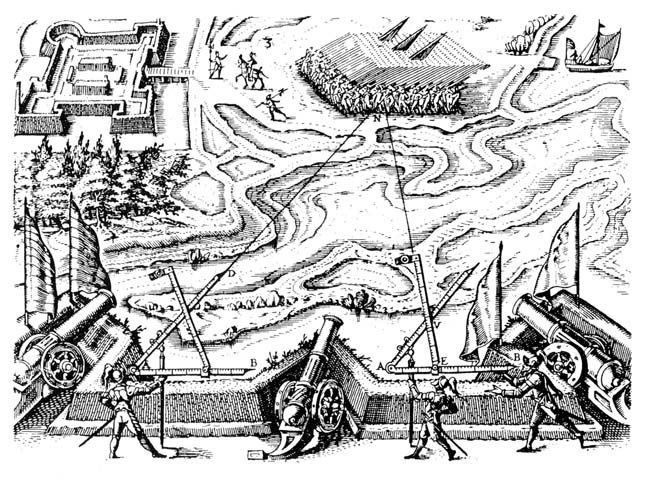 exhibition-making and preventive conservation --> inspection and exposition <-- (different understandings and use of) *touch = curatorial*
professionalisation of curating
short-term education
cultural exchange
![cat butt ass moral erect [source: Thomas of Cantimpré, Liber de natura rerum, France ca. 1290 (Valenciennes, Bibliothèque municipale, ms. 320, fol. 72r)]](images/ajayeb/0002.jpg "--> o
cat butt ass moral erect
[source: Thomas of Cantimpré, Liber de natura rerum, France ca. 1290 (Valenciennes, Bibliothèque municipale, ms. 320, fol. 72r)]") @apass feedback: (terrain of) peer engagement --> understanding each other’s practices
@apass feedback: (terrain of) peer engagement --> understanding each other’s practices
education, research, literacy, management, networking, custodianship, audience development
![ajayeb world cosmos [source: Cambridge Online University Library]](images/ajayeb/0023.jpg "--> o
ajayeb world cosmos
[source: Cambridge Online University Library]") research (overdue) relationship with intelligence --✕--> **research: adventure of charismas**
research (overdue) relationship with intelligence --✕--> **research: adventure of charismas**
...to be migratory (in thought, praxis, community)
![home Heidegger pigs house building Bildung Dasein being [source: Xin Zhui - Lady Dais of the Han dynasty - oberlin.edu]](images/ajayeb/0087.jpg "--> o
home Heidegger pigs house building Bildung Dasein being
[source: Xin Zhui - Lady Dais of the Han dynasty - oberlin.edu]") ...subjectivities without a heritage in criticality and art
...subjectivities without a heritage in criticality and art
constraint: a source of self-abundance --Renan--> suffering and risk = opportunities to hybridize with life
curating:
•nutrition and extension
•analysis and transplantation
•=/= content historicization
•=/= data
![moon wonder creation inflow follow rise [source: Qazwini book of ajayeb]](images/ajayeb/0058.jpg "--> o
moon wonder creation inflow follow rise
[source: Qazwini book of ajayeb]") extraterritoriality
extraterritoriality
being collocated in all the whispers of the world
wild pollination
artificial breeding
![Blickmaschinen gaze system visuality vision technique observer perspective situated knowledges positionality [source: Werner Nekes collection]](images/ajayeb/0141.jpg "--> o
Blickmaschinen gaze system visuality vision technique observer perspective situated knowledges positionality
[source: Werner Nekes collection]") Renan: Institutional work carried by a freelancer, a private individual or a civil servant can improve the publicness of art. It gives confidence to the work of art in public service. This institutionality creates new tasks in art that can be sustained by other practitioners.
Renan: Institutional work carried by a freelancer, a private individual or a civil servant can improve the publicness of art. It gives confidence to the work of art in public service. This institutionality creates new tasks in art that can be sustained by other practitioners.
@apass
...................................
![knowledge earth world [source: Prometheus 2012 film]](images/ajayeb/0012.jpg "--> o
knowledge earth world
[source: Prometheus 2012 film]") publication of the miracle
publication of the miracle
[the miraculous in exhibitions + self-exhibiting miracles]
Renan's *exhibitionary heritage* of miracles
seeing (risk of sight) --> passionate misunderstanding, confusion, rejection
![wind fact environment affect plot story literature ajayeb wonder inflow signifier nature culture representation [source: Qaswini]](images/ajayeb/0124.jpg "--> o
wind fact environment affect plot story literature ajayeb wonder inflow signifier nature culture representation
[source: Qaswini]") cultural engineering of anthropology of heritage
cultural engineering of anthropology of heritage
exhibitionary heritage: a scaffolding that times, locates, and proliferates all that is exhibitionary (like a shower, or rainfall)
![evidence fact model subduction trench mathematics [source: Laura Moriarty]](images/ajayeb/0070.jpg "--> o
evidence fact model subduction trench mathematics
[source: Laura Moriarty]")
![soul body image phantom limb subjectivity ego psychology topology morphology postural schema Grosz [source: USD Biology]](images/ajayeb/0171.jpg "--> o
soul body image phantom limb subjectivity ego psychology topology morphology postural schema Grosz
[source: USD Biology]") curatorial subjectivity
curatorial subjectivity
![wonder technology exhibition media image world system planet fuse [source: Frank Vincentz / Wunder des Sonnensystems, Ausstellung im Gasometer Oberhausen]](images/ajayeb/0138.jpg "--> o
wonder technology exhibition media image world system planet fuse
[source: Frank Vincentz / Wunder des Sonnensystems, Ausstellung im Gasometer Oberhausen]") exhibitionary complex
exhibitionary complex
•describe the problems of an exhibitionary heritage
•find solutions to artistic problems in the description of exhibitionary complexes
(the bad idea of interpreting exhibitionary heritage as an) exhibitionary solution to problems that are represented by the works of art --> correlate artistic solutions with exhibitionary problems }<--Renan-- consumes the links between art, exhibits, and curation naturally and atheoretically
![allegory boat wolf eagle river wedding temperament optic Da Vinci [source: http://www.leonardodavinci.net]](images/ajayeb/0044.jpg "--> o
allegory boat wolf eagle river wedding temperament optic Da Vinci
[source: http://www.leonardodavinci.net]") creation of art <--✕--> birth of exhibition
creation of art <--✕--> birth of exhibition
(artistic problem ~/= exhibitionary problem)
...using the concepts and tools of exhibition history
![animating power footnote feeling metamorphic transformation desire think imagine attention difference worlding interruption story [source: Adilnor Collection - al-Jawahir al-Khams]](images/ajayeb/0099.jpg "--> format
animating power footnote feeling metamorphic transformation desire think imagine attention difference worlding interruption story
[source: Adilnor Collection - al-Jawahir al-Khams]") the bad idea of the artistic is conceived in exhibitions & the exhibitionary in artworks
the bad idea of the artistic is conceived in exhibitions & the exhibitionary in artworks
postulate matter in terms of
•errors
•questions
(not necessarily in terms of)
•exhibition
•artwork
![atlas cartography Olearius map Sa'di perspectiv tool diagram planetary shathiat [source: Sina Seifee]](images/ajayeb/0161.jpg "--> o
atlas cartography Olearius map Sa'di perspectiv tool diagram planetary shathiat
[source: Sina Seifee]") exhibitionary heritage of
exhibitionary heritage of
•artistic practices --> the miracle in ideas/objects
•curatorial practices --> categories of the miracle
•exhibitionary practices --> the miraculous as datum of the world
miracle can be contained or can burst into the study of traditions and transmissions
![simulation representation child human model earth world grasp understanding tangibility memory device vision science [source: Ender's Game film 2013]](images/ajayeb/0145.jpg "--> o
simulation representation child human model earth world grasp understanding tangibility memory device vision science
[source: Ender's Game film 2013]") miracle = content + form
miracle = content + form
miraculous --> surrogate medium of the artistic
![world snow white poison gift life cinderella [source: Jon Rafman]](images/ajayeb/0085.jpg "--> o
world snow white poison gift life cinderella
[source: Jon Rafman]") (Renan:) how a miracle can turn the hopeful perplexity surrounding Virgin Mary into the relentless exhibitionary ----> *the power of suggestion is curatorial* --> materials can be rearranged (or other contents can be shaken off from them according to the demands of art history)
(Renan:) how a miracle can turn the hopeful perplexity surrounding Virgin Mary into the relentless exhibitionary ----> *the power of suggestion is curatorial* --> materials can be rearranged (or other contents can be shaken off from them according to the demands of art history)
flower showers
![wood grain Laura Marks Islamic art form techne shape force intensification [source: wikimedia]](images/ajayeb/0073.jpg "--> o
wood grain Laura Marks Islamic art form techne shape force intensification
[source: wikimedia]") an auspicious beginning for a lasting devotion
an auspicious beginning for a lasting devotion
گلبرگ --> the petal applied to the body of the sick and invalid, a sacred relic that is progressively distant yet proliferative
![web archive environmental scan wonder [source: Qazwini / ids.lib.harvard.edu]](images/ajayeb/0127.jpg "--> o
web archive environmental scan wonder
[source: Qazwini / ids.lib.harvard.edu]") problem of the exhibitionary heritage --Renan--> discursify that even miracles can be interpreted art historically, that they are worthy of belief
problem of the exhibitionary heritage --Renan--> discursify that even miracles can be interpreted art historically, that they are worthy of belief
![stone human geology intensification matter flow catalog [source: Gall stones | Walz Elektronik]](images/ajayeb/0140.jpg "--> o
stone human geology intensification matter flow catalog
[source: Gall stones | Walz Elektronik]") Julia Scher (first two weeks of April (1-14.04) and last two weeks of June (14-30.06))
Julia Scher (first two weeks of April (1-14.04) and last two weeks of June (14-30.06))
Marie-Luise Angerer (last two weeks of June)
Luis Negrón van Grieken (free)
Christian Sievers
Daniela Kinateder
![image projection forest light table round multi-media performance security system representation hack child Linux interface predation [source: Jurassic Park movie 1993]](images/ajayeb/0113.jpg "--> o
image projection forest light table round multi-media performance security system representation hack child Linux interface predation
[source: Jurassic Park movie 1993]") David Hahlbrock
David Hahlbrock
Zilvinas Lilas
Matthias Müller
Phil Collins
Heide Hagebölling
![Wunderkammer exhibition collection environment writing [source: Alison and Peter Smithson et al., Parallel of Life and Art]](images/ajayeb/0143.jpg "--> o
Wunderkammer exhibition collection environment writing
[source: Alison and Peter Smithson et al., Parallel of Life and Art]") Mischa Kuball
Mischa Kuball
Andreas Henrich
Ute Hörner
Peter Friedrich Stephan
////////////////////
![ganj earth stratum desire projection pit treasure mountain ghaf research ajayeb [source: noorbaran90.ir]](images/ajayeb/0137.jpg "--> o
ganj earth stratum desire projection pit treasure mountain ghaf research ajayeb
[source: noorbaran90.ir]") i am using these spaces basically as their potential for being a host for something else, rather than pointing their pure site specificity.
i am using these spaces basically as their potential for being a host for something else, rather than pointing their pure site specificity.
my work has worked (for me?) whenever it was an intervention to/for its objecthood as a being-in-art-form or for my own fantasies. the problem/matter of exhibition.
the theoretical work would base on reading shyness as for a philosophical opening for the practical part of the diploma that comes afterward. By this way of writing i operate myself, breaking free from the process of offering philosophical evidence.
![ajayeb book taxon categorical classification [source: A 14th-century AD manuscript of Zakariya ibn Muhammad al-Qazwini's Aja'ib al-makhluqat (The Wonders of Creation; Persian: ﻋﺟﺎﺋب اﻟﻣﺧﻠوﻗﺎت )]](images/ajayeb/0079.jpg "--> o
ajayeb book taxon categorical classification
[source: A 14th-century AD manuscript of Zakariya ibn Muhammad al-Qazwini's Aja'ib al-makhluqat (The Wonders of Creation; Persian: ﻋﺟﺎﺋب اﻟﻣﺧﻠوﻗﺎت )]") •Maulwurfe in the Moschee (shit on the head looks like Turban(!), about action and taking the action and getting the call, over doing of anything, revenge program, revelation to other's transmission, talking about shit in a mosque, etc.)
•Maulwurfe in the Moschee (shit on the head looks like Turban(!), about action and taking the action and getting the call, over doing of anything, revenge program, revelation to other's transmission, talking about shit in a mosque, etc.)
•king lear in the Hochzeitssalon (space for speech act, ritual, marriage of daughters, etc.)
•islam intro in the Biologie Zentrum Uni Köln (hygiene in islam, work on memory relation to research, reciting Koran brings the dead as witness, etc.)
////////////////////
![stone fire india saint Patthar Baba [source: anilkgupta1954,]](images/ajayeb/0038.jpg "--> o
stone fire india saint Patthar Baba
[source: anilkgupta1954,]") shyness is prescribed for woman, it exists in religion as a female virtue
shyness is prescribed for woman, it exists in religion as a female virtue
thinking in yoga posing (thinking, thanking), the thanking pose and the always thinking pose in yoga.
![cosmography Qazwini water energy flow fluid architecure [source: Tusi - Online Cambridge University Library]](images/ajayeb/0036.jpg "--> o
cosmography Qazwini water energy flow fluid architecure
[source: Tusi - Online Cambridge University Library]") intervention is not always attacking the other-as-stupid, but rather how do you perform your intervention in that sense that is that YOU are stupid before the other
intervention is not always attacking the other-as-stupid, but rather how do you perform your intervention in that sense that is that YOU are stupid before the other
the moment of madness in encountering art, understanding has to go through that madness
![snake world [source: ]](images/ajayeb/0004.jpg "--> o
snake world
[source: ]") i am going to have a smooth transition from my amazon project to my diplom, via animal talk?
i am going to have a smooth transition from my amazon project to my diplom, via animal talk?
--> ‘face’ in performance. (read Haraway, Levinas, Derrida)
face is linked to sensibility and vision in an intimate way. something that resists categorization, containment or comprehension, infinitely foreign. it is not the biological face. it is the idea of infinity within oneself. this idea of infinity which the face encapsulates is for Levinas the key means by which thought is brought into relation with what goes beyond its capacity. and this is crucial in art and specifically in performance art for encountering something such as face, face of the performer or the face of the work. the face is perceived as something that resists possession or utilization. the face promotes a discourse when it invites me. (ranting against sober means of communication). the face to face situation founds language.
presence of the face coming from beyond the world , but committing me to human fraternity (Gemeinschaft) does not overwhelm me as a numinous essence arousing fear and trembling. to be in relationship while absolving oneself from this relation is ‘to speak’. the face always speaks directly and absolutely to me.
![media literature German discourse database deutsch Sprache language computer link text Bild Ton Video station [source: widrichfilm.com]](images/ajayeb/0117.jpg "--> o
media literature German discourse database deutsch Sprache language computer link text Bild Ton Video station
[source: widrichfilm.com]") many late 20th century horror films feature a masked villain. the act of masking the face is not only metaphorical, but also has the terrifying effect of dehumanizing the villain. in herbert kelman's work on dehumanization, when the perception of a person “as an individual, independent and distinguishable from others, capable of making choices is denied, they no longer elicit compassion or other moral responses. the facelessness of the alien, swarms of ants, or other villains of pop culture.
many late 20th century horror films feature a masked villain. the act of masking the face is not only metaphorical, but also has the terrifying effect of dehumanizing the villain. in herbert kelman's work on dehumanization, when the perception of a person “as an individual, independent and distinguishable from others, capable of making choices is denied, they no longer elicit compassion or other moral responses. the facelessness of the alien, swarms of ants, or other villains of pop culture.
for face look at facade too.
![frog mouse crow lake human assemblage Kelile Demne [source: lithographed editions of Anwār-i Suhaylī - Kalīlah wa Dimnah - 1261]](images/ajayeb/0120.jpg "--> o
frog mouse crow lake human assemblage Kelile Demne
[source: lithographed editions of Anwār-i Suhaylī - Kalīlah wa Dimnah - 1261]") --> ‘provocation’ in performance. (read Haraway, Levinas)
--> ‘provocation’ in performance. (read Haraway, Levinas)
--> ‘act’ in performance. (read grotowski)
what is to be: ‘completely natural and logical’. dealing with the discomfort of unreasonable presence on the stage. nonrepresentational aspects of performance
![natural history museum Isfahan Esfehan wunderkammer visualization animal [source: commons.wikimedia]](images/ajayeb/0181.jpg "--> o
natural history museum Isfahan Esfehan wunderkammer visualization animal
[source: commons.wikimedia]") --> ‘teaching’ that is not rhetorics where the revelation of the other can take place (Avital, Levinas). teaching is synthesizing for someone else. what kind of communication is teaching involved?
--> ‘teaching’ that is not rhetorics where the revelation of the other can take place (Avital, Levinas). teaching is synthesizing for someone else. what kind of communication is teaching involved?
the discourse inherent in the relation with the other is like or as a sermon.
--> ‘eyes’ threatening or seducing eyes of the performer (Rainer)
![animating power footnote feeling metamorphic transformation desire think imagine attention difference worlding interruption story [source: Adilnor Collection - al-Jawahir al-Khams]](images/ajayeb/0101.jpg "--> format
animating power footnote feeling metamorphic transformation desire think imagine attention difference worlding interruption story
[source: Adilnor Collection - al-Jawahir al-Khams]") --> ‘ranting’ of the drunk in the face of the sober. disturbance of a continuity with attack with words.
--> ‘ranting’ of the drunk in the face of the sober. disturbance of a continuity with attack with words.
--> ‘saying’, before it conjugates a verbal sign, is already an ethical gesture. saying is therefore already the proximity of one to the other, the commitment of an approach, the one for the other.
one saying enters into the service of the said, that is the thematization of being, purity of its intentions will be inevitably compromised. a saying that must be unsaid. a movement of thought that continues to resist collapsing into a settled expression, freedom from the cage of thematics. this mission (responsibility for the other) can be adequately expressed only through a certain impossible undoing of language. presenting a philosophical other is only possible when we generate a saying saying saying itself.
my performance talk: to situate my subjectivity linguistically (in a nonpresence and a nonplace). (?) (if the stakes are at situating myself, then the question is why?)
saying becomes totally exposed in its approach to the other. in limited social situations it creates risks of embarrassment or rebuttal and perhaps sounding psychotic. something that will strip away all protective layers, whether cultural or literal, from the body (of knowledge). it can also be masochistically painful for the subject. the absolute saying is a trauma, with vulnerability and passivity even is a bodily way, where the ethical being is: one penetrated by the other. (saying is ethical while said is juridical.)
--> ‘psychology’ not only what we do but why we do. the science that should be studied so much in art, specially in performance art. the how of human behavior, feelings and emotions.
the psychological space, the intermediary space of the ethical relation, shyness and commitment to the other. “i am infinitely more demanding of myself than of others”. (is this the realm of shyness being before god?)
![text writing reading note index structure space [source: Abu Rayhan Al-Biruni Institute of Oriental Studies]](images/ajayeb/0046.jpg "--> o
text writing reading note index structure space
[source: Abu Rayhan Al-Biruni Institute of Oriental Studies]") --> ‘intelligence’ in the sense that what do i pay attention to and why, and what do i ignore and why, and how do i put it together. (synthesizing)
--> ‘intelligence’ in the sense that what do i pay attention to and why, and what do i ignore and why, and how do i put it together. (synthesizing)
--> ‘cornered’ someone that is cornered ontologically. can not shy out of the corner.
--> ‘present’ of presence signifies nowness. The movement of time makes things present by making them now. What is the relation of this “making present” to the world? Is the movement of time ultimately to be traced to that of the world? On such a view, we take the successive nows that constitute time’s movement as a function of the world. Their origin is the successive impressions we receive from its objects. We, thus, come to affirm that nowness is the world’s presence to us in the impressions it leaves. Augustine gives the classic expression of this position when he writes: “It is in you, O my mind, that I measure time. ... What I measure is the impress produced in you by the things as they pass and [the impressions] abiding in you when they have passed."2 The impress is registered as the present now. We register the abiding impression left in the mind as the remembered now. If, however, we break the tie between presence and the world, we have to say that the impress is the result of our own activity. The impression that results in the now comes, in other words, not from the world, but from ourselves. It is a result of our affecting ourselves. In Derrida’s words, its origin is “the auto-affection” of consciousness.
![ajayeb mountain earth pit Sina wonder mother matter horizon name people distance [source: scan from Qaswini's Ajayeb al Makhlughat]](images/ajayeb/0096.jpg "--> o
ajayeb mountain earth pit Sina wonder mother matter horizon name people distance
[source: scan from Qaswini's Ajayeb al Makhlughat]") --> ‘consciousness’ Since it involves the self-awareness that demands self-presence, the question of language expands once again. In answering it, we must inquire into the nature of consciousness.
--> ‘consciousness’ Since it involves the self-awareness that demands self-presence, the question of language expands once again. In answering it, we must inquire into the nature of consciousness.
--> ‘veil’ unveiled. a sign of difference, a kind of timidity? is shyness same as veil? is it a sheer projection? are we (am i) subdued?
![Galileo telescope optics affect medium interaction exteriority [source: astrofiliveronesi.it]](images/ajayeb/0109.jpg "--> o
Galileo telescope optics affect medium interaction exteriority
[source: astrofiliveronesi.it]") --> ‘exhibitionist ambitions’ and idealized structures. the exhibitionist ambitions of these artists forswear all objective orientation. Their own uniqueness and grandiosity is taken for granted. it is not open to debate and need not be founded in a structured manner that is accessible and comprehensible to one's powers of appraisal and judgment. the representatives of postmodernism adopt the stylistic forms, themes and visual material of their art from the boundless treasure trove of art history so readily accessible today. dependence on what has already been formulated. the underlying tone of this art serves to flaunt an unparalleled sense of superiority and grandiose self-confidence. seen in many performance in this time too. (in my painting i have a rational point of view.) i don't want to orient myself towards ambitions, injected by libidinal energy, of my grandiose self-artist. of those, whose prime concern is to show their uniqueness find themselves faced with the question: “what is to be done?”. I too, choose to refuse to pander to the demands of innovation, style and integrity, but at the same time not to work myself up to grandiose self-image of artistic omnipotence.
--> ‘exhibitionist ambitions’ and idealized structures. the exhibitionist ambitions of these artists forswear all objective orientation. Their own uniqueness and grandiosity is taken for granted. it is not open to debate and need not be founded in a structured manner that is accessible and comprehensible to one's powers of appraisal and judgment. the representatives of postmodernism adopt the stylistic forms, themes and visual material of their art from the boundless treasure trove of art history so readily accessible today. dependence on what has already been formulated. the underlying tone of this art serves to flaunt an unparalleled sense of superiority and grandiose self-confidence. seen in many performance in this time too. (in my painting i have a rational point of view.) i don't want to orient myself towards ambitions, injected by libidinal energy, of my grandiose self-artist. of those, whose prime concern is to show their uniqueness find themselves faced with the question: “what is to be done?”. I too, choose to refuse to pander to the demands of innovation, style and integrity, but at the same time not to work myself up to grandiose self-image of artistic omnipotence.
look at the theory of intelligence for language and other kind of ‘enjoying’ the nature, art or other structures.
![surgeon monster marvel encyclopedia curiosity human animal nature figure fish waterbody [source: On Monsters and Marvels by Ambroise Paré 1510]](images/ajayeb/0131.jpg "--> o
surgeon monster marvel encyclopedia curiosity human animal nature figure fish waterbody
[source: On Monsters and Marvels by Ambroise Paré 1510]") how is the philosophy of the sublime (quality of greatness) related to the format of my talks? if my work is not an endeavor on the philosophy of the sublime then what is it?
how is the philosophy of the sublime (quality of greatness) related to the format of my talks? if my work is not an endeavor on the philosophy of the sublime then what is it?
in this writing i am not going to work in the forms of claims as stages in a logical argument. my approach would we unsubstantial to break free from the process of offering philosophical evidence...
![media literature German discourse lecture space deutsch Sprache language university performance found object [source: medienpuls-bayern.de]](images/ajayeb/0115.jpg "--> o
media literature German discourse lecture space deutsch Sprache language university performance found object
[source: medienpuls-bayern.de]") mobilizing forces
mobilizing forces
scoring system
opposition to shamanism in performance art, points in The Art of Modernism - Sandro Bocola, for critique on Beuys and Abramovich.
Faced with objects and performances by Joseph Beuys, viewers are as baffled as they are by Marcel Duchamp's Bottle Rack. They do not know what is going on, are unable to relate what they see to any known system and are left entirely to their own devices, i.e. to their own emotional responses, for all the good that does them. They feel affected, and have a vague and almost unwilling sense of being touched at a certain emotional depth, but are unable to interpret these feelings (isn't that the case with most art performances?). Beuys celebrates complex and incomprehensible rituals before an astonished audience. He subjects his person to difficult tasks and appears to be making some kind of sacrifice in doing so. Beuys, after all, wishes to heal. To judge by his statements, he wishes to redeem the German people and indeed all of humankind from their social evils, their petrifaction and impotence. In this sense, he transcends the role of the artist. He sees his audience not, in the traditional sense, as a free counterpart to whom he presents a work (as form and expression of his own self), but as a material to be formed. He appears as the people's tribune, as teacher, seer, healer and prophet, transforming the role of the artist into that of the shaman. Kohut stresses that the effect of messianic and charismatic personalities is not necessarily detrimental under all circumstances. At times of severe crisis, it is not the modestly self-doubting type of personality that is needed (who generally makes up the leading stratum in calmer times). In times of fear, the masses turn to a messianic or charismatic personality, not because above all they have recognized his abilities and competence, but because they feel that this leader will satisfy their need to be imperturbably convinced of being right, or because they want to identify with his strength and security.
(caution criticizing beuys and abramovic, you don't know all about them. your criticism is certain aspect of their persona and performance face, in order to make your own point and argument. it is not to understand their works. is this ok?)
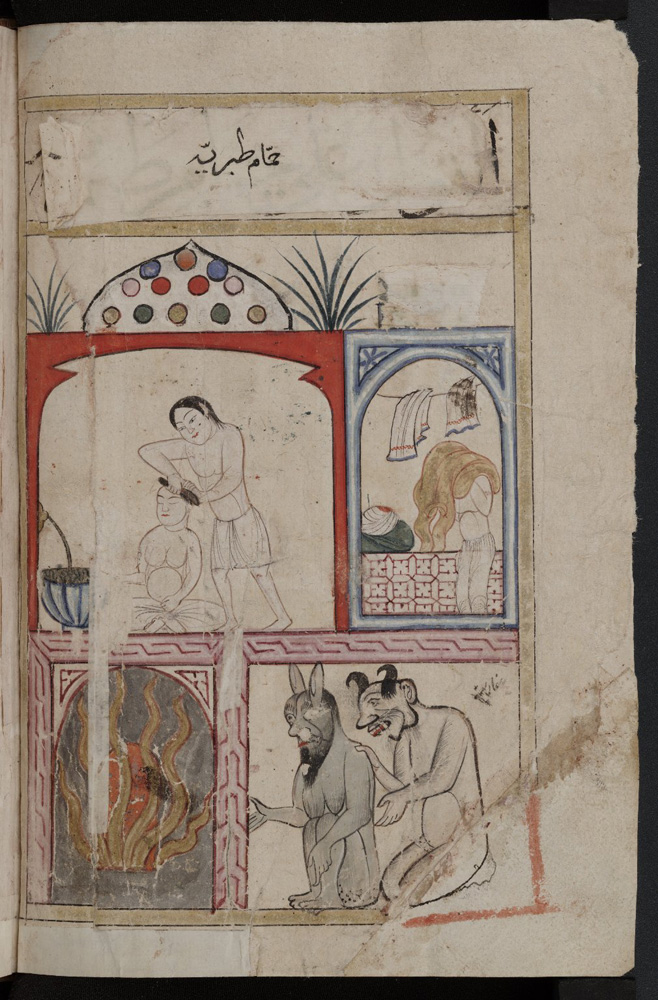
![graph diagram species scene pleistocene sadistic science life earth data plot [source: https://en.wikipedia.org/wiki/File:Extinction_intensity.svg]](images/ajayeb/0093.jpg "--> o
graph diagram species scene pleistocene sadistic science life earth data plot
[source: https://en.wikipedia.org/wiki/File:Extinction_intensity.svg]") when ideas fail, words come in very handy. (Goethe?)
when ideas fail, words come in very handy. (Goethe?)
![field, geometry, architecture, navigational space, life, line, linear, map, eye, view [source: Lynn Randolph - Living Lines]](images/ajayeb/0154.jpg "--> o
field, geometry, architecture, navigational space, life, line, linear, map, eye, view
[source: Lynn Randolph - Living Lines]") all serious thinking is interpersonal? it is the key to how we think by challenging each other with our ideas.
all serious thinking is interpersonal? it is the key to how we think by challenging each other with our ideas.
this is early, i should really give lectures in 20 years.
![shahname Ferdosi Div Rostam pit kill articulation agon [source: Adilnor Collection]](images/ajayeb/0065.jpg "--> o
shahname Ferdosi Div Rostam pit kill articulation agon
[source: Adilnor Collection]") intimacy: first talking than thinking (maybe even taking it back), feeling an idiot afterward. When the saying is taken over by rhetoric or maneuvering or calculation then the problem is persuading or proving, not intimacy. (intimate thoughts in Shakespear). running with strategy in conversing and conversation (winning a round or winning an argument) is traceable back to power and coercion and its discomforts and anxieties. the art that i am talking about should not win the conversation. (but why intimacy in the art project at all?) by intimacy i find a route to my true consciousness. in intimacy only there is the possibility for love. not making the other/audience to think in a certain way, but exactly the opposite, the performer has to loose the game of convincement or wit (in her work/form/performance).
intimacy: first talking than thinking (maybe even taking it back), feeling an idiot afterward. When the saying is taken over by rhetoric or maneuvering or calculation then the problem is persuading or proving, not intimacy. (intimate thoughts in Shakespear). running with strategy in conversing and conversation (winning a round or winning an argument) is traceable back to power and coercion and its discomforts and anxieties. the art that i am talking about should not win the conversation. (but why intimacy in the art project at all?) by intimacy i find a route to my true consciousness. in intimacy only there is the possibility for love. not making the other/audience to think in a certain way, but exactly the opposite, the performer has to loose the game of convincement or wit (in her work/form/performance).
shyness: not the clinical term. i am talking about a shyness that is deep in the character, a kind of trembling before the other.
![Munes al-Abrar moon fish twelve birds taxon [source: Folio from a Mu'nis al-Abrar fi Deqa'iq al-Ash'ar / top: The Moon and Fish; bottom: Twelve different birds in 2 registers]](images/ajayeb/0080.jpg "--> o
Munes al-Abrar moon fish twelve birds taxon
[source: Folio from a Mu'nis al-Abrar fi Deqa'iq al-Ash'ar / top: The Moon and Fish; bottom: Twelve different birds in 2 registers]") the ethical relation to the other, as always important, stakes are higher in performance? the proximity of the art object, the relation of the face to face relationship between the speaker and the listener, is the later container of ethical stake?
the ethical relation to the other, as always important, stakes are higher in performance? the proximity of the art object, the relation of the face to face relationship between the speaker and the listener, is the later container of ethical stake?
not audience attention, but audience imagination. not their reaction, but their response. Usually a response is a reply to a query not the result of a stimulus. Stimulus is an urgent vital process that acts to arouse action in shortest time. that time that is the price for thinking.
![photo camera space stone tech self [source: ESA/Rosetta/Philae/CIVA]](images/ajayeb/0157.jpg "--> o
photo camera space stone tech self
[source: ESA/Rosetta/Philae/CIVA]") shakespear, the Everest of acting. Why performance/theater is not related to thinking and is always setup for acting and action? need for drama.
shakespear, the Everest of acting. Why performance/theater is not related to thinking and is always setup for acting and action? need for drama.
the event has happened off stage, now we talk about it. Macbeth, unlike tarantino!
![rock material sensation [source: Sina Seifee 4/4/2016]](images/ajayeb/0019.jpg "--> o
rock material sensation
[source: Sina Seifee 4/4/2016]") violence is symbolized in many good old art. karaoke, etc.
violence is symbolized in many good old art. karaoke, etc.
violence is art-performance is exhibited...
the power of voice in islam, taboo of body.
no one is beheaded in the history of islam. (read tarikhe sakhtkoshi) contrast to French revolution.
i am not going to critique islam, i don't know what it is, just let me perform it.
![Iran flower Sa'di war poetry literature proximity metaphysics [source: Shahram Razavi]](images/ajayeb/0111.jpg "--> o
Iran flower Sa'di war poetry literature proximity metaphysics
[source: Shahram Razavi]") who performs? someone doing something?
who performs? someone doing something?
what is the cure for shyness.
‘performing for the other’
silent coming and going of the feminine, (form of shyness?)
![ajayeb wonder [source: unknown]](images/ajayeb/0054.jpg "--> o
ajayeb wonder
[source: unknown]") when we send the shyest as an ambassador to represent us.
when we send the shyest as an ambassador to represent us.
It is a self-defining system of signs referring to signs.
![matterial substance interface [source: https://www.allegorithmic.com/products/substance-designer]](images/ajayeb/0032.jpg "--> n
matterial substance interface
[source: https://www.allegorithmic.com/products/substance-designer]") a quiet listener. we have yet no idea what is speak. how taking transforms the mind that talks. conditions of thinking in relation to talking, before or after the mouth that talks. thinking in other languages. if intimacy is saying before thinking, how fits the acts of maulwurfe?
a quiet listener. we have yet no idea what is speak. how taking transforms the mind that talks. conditions of thinking in relation to talking, before or after the mouth that talks. thinking in other languages. if intimacy is saying before thinking, how fits the acts of maulwurfe?
work on shyness, I have to start (slowly) with what i (kind of) know.
![demand child lecture speech [source: Peter Blegvad - Leviathan]](images/ajayeb/0057.jpg "--> l
demand child lecture speech
[source: Peter Blegvad - Leviathan]") “...Nudged on the scene as a kind of shivering being, anxious and shy,..” (kafka, test)
“...Nudged on the scene as a kind of shivering being, anxious and shy,..” (kafka, test)
There is the suggestion here, as in Holderlin, that timidity might be a dialect of stupidity. (Finding no way of testing out of these subtle complicities, one falls asleep, exhausted by the distress of proving one's most minimal merit.) (Avital Ronell, The Veils of Servility)
![Eocene mammalian selves self minor celestial impact world now time species storytelling [source: Esther van Hulsen]](images/ajayeb/0052.jpg "--> n
Eocene mammalian selves self minor celestial impact world now time species storytelling
[source: Esther van Hulsen]") According to Silvan Tomkins, “shame operates only after interest or enjoyment has been activated.”
According to Silvan Tomkins, “shame operates only after interest or enjoyment has been activated.”
as Sedgwick has argued, for some people, and most often queer subjects, “shame is simply the first, and remains a permanent, structuring fact of identity: one that ... has its own, powerfully productive and powerfully social metaphoric possibilities.
the idea is that the performance that avows its performanceness acknowledges the difficulty of fitting into roles, finding identities, and managing a self, especially a self vulnerable to the effects of stigma.
![mirror source knowledge embodiment filter veil tele scope sun light could unknowing raytrace [source: Ars Magna Lucis]](images/ajayeb/0104.jpg "--> o
mirror source knowledge embodiment filter veil tele scope sun light could unknowing raytrace
[source: Ars Magna Lucis]") is there a queerness in me and my performance? is shyness, they way i do it, queer?
is there a queerness in me and my performance? is shyness, they way i do it, queer?
turn the spectator to the reader.
![thunder stone rock fire transportation affect [source: Engraving by I.F.Schley of the drawing by Y.M.Felten. 1770 - https://commons.wikimedia.org/wiki/File:Thunder_Stone.jpg]](images/ajayeb/0082.jpg "--> o
thunder stone rock fire transportation affect
[source: Engraving by I.F.Schley of the drawing by Y.M.Felten. 1770 - https://commons.wikimedia.org/wiki/File:Thunder_Stone.jpg]") does shame intertwines with queer?
does shame intertwines with queer?
this affect and mode of performance (which normative euro American culture would rather eradicate) can be queered, twisted and turned into endless artful enactments.
queer, as experimental linguistic representational and political artistic performance.
shameless in my shyness. (at the level of affect theory?)
![firefly condensed precision prisma poesis cartography refraction [source: wikimedia]](images/ajayeb/0160.jpg "--> o
firefly condensed precision prisma poesis cartography refraction
[source: wikimedia]") shyness: looking otherwise and feeling differently
shyness: looking otherwise and feeling differently
to act shamed of exactly that which he is excited. (is this a queer subject?)
![Wunderkammer exhibition collection environment writing [source: Alison and Peter Smithson et al., Parallel of Life and Art]](images/ajayeb/0142.jpg "--> o
Wunderkammer exhibition collection environment writing
[source: Alison and Peter Smithson et al., Parallel of Life and Art]") queer is not isomorphic with gay or lesbian or any other fixed identity, rather, queerness undoes all identities into an endless multiplicity and unbecoming. (liquefaction of any solidification)
queer is not isomorphic with gay or lesbian or any other fixed identity, rather, queerness undoes all identities into an endless multiplicity and unbecoming. (liquefaction of any solidification)
queer seems to hinge much more radically and explicitly on a person’s undertaking particular, performative acts of experimental self-perception on a filiations.
Indeed, the performativity of both queer and shame can be reiterated differently; the subject can disidentify from such interpolations and re-deploy the abjecting and/or disciplining of the terms in unforeseen ways, which Warhol did.
In surrender the head bends and meets the heart. The head that does not bend has no value, and the head that is stiff will have to bend sometime, either in surrender or in shame. The head that bends in surrender will never have to bend in shame. Shame accompanies arrogance. Shyness accompanies Love. See how children are endowed with shyness, that is natural. Shyness is inherent. Shame is inflicted by society and is acquired. Shame brings guilt and shyness adds to one? beauty. Retain your shyness and drop your shame. (?)
![encyclopedic universal social chicken table title optic scopic [source: unknown]](images/ajayeb/0180.jpg "--> o
encyclopedic universal social chicken table title optic scopic
[source: unknown]") shame is simply the first and remains a permanent, structuring fact of identity: one that has its own, powerfully productive and powerfully social metaphoric possibilities.
shame is simply the first and remains a permanent, structuring fact of identity: one that has its own, powerfully productive and powerfully social metaphoric possibilities.
deciding not to care how people thing (or feel?), because those are the things i don't want to change! (or i don't think i should want to change) (warhol)
what do i want to change? just having fun with my stuff. can i decide not to care what people think? shyness...
![cosmology world [source: https://fineartamerica.com/]](images/ajayeb/0049.jpg "--> o
cosmology world
[source: https://fineartamerica.com/]") in shame i wish to continue to look (or talk, or make or perform) and be looked at (or spoken to or seen in my performing of myself), but i also do not wish to do so. (Silvan Tomkins)
in shame i wish to continue to look (or talk, or make or perform) and be looked at (or spoken to or seen in my performing of myself), but i also do not wish to do so. (Silvan Tomkins)
i am embarrassed to show the shy singing.
![map cartography trajectory unknown figure diagram composition [source: Al Istakhri, Kitab al masalik wa l mamalik, Book of roads and kingdoms]](images/ajayeb/0162.jpg "--> o
map cartography trajectory unknown figure diagram composition
[source: Al Istakhri, Kitab al masalik wa l mamalik, Book of roads and kingdoms]") chronically embarrassing my self. (Aula presentation, shy singing, ...)
chronically embarrassing my self. (Aula presentation, shy singing, ...)
![elephant situated knowledges parable perspective relativism [source: http://www.tendergrassfedmeat.com/index.php?s=sammati_tarka_prakarana]](images/ajayeb/0025.jpg "--> o
elephant situated knowledges parable perspective relativism
[source: http://www.tendergrassfedmeat.com/index.php?s=sammati_tarka_prakarana]") on passivity, note for the reader: not to mistake it for endurance in this discourse. here we are talking about a philosophical term, in relation to the “being” and the “other”...
on passivity, note for the reader: not to mistake it for endurance in this discourse. here we are talking about a philosophical term, in relation to the “being” and the “other”...
an architecture that tries to be modest, a performance that tries to be intimidating as much
as it can.
![woman laugh snake mirror abyss animal landscape morality erect nature [source: Matali' al-Saadet (The Book of Felicity)]](images/ajayeb/0045.jpg "--> o
woman laugh snake mirror abyss animal landscape morality erect nature
[source: Matali' al-Saadet (The Book of Felicity)]") just in time shyness
just in time shyness
what are the pitfalls and abysses of philosophical reflection on and with shyness?
what am i trying to shortcut?
was Socrates intruding in his punk philosopher, stopping people at back allies and perform philosophy. he doesn't hold back, he intrudes, tattooing the body of the other, questioning.
the problem of his project?
![lens beauty decoration science telescope embodiment aesthetics ornamentation divine rich care attention encode decryption value meaning mystery [source: Galileo Galilei Objective lens, Padua, late 1609 n a frame made of ebony and ivory - Istituto e Museo di Storia della Scienza, Florence / astronomy2009.org]](images/ajayeb/0125.jpg "--> o
lens beauty decoration science telescope embodiment aesthetics ornamentation divine rich care attention encode decryption value meaning mystery
[source: Galileo Galilei Objective lens, Padua, late 1609 n a frame made of ebony and ivory - Istituto e Museo di Storia della Scienza, Florence / astronomy2009.org]") i am not shy in the work that i am trying to present publicly (?)
i am not shy in the work that i am trying to present publicly (?)
where am i shy?
posture of position or gesture
![Ferdosi Shahname river water passing flow detour [source: UCB]](images/ajayeb/0060.jpg "--> o
Ferdosi Shahname river water passing flow detour
[source: UCB]") the moment you stand in front of the audience you stop being authentic.
the moment you stand in front of the audience you stop being authentic.
when we listen to something very carefully and allow ourselves to be moved we can tune in ti=o the art work and absorb its methods. i have found myself moved when i allowed it, by the most childish and stupid works of arts.
![map worlding geometry civilization space social [source: Tavarikh Al-Osman]](images/ajayeb/0048.jpg "--> o
map worlding geometry civilization space social
[source: Tavarikh Al-Osman]") open minded and eager to make connections
open minded and eager to make connections
(jane jacob,) (1) community is spontaneous, the tissues of community are not something that can be planed, that they happen spontaneously. (2) and this only happens when you are at the local scale. so in this sense, design is suspect, because design is set to be post spontaneity.
find a way to think locally, and thinking about the city as a product of spontaneous interaction between people who are different. but the design can also make something that has a social character.
![pidgin minimal unambiguous message telegraphic code dubious literacy [source: dailymaverick.co.za]](images/ajayeb/0179.jpg "--> o
pidgin minimal unambiguous message telegraphic code dubious literacy
[source: dailymaverick.co.za]") we perform an experiment to prove or disprove a hypothesis, we are working within a framework of a closed system, the original proposition governs our procedures and observations, at arriving at yes or no. but when performing the experiment we come across something unforeseen, or prompted by evidence to jump tracks and think about a different issue. then we are working within the framework of an open system. we move beyond yes or no to exploring something emergent, something whose elements was there but whose form was unknown to us. a fancy and careful way of saying “something new”, because it is new to our understanding.
we perform an experiment to prove or disprove a hypothesis, we are working within a framework of a closed system, the original proposition governs our procedures and observations, at arriving at yes or no. but when performing the experiment we come across something unforeseen, or prompted by evidence to jump tracks and think about a different issue. then we are working within the framework of an open system. we move beyond yes or no to exploring something emergent, something whose elements was there but whose form was unknown to us. a fancy and careful way of saying “something new”, because it is new to our understanding.
William Empson
art results from overcrowding(?)
![Teguise Guatiza image sym life poesis poiesis biomic Haraway [source: wikipedia]](images/ajayeb/0170.jpg "--> o
Teguise Guatiza image sym life poesis poiesis biomic Haraway
[source: wikipedia]") when one is responsive rather than assertive one can't imagine where one will end Up: thinking. this responsiveness is different than the state of being active or passive. a passivity that motivates and mobilizes the subject into places that are yet unknown to her/him.
when one is responsive rather than assertive one can't imagine where one will end Up: thinking. this responsiveness is different than the state of being active or passive. a passivity that motivates and mobilizes the subject into places that are yet unknown to her/him.
Thinking, as Heidegger says, may be much the same as wandering. my lectures are like wandering.
someone who studies paradoxes, poetry and philosophy
(keeping what you know away from society, history and away from art, not to acknowledge what you have learn)
incompatibility between a particular love and a particular social arrangement for love.
![ouroboros snake erect mortality morality beast [source: ]](images/ajayeb/0003.jpg "--> o
ouroboros snake erect mortality morality beast
[source: ]") when you play with others, not try to shine and not try to shy. (shyness is dangerous to society)
when you play with others, not try to shine and not try to shy. (shyness is dangerous to society)
it is like being lynched by kukluksklan.
curios about somebody else rather than identifying with them.
i really learned how to work with people by learning how to keep people from killing each other in street.
if we are very sympathetic, saying “i know how you feel” is privileging solidarity: “we are all in this together”. but well we can't all be in this together in the same way, so what is it that we do together, despite this fact.
![snake animal ajayeb [source: Ibn Bakhtishu's Manafi' al-Hayawan - http://patriciapasso.com/2016/04/25/iconografia-y-significado-de-la-serpiente-en-distintas-culturas-de-oriente-y-occidente/]](images/ajayeb/0037.jpg "--> al
snake animal ajayeb
[source: Ibn Bakhtishu's Manafi' al-Hayawan - http://patriciapasso.com/2016/04/25/iconografia-y-significado-de-la-serpiente-en-distintas-culturas-de-oriente-y-occidente/]") instead of the declaring voice “i believe this or that”, we can say “i would have though” or “perhaps” introducing a zone of ambiguity in people's relationship with each other you might get something social. subjunctive mood (konjuktiv) not only is to zusammenbinden the elements of semantic also to zusammenbinden the the people who are speaking in these terms.
instead of the declaring voice “i believe this or that”, we can say “i would have though” or “perhaps” introducing a zone of ambiguity in people's relationship with each other you might get something social. subjunctive mood (konjuktiv) not only is to zusammenbinden the elements of semantic also to zusammenbinden the the people who are speaking in these terms.
cooperation is a rehearsal not a performance.
![distance grid telescope zoom measurement Ihde [source: galileo.rice.edu]](images/ajayeb/0108.jpg "--> o
distance grid telescope zoom measurement Ihde
[source: galileo.rice.edu]") public real made of people who don't argue in behalf of their own interest but to think most disinterestedly.
public real made of people who don't argue in behalf of their own interest but to think most disinterestedly.
my talks/works is about how we make sense of our environment, the network that we live in and the texts and discourses that we are reading and writing.
how shyness (even) look like? can we recognize it when we see it?
what is feeling comfortable in the presence of strangers? not verbally i mean, physically.
the notion of being comfortable in the presence of difference. being physically comfortable in presence of the people who are not like yourself.
the subjunctive is the language that the shy uses naturally, which is one of the necessary elements of cooperation. in contrast to subjunctive speech, there is declarative speech is a form of declaration invites submission, and it invites submission because somebody else defines for you clearly what something is about. there is almost an erotic of that, they really now what they are on about, they really know who they are, and you become a spectator to their definiteness. giving yourself up to somebody who seems more defined and more purposive.
cooperation in islam is not a personal experience, it is something that is encoded in very strict ritual. it is not an act of choice. cooperation is not a duty but a desire.
my talk is a fancy and careful way of responding to the voices of other. the ones that are sounding in my ear. (inslam, shakespear, math, that girl in enghelab square, etc.). i am not good at immediate reaction, so i respond with a delay and a lot of playfulness and black holes that come in to be of the part of this, by this relationship to the Other, that is manifesting itself through the language of the Other (islam)
In my performative practice, I seek a way to approach thinking about things that arrests my curiosity. It is a form of commitment to what comes forward and calls for thinking, an attention before what I do not know. My Talks are fancy and careful responding to that otherness, to the voice or face that speaks to you from somewhere that you cannot yet locate. This call could be from a sadistic super-ego inside or Shakespeare or kleinen Maulwurf, der wissen wollte, wer ihm auf den Kopf gemacht hat.
i am not just interested in my own foundational metaphors.
is there an amateurishness at the intersection of art and philosophy that i am drawing?
what is amateur?
the fact that i am giving talks is very much related to the social culture around me, in Germany the culture has a taste to listen and there is an interest for speech. now i get it like in the case of warhol he is rethinking his surrounding culture which is dominated at that time by pop, media and celebrity. i am rethinking the academia and philosophy that is in relationship with the arts, my issues and interests are different than warhol for that matter. i am enthusiastic and extremely interested in the material that i am working with, and at the same time overthrown by it and i believe in it, in the same way that maybe warhol believed in pop culture and business.
the nightmare after performance
the notion of skill in art, performance, life, work
trauma, in the experience of the trauma, the source mixes, and articulate in metaphors and hubric signifiers.
relationship between older works and performances, the issue of skill and technology.
it took 60 years after the developments in tempering metal, for barnors to learn new nigf techniques. this is common in the history of technology, that a tool appears before people know how to use it. do we know how we can use computers? when we master a technique, its uses are not immediatly clear.
getting interested in the wrong answer in the four answer question.
no skill develops without a good dose of curiosity. which enables us to think about what might be, rather than what is.
There is a half-remembered discussion of Sigmund Freud I read once in a book and which I have been paraphrasing regularly ever since. It said that for Freud dreams were a way of thinking by doing. You run, you cry, you kiss, you love, you cheat, you argue, you fall, you kill, you eat, you sing, you get lost, you travel back in time, you become somebody else – but you do it all in your head. You do it in your head and so it is thinking, just not a thinking we recognize as thinking. When I am dreaming I am composing thoughts in the way an artist composes a painting or a witch a potion – an assemblage made of bodies and places and actions. An embodied thinking, that is no less eloquent or extraordinary or transformative for being so.
...................................
![cosmology angels nature history king relationship aesthetic [source: Zubdat al-Tawarikh - Luqman ibn Husayn al-Ashuri - 1593]](images/ajayeb/0051.jpg "--> relation
cosmology angels nature history king relationship aesthetic
[source: Zubdat al-Tawarikh - Luqman ibn Husayn al-Ashuri - 1593]") ...One can chat and gossip but it is forbidden to preach, lecture or instruct.”
...One can chat and gossip but it is forbidden to preach, lecture or instruct.”
Claudio Magris’ Micronismi
...................................
(butler)
the structure of address itself
although I did not know in whose voice this person was speaking, whether the voice was his own or not, I did feel that I was being addressed.
To respond to this address seems an important obligation during these times.
It is about a mode of response that follows upon having been addressed, a comportment toward the Other only after the Other has made a demand upon me, accused me of a failing, or asked me to assume a responsibility.
The structure of address is important for understanding how moral authority is introduced and sustained if we accept not just that we address others when we speak, but that in some way we come to exist, as it were, in the moment of being addressed, and something about our existence proves precarious when that address fails.
...the demand that comes from elsewhere, sometimes a nameless elsewhere,...
We think of presidents as wielding speech acts in willful ways, so when the director of a university press, or the president of a university speaks, we expect to know what they are saying, and to whom they are speaking, and with what intent.
...perhaps we should think more seriously about the relation between modes of address and moral authority. (also one of the issues in today's performance art)
narration is always judgment
affective intervention
why should i listen to you?
because i have a voice!
visual culture has different strand from lecture culture. people are able to express themselves with verbal signs long before they can draw anything, using visual sign (picture: a drawing by Hanno). verbal language because of its easy everyday usage has become mundane and instrumental to communication, visual sign due to its learning curve and skillfulness belonged to the art domain.
...................................
transitive verb constructions are the ones that require a direct object in order to complete the meaning and to be grammatical. Used in theater, between director and actor, by communicating with transitive verbs actors can perform the language of the director.
my work embodies and communicates a desire to read (and write) texts
[steiner]
in Greek mythology the poet and the seer are blind so that they may, by the antennae of speech, see further.
One thing is clear: every language-act has a temporal determinant. No semantic form is timeless. When using a word we wake into resonance, as it were, its entire previous history. A text is embedded in specific historical time; it has what linguists call a diachronic structure. To read fully is to restore all that one can of the immediacies of value and intent in which speech actually occurs.
The process of diachronic translation inside one’s own native tongue is so constant, we perform it so unawares, that we rarely pause either to note its formal intricacy or the decisive part it plays in the very existence of civilization. By far the greatest mass of the past as we experience it is a verbal construct. History is a speech-act, a selective use of the past tense. Even substantive remains such as buildings and historical sites must be ‘read,’ i.e. located in a context of verbal recognition and placement, before they assume real presence.
...................................
(notes - december 15, 2011)
•Robots making Robots
•what a robot wants (and how it wants it)
•cataloging computer generated stones smoke
•digital to digital convertor
•physical interaction (between a user and a media object, pressing a button, choosing a link, moving the body) versus psychological interaction (the psychological processes of filling-in, hypothesis forming, recall and identification, which are required for us to comprehend any text or image at all)
•Mechanical Monsters
•blown away roof
•Technology: the new nature
•-error and - horror(-terror)
•edge of the earth
•gold and dream, gold price and power law
•the story of the viewer
•fact and perspective (elucidation)
•love at first sight (digital)
•continual production of the new is what allows things to stay the same, (logic of the same)
•noise story
•the ‘content’ of any medium is always another medium (McLuhan)
•The mediation of religion through buildings
•start with metaphor and end with algebra
•a “model” is a system of objects (any kind of objects) that make all of the sentences in a theory true , where a “theory” is a list of sentences in a language.
•metaphors somehow mobilize the difference between the two domains
•arena of alienation
•Cut the Noise
•mirrors with (/without) memories
•substitutability
•optical appearances (mind ~ eye)
•Dioptrics (science of refraction), catoptrics (reflection),
•that could not be spoken of or represented, because it was empty of discourse and thus of meaning.
•innocence of the eye
•Poor Unfortunate Souls
•being useful, like a prison guard
•autopoetic (complex self-referential systems)
•to take up the motives from the external world
•will-less perception, “the pure eye of genius”
•bringing from the artificial world to the art world
•object oriented programming / subject oriented
•Observer, system and environment
•a system (designed) with a purpose of itself
•magnifying or light-collecting optical device
•social selfish
•un-computational
•gray area
•self-identity is bad visual system
•Vision requires instruments of vision; an optics is a politics of positioning. Instruments of vision mediate standpoints;
•Identity, including self-identity, does not produce science; critical positioning does, that is, objectivity
•docile body
•technological visioning (vector of secret texts, books within books, ancient curses, digital dreams, and medieval cyber-art)
•empty space left by theory and philosophy
•technical visioning
•Technology is never merely “used,” never merely instrumental. It is always ” incorporated” and “lived.”
•In his last paintings, such as the Bride of 1912, Duchamp both elaborated an iconography that combined mechanical and visceral forms and began to move away from any procedures that revealed the artist's hand to create “retinal” or “anecdotal” art.
lemon grass plant, marigold
Saeed 0012063108222
Tehran Wi Fi: 88 57 27 92
newer medium may be ‘nested’ inside of an older medium (or vice versa)
mental life (memory, imagination, fantasy, dreaming, perception, cognition) is mediated and is embodied in the whole range of material media… we not only think about media, we think in them (Mitchell)
The shock of new media is as old as the hills
Franz Reuleux described this correlation: the more primitive the technology, the less attuned the parts of the machine to each other, the greater the degree of play -- the more perfected the technology, the closer the fit, the less play between the individual parts.
(For Winnicott,) play is a psychological state where the boundaries between self and the world remain labile and fluid, (a state which is important not only for the development of the child, but with significant ramifications for human life and culture in general.)
Representation is a distinctive manner of imagining the real, and is a fundamental phenomenon upon which all culture rests.
Henri Lefebvre distinguishes Representations of space and Representational spaces . ... Representational spaces are “directly lived” through associated images and symbols which overlay physical space, making symbolic use of its objects.
the conceiving mind over the perceiving body (vision/touch)
touching was considered “a cruder scanning at close range,” and seeing “a more subtle touching at a distance.”
for Berkeley there is no such thing as visual perception of depth, and Condillac's statue effectively masters space with the help of movement and touch. The notion of vision as [Ouch is adequate to a field of knowledge whose contents are organized as stable positions within an extensive terrain.
•a technological gaze
•way of seeing (Derridean deconstructed)
•high-tech images
•artifact (cultural artifact, social)
•image of the or a body and its environment
•impossible subject-positioning, the codification of flesh, a visualization of scientific narratives and the aestheticization of information, all of which tell us about a longer line of cultural fantasies about information, code and technology. (Norah Campbell)
•Everything said is said by an observe (Maturana and Varela)
•framing the world
•virtual gaze (Baudrillard)
•achieve absolute vision, while seeing nothing.
•very much as real; human and technological, both
•i say this as someone who thinks that we are part of this digital world, but we are not necessarily subject to its terms
•splicing of direct and tactile human perception of reality with another reality, one that is mediated and technical
•the naration is not pure nor whole (why cyborg?)
•place of visibility (/ field of articulability)
•it is an aesthetic dream, dream of ismorphism between the discursive object and the visible object
•exteriorization of the body (relation between face / hand / tool )
•The “exact meeting place” of form, matter, tool, and hand is the touch(Henri Focillon)
•
////////////////////////
In this interconnection of embodied being and environing world, what happens in the interface is what is important.
--Don Ihde, Bodies in Technology
At first glance, strapped to the body of critters such as green turtles in Shark Bay, off Western Australia, humpback whales in the waters off southeast Alaska, and emperor penguins in Antarctica, a nifty miniature video camera is the central protagonist. Since the first overwrought seventeenth-century European discussions about the camera lucida and camera obscura, within technoculture the camera (the technological eye)seems to be the central object of both philosophical pretension and selfcertainty, on the one hand, and cultural skepticism and the authenticitydestroying powers of the artificial, on the other hand. The camera--that vault or arched chamber, that judge's chamber--moved from elite Latin to the vulgar, democratic idiom in the nineteenth century only as a consequence of a new technology called photography, or “light-writing.” A camera became a black-box with which to register pictures of the outside world in a representational, mentalist, and sunny semiotic economy, an analogy to the seeing eye in brainy, knowing man, for whom body and mind are suspicious strangers, if also near neighbors in the head. Nonetheless, no matter how gussied up with digitalized optical powers, the camera has never lost its job to function as a judge's chamber, in camera, within which the facts of the world--indeed, the critters of the world--are assayed by the standard of the visually convincing and, at least as important, the visually new and exciting.
... first we have to plough through some very predictable semiotic road blocks that try to limit us to a cartoonish epistemology about visual self-evidence and the lifeworlds of human-animal-technology compounds.
Gilbert stresses that nothing makes itself in the biological world, but rather reciprocal induction within and between always-in-process critters ramifies through space and time on both large and small scales in cascades of inter- and intra-action. In embryology, Gilbert calls this “interspecies epigenesis."43 Gilbert writes: “I think that the ideas that Lynn [Margulis] and I have are very similar; it's just that she was focusing on adults and I want to extend the concept (as I think the science allows it to be fully extended) to embryos. I believe that the embryonic co-construction of the physical bodies has many more implications because it means that we were ‘never’ individuals”
caring: becoming subject to the unsettling obligation of curiosity, which requires knowing more at the end of the day than at the beginning
//////////////
Nietzsche also said, at the very beginning of the second treatise of The Genealogy of Morals, that man is a promising animal, by which he meant, underlining those words, an animal that is permitted to make promises (das versprechen darf). Nature is said to have given itself the task of raising, bringing up, domesticating and “disciplining” (heranziichten) this animal that promises.
Microlandscapes:
the talk, also works the notion of mirror stage and what does it mean for us and for the companien species that are entangled. what threads of meaning are taken apart by pulling on the thread of self reflection and self vision, what will gets account as nature for whom and when. the animal that is in charge of her own image is the representation of the universala man.
Appearance of eukaryotic cells around 2 billion years ago is probably the most significant event in the history of life on earth. It gave the creatures with DNA two important things: a nucleus that contained all the genetic materials and an interface to communicate with the world outside of the cell--a complex membrane--to talk with the materials alien to itself. Interface is a critical point of intersection between different life worlds, fields, or levels of organization. They are the areas in which social friction can be experienced and where diffusion of new technology is leading to structural discontinuities (which can be either positive or negative), the interface is where they will occur. The argent issue of interfaces in social interaction and flow between human animal, nonhumans, and computers is today becoming a zone of transition of ephemeral technologies, physical contact, socio-political boundaries, and metaphor-representation.
Since antiquity, representation has been the foundational concept of aesthetics and semiotics. In the modern era, it has also become a crucial concept in political theory. In a discussion of law and ethnography, Clifford Geertz calls into question the Western distinction between matters of fact and matters of value. “Facts and law we have perhaps everywhere; their polarization we perhaps have not.” Geertz's hermeneutic approach leads him to focus on the relation between the grounding of norms and the representation of fact. Therefore, he concludes, representation is a distinctive manner of imagining the real, and is a fundamental phenomenon upon which all culture rests.
The performance-talk is divided into three tangled narratives, one the social mode of traveling that includes the child--the opposite of the lonely masculine traveler--based on the real experience and a personal story in a trip to Amazon in Colombia with Karin Demuth and her three years old boy--Hanno--, second a multi-headed reading of technologies of interfacing within computer culture and the worlds of other species, the meaning of inter-facing with the other, and third a visual representation of the highly technical images recorded by Kinect infrared 3D-scanner/motion-detector. The result of the visualization is a heavily glitchy image, which aims in the performance to link the spatial practice to the perceived and the representational spaces to the lived. Affirming the “unnaturalness” of the image makes it a transposition of universal means of communication--the language--that would like to provide a direct, unmediated, and accurate representation of the jungle.
The performance is an engagement with the notion of companion species elaborated by Donna Haraway, in an experience of walking in a tropical jungle with a computer in one hand and in the other hand the hand of the human child. The work deals with questions of the other-space that is mentally filled with projections and projects. The recording of the walking in the rain forest --as spatial and sensual experience-- is thus dematerialized and has acquired a digital character. The dense and hot environment of the Amazon is replaced by an abstract graphic structure, thus bringing a new understanding of the locality of the walk. The noise and the randomness of the technical coloring the surface of the jungle provoke an aesthetic fascination, and an appropriation of the imposible image of the forest.
Traveling to the Amazon to experience its radical Otherness is a European tradition. It unintentional affirms the ideology of a “state of nature” that is prior to culture.
Lacan: i am led to regard the function of the mirror stage as a particular case of the function of the imago, which is to establish a relation between the organism and its reality - or, as they say, between the Innenwelt and the Umwelt.
This developement is experienced as temporal dialectic that decisively projects the function of the individual into history. the mirror stage is a drama whose internal thrust is precipitated from insufficiency to anticipation - and which manufactures for the subject, caught up in the lure of spatial identification, the succession of phantasies that extends from a fragmented body image to a form of its totality that i shall call orthhopaedic - and, lastly, to the assumption of the armour of an alienating identity, which will mark with its rigid structure the subject's entire mental development. thus, to break out of the circle of the Innenwelt into the Umwelt generates the inexhaustible quadrature of the ego's verifications.
Electronic Reserve Text: from Jacques Lacan, Ecrits, New York: W. W. Norton, 1977.
The Mirror Stage as Formative of the Function of the I as Revealed in Psychoanalytic Experience
Delivered at the 16th International Congress of Psychoanalysis, Zurich, July 17, 1949
...................................
Flusser, Gestures - beyond machines (reading)
the project investigates the way in which Seifee as an artist engages tactics of fieldwork, embodiment and materiality (in a manner that reveals or instigates processes of knowing).
(In this moment of increasing standardization and specialization regarding how people learn, art is a space for innovative thinking and experimentation outside given frameworks.)
...our ability to share the experience of the habits of the world that we discover. (Kohn)
...................................
Campbell on Harman's philosophy
(problem of) object-oriented ontology as social theory [insights of object-orientation mechanically applied to the social by Harman, “immaterialism"]
•innovative adaptation of phenomenology
•critique of how objects have been failed by philosophy
•insistence upon an aesthetic attitude of investigation
--but-->
•object-oriented social theory lacks the rigor and imaginative potential to envision the ontology of the social
•the way object-oriented ontology is stuck in a no-man's-land of not-quite-nonhuman-not-quite-human
•as ooo enters social theory it commits a performative fallacy --> missing the fundamental starting point of social theory: ***objects come into the social world as expressions of (negotiated, perceptual, political, agentic) value*** [social theory is fundamentally predicated on the socius --> social theory is about the association between things =/= homogenous things]
}=/= Campbell's *posthuman relationism*: another form that better understands the abyssal point between the non-human and the human
(2007 conference) speculative realism {antipathy to “human-centred” intellectual traditions} ~=> object-oriented ontology
(objectivity =/= obliqtivity)
Harman's immaterialism: realism without materialism : objects can only ever be captured obliquely
object-oriented ontology's development:
•characterised by a consistent lament for how post-Kantian philosophy in general (Continental philosophy in particular) has abandoned hope of describing objects as objects
•the real: absolute autonomy of objects (withdraw from subjects)
◦objects: sleeping giants holding their forces in reserve
•prefer the excess of the aesthetic over the reduction by the scientific (materialism's tendency to reduce objects to a primary substratum ==> rendering them susceptible to mathematical capture) --Campbell--> *aesthetic foundationalism* [==engender==> an attitudinal response to objects] (@apass, this is also a problem in artistic research):
◦aesthetic appreciation above the reduction of the phenomenon achieved by science --> “art (art criticism) is a style that gets us closer to the nature of objects” (+ bad example of Clement Greenberg)
◦(to make the invisible deep conditions of objects perceivable) prioritize *allusive style* above *literal description*
•claims to post-phenomenological sovereignty
•over-mining approach to knowledge production =/= objects's surplus of reality
◦methodological approach which encounters objects as objects (=/= actor network theory's manner of focusing upon an object's effects) [+ bad example of Dutch East India Company]--Campbell--> object-oriented social theory produces a rudimentary narrative with no discernible innovation on the level of:
◾objects --> the actors are recognisable companies, personalities, infrastructures
◾relations --> the major symbiotic moments are legal contracts, infrastructure and formative moments in a human's life
◾time --> there is standard chronology from birth to death, with emphasis on human-centric causes and effects
•“social theory = a mode of knowledge production” (=/= a decontextualised reflection of the world) ==> withdrawal: a psychological alibi, an aesthetic (=/= cognitive concept) ==stimulate==> an attitudinal response: humility [+ passivity?] in the face of overwhelming non-human existence [~ appeal ==produce==> a paternalistic-arrogant-instrumentalist attitude to the nonhuman =/= *appeal ==foster==> responsibility* (a norrnativity that withdrawal cannot) ---> go to Haraway + Campbell]
}=/= posthuman relationism: realists who draw on contemporary advances in disciplines like geology, biology, mathematics and neurology to make the case that non-human reality is not a sub-set of human reality -->
•commitment to an object-oriented realism (~= Harman)
•occupy an *anthropic* event horizon: their social analyses occur in the shifting, impossible ground hetween the human and the nonhuman (=/= Harman)
•dialectic of object **withdrawal + appeal** (=/= Harman's object withdrawal) ~ ***interaction between objective withdrawal & subjective appeal***
(Moss) earth as making an appeal --Freud--> a demand for work
“when the attention of an experienced person is drawn to the child's state by this path of discharge, [the path of discharge] ... acquires a secondary function of the highest importance, that of cornmunicalion
--> initial helplessness of human beings is the primal source of all moral motives
(child's) creaming and kicking --> appeal (made by the earth) is a combination of demand + accusation
contemporary social theorists are turning towards objects
<==Bennett== object produce a ‘gestalt shift’ in perception
}==Tsing==> (amounts to) a political act <== (turning towards objects) requires us:
•to re-divide the world
•to re-prioritise matler(s)
•to create different causalities
•to follow new agencies
•to produce new spacetimes
•to interrupt the ‘mind-lulling presence of common sense’
}----> acknowledge the importance of traditional *social theory* in identifying gross inequalities + advocate a posthuman relationism that moves *from critique to production* ==> *new and surprising connections between modes of existence* (for example)
•did the typical American diet play any role in engendering the widespread susceptibility to the propaganda leading up to the invasion of Iraq?
•do sand storms make a difference to the spread of socalled sectarian violence?
•does mercury help enact autism?
•what if serious adoption practices for and by the elderly became common?
•what if nations that are worried about low birth rates (Denmark, Germany, Japan, Russia, white America, more) acknowledged that fear of immigrants is a big problem, and that racial purity projects and fantasies drive resurgent pronatalism?
posthuman: a mode of listening for the nonhuman + simultaneously acknowledging the impossibility of fully hearing it --> impossible position ==expand==> our range of socialities, causalities, temporalities and ethics because it contains the **stubborn anthropomorphic residual** within any ‘new’ theory of society
--> (not infinite) co-constitution of the social + the extra-social (vaccines & markets, planetary systems & telescopes, catastrophes & laws, etc.)
feminist science studies *demand a normative responsibility* towards ontological inclusivity and humility
(now that there is no objective -->) interrogatives are object-makers
*strangeness (of nonhuman life) [acts as a guide] --> mobilising new prepositions of connection ==> to think differently about the social ==> new conceptions of society (as planetmate, messmate, natureculture, mindbody, thing-power, odd kin, etc.)
parallels drawn between theories of evolution & theories of social change:
•Gould --> concept of punctuated equilibrium
•Serres --> ontology of the social as parasitism
•Hayles --> translation of epigenesis and technogenesis
•
{phenomenon of serial endosymbiosis theory <-- social theorists deploy this in the search for accounts of how change and creativity originate}--> (bio-econornic context) *symbiosis* has long been recognised as a theory which demonstrates the co-constitution of the social and the biological
=/= Darwinian story of: small variations, random mutation, long time scales, natural selection, fitness and incremental development:
•complexity derived by brute mechanical climbing from the base already built by the efforts of earlier climbing
•unit of change: the gene, or individual organism, the zoocentric, ‘big like us’ epistemic culture of both science and social science (=/= weird worldings of protists, archea, eukaryotes [Wertheim])
bacteriology ==> new organisms were often stemmed from profound and prolonged symbiotic relationships that have proven difficult to analyse =/= discrete
•traits are inherited outside of sexual dissemination (digestion, infection, donation, other complex forms of partnerning) --> consortia: amorphous symbiotic complexes (metabolic energetic networks) =/= organism: anatomically bounded objects (systems of information and exchange)
}==Margulis==> focus on how perceptual, political, social and scientific conditions precede objects: *objects = boundary-work*
--> differential speeds of change (sudden and unlikely mixes + slow and causal)
--> deconstruction of individuality
(co-constitutive bio-econornic-political-social context:)
**ideological contest between individualism and collectivism in political economy <==> intellectual development of symbiosis theory**
•socialist and anarchist concept of mutuellisme in the mid 1800
•Hobbesian-Malthusian-Darwinian bio-economic concept of struggle for existence in zero-sum games of all-against-all
•Kropotkin's symbiosis as evidence for the benefit of global cooperation towards the common good, the division of labour, protection of elements and interdependent organisation
•evolutionary theory used to champion individualism and the social policies of laissez faire
Campbell --> what Harman misses is the elementary starting point for sociologies of science: *that social science translates science* just as science translates “reality”
serial endosymbiosis theory ==>
1. no theory of social change is going to be value-free (endosymbiosis is a process that is always already highly charged with rich metaphor, entailing a ‘host’ that is in an ‘exchange,’ ‘relation’ or ‘merger’ with a ‘guest’ --> a form of ‘living together’ that becomes ‘close’ over time)
2. extraordinary range and nature of these relations can act as strategies for other worldings (other ways of being with each other) --> important normative function [at the cataclysmic endings =/= catastrophic ending]
3. a way to think about temporalities (when a bacterium nestled into a simple cell, creating an intimacy that has lasted four billion years)
4. a template for unlikely intimacies
Harman's philosophical monologue on social theoretical practice (which might yet be remedied by actual dialogue with social theorists) ==> performative fallacy (<-- common in artist writing)
@apass****
(Campbell asking) why has object-oriented ontology become such a popular force in other disciplines?
<== complex interplay between sociological + logical factors
+ rise of *para-academia*
@artist (in proliferation of artist writing)
****speculation = the alibi for a doctrine that wishes to spare itself the trouble of justification****
--> we need closer attention to rationality as the basis of judgement when we talk about speculation
--> we need to be more informed by (sciences) when we stretch relations to our rational outposts, without ignoring their appeals
...................................
posthumanism --> any discursive or bodily configuration that displaces the human, humanism, humanities --> (21st century) technology is the center of critical thought about culture and about nature
[*]posthumanism: a structure of feeling (sense of an era starts to be experienced in the social imagination --> social forms become more recognisable when we had some time to classify them, articulate them, theorize them)
(Williams > Campbell) structure of feeling
we can point to times in the past and say that as an X sensibility (they were romantics, enlightenment, postmodernism) =/= sensing here and now --> practical consciousness, a period at an embryonic stage, at the very edge of *semantic availability*
what structure of feeling is forming in the contemporary western world? --> posthumanism
(postbiological, postcorporal, cyborg existence, etc.)
to be human <--attack-- genomics, global finance, nature of social in virtual communities (telegram) ==> yet-to-be formalized paradigms of human experience
==> fracture the concept of legal self [legal theory (arbiter of human rights) --> concerned with what is to be human]
(taxonomies of the human species at its time -->) humanitas: legal term used in public in ancient Rome to distinguish Romans and Greeks from Barbarians
humans in persistent vegetative states
international trade of human organs
human genome project
xenotransplantation
technological unconscious
(tree of life replaced by) a model that:
•classifies species according to DNA
•disregards morphological type (how elements of body appear)
•reveals human to be a tiny subspecies in a mass of absolute diversity
classical philosophy --> scientized for a momden audience (by Descartes 17th century) --> special status of human <-- seen as a totally transparent, secular, scientific, liberal way of thinking about the world
humanism = a belief in progress (implicitly conceived as a technological instrumental profit-oriented) + technological masery over nature + ‘human =/= animal’ + therapeutic approach to scientific inquiry }<-- a 19th century anachronism --> deeply ingrained in contemporary self-consciousness and everyday common sense
human: hero of liberty <-- french in origin, political in purpose
August Comte --> the universe can only e understood when the scientific exploration of phenomena was separated from supernatural superstition =/= ajayeb
Campbell making the case --> humanism needs to be deconstructed (not in a blithe نرم وملایم postmodern discursive way, rather) the definitions of what it means to be human are of life-changing importance --> humanism's supposed universality and transparency masks the fact that it is *an inherited western relatively recent philosophical perspective of the world*
in consumer research --> human: culturally inflected, psychosocial producer of + produced by the market =/= human: a disembodied information-processor with a rationalistic indentity and a computatinoal approach to the market
--Campbell--> how can interpretative consumer research benefit from a perspective which acknowledges this ideology of humanism?
the term posthuman has been used to describe anything which extends human capcity --ironically--> something as ubiquitous banal ancient and human as *tool-use* could itself be described as posthuman (Hayles, Stiegler, Wills) ==> **posthuman is as ancient as the human itself** }--> [*]posthuman: (a radical recognition that) technological = *originary logic* + *ethical sensibility* (= a stepping-out [=/= coming-after] of the enclosure of what is only important and necessary to the human)
•a concept that draws attention to the cracks that have always existed in the water-light descriptions of the human
•the ethical and radical realisation that the human only comes into existence by the work of (organic + technological) nonhuman others
cyborg --> associated with liberatory modes of identity
**technology deconstructs everyday human experience of agency, free will, choice, self** @apass
21st century --> technology is the center of critical thought about culture and nature (--> that is why it became organically part of my ajayeb research)--> *to think about technology in a manner which reflects its ubiquity, its deeper symbolic and aesthetic dimensions, the way in which it can radically chnage humanness and human-centered approaches
(humanistic epistemology ==>) mode of the human:
1. information processor
2. cognitive subject
3. cultural subject
posthuman mode:
1. to widen the temporal range of research (deep future, deep past)
2. take the form of an ethical inquiry (where the human is no longer the center of the world)
3. to think about the ontology of technology
4. the relationship of the human and the nonhuman (sustainability)
20th century --> gene
21st century --> posthuman (postgenetic metaphors)
robotic revolution + biotechnology revolution > agricultural revolution + industrial revolution + information revolution
(consumer research started to develop an outlook that) things are just as complex and social as people
•brand: entities that talk to and interact with other brands, entities that form relationships with humans
(lives that seem to exist in on the edges of simple humanist life:)
•*massive* life of market
•*excessive* life of the brnad image
•*virtual* life of Facebook
•
consumer research focuses on the ontological and epistemological givens of only the consumer
(Turkle theorizing) how consumers change through their relationship with the nonhuman
•children view certain objects in the world around them as having degrees of aliveness
•children who have grown up with computers do not experience a dichotomy between biological and computatinoal processes
•playing with a toy like transformers, the toy shifs from being machines to being robots to being animals --learning--> fluid boundaries between mechanism and flesh
•(the ontological stickiness of the) [*]computer: a mind that is not yet a mind, inanimate yet interactive, it does not think yet neither is it external to thought
(Menser + Aronowitz) television: a complex object constituted by and related to many fields (solid-state physics, politics, etc.)
Latour...
}--> (such way of theorizing ==> precondition of) an era where radically mew technologies produce entities as indefinable complex global (as the Human Genome project) biofuel supply-chains or climate change models [--> also cryptocurrencies, blockchain]
}--Campbell--> consumer researchers are creating new concepts and figurations in order to expand the borders of waht constitutes life [for example “living-product” metaphor]
(the problem of the) [ontological division of] consumer =/= world of objects ==> (ideological move -->) privileges human : it is understood by the human, because the human (the only source of analytical attention) is the only thing doing the consuming, having the experience, making the meaning
figuration: new ways of taking account of the world =/= anthropomorphism
--Haraway--> practices that create *knots* of material-semiotic actors {<-- art does that? art's sometimes unreal figurations =/= **interpretative consumer research makes the most realistic figurations of this century**}@Chloe2
the metaphors of our time:
•becoming (=/= being) <-- a shift towards a *process metaphysics*
•
(Parsons + Maclaren)
items of disposal (do not fail to exists, but rather they) are *moved along* to other spaces or politics and become other things
•becoming a precious antique
•becoming a water blockage
•becoming a source of marine death
•becoming a materially precious thing (in another part of the world)
•
--> **how things actually move, how they transition between many states**
--> *object = data about the object =/= tangible thing* <-- (transition) from thinking of object as the primary reality --to--> perceicing the object as data in computatinoal environments
==?==> (change of the nature of object ==>) radical shift in theorizing consumer behavior
posthumanism
•a key term in contemporary western postindustrial era
•a term htat has been used ti describe a highly technologized future existence
--variationally--> other stories (fables) about technology exists =/=
1. the claim of (often monolithic) novelty of the historical moment in the west
2. that technology is a sterile instrument
3. that technology aids the human in his ascent to ever greater degrees of humanity
(greek tradition -->) *to think deeply about technology, we have to think about its ontology*
•techno-sociology --> Latour
•ecological feminism --> Haraway
•post-Marxism --> Tiziana Terranova
•
•philosophy of tech --> Heidegger: the most dangerous thing we can do is to think of technology as something neutral --> we often make two ***intuitive ideological jumps of reason*** when we think of technology:
1. “technology = means to an end”
2. “technology is created by humans”
}<-- example of anthropological truth (about technology) ~ it is a truth as it appears to human beings & it is an *instrumental truth: truth aimed at getting things done or making things work* =/= [*]technology: the mode by which realities are brought into existence in the world (hervorbringen) {unconcealing ==> a concealment of another reality}= (process of) *poiesis = bring out + conceal*
-the greek word *techne = technology + art* derived from the term episteme (the ways in which one can know reality) ==> ****technology: a type of epistemology, a way of knowing****
}==Heidegger==> *technology needs to be understood beyond its instrumentalist humanist history* --Campbell--> *seeing technology historically as an ancient phenomenon*
technology thought of as something that comes from the west & does something to other people in other placers <-- a framework (even well-intentioned) that denies both agency & contemporaneity to the ‘other’
(-McQuire)
(we are told that)
•the era we exist in is the “information age”
•the world is “networked”
•marheting is “service-dominant”
--Campbell--> what realities do the terms “information” “network” “service-dominant” create, unconceal, conceal?
==> questions of:
-what is the consumer?
-the nature of consumer consciousness, knowledge, desire
*far from being a neutral uncomplicated relationship, consumers develop strategic behaviors for *coping with technology* that is paradoxial + fantastical + ideological + multidimensional
(-Konzinets)
•DIY technologies: forms of competence redefined + redistributed between hardware & human
•technology & identity interpolate each other
global debates of:
•fear of genetic determination
•nature of consciousness --> similarities and differences between computation and human being
•
--> intimately concerned with the status of humanness
1990s theories of gift-giving, possession, labour, self-concept =/= *cyber consumer* --> circulation of desire and commodities in environments that are so highly mediated and technological that it begins to generate behavior and situations that are quite foreign to existing thinking about that markets are and what consumers want
**technology: an active force that both consumes & creates consumers**
(problem of) sustainability
1. to sustain: rest, retreat --> humannes is a major threat to all nonhuman planetary existence ==> the idea that radical threats to nonhumanness must be warded off by radical decreases in human population, consumption, normtive standards of living
<-- this notion of sustainability exists radically at the limits of human capability (more than ecological crisis or human inequality, more than the threat of terrorism or nuclear proliferation)
2. to sustain: to extend, strengthen --> the idea that if we are not here then nothing on the planet has worth; if humans ado not exists, then the earth does not exists ==> our efforts of ecological sustainability are intrinsically human-centered [--(implicit attitude)--> prolonging humanness]==> ecological problem = crisis: an intense, short-lived episode in human history + it will be solved by high-technology solutions
technology has co-evolved with being throughout billions of years --Hayles--> (myriad profound subtle ways) to make nature
--paradox--> *it is “human nature” to use technology + technology changes “human nature”*
--Campbell--> ***while not everything is technical, everything is technological***
*posthuman stance (strategically oriented towards deep future, pays attention to the lives of nonhuman others) gets ontological with technology*
...................................
McQuire
defining the technological --activate--> the border between nature & culture = (the heart of) what it means to be human
...................................
[title]
system attic
...................................
(in my work with apass digital designs, i have been trying to negotiate with the notion of)
*technological gaze*
what new modes of subjectivity are filtered through technological gaze?
(?how) high-tech images are cultural artifacts
technological gaze's method to put its meaning together:
1. impossible subject-positioning
2. codification of flesh
3. visualization of scientific narrative
4. aestheticization of information
(Maturana + Varela) everything said is said by an observer =/= philosopher
marketing communication theory
[*]gaze: (a technical term for) the ways we visually consume images of people and places + the ways images are constructed to entertain & encourage certain ways of seeing
•(using psychoanalysis) Mulvey's gaze: the way in which the camera acts as the eyes and ears of the spectator, presenting ways of framing the world (power-laden + not neutral position) ==> certain understanding of the world is assumed
•Shroeder --> gaze signifies a psychological relationship of power --> the gazer is superior to the object of the gaze [---> go to zoo]
how “human” ways of experiencing the world are gradually being integrated with non-human, technological ways of perceiving and understanding reality:
•Baudrillard --> virtual gaze
•Virilio --> automation of perception (war weaponry --> the idea that in west we have technologies so advanced we achieve absolute vision)
•Balsamo --> cosmetic surgery (~= new visualization technologies) ==> new forms of dominance [---> go to Kardashians TV shows], *replacing the male gaze with a normative disembodied technical gaze
•Haraway --> technocratic gaze
•Strafford --> (starting in enlightenment) *automated spectralization* (in visual presentation of the world) --> the intention and purpose of the gaze became medicalized and technologized [---> go to cartography]
•
}--> (from technoscience to feminism) theorists have noticed a *splicing* of direct and tactile human perception of reality with another reality, one that is mediated and technical ==produce==> a new reality that negotiates the individual's knowledge of the universe in diverse and complex ways (<-- not catastrophic =/= Hörl)
(time of) intellectual and artist upheaval ==> new and surprising modes of imagining the human
![assemblage fabricate auto making path framework technology Flugblatt pamphlet encycloped [source: Zock Het Eens Op p.99]](images/ajayeb/0130.jpg "--> o
assemblage fabricate auto making path framework technology Flugblatt pamphlet encycloped
[source: Zock Het Eens Op p.99]") 1950s concept of cybernetics constituted a fundamental change in thinking about control, communication, information, life itself (+ new language of feedback, autopoiesis, cellular automata, neural net)
1950s concept of cybernetics constituted a fundamental change in thinking about control, communication, information, life itself (+ new language of feedback, autopoiesis, cellular automata, neural net)
1990s
computers + information --> cybernetic theory: (stressed that) information patterns are more important in understanding organisms than materiality
*cybernetic view of the world --> information coded in pattern & randomness =/= material absence & presence*
•(both) human and technological = informational entities
•human = cyborg: (human conceived as) cybernetic organism
[?how] discourses (narratives + metaphors + symbols) of science and technology --Campbell--> use in advertisement to create meaning
**technological imagination --seize--> social imagination**
always reinforcing the *awesome power of technology to capture reality* (objectively + without any agenda)
•movie Fantastic Voyage 1966 <--Dijck-- fascination with envisioning the body from a different perspective
•status of foetus (float in black and white) <--Haraway-- meanings whose legitimacy comes from technological systems of perception
•[computer-generated images =/=?] camera-generated images <--Cartwright-- (paradox of) camera's role in capturing the real + camera's capacity to evoke emotion and present a sense of the unattainable ~= (to appear to be at once) both *magical* & *truthful* ==introduce==> new subjectivities into marketplace
mediation of visual phenomena through the eye of technology ~=> new sets of truths (about the body, environment, etc.) --often--> a **disembodied technological gaze looks at the body**
advertisement becomes more highly finished, excessively produced, artificialized --> a technological gaze is found in the discourse of advertising --> scientized & technologized images celebrate a particular view of ***life as information***
...................................
nature = figures + stories + images (~= topos, commonplace)
paying attention to nature like a child <-- Haraway
[*]trope: a verse interpolated into a liturgical text عبادات to embellish or amplify its meaning
language --> material-semiotic flesh
liturgical possibilities of nature
•Christian liturgical year
•Zaratusztrian nowruz
•star wars --?--> practice of turning tropes into worlds [--> war of imagess]
•war of words
•
(agonistic fields:)
military combat
sexual domination
security maintenance
market strategy
...................................
(techniques of the observer - september 9, 2012)
•What is the relation between the dematerialized digital imagery of the present and the so-called age of mechanical reproduction?
•ongoing abstraction of vision - Problems of vision
•transformation in the makeup of vision
•history of art <-> history of perception?
•onlooker (Zuschauer)
•historically important functions of the human eye ==> medical, military, and police hierarchies
•Most of the historically important functions of the human eye are being supplanted by practices in which visual images no longer have any reference to the position of an observer in a “real,” optically perceived world.
•where abstract visual and linguistic elements coincide
•avoid mystifying it by recourse to technological explanations (this was my mistake!)
•an observer is more importantly one who sees within a prescribed set of possibilities, one who is embedded in a system of conventions and limitations.
•measurable in terms of objects and signs
•newly constituted human sciences in regulating and modifying the behavior of individuals.
•it was through these disciplines that the subject in a sense became visible
•passage from the geometrical optics of the seventeenth and eighteenth centuries to physiological optics
•to expose the idiosyncrasies of the “normal” eye
•Retinal afterimages, peripheral vision, binocular vision, and thresholds of attention
•outcome of a complex remaking of the individual as observer into something calculable-and regularizable and of human vision into something measurable and thus, exchangeable.
•standardization of visual imagery
•in the amphitheatre / on the stage / in the Panoptic machine
•dissociation of touch from sight ==> “separation of the senses” and industrial remapping of the body in the nineteenth century
•unloosening of the eye from the network of referentiality incarnated in tactility ==> fitted for the tasks of “spectacular” consumption
•Perception for Benjamin was acutely temporal and kinetic;
•a mobile consumer of a ceaseless succession of illusory commodity-like Images.
•Machines are social before being technical
•desiring machines
•The paintings of J-B. Chardin are lodged within these same questions of knowledge and perception His still lifes, especially, are a last great presentation of the classical object in all its plenitude, before it is sundered irrevocably into exchangeable and ungrounded signifiers or into the painterly traces of an autonomous vision.
•that the very process of becoming tired was in fact perception. “When the eye fixes itself on a single color...
•the clear eye of the world
•The more Schopenhauer involved himself in the new collective knowledge of a fragmented body composed of separate organic systems, subject to the opacity of the sensory organs and dominated by involuntary reflex activity, the more intensely he sought to establish a visuality that escaped the demands of that body.
•the physiological makeup of the subject as the site on which the formation of representations occurs.
•Of these only the cerebrum, together with the sensory nerves attached to it, and the posterior spinal nerve fascicles are intended to take up the motives from the external world. All the other parts, on the other hand, are intended only to transmit the motives to the muscles in which the will directly manifests itself. (Schopenhauer)
•It is knowledge that Simultaneously provided techniques for the external control and domination of the human subject and was the emancipating ground for notions of subjective vision within modernist art theory and experimentation.
...................................
bad visual systems
narcissism as a cultural practice (that also motivates and steers technological inventions)
accelerationism
(Accelerationism may also refer more broadly, and usually pejoratively, to support for the deepening of capitalism in the belief that this will hasten its self-destructive tendencies and ultimately eventuate its collapse.)
Selfie
seems to me the perfect example for this submission of the unconscious to the globalized machine
latest theoretical buzzwords
control over the interpretation of the world
circulation of the global image machine
tree-made paper
who are (not) allowed (not) to have a body?
all forms of knowledge claims,
acting on the ideological doctrines of disembodied scientific (cinematic) objectivity
all seem just effects of delayed render algorithms in the play of signifiers in a virtual force field
space of simulations
not giving up to the paranoid science fiction
getting to know the world effectively by practising the sciences
tools of semiology
rhetorical nature of truth
not Romantic nor modernist objects:
1. infective vectors (microbes)
2. elementary particles (quarks)
3. biomolecular codes (genes)
view of the relationship of body and language (the problem of metaphor)
those of us who would still like to talk about reality
imagery of moves in the fully textualized and coded world
high tech (military) field
recognizing our own ‘semiotic technologies’ for making meanings,
life is semiotic as well as technology
(commitment?) to faithful accounts of a ‘real’ world
Haraway writes: All components of the desire are paradoxical and dangerous, and their combination is both contradictory and necessary.
We need the power of modern critical theories of how meanings and bodies get made, not in order to deny meaning and bodies, but in order to live in meanings and bodies that have a chance for a future. (reductionism?)
insist on the embodied nature of all vision, and so reclaim the sensory system that has been used to signify a leap out of the marked body and into a conquering gaze from nowhere. (how the exhibition can make visible my positing in the work? ground me in an embodied vision? my situation. to situate me. not necessarily organic embodiment? what have i need to learn in my bodies?)
perverse capacity of the eye
culture disembodies. (nature embodies?)
to distance the knowing subject from everybody and everything
visualizing technologies are without (apparent) limit?
linked to:
-artificial graphic manipulation systems
-computer aided scanners
-colour enhancement techniques
mapping is at stake. what kind of mapping the Kinect image provides? that is opposite to the zeiss lens?
how to go there with the technology and not fuck the world? carefully not give birth to mythical ideological seeing or promising transcendence
Kinect's generative, but not devouring vision
the perversion of the zeiss lens is in that it tries to let the viewer ‘experience’ the moment of discovery in immediate vision of the ‘object’
the exhibition is about a writing of the body that metaphorically emphasizes vision
= and commit to deconstruction and passionate construction.
= and passionate detachment, which is dependent on the impossibility of innocent ‘identity’ politics and epistemologies as strategies for seeing from (any) standpoints, in order to see well. (refer to lecture-performance Standing on the Shoulders of Giants - Sina Seifee 2015, on a critical epistemology of seeing-from-far)
= whom to see with?
Haraway: only partial perspective promises objective vision. This is an objective vision that initiates, rather than closes off, the problem of responsibility for the generativity of all visual practices.
The ‘eyes’ made available in modern technological sciences shatter any idea of passive vision? these prosthetic devices show us that all eyes, including our own organic ones, are active perceptual systems, building in translations and specific ways of seeing, that is, ways of life.
partial way of organizing worlds
is unlocatable irresponsible?
is my visual exhibition a knowledge claim?
To see from below (or the perspective of the mathematics, Kinect, hacker?) is neither easily learned nor unproblematic
ways of being nowhere while claiming to see comprehensively (i did not claim any of these - i didn't try even. i was there traveling with relation to my co-travelers and a technology relation) my issue with the images is their generality and perhaps that is their unlocatablilty. but to situate my knowledge and myself i am not solely depending on the image rhetoric. i was committed to mobile positioning, and that is critical.
mediate vision
knowledge potent for constructing worlds
trying to be less organized by axes of domination
Science has been utopian and visionary from the start? that is one reason ‘we’ need it.
my eye were crafted by the blood of mosquitoes...
translations and exchanges, material and semiotic
what has the property of systematicity in my Amazon?
orientations and responsibility in material semiotic fields of meaning.
is Here, Kinect's vision not immediately a very powerful metaphor or technology (for political epistemological clarification)?
The visual metaphor invites us to investigate the varied apparatuses of visual production, including the prosthetic technologies interfaced with our biological eyes and brains.
should i have an argue for (politics and) epistemologies of location, positioning, and situating?
view from a structuring and structured body
we love stuttering, and the partly understood
Translation is always interpretative, critical, and partial
Amazon (location) resists (the politics of) closure
logic of culture (nature made flexible)
science coded body
black coded body
colonised coded body
coded as self sufficient (when?)
the project and me are not boundary object (i am not tarzan)
suppress the lost text of aristotle on the rhetoric of humor
how can something work and not work?!
mathematical competition
what is the other story (of forest, journey, etc.) that i want urgently tell?
or the rhythm of what story i want to change?
...................................
In 1905 the French neurologists G. Deny and P. Camus recounted the case of Madame I who had lost body awareness. She described her “general insensibility” as follows: “I'm no longer aware of myself as I used to be. I can no longer feel my arms, my legs, my head, and my hair. I have to touch myself constantly in order to know how I am. I have the feeling that my entire body is changed, even at times that it no longer exists. I touch an object, but it is not I who am touching it. I no longer feel as I used to. I cannot find myself. I cannot imagine myself. My insensibility is frightening, as if everything were empty.” Madame I was unable to recognize the position of her arms and legs and was completely insensitive to pain. According to Israel Rosenfeld's thesis, Madame I was unable to know her body as part of her memory. (her brain could not create a body image) She could not imagine, or create in her mind, images of parents or the houses where she had lived. Lacking a continuous image of herself, she could re-create momentary images only when she was verifying to herself that she had a body. (see Strange, Familiar and Forgotten pp 40-42)
“If all self-reference were destroyed, consciousness and understanding would not be possible.
“Meaning and understanding are parts of the structure of consciousness that emerge from self-reference; they cannot exist without a body image.” (p.55)
“Self-reference is not a hypothetical idea but a demonstrable part of the structure of consciousness; a partial breakdown in the physiological mechanisms that create it give us the phenomenon of phantom limbs.” (p.56)
Two English neurologists, Lord Russell Brain and Henry Head (!) coined the phrase “body image” for the internal image and memory of one's body in space and time. The body image is not only a picture of the body but also an anticipatory plan for the detailed movements of the body, and rather than a fixed structure, it is dynamic and plastic, capable of reorganizing itself radically with the contingencies of experience.
The body image can also incorporate external object, implements, and instruments. When they are being used, they can become intimate, vital, even libidinally cathected parts of the body image.
(Don Ihde:) “To embody one's praxis through technologies is ultimately an existential relation with the world.” (Technology and Lifeworld, p.72)
Embodied relations such as the experience of “seeing through” glasses (or the use of hearing aids, blind man's cane, or driving a car) take the technology into the perceptual-bodily self-experience. The mediating technology becomes part of the body image, and achieves “instrumental transparency”
...................................
(Giuliana Bruno)
This tangible, superficial contact, in fact, is what allows us to apprehend the objects and the spaces of art, turning contact into the communicative interface of a public intimacy. (but not in the Amazonian skin contact) (it is different than Lucretius reflecting upon the nature of things)
(materiality of) cultural surfaces
As a form of dwelling that engages mediation between subjects and with objects, the surface also can be viewed as a site for screening and projection.
The surfaces of the screens that surround us today express a new materiality as they convey the virtual transformation of our material relations. And these screens, which have become membranes of contact, exist in our environments in close relation to the surfaces of canvas and walls—also undergoing a process of substantial transformation. And so it is here—in this meeting place that is surface—that art forms are becoming reconnected and creating new, hybrid forms of admixture.
who shares (deep) engagements with superficial matters?
layered space of interaction between subject and object
surface can be read as an architecture
from mediated encounters with material space to mobilization of cultural space (the exhibition)
memory, imagination, and affect are linked to movement -- embodied in jungle walk?
modernity's desire and fancy for tactile experience, driving and impulse to expand one's universe and eventually to project it, to exhibit personal passionate voyage of imagination -- effects of a spectatorial movement that is evolving further in Selfie. that is the emergence of such sequential virtues motion capturing that comes to inhibit the train of thought = interconnection in the sequence of ideas expressed during a connected discourse and how this sequence leads from one idea to another (modernity).
(i don't do filmic voyage)
...................................
By Consequence, or train of thoughts, I understand that succession of one thought to another which is called, to distinguish it from discourse in words, mental discourse.
“When a man thinketh on anything whatsoever, his next thought after is not altogether so casual as it seems to be. Not every thought to every thought succeeds indifferently.” (— Thomas Hobbes, Leviathan, The First Part: Of Man, Chapter III: Of the Consequence or Train of Imagination)
...................................
the current forms of biotic forests is due to the spreading of seed-dispersing plants millions years ago (what about abiotic? Kinect)
one of issues related with rate/speed is synchronicity
the effects of biotechnically / bioculturaly situated people
Amazon's nature in opposition to slave gardens (slave plantation systems with factory machine) (along with imperial botanical gardens)
for travel and propagation of...
moving material semiotic
part-time organisms
when visuality is looked at in a haptic modality (the tentacular face for example), vision can be figured as touch, not distance. negatively curving in loops and frills, not surveying(/surviving) from above.
...................................
when a depiction (poetic, visual, etc.) is dangerously ambiguous?
are we really immersed in data realities? and that really means we are losing the sight on experiences fetched by our bodies?
co-existing and contradictory incomplete models that ground us in our critically limited existence. what does beyond the (techno-cartographic-episto-cogno-histo-) map's horizon means for this situated “us”?
...................................
(Amanda Boezkes)
the ontological purification apparatus
we are now on an idea of the earth in so to calibrate our sensorial systems to adjust to human-born unpredictabilities that override and neutralize long-standing histories of local knowledge.
how an ecological perspective can be incorporated into vision -- become a visuality? -- mobilization of visuality
how an artwork may account for the ways ecological change registers in vision?
geo-aesthetics
information is not energy-specific (Gibson)
theory of affordance : information pick-up process --> threshold between the sense-system of organism and the invariance of the environment
an experience of an observer that is not a property of the observer, it is invariant and relational.
that is, it acknowledges that objective information about an environmental system can be obtained both in spite and because of perceptual change. in this respect an indigenous knowledge is not simply an order of cultural perspective, they are rather a form of objective testimony, by the people who are attuned to the environment's invariant structure. they are not simply a traditional or local “point of view.”
in this sense what kind of info is the image of Kinect about the environment? it is not objective info nor culture, what is it? personal testimony? descriptions of a technological reading?!
affordance, as a concept, allows complexity and refusal to reduce environments, objects, and actions to the basic function they may have to the perceiver in her/his/its world -- it permits a level (horizon) of consciousness of the world beyond function.
how a beetle may rest on the retina of bird's eye like pieces of puzzle fitting together
facts of environment
to what extent can an ecological perception become virtualized, represented, and returned to vision as a condition, or style of being? that is how to take conscientious of the ecological beings that we are in any project? -- that is attuning vision to an ecological reality
E. h. Gombrich understood the perception of art as a process of cultivating the visual skills of recognition in the eye itself
historical ways of seeing
any skill we have in spite of environmental variances, is operating from visual schema that are geared to trigger pattern recognition, (art?)
visuality vs vision
the caricaturist does not teach us how to see, but rather instantiates a new code of recognition. a visuality is nested into vision; vision is reciprocally primed to recognize a visuality ***
visuality involves more than pattern recognition
perception is not the tool by which we experience art, but its very content and substance. john Onians concludes that “each painting forms its own ‘eye’.”
what kind of eye the art (of my Kinect) cultivates? (a techno-aesthetic eye?) (the diagrammatic eye?) (referring to the diagram project “sadistic statistics”)
the ways we see ...ly (historically, ecologically, evolutionary, technologically,) more part and parcel of the visuality of the anthropocene
the neuro-aesthetic eye
to “read” environment in terms of info pick-up and accommodation
to simply perceive as we do
but to parlay (double up) our perceptual system into a modality of processing, response, and responsiveness
(the aesthetics of) the visual brain is the contact (not contract) between the individual and the ecosystem
modulation of ethos in landscape?
Kinect is not bringing a knowledge that is neurobiologically imperceptible to the naked eye nor is it technologically making a worldview accessible.
“it is low tech”, its images are born of partial recognition, attunement, and attention
low-tech works may be critical for developing a visuality that is not yet integral to or explicit within new media, visualising the specifically neurological dimension of ecologicity and mobilizing vision as a perceiving organ to cultivate this self-awareness.
...................................
(McKenzie Wark)
climate science, a key science of our time, rests on an apparatus of very powerful computers and communication vectors, which overcome the “friction”, as Paul Edwards calls it, between data and communication. it brings together global data according to global standards, mathematical models of physics of climate drawn from fluid dynamics, and massive computational power. the model and data coproduce each other in a way, as the data sets are all partial, and many data points have to be interpolated to make the models work. and then all of that has to be mediated back to human awareness via tables, graphs, computer simulations, and so forth.
...................................
(Irmgard Emmelhainz)
(anthropocene) change in the conditions of visuality
transformation of the world into images
phenomenological + epistemological consequences
images participate now in the forming of worlds, they have also become forms of thought
the optical mind
the radical change in the conditions of visuality has brought about a new subject position or point of view, announce by the trajectories of:
1. antihumanism (between impressionism and cubism)
2. posthumanism (between cubism and experimental film)
3. non-grounded form of vision (from experimental film to digital media)
this regime of visuality implies: automatization, tautological vision, and signs leading to other signs
resulted to => the proliferation of images also implying the cancellation of vision
“vision cancelled”
linearity of the Renaissance perspective plan created the illusion of a view to the outside world, analogous to a window.
cubism: showing a perpetual present in a parallel temporality.
perspectival multiplicity became embedded in the picture plane.
invented a discontinuous space, making identity and difference relative (questioning the classical metaphysics), by subverting the relations between subject and object.
does my Kinect pictural model employs the architectural space? is camera architectural?
in experimental film, duration became a key component of aesthetic experience, analogous to human consciousness, a prosthetic vision
identity and difference, rejection of a priori space
how to release the subject from human coordinates? what are references to human coordinates? screen's rectangular frame?
the machine (optical perception) delivers a posthuman, prosthetic enhancement of vision, which announces, first the incipient (initial) normalization of perception as augmented reality and data visualization
displacement of the subjective center of operations
epitomize
subvert
fragmentation brought by mechanization, has an alienating character
its impossibility to give back an image or serve a reflective mirror
it is indifferent to “me”
the exhaustive visualization and documentation of wildlife is effectively concealing its ongoing extinction (one of the reasons i am not using the zeiss-lens-camera recordings)
(for Susan Sontag) taking photographs [...] is a way of certifying experience, also a way of refusing it - by limiting experience to a search for the photographic, by converting experience to a souvenir. [...] the very activity of taking pictures [...] assuages (erleichtern) general feelings of disorientation that are likely to be exacerbated (worsened) by travel.
cognitive activity
giving form to experience, also transforming things into signs, welding image and discourse
the contemporary experience is also made of sharing/tweeting/liking images
the contemporary political economy: communicative capitalism derives surplus value from the volume and velocity of sings and data circulating in the infosphere.
proliferation of cognitive signs is another feature of communicative capitalism, submitting the mind to an ever-increasing pace of perceptual stimuli
(for Berardi) seeing means accelerating perception in the fields of everyday experience, accelerated tautological vision derived from constant passive observation. this is another of communicative capitalism's form of governance, as this kind of vision generates techno-linguistic automatisms by carrying information without meaning
is Kinect image-compilation a creature of infosphere? (boring question?)
normalization of groundless seeing (exemplified in google earth)
“picture does not make an image” (Serge Daney, before and after image)
image against vision
life persists irrationality, not given form by imagination, ceasing to cohere into a higher truth. (Fox, cold world)
...................................
(Ada Smailbegovic)
nature of things (2013, Sina + Elisa)
related to temporalities and velocities (plant politics of movement)
the video registers different rhythms and textures of change in the event of weather
methodological impulse to draw on descriptive practices of natural history
attuning to particulate differences that compose change
the temporal dimension of human “umwelt” is tuned into a limited set of rhythms and durations. therefore many of the temporalities that are relevant for developing a politics of time (such as longe duration of geological time) may not be directly available to human sensorium.
not just something that it is difficult to sense, but temporality as a compound entity of other variables. (temperature, etc.)
binding times together
an alternative perspective on (anthropocene) temporality involves developing a poetics of description as a mode of affective and aesthetic amplification
=> developing an experimental poetics of technology as a mode of aesthetic amplification towards a less perspectival visuality -- the writing tends to operate in a more tentacular mode of perception --> sweating on every negative space
+++ sweating again was crucial in our sensorial (and therefore cognitive) relation when we were in Amazon. Kinect and sweating both propose modes of perception other than perspectival shadow casting system of vision.
(organic or inorganic/technological?) processes that constitute the planet/plant
=> intimacy with the organic/inorganic/technological processes that constitute the planet
(my work is to create or find out) poetics and the methodologies that register the bite and indexes its significance
(+ bite of the critter on my skins)
(Chakrabarty in The climate of history:) “man's environment did change but changed so slowly as to make the history of man's relation to his environment almost timeless and thus not a subject of historiography at all”
the collapse of this age-old humanist distinction between natural history and human history
plant writing
formulate transitional categories that would be responsive to differentiated modes of activity attuned to the difficulties of depicting natural phenomena that are continuously in flux.
reader of the meteorological registers
envision the temporal flux
the shifting edges (of the Kinect building generics)
(Kinect image) as architectural form composed of different (transitional) materially instantiated temporalities
transposition of qualities
within grammatical and figurative textures (of poetic)
between the material and the metaphorical
modes of materiality
...................................
(W.A.G.E. working artists and greater economy)
for artists who don't have secondary jobs, their mobility--despite being underwritten in many cases by class privilege--is forced. they are wired-up, networked carriers of social and cultural capital set in perpetual motion, transforming cities in their passage through them on the art circuit--sophisticated nomadic clans who travel to survive.
...................................
nature of things (2013, Sina + Elisa)
places marked with zones of limited habitation--you can't live there, you are a visitor
a place that is both wasteland and wilderness at the same time
wasteland tourism (museum in chernobyl)
1. the christian tradition: it was our obligation to use up the earth before the apocalypse
2. the romantic view: we humans are the servants of the land, we are its eyes, we are its expression
we are becoming visitors of waste wilderness, most natural and unnatural land simultaneously
...................................
the moment the world enters my body it has already been transformed
for Elisa and me Bochum's forest was a location, with its decay, it's subtropical humidity and toxins, and because of the way it is trapped between the natural and the man-made.
“we are forever collecting ourselves” (Baudrillard)
we have always encountered the world via technology
(now internet)
...................................
(Zoe Todd)
Zapatista (a revolutionary leftist political and militant group based in Chiapas, the southernmost state of Mexico) principles of “walking the world into being” (as locus of thought and practice to decolonize posthumanist geographies)
(for Juanita Sundberg) the zapatista movement theorizes walking as an important practice in building the pluriversale, a world in which many worlds fit. [...] as we humans move, work, play, and narrate with multiplicity of beings in place, we enact historically contingent and radically distinct worlds/ontologies.
the epistemic violence inherent both in academic treatment and dance (they both bring things to life?) (is dance controlled form of violence? does violence always bring things to life contrary to the belief that it kills life?)
(i don't want to) trivialize (Amazon and my Amazon trip) as case-study and neutralize its indigenous ontologies
(John Hartingan:) Anthropocene as “charismatic mega-category”
(of the white intellectual space of the Euro-Western academy)
(which sweeps many competing narratives under its roof?)
(indigenous artists, Rebecca Belmore & Jolene Rickard:) material might act as a bridge, instead of a mirror
(narcissistic obsession of Western civilization/art with material-as-mirror)
(Dwayne Donald:) place-based cultures and knowledge systems
colonialism is basicly “disconnection”, denial of relation
(in its heart is written “we are not related”)
(so few indigenous bodies are present in sites where academic discourse are being forged and practiced) when they are present, they are often dismissed as biased, overly emotional, or unable to maintain objectivity over the issues they present. (can i say the same treat is with iranians? and in which scene or context? -- iranians are “not” famous for exhaustive discursive unemotional and unopinionated maintenances)
(around me / around here) => importances and pleasures of going from “around me” to “around here”
(how can we stop in art to) recreate exploitative patterns from the past (?)
ecological imagination is a turn towards reciprocity and relationship
in Kinect the path of a journey is refracted, mirroring a critical site of refraction, as a practice. walking with Hanno in the Amazon forest is a joyful and critical engagement through a form of practice that resists universalizing tendencies.
...................................
tree is never tree-like (filial, Arborescent, versus rhizomatic)
vertical vs. lateral
Arborescent vs. reticulated (like the patterns on a giraffe or spots on the python)
stake at “relationships”
how can we problematize narcissism? what if it is the wrong word describing a certain property of life? Narcissus is recognizing himself in his environment and he dissolves himself in that image. the main thing about this story is that he is most alive via the story, Narcissus is basically undead.
...................................
close-range vision
how can we practice movement and touch in the physio-locality of the eyes?
tentacularity
touching was considered a cruder scanning at close range and seeing a more subtle touching at a distance
importance of far distance over close range => refer to project Standing on the Shoulders of Giants (2015, Sina)
...................................
forest's “space”
Hernri Lefebvre distinguishes Representation of space and Representational spaces. ... Representational spaces are “directly lived” through associated images and symbols which overlay physical space, making symbolic use of its objects.
Representation is a distinctive manner of imagining the real, and is a fundamental phenomenon upon which all culture rests.
or instead of how a forest looks like, what is the forest made of? and for whom? what is the forest made of is the matter of negotiation (between the different kinds of beings who think differently about the forest)
in order not to neutralise the forest to culture (cultural history as an explanatory priority to the historically contingent circumstances) we can propose two questions of older critique of perspectival perception:
1. that the body accounts for perspective (?)
2. representation is exclusively mental (?)
of course both questions are phenomenological positions, but that does not mean that we no longer need representation to understand relationality. (Konh words)
needing or not needing representation to understand relationality
...................................
(Latour)
not a philosophical argument, but a cabinet of curiosities assembled by “friends of interpretable objects”
... not an encyclopedic undertaking ... we have chosen only those sites, objects, and situations where there is ambiguity, a hesitation, an iconoclash on how to interpret image-making and image-breaking. (going to sites or objects where there is ambiguity, hesitation)
(the exhibition is not about recollecting truth or objectivity)
christian religious paintings that do not try to show anything but, on the contrary, to obscure the vision.
redirecting the attention away from the image to the prototype (Platonism run mad?) -- redirecting of attention to another image
are we really going to spend another century naively re-destroying and deconstructing images that are so intelligently and subtly destroyed already?
do we really have to spend another century alternating violently between constructivism and realism, between artificiality and authenticity?
science deserves better than naive worship and naive contempt. its regime of invisibility is uplifting as that of religion and art. the subtlety of its traces requires a new form of care and attention.
(we need new forms of attention)
the more artifactual the inscription, the better its ability to connect, to ally with others, to generate even better objectivity (Kinect?)
Kinect recordings as ethnography?
how to escape from the tyranny of “simply objective”, “purely representative” quasi-scientific illustrations? Freeing one's gaze from this dual obligation accounts....
religious icons and their obsession for real presence
they have never been about presenting something other than absence
scientific imagery
no isolated scientific image has any mimetic power; there is nothing less representational, less figurative, than the pictures produced by science, which are nonetheless said to give us the best grasp of the visible world.
...................................
is Aruz (عروض) interface? surface/face and meaning/inhalt/content dualism in Tasavof, Rumi breakings of Aruz. Tsavof believes that only through appearance one can get into the depth
science, religion, and politics all three take for granted an image of nature.
...................................
(Peter Galison, in iconoclash)
wanting to know with eyes-open
it was by way of intuition “that the mathematical world remains In contact with the real world; and even though pure mathematics could do without it, it is always necessary to come back to intuition to bridge the abyss which separates symbol from reality.”
...................................
(Dipesh Chakrabarty)
(history of nature?) the nature of history as a form of knowledge
(Croce essay 1893 history subsumed under the concept of art) Croce drew on the writings of Ernst Mach and Henri Poincare to argue that “the concepts of the natural sciences are human constructs elaborated for human purposes.” “when we peer into nature, we find only ourselves” we do not “understand ourselves best as part of the natural world” (is that not the image of Narcissus who looks into the nature and can only see himself--nature observation as mirror stage)
so as Roberts puts it “Croce proclaimed that there is no world but the human world, then took over the central doctrine of Vico that we can know the human world because we have made it.”
Croce's idealism “does not mean that rocks, for example, ‘don't exist’ without human beings to think about them. apart from human concern and language, they neither exist nor do not exist, since ‘exist’ is a human concept that has meaning only within a context of human concerns and purposes” (not saying human symbolic system of thought)
man environment did change but changed so slowly as to make the history of man's relation to his environment almost timeless and thus not a subject of historiography at all. ***
the history of man's relationship to the environment was so slow as to be almost timeless
but now scholars are writing significantly different: destroying the artificial but time-honored distinction between natural and human histories, climate scientists posit that the human beings has become something much larger than the simple biological agent that he or she always has been.
vision of man “as a prisoner of climate” and not of man as the maker of it
is the Anthropocene a critique of the narratives of freedom?
price we pay for the pursuit of freedom
politics: the most common shape that freedom takes in human societies.
politics has never been based on reason alone. (it seems politics is something that is out of control)
(Maslin, Global warming) [Global warming] requires nations and regions to plan for the next 50 years, something that most societies are unable to do because of the very short-term nature of politics.
![nature material computation atom science knowledge representation zoom simulation innovation wealth Hydrogen asymmetry [source: http://www.nature.com/]](images/ajayeb/0135.jpg "--> o
nature material computation atom science knowledge representation zoom simulation innovation wealth Hydrogen asymmetry
[source: http://www.nature.com/]") Anthropocene was neither an ancient nor an inevitable happening
Anthropocene was neither an ancient nor an inevitable happening
the crisis of climate change calls for thinking simultaneously on both registers, to mix together the immiscible chronologies of capital and species history.
as Gadamer pointed out, Dilthey saw “the individual's private world of experience as the starting point for an expansion that, in a living transposition, fills out the narrowness and fortuitousness of his private experience with the infinity of what is available by re-experiencing the historical world.”
...................................
(Peter Galison, in Image of Objectivity)
“let nature speak for itself” (!) a new brand of scientific objectivity that emerged in the 19th century => restrain themselves from imposing their hopes, expectations, generalization, aesthetics, even ordinary language on the image of nature. (the image of nature has never been objective)
the present usage of objectivity can be applied to everything from empirical reliability to procedural correctness to emotional detachment
each component of objectivity opposes a distinct form of subjectivity; each is defined by censuring some (by no means all) aspects of the personal.
personal idiosyncrasies
this ideal of objectivity attempts to eliminate the mediating presence of the observer
the phenomena never sleep and neither should the observer
heroic self-discipline
profoundly moralized vision
and like almost all forms of moral virtuosity it preaches asceticism
human worker whose attention wandered, whose pace slackened, whose hand trembled
the self-recording instrument promised to replace the weary artist
machines offered freedom from will
being true to nature:
-in its method (mechanical)
-in its moral (restrained)
-in its metaphysics (individualised)
early alternative approaches to creating picture that were true to nature, but not objective in the mechanical sense
atlases habituate the eye, they are perforce visual
(contrast to the scientific visual forms of photography where one is on the right place at the right time with the right equipment) the Kinect's total randomness
one problem of atlases is that they have to decide what nature is
they all have to solve the problem of choice: which objects should be presented and from which viewpoint (Kinect choosing mechanism and arbitrariness?) (can we not choose what nature is when we are at it? and when we are at nature?)
rejection of aesthetics (but what seduction exactly betrays? or what does it make accurate?)
average (is truth to nature?)
asceticism of noninterventionist objectivity
“straight photography” is above all a signature of a particular scene, a specific and localized representation only awkwardly adaptable to a mosaic composition from different individuals (Zeiss-lens-camera images)
how scientists deployed mechanical means to police the artist
(for Martin Kusch - objectivity and historiography) truth-to-nature had its rationale in enlightenment sensationalist psychology, with its conception of the self as fragmented, passive, and excessively receptive.
--> to be true to nature was actively to select and interpret sensations and in that way bring them under epistemic control.
--> representation in nanofacture, image is used to actually engineer the whole thing. making and seeing coincide.
eliminating judgment
the device would remove the process of abstraction from the artist's pen
what characterized the creation of late 19th century pictorial objectivity was self-surveillance
(note of Geppetto, Younus, Pinocchio)
personal equation: a systematic error correction
to produce reliable images
While in the early nineteenth century, the burden of representation was supposed to lie in the picture itself, now it fell to the audience. The psychology of pattern recognition in the audience had replaced the metaphysical claims of the author. Mistrusting themselves, they assuaged their fear of subjectivity by transferring the necessity of judgment to the audience.
(Grashey's) police metaphor was entirely appropriate. Not only was the history of late-nineteenth-century photography thoroughly bound up with the history of crime control, the x-ray photography itself was increasingly finding its way into court.
scientific evidence
legal evidence
at issue was, once again, the shifting border between judgment and mechanization, between the possibility (or necessity) of human intervention and the routinized, automatic functioning of the technology.
medico-legal concept of evidence
the image of the x-ray appeared (in court at least) to preempt and displace all other forms of knowledge.
(Allan Poe:) “if we examine a work of ordinary art, by means of a powerful microscope, all traces of resemblance to nature will disappear--but the closest scrutiny of the photographic drawing discloses only a more absolute truth, more perfect identity of aspect with the thing represented.”
trompe l'oeil (new note)
in X-ray, the encryption of information takes place in the technology itself
photographs did not carry a transparent meaning
once so policed, and presumably only then, could the photographic process be elevated to a special epistemic status, putting it in a category of its own
in contrast to drawings, photograms were tarnished by the crudeness imposed by the limited palette of the color raster. Given the choice, the author clearly favored the crude but mechanical photographic process. Accuracy had to be sacrificed on the altar of objectivity. (is Kinect pure mechanical? why i have been insisting to remove my hands?! why i was craving for objectivity?)
=> to leave imperfections in the photograph as a literal mark of objectivity
testimony to objectivity
rejection of subjective temptation
sophistication could corrupt an individual? (you can be accurate but not sophisticated) (not cleaning up the image of plates)
The moral narrative surrounding this mechanical construction of pictorial objectivity took many forms. As we have argued, pictures (properly constructed) served as talismanic guards against frauds and system builders, aesthetes and idealizers.
extending the mystique of the visual to the dense symbolic presentation of functions and graphs
inscription instruments
(Marey, method grafique) “the graphical method translates all these changes in the activity of forces into an arresting form that one could call the language of the phenomena themselves, as it is superior to all other modes of expression.”
graphical representation could cut across the artificial boundaries of natural language to reveal nature to all people,
they were the words of nature itself
the search for this rendition of objective representation was a moral as much as technical, quest.
morality of self-restraint
(for the scientific atlas makers of the later nineteenth century,) the machine aided where the will failed. (at once a powerful and polyvalent symbol,) the machine was fundamental to the very idea of mechanical objectivity.
the machine, in the form of new scientific instruments, embodied a positive ideal of the observer: patient, indefatigable, ever alert, probing beyond the limits of the human senses. (what other relationships exist with the machine? other than this self-disciplined observer)
(rhetoric of) wonder-working machine
the machine, (now in the form of techniques of mechanical reproduction,) held out the promise of images uncontaminated by interpretation.
...the scientists’ continuing claim to such judgment-free representation is testimony to the intensity of their longing for the perfect ‘pure’ image. in this context the machine stood for authenticity: it was at once an observer and an artist, miraculously free from the inner temptation to theorize, anthropomorphize, beautify, or otherwise interpret nature.
one type of mechanical image, the photograph, became the emblem for all aspects of noninterventionist objectivity ... not because the photograph was necessarily truer to nature than hand-made images--but rather because the camera apparently eliminated human agency
(what is the difference between systematic image and mechanical image? same? -glitch..)
(mechanical) images that could be touted as nature's self-portrait
aura of stoic nobility
painstaking, humble, laborious (work)
moral virtuosity never exists without an appreciative audience
by ringing the changes on the resonant cultural themes of self-purification through self-abnegation, scientists persuaded themselves and others of their worthiness to assume priestly functions in an ever more secularized society.
humanity and self-restraint, the one imposed from without and the other from within, thus define the pride-breaking morality of the scientists.
objectivity is a morality of prohibitions rather than exhortations
subspecies of interpretation: projection, anthropomorphism, insertion of hope/fear into images/facts of nature,
varieties of objectivity:
A. mechanical objectivity
B. the metaphysical element that makes objectivity synonymous with truth
C. aperspectival element that identifies objectivity with the escape from and all perspectives
it is tempting to collapse all of objectivity into the view from nowhere. this temptation to simplify by conflation should be resisted, for the highest expressions of objectivity in one mode may seem worthless when judged by the standards of another mode.
(as humans we must deal with our personal, idiosyncratic, perspectival perception)
photo: accurate rendering of sensory appearances
objectivity is a multifarious, mutable thing, capable of new meanings and new symbols: in both a literal and figurative sense, scientists of the late-nineteenth-century created a new image of objectivity
...................................
we must consider the paths people and trees have taken
entangled networks of matter and meaning
“i don't mind being ‘close to nature.’ but i know what they mean when they say that, and it's not what i mean.”
--Linda Noel, Koyungkawi poet and acorn mush maker
oaks were travelers and mixers
...................................
(Tomaz Mastnak)
Botanical decolonization
planting and displanting of humans and plants are elements of the same multispecies colonial endeavor
native plants as a discursive field
complex and unmarked ways that plants have been sorted out as ‘native’ or ‘nonnative’
(as a measure of perfection and ‘civility’) gardening was also the key to the survival of colonies
(for Bacon) ‘plantation’ meant in the first place to ‘Plant in’ people
‘plantation in a pure soile’ (founding a colony)
once we see colonialism as the literal planting and displanting of peoples, animals, and plants--as inscribing a domination into blood and soil founded in the fantasy of molding ecosystems with godlike arrogance--it becomes clear how colonialism ushered in the anthropocene
native plants, by implication, were uncultivated. in the imperial imaginary this distinction between cultivated and native plants was isomorphic with people as well.
‘nature’, like the uncultivated native, was to be dominated by ‘culture’. such ‘government of nature’ found its metropolitan manifestation in botanic gardens. (species collected for scientific reasons, for aesthetic and ideological benefit)
government of nature
invasive animals
the real issue is that we still live in a colonial environment. we live with the legacy of botanical colonization without even knowing it. this legacy is not mere background to social and political life.
Nazis’ attempted eradication of Impatiens parviflora from their own native forests (Gröning and Wolschke-Bulmahn, 1992)
the idea of “borrowing freely from all the world's styles and floras” erases the violent colonial encounter of displacing by replacing it with the figure of the undocumented immigrant
..charging native plant enthusiasts and invasion biologists and managers with xenophobia...
(Davis et al, 2011 article published in journal Nature, title:) “Don't judge species on their origins”, is a misleading phrase; at issue is judging species not on their origins, but on their emplacement.
(Yanagisako and Delaney, 1995) “people think and act in the intersections of discourses”
but not every domain intersects in every instance, and the character of an ‘intersection’ is historically specific. it is a truism to claim that ‘like humans, plants and animal travel’ (Raffles, 2011, page 12). What Raffles fails to address is crucial: how, exactly, do those plants travel? to treat the ‘remaking’ of surroundings as a neutral, benign category, served from the colonial history of globalization, is problematic at best.
treating plants metaphorically only as immigrants, but never as settlers, paradoxically divides human from nature. it elides the forms of displanting--of botanical colonization--that were part and parcel of the colonial encounter.
Myths of the ‘noble eco-savage’ and the ‘ecological Indian’ have been shown to be inaccurate (Krech, 1999; Whelan, 1999)
(the notion of the Anthropocene implies) an ecology in which humans are immanent to the natural world
...................................
(eyes are) visual possibilities
“eyes” (are always) made available [...] with a wonderfully detailed, active, partial way of organizing worlds... [Haraway, SK]
...................................
lecture khm Luis
trans or cross ecological movement, from amazon to shahname, because i like it and i care for thoses ecologies.
and because we can't keep clean. i love to talk about clean and dirt. maybe some other time. if we can say anything about the world is that it is dirty and excessive and lunetic. literally lunar. the moon. if you think your bio and biology is not scheduled by moon or lunar forces think again.
do i need a bit of ego to sustain this skin-encapsulated organism (pointing to myself. this is another pointi dance)
tech interface amaz div device literature
...................................
[Avital]
in the conflict of rhetorics, the victory never goes to any but the third language. The task of this language is to release the prisoners: to scatter the signifieds, the catechisms
to enter areas of conflict [...] fragile zone where non-knowledge dominates knowledge
Self-dissolving and regathering, the subject became linked to the possibility of a new autonomy, and opium illuminated in this case (Baudelaire, though under De Quincey’s influence, was to use it differently) an individual who finally could not identify with his ownmost autonomy but found himself instead subjected to heroic humiliation in the regions of the sublime. Opium became the transparency upon which one could review the internal conflict of freedom, the cleave of subjectivity where it encounters the abyss of destructive jouissance.
mapping the body as an intensive conflictual site
scenography and rhetoric of armed conflict
(Avital on) the maternal trace in the technological revealing from Heidegger to the Bushies
the readers and nonreader
the scene of the proto-pedagogy (involves only two persons): The master and pupil together produce an allegory of being struck, enlightened
(for Levinas:) expérience =/= épreuve
•experience --> a knowing of which the self is master is always said
•épreuve (text, trial, proof) --> the idea of life and of a critical ‘verification’ which overflows the self of which it is only the ‘scene’ ~~> a test site in which the self is placed at absolute risk, life submitted to incessant probes, find themselves subjected to the rigors of the épreuve
conflict's another logic of rigor in certain types of non-Western practices (such as Zen and yogic teachings)
the pupil is led to an inner experience without interiority, to understanding without cognition, without a history ==> subjectivity
the Zen pupil, often a wanderer, listens differently, stilling herself to consider the sonic eventfulness of growing grass
...understanding no longer crowns the end of a labored process of appropriation =/= Western narratives of testing
going after the grail or attempting to reach a metaphysically-laden Castle
...cannot be properly located or possessed
the inaction hero
(?are we accustomed) to viewing the test as a way of mobilizing courage
The Sphinx marks the porous boundary between Western and Eastern domains of questioning and tells of bodies menaced by pulverization: should the riddle not be solved, either the questioner or the questioned must go. Passing the test is a matter of survival of the species for Oedipus, as it is for the interspecial dominatrix of the riddle: la Sphinx dissolves when the young man offers the correct answer.
=/= koan
...................................
My performance here is maybe a form of prayer or invocation[8] not simply to be read as a mere theoretical and discursive statement, and is intended to be a table of digital curses. To reopen the agency of curse in a cultural style that I have come to encounter, it might produce a different but not necessarily better speculative difficulty in discussing about the virtual. A curse[9] (according to Iranian-Islamic mixture of traditions in the milieus of promising and swearing,) is basically a networking function with both mechanical and interventionist properties that translate desire into performance—an intersubjective textual momentum that run virtually into the real world and it may (or may not) run down its target. Much like rumor, curse is contagious and reproductive but unlike the publicity of rumorous velocities, curse insists on secrecy at the same time harvesting its powers for revealing. The reality of the ‘curse’ is ‘assumed’ mostly and that is the virtual nature of this relation (with the materialities of the world that curse inscribes on) that I am interested in.
Curse systematically works with names, to be more accurate, with the notion of the “proper name”[10] invested in the idea of an automatic function that shifts ‘name’ to ‘agency’, virtual to concrete. That is if one knows the proper name, one could raise all actual agencies that act with real consequences—slogans in politics may rely on this typical power of cursing. In the Amazon I was not looking for the proper name of nature, neither theological nor analytical nor the supposed accidental. That means (looking for ways) critically not to be real.
An extended concept of cursing enters visuality in the gaze of the evil eye.[11] The malevolent glare who stamps upon by staring at an accidental moment of encounter in the evil eye, brings together the narrative of the random traveler who casts a gaze in another world of virtual and visual agency, and emphasises the randomness and hideousness of looking. The transaction between the eyes in the evil eye goes both ways to posses both the beholders. The target of the evil eye is always missed[ar] due to the internal conflict of perception and will. The intersection of visions is feared and programmed in the modalities of material talisman and culturally protective performances for the subject from meeting the other’s gaze. But the evil eye is precisely so powerful and real because of its ability to name the uncanny event of encounter. “Nothing is wholly obvious without becoming enigmatic.”[12]
[Serres]
does experimentation, in art science, excludes subjectivity? More the importance of experiment on self. Returning the aim back to knowledge, instead of the division of knowledge. Our subjectivity is not an illusion to be overcomed, but that is another part of reality.
Displacement on the space of myth. Myth informs science.
To know is to navigate between local fragments of space , to reject techniques of classification and separation, to implement a philosophy of transport to counter the dogmatism of united and systematic knowledge.
...the itinerary traces the transmission, transformation, and multiplication of messages through diverse spaces of communication.
The spatial language of the writing of the world, geography, language of paths, movements, marks the moment of passage towards a new epistemology.
World is the space of your inscription, scientists. To read and to journey are the one and same act.
Fantastic flow of myth. The sacred and the religious words are spoken at the same time and in the same breath as those of science and of journeys.
Two speakers, united against the phenomenon of interference and confusion. Who's stake is in interrupting communication? The above interlocutors are on the same side, far from the dialogical game.
Demin includes himself in the circuit, blurs the message, renders it unintelligible, and exactly by that assures transmission. Parasite produces by the way of disorder a more complex order.
..penetrative grasp of a text, discovery and recreative apprehension of it life-forms, is impossible to paraphrase or systematize.
..temporal and local settings of one's text. (to master it?)
to read X, is literally, to ‘prepare’ to read X
in certain civilizations there comes epochs in which syntax stiffens...
Changing landscape of fact
unexamined smiles
worn tropes
words, the guardians of meanings, are not immortal.
Metaphysical scandal
note on history: past is a language construct, that the past tense of the verb is the sole guarantor of history.
Dialectics as a method of intellectual chase.
Who first told a joke?
Certain languages are inhospitable to new metaphors.
Language-act
to read: is to restore all that one can of the immediacies of value and intent in which speech actually occurs.
my original repetition
we re-enact in our educated consciousness
in what sense does unperformed music exist?
The same ground, when using the ‘speculative instruments’, the critic, editor, actor, and reader stand on.
When we read or hear any language statement from the past, we translate.
Encode and decode “message”, misleading operative models of translation between different languages and even within a single language.
One treason in translation: words rarely show any outward mark of altered meaning, they body forth their history only in a fully established context.
What material reality has history out of language? --the tasavof verbal linguistic tradition
silence knows no history...?
...to remind you that everything is the condition of madness.
“Tense Past”
..the landscape composed by the past tense, the semantic organization of remembrance... is styled and coded differently by cultures. --miniature illustrating San'an?
The verbal icon made up of all successive translations of Greek literature and philosophy has oriented fundamental movements in Islamic feelings --Farabi, Mirdamad, etc.
My translation of classics is not out of a vital compulsion for immediacy or precise echo. I am not trying to build my own resonant past. Myth of the ‘true past’... different perspectives can co-exist and blur
the metaphysics of the insult, in San'an story
i am interested in the conventions in which texts can be read, in which a semantic statement can be carried over into someone's own idiom. I am teaching how to reread texts of Attar and so forth.
We have civilization because (we have learned) ‘to translate out of time’
übertragen,
handing down thought narrative,
something that also depends on transfer of meaning in space.
Languages conceal and internalize more, perhaps, than they convey outwardly.
Speech-act is most expressive of status and power--when a peer is in earshot. (something that i have been trying to undermine in my lectures)
...calculated to guard some coherence of inner life (while wounding outward)
(motions of) menace and non-information (in top down dialogues)
monosyllables of the oppressed and polysemy of the upper class (the capacity of the same word to mean different things, such differences characterises the language of ideology.)
fracture of words and the maltreatment of grammatical norms, by children, they are a exploited and rebellious class, the child seeks to keep the world open to his own, by refusing to accept the rules of grown-up speech.
Lear note: surrounded by incomprehensible or hostile reality, the child breaks off verbal contact. He seems to choose silence to destroy his imagined enemy. Like murderous Cordelia, children know that silence can destroy another human being.
The multitudinous existence of child has left comparatively few archives.
...the uniquely vulnerable and creative condition of the childhood
privileged inferiority (of both child and woman)
intercourse and discourse
feminine use of subjunctive, in European languages, give a characteristic vibrato to material facts and relations. ... They multiply the facets of reality, they strengthen the adjective to allow it an alternative nominal status.
...obtuse resistant fabric of the world
in every known culture, men have accused women of being garrulous, of wasting words with lunatic prodigality.
The chattering, ranting, gossiping female, the tattle, the scold, the toothless crone her mouth wind-full of speech, is older than fairy-tales.
...men's delight in women's voice when their register is sweet and low.
the change in men's voice, the crowding of cadence, the heightened fluency triggered by sexual excitement. And how men's speech flattens, how it's intonations dull after orgasm.
The motif of the woman or maiden who says very little, in whom silence is a counterpart to chasteness and sacrificial grace, lends a unique pathos to Antigone or Oerepidus..
fabric of obligation, different for men and women within the same community
linguistically programmed conceptualizations vs. biologically determined apprehensions of sense data
...lady Macbeth negates the fierce reality of Macbeth vision
...communication like breathing is subject to obstruction and homicidal breakdowns, under stress of hatred, of boredom, or of sudden panic, great gaps open ...that their previous understanding had been based on a trivial pidgin which had left the heart of meaning untouched.
What is the female speech in San'an?
By far the greater proportion of art and historical record has been left by men. The process of ‘sexual translation’ or of the breakdown of linguistic exchange (is seen, almost invariably, from a male focus.)
-the breakdowns and translations in San'an story.
-The sexual translation and breakdown of linguistic exchange in San'an story.
How, when, and who can see or render the genius of women's speech and see the crisis of imperfect or abandoned translations (from both sides)?
...having an ‘ear’ for contrasting pressures of sexual discourse or identity
in San'an, man and woman, each respective experience of eros and language had set them desperately apart.
In whose idiom, male or female, one can grasp (only) falsehood or menace?
...as declaimer of my own stifled, tongue
any model if communication is a model of translation, of transfer of significance. No two localities use words and syntax to signify exactly the same things, to send identical signals (of valuation and inference).
[the matrix space tries to create that assurance of identical signals, the electronic, digital space, grid, systematic, node based-- but linguistic storytelling is not]
In performance, corresponding to my level of literacy, and a private thesaurus, part of my subconscious and personal memories, and using the singular and irreducibly specific ensemble of somatic and psychological identity.
Getting out of one's own dictionary of private remembrance, in old age.
A study of translation is a study of language
the ideal of a totally personal voice, of a unique ‘fit’ between an individual's expressive means and his world-image, perused by the poets.
Only when we reflect on it, when we lift the facts from the misleading context of the obvious, that the possible strangeness, the possible ‘unnaturalness’ of the human linguistic order strikes us.
I am interested in this pluralist framework we are living in since the inception of recorded history.
...
It is not a formal hard-edged linguistic relegation, rather a metaphysical speculation
(making a ‘language atlas’?)
constructs of universals / transformational grammars: that have nothing of substance to say about the prodigality of language atlas
my interest in the ajayeb is due to the traces it provides into verbal literacy, a living vulgar language, rather than a dead structure such as mantegh al teir Attar (Mantiq-ut-Tayr).
..vanishing languages and people, their history and morphological structures uncharted, dim into the oblivion, each takes with it a storehouse of consciousness.
An image of man as a language animal of implausible variety and waste.
Cultures (during Attar's?) seem to expend on their vocabulary and syntax acquisitive energies and ostentations entirely lacking in their material lives.
[very interesting point regarding the language of mysticism, Attar and others.]
language riches seem to act as compensatory mechanisms. (having 60 different words in Shahnameh for signifying ‘horse’, doesn't necessitates the material variety of horse in the ancient Iranian culture?)
--starving bands of Amazonian Indians may lavish on their condition more verb tenses than could Plato.
Is my language, or lack of speaking certain languages, a powerful obstacle to the material and social progress of me?
--withering inward by language barriers. Linguistically atomized
interaction of physical and spiritual agencies...
The nominalist mechanism of creation: each time man spoke he re-enacted, he mimed.
(...the early forms and feelings of consciousness in human ancestral pasts)
my reading or performance includes scrutinising configuration of letters and inverting words.
Bad translations communicate too much, limited to what is non-essential in the fabric of the original, missing the bond of meaning.
If translation is a form, then the condition of translatability must be ontologically necessary to certain works.
Metaphysics of translation
translation is profoundly philosophic, ethical, and magical. It imports source of life. Alchemy, must retain a vital strangeness and ‘otherness’.
My translation, an interlinear version of the script, a virtual archetype of translation
obsessive awareness of the opaqueness of language, Kafka's continuous parable on the impossibility of genuine human communication. The impossibility of not writing, the impossibility of writing in German, of writing differently.
Presence of interpreters in the building site, Kafka, literature house
in Kafka, great wall = mosaic law ?
Only if men could use language without perusing meaning to the forbidden edge of the absolute.
Alpha & Aleph
...is certain to encompass ‘some terrible meaning’ in one of its secret languages
‘a poetic vocabulary of concepts’
‘connections or affinities’
pursuit of an inter-lingua for philosophic discourse
not to contemplate a mechanical transcription of the original
history, the mother of truth.
To define history not as an inquiry into reality, but as it's origin.
Menard, William James
translator's ‘mysterious duty’
if needed, i am anyone
language mysticism studies
...primitive seek expression through ‘imaginative universals’, this rapidly acquired a ‘infinite particularity’
it is only by means of essentially poetic recreation or translation of a given language-world that the new science of myth and history can hope to retrace the growths of consciousness
in apass, inventing a science of myth and history, towards a general theory of significant sign.
Corruption of language and decline of body politics?
Can we correlate the Persian syntax with the metaphysical ambience, internal divisions, and lyric bias of Persian people?
A pivot point must inform and relate
...the shaping agencies of intellect.
Speech is poiesis and human linguistic articulation is centrally creative.
The language-matrix
language, informed by energies proper to itself, more comprehensive and timeless than any who makes use of it...
There is a phenomenon of linguistic Entfremdung inseparable from the creative genius of the word. (Humboldt)
...conjectures with prophetic brilliance
discourse (Rede) would not be muffled by the ground---we walk erect
jede Sprache ist ein Versuch---trial
(Humboldt)
different languages penetrate to different depths
Literaturehaus, hause has always been a metaphor for consciousness
cryptotypr : categories of semantic organization
which translates the underlying metaphysics of a language into its overt or surface grammar.
...understanding of those deep-seated dynamics of meaning, of chosen and significant form, (that make up a culture)
it is exceedingly difficult for an outsider to, operating inevitably within the world-frame of his own tongue, to penetrate to the active symbolic depths of a foreign tongue.
---we reach for the bottom and stir up further darkness.
..a careful philosophically and poetically disciplined observation
beautifully logical (discrimination) about: causation, action, result
dynamic or energetic quality, directness of experience.
(these words for Shabnam?)
...all matters of the function of thinking
(why do i want to bring to her, to Shabnam, the quintessence of the rational?)
‘the inner music of meaning’
the german tenderness
german tender---zart
(in Shabnam's poetry : the clash between ‘mental’ and ‘psychic’ codes of recognition)
the villain is outside the law (of exchange)
...the court of words---in ikhvano safa animals demonstration
...when the market of life has closed down
faith and substitution of meaning
how can i tear you from your vows, and not myself use vows?
The faiths that are sworn (before every exchange or change)
a word for a woman bound by another sacred word --> breaking your oaths---in the age of ... (message to the tribalist, the son)
Don Juan: yesterday you gave me your word to come to dine with me.
A beautiful woman: yes where must i go?
Don Juan: give me your hand.
a madman /
outside the law of reason, a dog /
outside the law of man, a devil /
outside the law of god, a...
The hypocrite pays in appearance
devil dubing/subtitling the society of reasonable men
..mad dogs
law directs the circulation of goods. What does it mean for an object oriented thought?
Law directs the circulation of goods, women, promise; of representations, insults, jests
i, as the text of sina, will show you that...
An ordering relation is irreflexive, antisymmetric, and transitive
sequential to consequential
(the concern of narrative)
order of reason (one order among many other sequences)
reason has immense consequences, so does aesthetics
betterable better : finding a stronger one---Kelileh Demneh
the case is of a maximum
the tree of the “better”
a whole forest hidden by a single tree
‘possibility’ is always the higher point on the tree
if you kill me now, my time freezes and its order disappears.
(said sheep to the wolf)
relative relations and absolute limit; he is the master of future
where do you come from? : this is of your clan : irreversible genealogical tree : complete model of kinship (for the ordered structure)
the idea of non-destruction is strange in nature, as if there is a notion of construction in nature, establishes a responsibility.
Care, claims to have suffer
at the end; you are the cause, i am the effect.
Perfect, is free of the psychologism of hypocrisy
•hypocrisy comes from the word to judge
stable structures and dialectical processes are inseparable
(each choice associated with a location on the tree)
(best) reason always permits a winning game (?)
might into right and obedience into duty, that is transforming force into factual necessity, by the stronger. Obedience into law. This is Rousseau
means to have access to the inaccessible
the exact sciences the optimal relationship from subject to object, conceived since the classical ages
A slave who, while sleeping, dreams that he is free
(put to the order of slave, a slave presenting a project to his master)
leipniz and Descartes, posit a maximum and minimum strategy in an ordered space.
The universal quantifactor : constant repetition of all, always, never, absolutely, etc. --> “i shall always follow this path.”
“perfect” signifies “optimal”
quantification of a relationship followed to its limits.
The process quantified, the tactics maximised
(“result:” instead of “-->” (“arrows”) in my writing? )
‘to know nature is a game’
experiment is also a game?
With win or lose possibilities, in which there exists a guaranteed winning strategy.
Game is the model of all exact knowledges.
...................................
The Ur-Supe, the original state of life, the marine mixture, the primal liquid state, prebiotic soup, the physiochemical condition for the origin of living beings
a mother emerges from a mother
the earth is in labor, a labor of metamorphosis, transformation, production, generation
beneath the anecdotes and pathos, the text mobilizes with great precision certain findings of rational mechanics
(ice and fire) is only relatively cold
vocabulary =? Model of precision
centers are breasts
periodic breasts
last science transcends the first
reservoir exists for the circulation
two notions structurally stable in encyclopedia: circulation & reservoir
elements + operation =/= structure
analysing a text in terms of encyclopedia, i need to answer two questions: what is reservoir? What is circulation?
question regarding iranian literature reservoir: what is the reservoir? Where is the reservoir? What are its configurations?
(the last question syntactically proposes also the possibility of reconfiguration)
Is it metaphorical? Is it closed?
What is its plan? How it transports according to this plan? What are the circulating elements? What is stable there? What are the transformations when it transports?
Reservoir is libidinal*
capital, quantity of energy, constancy of force,
what can be applied to the pattern of circulations?
(of vocabulary, value, money, desire, etc.)
what blocks circulation? Who or what governs it?
In answering, you reconstruct (the entire set of what you consider interpretive)
application: strategy of conformity
explication: archaic and vague approximation
it is not necessary to introduce methods to read a text: the method is in the text. The text is its own criticism, its own explication, its own application.
Texts that operate = texts that are operated on ==> there are just texts
(there is no dichotomy in the operation)
technologies concerning heat, thermodynamics, shocked the traditional world and shaped the one we are now working in.
...theories concerning processes of transformation.
...stages of alchemical initiations, archaic figure of fire,
How to make the history of science as effective as science itself?
...................................
suddenly science falls silent and mythology speaks
transsubstantiation
the astronomer falls in ==> the truth comes out
(ask maryam's astronomer: what disconnects the connected?)
throw the key to the text
for classification, connection is at stake, space is at stake
the formal invariant is something like a transport
what is worse for classification?
non-connections that are at stake
we shall never be free of space
fire, and transcendental subject
accidents of space (at work upon the multiplicity of spatial varieties
what is the program of topology?
My body lives in as many spaces as the group (the society) has formed.
The euclidian house, the street and its networks, open/closed garden, closed space of the sacred, school and its fix points and social varieties, complex ensemble of flow charts, those of language, of factory of family, of political party, and so forth.
..my body is plunged in the intersection of this multiplicity
culture : constructing precise and particular connections between such spatial varieties --> “original intersection”
topology; culture connects and joints, art delinks and disconnects
(the law of incest prohibition connects the disconnected)
pure --> untainted --> separated, enclosed
the discourse of rationality replacing the mythical text --> art becomes science --- the realization of a project is left to reason
siyavosh/sohrab is one of the descendants of disseminated spaces, of catastrophic separation of the continuous
when Rostam recognises the mark of his son, Ferdosi giving a version of recognition scene, connects --> Oedipus
the son, the mother
-we can recognise a typological space: the same and the other: the separated
-the space of the world is described requiring connection
-family tree
-parts are to be joined
-rostam and sohrab, siyavosh and sudabeh, cannot be composed to form a single homogeneous space. (rostam and siyavosh do that)
the presuppose that before discourse there existed a mutual policy of unrelated spaces ~ chaos
-the object or the target of (cultural) discourse is to connect
-to transform a chaos of separate spatial varieties into a space of communication
-scatered members, re-membered
-incoherent chaos, reformulated in the common space of transport when it is reconstructed
Kelileh
...she is the signatory of the discourse
...she mimes the progress and delays of Demneh
ajayeb, a time when transport and itinerary were only myth
transport ~/=? transfer
-transport is a unitary space where transfer is *always possible (like money)
-transfer is only a possibility
so, we must find the word or construct a conditional logos that *already works to connect the crevices which run across the spatial chaos of disconnect varieties, the *proto-worker of space*, the weaver in the topology of nodes
separations by sudden stoppage
•is this a myth?
a worker of the single space
(we are not)
euclidian space of every possible displace
(what are the displaces and displacements in Ajayeb? Be specific)
(proliferating multiplicities of) unlinked morphologies
(fire text)
to practice dichotomy (and its connected paths) one must know that its clefts follow and overlap the ancient mythical narrative (in which worlds are torn ...)
when geometry is born myth falls silent
(the ancient journey) from islands to catastrophes, from passage to fault, from bridge to well, from relay to labyrinth
the original function
the “new space” is always universal
the space of reason is universal, within it there are no more encounters
one can walk on two or four or three legs ----> how the earth is measured
(before entering the Ajayeb website asking that question?)
(a dangerous) flock of chaotic morphologies
(is this subdued or maintained in Ajayeb?)
(i am also more interested in) the aged Europe asleep beneath the mantle of reason and measure
(Leibniz said that one should listen to) old wives’ tales***
The Old Wives’ Tales
...................................
recapitulation
appropriation
=/= fabrication
creation
what are the ‘forces in motion’ in Ajayeb? What are:
Instruments of leverage,
machines,
producers of forces,
for packing,
for transporting,
as source,
as origine,
the applied geometry of our relation to the world
tools are dominated by form
virtual velocities
objective world
geometric reasoning
industrial revolution, a revolution operating on matter
one takes force or produces it
matter transformed by fire
Turner saw the introduction of fiery matter into culture
an axis of (roaring) fire
matter is no longer left in the prison of diagram, fire desolves it, makes it vibrant, tremble, oscillate, makes it explode into clouds.
New matter ==> new world
fire delivers one from the ice***
steam engine triumphs over forced immobility, inertia
the cut of the reference
product of furnace, the cold product of fusion
old-style riddle
navigate between two pronouns
...................................
properly formed cluster (of letters) = standardization
standard compromises the non-essential, or inessential, those without meaning
what is a logician interested in?
Form --> pathology
misguided sciences
if static is accidental, background noise is essential to communication
pathology
spocken: stammering, mispronounciation, regiomil accents, dysphonia, cacophony
technical: background noise, jamming, static, cut-off, hyteresis, various interruptions
to communicate oraly (in performance work with Ali ) is to risk losing meaning in noise.
A successful communication is the exclusion of the third man, the demon, the interference.
Mathematics has triumphed so well over noise
the (un)logical beginning of logic
to render a form independent of its empirical realization --> universal
drawing a square on sand, i evoke an idea, i eliminate the empirical, dematerialise reasoning
(what is rematerialised reasoning? aesthetic form..?)
the inevitable fact of the historical existence of mathematics
(math's historicity)
(a different word for every yesterday)
...................................
... one had a discourse which often concluded either with the cosmos in general or with the organic life in particular.
19th century
negentropic islands in entropic sea, pockets of order in rising entropy, crystal depositions sunk in ashes, diamond in the rough
organism = meaning + direction
organism combines memory, invariance, plan, message, loss, redundancy, etc
it is old, mortal, and transmiter of new cycle
تو نیکی میکن و در دجله انداز
to niki mikono dar dejle andaz...
(organism?) is a quasi stable turbulence that a flow produces, the eddy closed upon itself for an instance, which finds its balance in the middle of the current and appears to move upstream, but is in fact undone by the flow and re-formed else where.
Man is one at high temperatures
from the information point of view there is a tremendous background noise
the noise of a complex to which a receptor is linked
this unconsciousness
(no one can call that) information is fortunate
there must be noise in pleasure and information in pain (?!)
---hmmm we can't know this properly?
Find in ajayeb, operating functions:
transformations,
fixations,
energy displacements,
movements of observer,
ambiguity functions,
freudian slip,
exploits of signs,
exploits of energy,
(ajayeb is defined by its resistance to metaphors in a system of language)
یک کلاغ چهل کلاغ yek kalagh chel kalagh is precisely noise in a transmission system along a given circuit from one element to another. From a point of view outside the system ambiguity must be added to increase the system's complexity
theory of change (in sign)
what are the unconsciousnesses of integration?
(many) interlocking (black) boxes
obstacles do organise, noise becomes dialect
they come crashing at our feet
in the forms of eros and death
like surf at the edge of the beach
unconscious is the last black observer of chance
aging, is a process we understand as the drifting of information into background noise
عجایب المخلوقات ajayeb al makhlughat, anamnesis, memory, and everything imaginable
body creates language from information and noise
one who utters language, is the receiver at the end chain, the final observer. But the initial dispatcher is (always) unknown.
Ajayeb, make? a chance-program couple
to perform both:
•i am submerged in (its) signal exchanges
•i observe its global set of exchanges
introspection veers off into experience
as Freud, who started from energy models of thermodynamics, has intuited, everything occurs by a dynamic of language, the subsequent development of thermodynamics into information theory.
Knowledge is always linked to an observer
we are drifting towards noise and black depths of the universe...
knowledge is at most the reversal of drifting, that strange conversion of times, always paid for by additional drift; but this is complexity itself, which was once called being
...................................
Auguste Comte says: in light of previous experience we must acknowledge that impossibility determining, by direct measurement, most of the heights and distances we like to know.
Thales, geometry as ruse
construction of summary
operation of application
use of metrics
in applied sciences
(often) measurement is the essential element of application,
but primary in the touch (sensory)
practice <--> ruse <--> theory
we need a ‘ruse’ to go from practice to theory
(mathematics? Is this why young philosophers are lured into math?)
the length my body cannot reach, sun, horizon, the far side of the river
greek idea of theorize: see
sight: by “placing” measurement, measurement by sighting
greek:
vision is tactile without contact
Descartes knew this better than anyone
inaccessible (is at times) accessible to vision
the ruler (the mode notion of module) has been placed accurately on the thing
the eye is a witness of covering-over
to measure is to relate
but, the ‘relation’ implies a transporting, of the ruler
(we are with this) at the realm of the accessible (=/= metaphysics?)
in the realm of inaccessible, vision must take care of displacement
The goal is either civil or astronomical
civil =/=? astronomical
to ask the object in motion to provide a constant flow of information about the object at rest.
Thales stops time to measure space
time freeze in order to perceive
eternity of mathematical figure
how geometry came to the Greeks?
•a practical genesis: build a reduced model, have a notion of module, bring the distant to the immediate.
•a senatorial genesis: organize a visual representation of that which defies physical contact.
•a civil or epistemological genesis: take astronomy as a starting point, reverse the question of the gnomon.
•a genesis that is either conceptual or esthetic: erase time in order to measure and master space.
exchange of the stable and the variant
in a culture with oral tradition, story takes the place of schema, and theater equates intuition.
In Thales story, the schema is the invariant of the tale instead of the tale being the origin of the schema. To teach the theorem is to tell the pseudo-myth of the origin =/= mythical tales being the dramatization of content
Thales theorem is itself anecdotal in relation to the invariable concept that it expresses its own genre: that of similarity***
from a practice he gets another practice
which messages, and how, answers and questions was covered over the centuries by the scenography of shadow-light opposition?
Descartes story: perspectival geometry, theory of shadows.
Plato's story: the sun of the same, the other and empirical object, cast shadow on shaded surface, similarity, the cave of representation.
The tales of origin? --> origin of a technology? Of an optics? Of a geometry?
The ruse of applied mathematics
cultural settings of an architect and an expert builder...
Descartes followed by Descartes
archaic forms of pre-mathematics that run through history
(thinking with geometry must be careful because of its roots in engineering and ruse)
Plato's cave: even flat wall bright, light creates a shaded area; my knowledge is limited to these two shadows. And it is only a shadow of knowledge.
Conclusion of the story of confrontation with solid objects, compact volumes, objective indefinite unknowns.
recognizing the object by its shadow => geometry* (-- transparency and emptiness. the world they constitute is thoroughly knowable)
or
i allow a kernel of shadow within the object --> history of science: the solid always envelopes something that can be rendered explicit***
radical negation of interior shadows
pyramid is itself fire, sun passes through it
Plato kills the hen that laid the golden eggs
“the future of the square and the diagonal is decided as much on the sand where we describe them through the language that names them as it is decided in the sky of ideas.”
the realism of transparent idealities is still immersed in a philosophy of representation.
Iconography is replaced by scenography
the shadowless theatre
the inevitable realism is (still) an idealism
without shadow ~= without secret
kernel of an implicit science: what are the relationships of a technique, (with) of a myth, (with) of a communication.. ?
The idealities implicit in technology --> mobilized in representation
(--> dramatized by myth) : obscure articulation of rigorous knowledge (--> totality of human activity)
the birth of beauty never stops
.
.the eternal geometer
(mathematical science's) sudden fits
...................................
on defeat:
the original power: ‘victorious’ [--> mastery is (so far presented as) victorious]
=/= a song to the pleasures of life, a guilt-free knowledge
-choosing between springtime or plague
[--> “phenomenology of defeat"]
-(can we) be and think (, stay, come from, or arrive) on the side of the *retreat* (whether strategic or historically mandated) ? (@Leo)
retreat --> (re)trace ...{is about the traces of things that are left that need to be read, condition of research practice, but never coming with a full-on truth-telling logos, rather stay in the twilight(ment) and not the blinding sun of an enlightenment}--> learning from Derrida and Avital
-when things start getting internalized --> ‘depressive position’ --> you can manage your relations to the ‘good object’ --> integration [=/~-> the twin-other: melancholia] [=/= when everyone is out to get you --> schizophrenic paranoid position]
...dealing with what we are left with, the reminiscence, die Reste, and so on
(Rousseauian, Heidegger also,) there is too much action, let's back off, let's retreat, let's listen to what the retreat is...
-retreat not as a military tactic, which means you are doing it in order to win something
---->[the story of writing]
within the artist world [artist as a creative being who inscribe on the world and in the world] (including apass) “writing” is internalized as the ‘bad object’
always considered secondary, excremental مدفوعى, the sign of something lacking: if you were in the real space of action, of being, you wouldn't need to write
-(for artists) writing distressed as an activity
-[the question remains] who holds the phallus? (in a converstaion and elsewhere) (=/= being open to being)
-taking dictations, an abjected position
writing is always linked to modalities of #retreat, evacuation, nonpresence
(am i associated with ecriture?) ==> being persecuted (on some level), there is something unbearable about the retreat ----> panic of the political
-let's inhabit an understander of retreat and what it involves, and, taking the responsibility of leaving your post. [we learn from what Kafka(‘s architecture of decision) surveils and marks for us > Avital --> where we are speaking/speeding from? and what is the architecture from which language emerges? is it a textual ventilator? or things are threatening to fixate?]
how Iran named its Iran-Iraq war? Défense sacrée, the Holy Defense, دفاع مقدس, (and many other names)
how did we “have” an experience---after the war? (much less an adventure or an adventurous encounter with history pumped up with meaning and sense-making and productive futurity)
to tabulate
ok, i am refering to things that don't come up as part of the master discourse, things that don't come up as something we can assimilate (جذب) or appropriate
towards the gaze --> a theatrical gesture : to see everything serenely (in quiet contemplation) --> to be (at last) free from the Gods
(those who believe that) there is only transcendence, (that transcendence is all there is)
(this is also the common mistake in reading Iranian old mystic literature)
cruel hallucinations
laws criss-cross the world
...for i am a slave of science
the chain of orders : the new is born of the old =/= angle (interrupts the stoic chain, the chain of cause and effect)
extermination and determination
laws of identity, repetition, and information-free
death at the end of entropy --> sequence of events (from the point of view of plague narrative --> the law is the plague + the reason is the fall [--> everything falls to zero])
the same ~=?! non-being
drops of knowledge
physics of the military*
•sheets of atoms
•well-ordered arranges
•in columns
•the learned science of the teachers
•the structure of division
•Heraclitean physics of war
•chain of reason
•the knowledge of ranks
-
(in nature?) animals are born from flows
animals born from fluid mechanics
the infinite cylinder of parallel consequences, trains of reason rain down in torrent:
•contact space travel, doctor strange kick trip, lucy time travel, matrix clock scene
what is the analogy with the concrete model? In each case
what is the order of the world that is explained by visible phenomenon in each of these cinematic scenes?
The beginning of vortex
causality
perspective
body
(what are?) models in ajayeb:
concretes, quasi-concretes, laws, equations,
vortices, turbulent clouds,
random dispersions,
flows, disequilibrias,
packs, alliances, conventions,
struggles with nature, alliances,
downhills, slopes,
content, norms, results,
the model and theory are both necessitarians
(how can this be explained materially?)
(what is the opposite of ‘people’?)
“physics”: the global contract (=/= global conflict; promise of physics), the general scheme of things (that scientists agree on)
flow did not follow (the general theorem of mechanics)
[@Sana] (why is it important) to describe flow in all its concrete complexity (--> Freud describes psychological flow in his work on libido)
----> formation of living systems
#the mindful stochastic knowledge of phenomenas#
Sohrevardi's work on the soul out of the tangible realm
(if your house or town is on an ocean the chosen model is a fluid one =/= polyhedron crystal) --> how would Sohrevardi choose a model? What would he think of fluid systems? [--> The Solids of...]
what are his rigorous bodies?
in Sohrevardi the *order* is of the ...[?] {of the world? Of the street? Of the code? Laboratory? Of the operative? Civil? Logical? Social? Scholastic?
more phenomenological ~=?(&?) less measured
(the river of phenomena is physics)
they put (ajayeb's) nature outside nature, (placing it in the subject, and so on)
which facts “are” the foundation of materialism?
-(the idea they says) classical knowledge deserves classical philosophy
(#?%$@x*!!!---->) if there are monsters here, go elsewhere(!)
what? / how? --> by contract or by strategy?
the ‘question’ is always consequential, never naive or frivolous
we need? workers (=/= generals)
we need? contracts (=/= strategy)
(how can i understand my “strategies” and my “contracts” ?! contractual agreements that i use or depend on or produce in my research and work with ajayeb, and in relation to the others in my performances--{my vocabulary, thinking with me, (un)learning with me, etc}--and even prior to the event of our encouter, the binding transferential contract in relation to the one who speaks) ~~--> (and issuing its) betrayal
strategy --(always? [should?] ends with)-->? contract; (for example, making peace treaty after war)
[]
{*strategy, “art of generals,” from French stratégie, from Greek strategia “office or command of a general,” from strategos “general,” from stratos “multitude, army, expedition,” literally “that which is spread out” (--> “structure”) + agos “leader,” from agein “to lead” (--> “act”).}
(strategy/contract/...)
***science is conditioned but unconditional***
(Serres:) science is conditioned by postulates or by decisions that are generally social, cultural, or historical in nature, which form it and orient it
--(nevertheless)--> sci is universal and free from contract #science-story
“I can't think of a mountain, a border, or a date which makes the agreement of scientists and everyone else relative on these points.”
-they say sci is conditioned but not determined
conditions that do not determine the contents of what they condition
(mathematics?)
but they determine the map of what they condition : the schema of its relations --> the topology of science; the clay remains the same but the shape changes
Fluid Mechanics can be a basis for biology (--> constitution of living being) or for a technology of the inert (--> theory of ship building).
...crazy!
Education is conducted by duce
method ~=? path
strategy is not only a form of dynamics or energetics but first of all a topology*
the master pays no attention to the content
murder (increases) along the chain
...if one is the master of justice
freed from violence, he goes forward unnamed
-against the mechanisms of Mars (or moon) , we now let things to come to being as objects, outside the mechanisms that regulate our unregulated violence
-sacred forms a field of knowledge --of-->{intersubjective & polemical relationship}
first, sacred is located elsewhere, placed outside the world, then Nature is born objectively --> in the new contract, the exact word can be spoken
...but a new crisis make it start over again
-the sacred is formed by (this) catastrophic and repetitive dynamic
ruse (kalak کلک, che kalake khubi چه کلک خوبی): the “laws” of nature a projection of a (usually political) constitution on the world; to give a status of a natural necessity to arbitrary power
ruse ~ reason---the dominance of the here and now
no one is better endowed by nature for trickery than a Greek. These masters invented dichotomy, separation, and partition. ... They invented the theory of the specificity of various realms (~ cosmology?)
their divisions and clarifications ==> “we today have the weak and awkward fancy to read the world as polysemic and out of sync”, polytomy {from Greek: πολυ-, poly-, “many” and σῆμα, sêma, “sign” ==> multiple semes or sememes and thus multiple senses. ---(soft/hard) polysemous ontologies---(polytomy =/= homonymy اشتراک لفظی ,یک لفظ =/= synonymy یک معنی)} ~--> the awareness of any metabasis to another genre, “discrete” (--> 3D apps today)
(Greek) mathematic =/= illusionist
“if there is a separate field in which no one can keep cards up their sleeves without being resoundingly defeated, it is definitely mathematics.” (Serres)
Greeks theory of segments in the representation of distinct worlds *** (when one uses greek technologies today, which worlds are rendered distinct?)
mathematics, myth, medicine, theory of exchange, ...
Serres's field trip
(Lucretius and our answer to the) what is a living thing?
•! a thing in equilibrium and disequilibrium, a flow, a vortex, heat, etc
•atomist physics
what ‘abundance’ means for Juan?
For me? for Sa'di in golestan...?
abundance is when it seems the artist hasn't put limitations on the flow of signs and meanings.
#my basic methods(?): abundancies, adjacencies,
~-/?--> simplest complex, simplex (concern of comparative topology) ~= the stable network of compositions
my ajayeb hypertext, what is there the specific ‘law of putting together letters’ ([and atoms?] to produce a text)? That means the question of Greekness and syntax technology, and my reworking articulated
•alphabetical proto cloud (Serres) --?--> without law, random
•what are the laws of ‘good combination’ that i am reworking or resisting or acquiring or answering to, in my ajayeb hypertext? (how composition is reproduced?)
--> (the law enunciates [تلفظ کردن ,مژده دادن] the federated,) * the law repeats the fact =/= the ‘things’ of ajayeb are (still) in the process of being formed (--> the morality of reading that i am working on)
(in the facts of the law there is no space between things and language is reduced to zero)
-language and things are born together with the very same process (Serres - Hermes.) --> stable gathering of elements
•ajayeb's version of the network of primordial elements in communication with each other
my interest in the devil is in the details of my makings (and others)
--> to touch details that establishes a direct contact
...................................
“Venus states the foedus, the contract, as an ego contiugo vos, Venus assembles the atoms, like the compounds. She is not transcendental like the other gods, but immanent in this world, the being of relation. Venus is identical to relation.”
Aphrodite governs
guarantee of repetition
parallel paths
pseudo returns
“Time itself would be nothing without objects situated in space [...] the clock that Lucretius placed right in the middle of nature cannot mark Newtonian time; as the clock is the totality of things, between their birth and death, it marks a Bergsonian, that is, thermodynamic, time--an irreversible and irrevocable time, marked like the endless flow of atoms, flowing, running, crumbling, (coulant, courant, croulant) toward their downfall and death. Things have weight: they fall, seeking their peaceful rest. Fluid, they flow; hot, they cool off. Downfall, death, dispersal; breaks, dichotomies, atoms. Atomic flow is residual : the background of being, white noise. This world set adrift never to return is bestrewn, here and there, at indefinet times and in indefinet places, with pockets, where vortices are born in pseudo returns. Clocks appear with these objects [=/= the universal absolute time standing outside contingency of everything else], spiraling, shifting clocks which from their moment of birth begin to mark the time of death. The Lucretian world is globally entropic, but negatively entropic in certain swirling pockets. Conjunction is negative entropy; the complex thus formed counts the quantity of information set adrift. The event which barely occurs and almost immediately disintegrates minimally resists the irreversible flow, carrying little information. Newtonian time, which is reversible, marks resistance to the irrevocable. It is absent from these sorts of physics, and that is why our forefathers were unable to imagine that Lucretian physics ever existed, with the possible exception of Bergson, who thrived on it. Irreversible time is the master here : the physics of things resists it in spots, but in the flow of the drift; history follows, barely a ripple in the flow. History flows around physics.” (Serres - Hermes p.116)
...events are all of the socio-political order
(if science or physics or episteme classifies things, what classifies physics?)
what classifies what?
Question of epidemiology
slave: material object
master: spatial object
Serres: Lucretius: dichotomies are symptoms of better-connected material things
•history symptom of nature
•time symptom of symptoms
“Mars is only an accident of stable Venus, a temporary relief outside the assembled convention. Mars passes, badly connected.”
Mars is only in transit
a penis captive
(like Lucretius, do I need to distinguish, in ajayeb) the conjunctional, contractual, stable links, (and projections of the constitution of political order?)
what are ajayeb's unstable historical contracts? --> historical contingencies --?-- “there would be nothing without the existence of the former, which quickly disappears around them”
that which disappears from definition, reappears metaphorically
the small amount of linkage between events
(with translation we might ask: with/by what are you translating? --> input and output of the translation cannot be known in advance)
ataraxia: the absence of trouble, peace of the garden (=/= soul made of atoms, unstable) a moral state ==> a physical state
(=/= aporia)
•not perturbed,
•the term was also used to describe the ideal mental state for soldiers entering battle. [-->? the image of the ideal soldier: Keanu Reeves kind of coolness in The Matrix film, (the machines are made in the image of the emotional ones.) at the end of the first film, we have an aesthetics (of indifferent and silent:) transcendence + perfect warrior], [another theory is that the freedom from emotional attachment was developed since early middle ages for merchants in order to (in a meddieval sense) *trade* =/= melancholic introspective contemplative efforts of faith]
------[apatheia: eradicating the tendency to react emotionally or egotistically to external events, ~ equanimity, =/= indifference*@Sven; (metriopatheia: men between the excess and deficiency of emotions;) a form of response to the world? ]
@Sven:
•interdifference [open systems between or among (in)differences?] --> interindifference --> entering differences, enter in diff
•intradifference [closed system inside or within (in)differences?]
Nature is rivers and whirl winds
streaming of mortality
Greek preference of ‘fall’ over ‘transition’:
things arrive and occur and only crumble and disintegrate for a unique figurative case*
symptom, a natural object, materialism
{the intersection of independent causal chains ==> river rise of chance occurrence}
@Seba's new planet story workshop & @Sana: what generate things, spinning the wheel, streaming flow, cascades (global fluidity of local solids,) *principles of heat* (that make worlds and bodies,) the *state of disequilibrium* (of the world [for Seba] & of the soul [for Sana])
***what is the name of disturbance?
(i have been proposing Sana to mix physics and psychology)
what are moral mortals linked to?
anguish and anxiety (in the absence of God, after the death of God)
#archive
thermodynamic time:
“...we have to mark irreversible time on the clock. It ticks away. Irreversibly, marking degradation. The things that were formed in the hollows of the vortices lose their atoms little by little in the downstream flow. [...] time of heat, weight and flow.” (Serres)
(Greek idea of) history is only the translation or transposition of this material principle.
--> (thermodynamic principle of) archive: hollow man up to the erosion of irreversible time
-vector of the progressive civilization going up stream (in the tropic river)
in archive invariability is global =/= irreversibility & chance
([i am more interested in the] obstacles in front of the) well-founded “conjoined world”
system statue
that which can be touched and tested
constant general random invariabilities in primordial path of matter
(**Serres:) morality = physics
(--> the image of physical collision and causality simulation --> morality)
--> what is then the image of the CG artist in the world? The wise man in and of the world, friend of the world, extended to the global universe:
*this is an important moment in Greek Wisdom, man is not an stranger but at home in world, (a disturbance a vortex in turbulent nature,) in contract with Venus =/= (breaking the contract,) man is stranger, fallen from sky, he hates things and fight against them, environment is an enemy --> martial neurosis from Plato to Descartes to Bacon to us
***hatred of objects at the root of knowledge***
messages exchanged:
•I, you, he, we, they,
•this, here, ecce,
•here is the thing itself
man: the one who subordinates every object to relations among subjects.
(the origin of) theater is submerged in animality : “politics and theater are merely mammalian”
-in comedy and tragedy there is only a question of human relations and there is never an object as such
(Hobbes:) “man is wolf to other men" = man is a subject to objects
*the discovery of the object*
(that there is such a thing as) object is an old original political relation tale
-a scientific invention? -->{always ask, what are the objects and subjects of [(pre)historic] science?}
*** “Aphrodite-pleasure is born of the world and the waters. Mars is in the forum and in the armed crowd. Reduce your relations to a minimum and bring your objects to the fore. Reduce the intersubjective to a minimum and the objective to the maximum. With your back turned on politics, study physics. [...] Forget the sacred, that means: forget the violence that founds it and forget the religious which links men to each other. Consider the object, objects, nature.”
Serres*
...nevertheless the plague returns and there is violence
sacred --> division of space --> temple --> inside & outside --> a dichotomized space --> a boolean geometry, a two-valued ontology --> inside : religious , outside : profane --> inside : matter , outside : void -->? Atom
...................................
Origin of geometry, construction of geometric idealities, establishment of the first proofs, a Greek (or Egyptian priest) miracle
--Serres--> this is the same as asking: how one passed from one language to another, from one type of writing to another?
**we are always dealing with many languages**
one of my contracts: agreement on what is noise.
I never truly made an agreement with my audience on what we might collectively agree about noise and interference.
•mode of communication, meaning-making, language, transference, transformation,
•what is the intersection of our repertoire? (in apass, particularly; each of our mimetic preoccupations, dynamics of our violences, our mathematical sites, drawings on sand, modifiers, etc.)
==> dialogue
mathematics: (presents itself as) a communication maximally purged of noise
HRN: human relation-noise
=/= geometry
die agonal
to which degrees my work on ajayeb aligns or depends on the “new language” of the inexhaustible discourse of mathematics as inherented from the Greek geometry into the modern culture?
What are the inaugural relation of the geometric (metrological) ideogram to the CG? And to the Egyptian priest?
What is compared, modeled, simulated:
•flood
•fires
•celestial fire
•catastrophes
•violence of the elements
•
ajayeb: doxographies (, legends and allegories) composed in natural language (?)
=/= (the problem of) how to duplicate the cube ---,{thematized object of the complete intersubjective relation}
~=? alogon =/= logos: proportion, measured relation, discourse;
alogon prohibits speaking
crisis and recast, questions of archive
Luisa, Foad
(the space of the relation between) experience & abstract --> between sense & purity
(an inquiry line for Luisa: try to figure out the status of pure [which is impure? when history changes])
my allegorical covers
meaning of:
•non-disproportion
•nonviolence
Socrates: you are in crisis because you are ignorant of geometry
even: same
odd: other
برهان خلف borhane kholf, irrationality of the absurd
the irrational is mimetic
=======================
“before-after” temporality narrative
Serres's fabulous work on the effects of the style in science
--> styles profile from (a sort of) stability *** -they inspire disciplines and furtilize fields of research, they seizes what is at stake in sciences
who believes that the passage from local to global is always possible?!
Lucretius answer is immediately “no”
in apass each of us is somehow busy with the critique of unidimensional platitude characteristics of our milieus. / Is that the global notion in our researches?
I want to take it up, maybe fulfill, and modify the project sketched out in ajayeb al makhlughat 10 centuries ago.
#my reading act with ajayeb is like the practice of pencil monoprint on paper on a relief surface. The patterns of reading emerge as the pencil moves gently across the paper, pressing down or not. The paper, pencil, pressure, movement, the object behind, the touch of three elements, interactive interfacial patterns of readingwriting with ajayeb's textual corpus*
” [...] the industrialized world is frequently condemned to considering the concrete universe as its representation.”
Stengers + Prigogine
(?what do we have that helps us give up the idea of a) rational nature of the real
observation ==> generalization
measurement ==> precision
which precisions can be achieved by other than measurement?
How not to travel through the universe like free and self-determined gods? (#magicians)
Stengers > Leibniz @Luisa: “movement is produced within a full world, an interdependent world in which nothing can happen that has not been made possible by the state of the set of bodies according to a harmony that determines and checks at every moment the unfolding of the different movements.”
the full and compact nature, version of ajayeb
my work in apass is on a theory of transformation among languages (not about the best point of view =/=> system integrated =/=> trajectories calculated):
•ajayeb's natural language
•system language of differential logic
•english grammar and syntax
•organic and intersubjective space of my peers
•old farsi
•animal
•
“speak of” science
“speak about” science
“speak” science
“speak” metaphysics
speaking the language of dynamics
what is still at stake in science: the description of a world of processes
...................................
Lezra
In the European imaginary, the public struggle over the “better” word makes the city (the polis) @apass
Derrida calls for patience, take care read on slowly. Kafka: all human errors are impatience. Radical patience, is the necessity to differ, but also to rush in precipitately, one has to make decisions: absolute urgency.
Literature for derrida, reading in my works, is indissociably bound up with questions of politics, democracy and responsibility, religion, nationality and nationalism, identity and law.
E m foster, how can i tell what i think, till i see what i say.
What one finds repeatedly in derrida's work is the uncanny effect by which one is invited to sense the unfolding of all his thinking starting out from anywhere, from any idea, any word, any thought that happen to be at issue. Deconstruction is the name for this?
Derrida proceeds with patience and pleasure, to describe what is going on in a particular text or situation.
Every reading is difficult, Shakespeare, maulwürfe, mathematics. The difficulty of reading is in transforming the ways we are obliged to think about those texts.
The transformation is crucially always already in the texts he reads. Describing what happens when reading a passage of anything. Everything is in Shakespeare, in Plato, in Kafka. The relation between description and transformation is uncanny.
To talk about the logics of supplement is another way of attending the deconstructive effects of the and. To put into effect new discourses, new acts. This description and transformation is deconstruction, is more than a language and no more than a language.
There are always differences, tensions, paradoxes in the text, between what a text says and what a text does.
Derrida always begins (wherever he happens to find himself) in a specific context, which is to say in trying to engage with a specific text or scene of reading.
(Writing is) is winking at someone (you like) while listening to my favorite music.
A writing that is not structurally readable -- iterable -- beyond the death of the addressee, would not be writing.
The supplementarity of digression, a fictional supplementarity. Freud is compelled to tell a story but in the act of doing so, he betrays the annulment or effective impossibility of this story. Sons murder of primordial father. Origin of morality: earliest moral restrictions in primitive society have been explained by us as reactions to a dead which gave those who performed it the concept of crime.
The feeling that a text is especially written ‘for’ derrida... As if waiting for him to come along and point it out.
Freud's story is less the narration of an imaginary event than the simulacrum of narration. Freud's quasi event, is at once of fictional narrative and as narrative as fictive. It is the origin of literature at the same time as the origin of law, derrida suggests.
Kant, Freud, Kafka, what makes important all these thinkers for Derrida has to do with how each in their different way brings out a ghostly or virtual ‘narrativity and fiction’ at the very core of legal thought.
Law is always an idiom. An idiom is an expression with a meaning that cannot be guessed from the meanings of the individual words: its door concerns only you. One's relation to the law is singular.
The drama of naming (@Sonja naming the dance, dancing the name, is she dancing the name of the dance)
john Keats, prospective; Williams Wordsworth, retrospective. Prospective work consists of hopeful preparation, anticipation of future power rather than meditative reflections on past moments of insight and harmony. Oriented towards the future.
All i am doing today, like derrida, can be seen as a grafting (ghalameh zadan) or extension, supplement or prosthesis, an outgrowth from somewhere else, earlier on.
I will attach to the story of maulwürfe like the shit on his head.
Recalling and reinventing Shakespeare, the idea is not to bring it from past to present, something that is already disjointed in time towards the future. I push the characters of King Lear to a future. The deconstructive reading of the play has to do with the opening of the future itself. It is utterly important that you do something unpredictable for yourself. If you are in the business of hate, love suddenly, changing tracks brings the unexplainable to the trajectory. Going in discipline is like riding a train on rails, i am not saying to go off the track and crash or stop, but to change track experimentally and to change gear. The tracks are built for us to move in the field of thought, they don't cover the whole surface, by moving along them we can witness the new to emerge from our interdisciplinary run.
Derrida shows, reminds, that we can never do anything systematically.
Monstrosity in the story Yal-o Ejdeha by Shamlu. Monsters of the deep..
my aim was to show the monstrosity of all the characters in King Lear not just Edmond. Edmond is the artist of the self. Shakespeare makes unacceptable characters. King Lear play is intolerable itself, an encounter with the opening of the future itself. Instead of giving in to the normalizing and legitimating representations which identity, recognize, and reduce everything too quickly, why not rather be interested in theoretical monsters, in monstrosities which announce themselves in theoretical reading.
The proper significance is simply and categorically deferred forever, insistent strangeness of the force of deferral, (effecting what derrida has called) the singularity of the here and now.
“explained” is “explained away.”
unreasonable is not concealed necessarily.
Duty to irresponsibility
any phantasmatic organization, whether collective or individual, is the invention of a drug, or of a rhetoric of drugs, be it aphrodisiac or not.
In talk, i respond to the how of a poem or text dictating a kind of addictive reading or desire in the reader.
The project of a text, the project of a theory
according to Freud, when the work of mourning is completed the ego becomes free and uninhabited again. Funeral speeches and related writings, are possibilities that structures the movement of identification. Mourning is the interiorization of the dead other, also its contrary. Politics is figured as first and foremost an organization of the time and space of mourning.
After him, it is all war and crumbling.
We know better than ever today that the dead must be able to work. And to cause to work, perhaps more than ever.
The meaning of meaning [...]
...................................
[*]deconstruction: a sort of strategic device + opening onto its own abyss (one of the most influential approaches to texts) =/= method
Campbell --> Derridean deconstruction is visual
Derrida's thinking helps us take images seriously (as philosophical artefacts)
•organizational image: the aesthetic ambassador for the organization (it visualizes + gives aesthetic value to it)
•advertisement: preeminent image of production and consumption of the global economy
image = logocentric vision --need--> problematizing =/= solutionizing
-is there a spirit of critique that is not liberatory in purpose?
Derridean deconstruction: a critical approach --draw--> attention to the operations of method itself (=/= method):
[~? feedback types:]
1. interventionist --advocate--> different/contradictory readings (of images)
2. radical --interest--> roots of meaning-making activity
3. liberatory --seek--> evoke justice (forcing an image to account for itself)
4. ethical --concern--> what is overlooked
5. innovative (productive) --promote--> non-traditional ways of reading (of interpretting, of finding meaning)
intellectual climate in 1960s ==>
•Derrida's deconstruction --> bringing Saussure's own work to its own radical paradoxical conclusion
•Foucault's archeological approach [question the idea that human is an a priori --> how humans have been diagnosed in psychiatry and (ab)normalized in criminal and sexual *discourses* ==produce==> reality effects at the level of body]
•Barthes's semiology =/= the idea that the author is the single and authoritative source of meaning
Derrida's list of concepts:
differance
retrait
revenant
dissemination
deconstruction
hymen
invagination
archiécriture
supplement
khora
pharmakon
scrypt
parergon
subjectile
}--> levers applying torque گشتاور and displacement in the textual machinery
deconstruction
==> counter-intuitive analyses
--> presupposes a detailed knowledge of construction (one must become intimate with the ways something is assembled) [=/= cart blanche for meaning]
--> (Jassem's style of) reading otherwise: passing the classical discipline (=/= abandon, jettison it) to explore what it omits, forgets, excludes, expels, marginalizes, dismisses, ignores, scorns, slights, takes too lightly, waves off, not serious enough
•anthropcentric truth: a truth that appears to human beings
•instrumental truth: a truth aimed at getting things done (making things work)
•teleological truth: a truth which closes debate and fastens meaning
[*]visual = a form of control (<--Campbell-- this aspect makes it central to organizational analyses) <==
1. *visual organizes reality by claiming status as the preeminent form of representation* (vision is the dominant tyrannical phenomenology of the contemporary world ==> all forms of knowledge can be presented visually)
2. *conflation of the ‘seen = known’* : “vision = ways of knowing = experiencing the world” (<-- imagined inseparable) ==> the idea that depiction/picturing/seeing are ubiquitous features of the process by which most human beings come to know the world as it really is for them
3. *visual organizes the worldview of the seer* --> visual is at its most powerful when it is most invisble (for example scientific diagrams, mapping @apass)
***instances of visual control:
•uniforms
•packaging
•computer software packages
•brand logos
•buildings
•websites @apass
•management reports
•staff
•servicescapes [an environment where the first/primary perceived aspect is service]
•
harmful, deficient, deformed, secondary =/= superman, supergirl
logocentrism: letting the logic lead the letter --Campbell--> images are logocentric in that they create meaning by appealing to a central apparently undeconstructible system of authoritative truth (appealing to sources of transcendence outside of the image) [--> for example forensic architecture images =/= Derrida's *there is nothing outside of the text*]
•in investigating an image we often posses a logocentric vision, drawing it into convergence, making it coherent and giving it a non-contradictory and singularly authoritative meaning
[title]
ruined coherent heritage
there is no escaping the enclosure of (logocentrism of western tradition of) metaphysics <-- we can critically engage it from within
bricolage
bricoleur --> one is participating in the intellectual heritage one is critiqing
death of man
•Barthes --> death of author
•Strauss --> structuralist approach to human nature
•Foucault --> history of the historical arbitrariness (of the human sciences)
•
}--> antihumanism (of Barthes and Foucault) suggests it might be possible to stand outside the humanist legacy (and analyse from a position outside) ==Derrida==> (escaping from human constitutes) a very human tendency that has been at work in the cultural and social imaginary since antiquity --> for example Foucault's archaeology: (to understand) *how reason determined madness in different eras by looking at how reason evolved historically* ==> puts the analyst outside the humanist legacy of reason ==restore==> the metaphysical illusion of mastery and control
=/= Derrida
(my problem with making alternative *archives, gardens, and maps* in art:)
•metaphysical complicity (with archive and garden) + critique we direct against complicity (with archive and garden) --> we cannot give up the “+" = slip into the form, logic, implicit postulations of precisely what it seeks to contest
logocentrism operates in images by appealing to sources of transcendence outside of the image --> for example
[*]map: visual organization of the world --> quickly erase or black box the circumstances and history of their own construction ==> marshal vision into logocentric coherence --> act as reflection (=/= representation) of the world
radical cartography is now an established sub-discipline of geography (*maps are deconstructed to identify their logos*) @Sina's mimesis of Olearius's cartography
deconstruction is most needed at precisely those images where our immediate reaction is to say “there's nothing to be deconstructed here” (“that's just the way it is”)
software design (website interfaces) --> images of technology
critical practice: producing a new knowledge of the text (==> explain the ideological necessity of its silence) =/= make a whisper audible, complete what the text leaves unsaid
other: other meanings of a text, other ways of seeing things
self/other --Derrida--> it only has meaning insofar as it differs from something else
•every concept has its opposite or its other (somehow marked within it)
•the good one can be designated only through the metaphor of the bad one #fable
deconstructing an image:
•looking at what the image includes and excludes
•detecting the social roles it creates
•examining the hierarchies that appear natural in the image
}<== **visual representation works as much through what is not shown as what is shown** (Hall), through feints and deceptions (Mitchel), through gaps and silences (Joy + Venkatesh), through stated and unstated (Stern), through the not seen or said (Rose)
reading: detailed and specific examination (of a piece of text) = لاروب dredging machine --> disturb the text (dissecting patiently and minutely the narrative, structure, syntax, figuration, images, metaphors, metonyms استعمال لفظ در معنای غیرحقیقی majaz) ==(draw out)==> complexities, ambiguities, aporias, ironies, taken-for-grantedness, just-is-ness
--imply--> a critique of objectivity
{revelation = disturbance}-->{alternative meaning = site of simultaneous deconstruction}
dynamics of reading (close reading)
1. working of a text hides itselg (images of soap powder, children's science homework, computer chips, etc.)
2. rigorous inspection of the text
3. text is not immune to interpretation (~ text reconfigures itself according to the touch of history, personality, method, intention, politics, culture of any given interpretation =/= closed space)
*reading = producing meaning* =/= reflecting
•Toyota's advertisement --> an image of gay family life --> the image converges on a notion of multicultural pansexual divergence --> market conditions under which homosexuality is accepted
•Joe Camel campaign --> Joe (from Joseph Old Testament) shortened in colloquial american usages to “Joe”, which by the 1930s began to designate anyone whose real name is unknown or connoted the “most typical” of any category of person [=/= dinosaurs] + camel: beast of burden and of humility (Aesop's fables) and as creatures of uncontrollable lust (from depiction by monks in medieval times to teach moral fables to the public)
performance of a textual sex change operation
(monotonality) monovisuality of the dominant visual message
logocentric: a transcendental signified to which the text refers
Plato's powerful attack on writing as “dead speech”: Socrates and Phaedrus walk in the countryside. Socrates recounts to him a myth about the origin of writing: the king Thamus is presented with a present from his son Theus; the gift of writing. Theus tells his father that the gift will make his people wise as it will improve their memory --✕--> Derrida shows that in the same argument Socrates goes on to describe speech as another sort of writing; he actually uses a writing metaphor to describe the “true nature” of speech “not merely as a knowing, living, animate discourse, but as an inscription of truth in the soul”
deconstruction =/= re-interpretation
| |
impossible + providing a
plausible story different story
deconstructive reading (idiosyncratic to the text) ==offer==> multiple & contradictory potential meanings to the text
Derridean approach to meaning making:
•cricular
•paradoxical
~= it requires us to *deconstruct the deconstruction* --> *work against meaning and interpretation*
name of man: (the name of that being who throughout the entire history has dreamed of full presence = the reassuring foundation, the origin =/= play)
[my fable workshop was about this -->] Derridean deconstruction of images -->
•drawing attention to the way image constructs itself in order to implicitly represent a single history (=/= seeking to tell the truth about what X means)
•keeping alive the contradictions within it (=/= solutionizing)
(?how to deconstruct [iamges of]) nanotechnology: practice of manipulating all types of living and non-living matter at its atomic level
•corporations portraying nanotechnology as a positive and legitimate force (+ visually close down the possible meanings of its products) = Iron Man
•nanospace: planetary bodies afloat in the darkenss of intergalactic space
•fantastical unserious endeavour
([what is?] my problem with) message شعاری
**advertisement ==> confuse agency & ownership**
the fantastic is rescued by the human (face)
(in advertisement -->) **the ways in which knowledge & reality are marshalled into collective visual consensus**
visual deconstruction --> rigor towards the idiosyncrasy and singularity of any text
restricted economy of the text ==> particular meaning =/= Derrida: moveing from a restricted --to--> general economy of the text
...................................
metaphysics: enterprise of returning (strategically, ideally) to an origin (a priority) thought to be simple, intact, normal, pure, standard, self-identical [=/= to think in terms of derivation, complication, deterioration, accident]
<--Derrida-- (the most constant profound potent metaphysical gesture in Western philosophy:) conceiving simple before the complex, essential before the accidental
}--> logocentric thought: thought which does not adequately attend to the contradictions inherent in its own medium ==> [logocentrism:] (fable) faith in the status of language as a lucid carrier of meaning (=/= attentiveness to the materiality of communication and the implications of such a project)
pecific languages make communication material, and exploring the interplay of terms within a linguistic system (-->? baroque) =/= Enlightenment = Age of Reason (logos)
...................................
Beauty and the Beast
or, blast of the clean slate
(goddamn it)
The picture of a relatively undifferentiated and continuous topological space undergoing discontinuous transitions and progressively acquiring detail until it condenses into the measurable and divisible metric space which we inhabit, is a powerful metaphor for the cosmic genesis of spatial structure. (Intensive Science & Virtual Philosophy)
baroque Trauerspiel, classical synthesis, ...
synthesis: synthetic thinking (the combination of ideas into a complex whole)
this is not a reasoning exercise (deducing particularity, etc.)
imagine you find a head. how do you search for the body? (research project)
graduating from ... and approaching ...
(from fairy tale ---> approach myth)
--> http://www.sinaseifee.com/DifficultForests.html
becoming Amazon as the fear of the male.
(Amazon as male hunter symbol)
(symbol for) masculine gender principle
(to disavow sexual difference)
I am not bringing the text to you, or you to the text.
as you have already guessed we have to destroy both the notion of text and you, to some extent, in order to permit a reading to constitutes itself.
is San'an a prince charming?
(let's examine)
the spiritually established death-birth (death of birth and birth of death) at the end of story
Miyazaki's faceless monster (in Spirited Away 千と千尋の神隠し), with his flexible plasticity, has an issue with appearance. he goes from loneliness, to love, to greed, and finally becomes a student body. he has great agency in the beginning and docile in the end, [اسیر صورت --?--> اسیر معنی]
San'an is determined to see it through, the whole process
the German super-ego
the German ego
to carefully inject some of German super-ego to the Iranian ego
(for Anastasia) what is the next war?
ترسا
(to the audience:) you should feel free to make notes, because I am making notes while you are talking, and these kind of lectures I am doing are the process of those note-makings.
I like to interrupt you. the performance is itself an interruption of you, like when we say in a conversation “may I interrupt you” your pace, your velocity, your speech-acts, etc.
what is being ‘interested’ in the history of illusion?
in your process in becoming woman, you might end up becoming a female robot.
(Tarsaa's part)
whose testicles are smashed here?
to the less molested .... (body of the pupil)
psycho-history
human preparedness for inter-relations with technology and technologization
***test some failures
a different brand of anxiety (?)
walking on groundlessness, literature, house of literature?
protest against “was”
give literature in its totality
initiate a program
we don't love our selves nor our neighbors
San'an, when he thinks he is getting close, he has abysses he has to clear
which language the house speaks? or which language German speaks?
house of literature, house is the site of kinship too.
if literature is like a house at all
unreadable algorithm of encounter
...................................
I hope we can get along famously
my work has been really about old forms in the city, how should we build,
tyranny,
packaging (packaging existing knowledge, the way for example the IT industry does it.)
am I against packaging?
rationalizing and separating functions in the city
place, space, face,
in the history, the leg-less-stone and the lying-visage have been together. a study of apparition must include the physical material as well, not as counterparts, rather as its play-mate.
...................................
the structure of space in San'an poetry
distinction between subject and object, between signifier and signified, encompassing the whole of dualistic logic through its branching patterns, through its definitions of set pathways between root and branch.
the Arborescent model of relationships in San'an story?
The rhizome likewise resists structures of domination, such as the notion of “the mother tongue” in linguistics, though it does admit to ongoing cycles of what Deleuze refers to as “deterritorializing” and “reterritorializing” moments.
...................................
about my performances:
“There is no longer a tripartite division between a field of reality (the world) and a field of representation (the book) and a field of subjectivity (the author). Rather, an assemblage establishes connections between certain multiplicities drawn from each of these orders, so that a book has no sequel nor the world as its object nor one or several authors as its subject.”
(Deleuze - Rhizome)
...consists not in an argument, but in the ecstatic elaboration of a metaphor, a web of interconnected concepts, the development of a new vocabulary without a pause for explanation or so much as a simple definition.
“...a mapping rather than a tracing”
“What distinguishes the map from the tracing is that it is entirely oriented toward an experimentation in contact with the real. The map does not reproduce an unconscious closed in upon itself; it constructs the unconscious”
“It fosters connections between fields, the removal of blockages... “
(removing some blockages of meaning-lock in San'an)
my lecture, emphasizes the rhizomatic to foster imaginative work that challenges typical critical forms.
not to overlook the working of matters, and the exteriority of their relations.
(in a book, a lecture, etc.) there are lines of articulation or segmentarity, strata and territories; but also lines of flight, movements of deterritorialization and destratification.
(what are Attar's Sheikh's actual authority as a teacher?)
(George Makdisi: “Madrasa and University in the Middle Ages”)
[...] “Perhaps the most fundamental difference between the two systems is embodied in their systems of certification; namely, in medieval Europe, the licentia docendi, or license to teach; in medieval Islam, the ijazah, or authorization. In Europe, the license to teach was a license to teach a certain field of knowledge. It was conferred by the licensed masters acting as a corporation, with the consent of a Church authority, in Paris, by the Chancellor of the Cathedral Chapter... Certification in the Muslim East remained a personal matter between the master and the student. The master conferred it on an individual for a particular work, or works.” [...]
feeling cool and correct
(in) a parasitical golden age
what is “education” in a mystical world (or actually a mystical world-view)
how can be undermined or rewired, (“teaching” without education)
magical idealism
from Delphi-magiscism to the San'an
(does San'an actually wants to go to Greece?! but went to Italy?)
اقصای روم
the space we are founding ourselves in is not neutral, not innocent, not un-signed
it is paid for, has a certain architecture, (phallic work)
the intellectual mask...
semiotic of learning and thinking
(Maulwurf,) shit on your head, shit is the origin of all gifts, when a child offers his first donation, “look what I have produced!” I honor you with this Kacke.
--> http://www.sinaseifee.com/VomkleinenMaulwurf.html
how can we bring the variety of animals into the singular butterfly metaphor? (Attar's bird's butterfly effect)
Schmetterling! (parvaneh - پروانه)
(‘schmettern’ in German: v. smash, shatter, slam; blare, fanfare, bellow, roar) --- in schmettern you already have the ‘smashing,’ the butterfly smashing in the windshield, by that we are in the land of technology.
Schmetterlinghaus? (The Imperial Butterfly House in Vienna)
خرمن پروانه
Schmetterling is also a German (Reich Air Ministry) air-to-air missile project developed during the WWII, which is detonated by acoustic and photoelectric proximity fuses (Abstandszünder)
(Jason Bahbak Mohaghegh)
time, space, being, death, subversion, pain, transcendence, victory, blood, Nietzsche, Heidegger, Adorno, Benjamin, Baudrillard,
•poetic violence, obscure elsewhere,
•imaginative reservoir.
•political, poetic, spiritual, or aesthetic sources of inspiration.
•the rebel factor
resistance-fight / ideological dictator
artist-forerunner / experimental thinker
constellation of desire
ambush of destruction =>
...internalization of toxicity
to assimilate the poisonous
mithridatic (“mehr-dad” معجون مهرداد)
what is the dominant information in San'an world?
(ideological and) literary apparatus
issues of belonging and desertion
to endure the direct
epistemic fear
I suggest we go through the rhetorical treatises of Middle East political past century
(mystic war:)
the decadent view of the obliterated
(swallowing partial glances of the)
“extinction of society”
drinking it
these signals of vanishing are forms of training?
a formula of continuation?
ancient models of defense****
مکانیزم دفاعی
other mature forms of defenses:
•sublimation
•projection: a characteristic that one perceives in oneself but seems unacceptable is instead attributed to another person, denial in attribution [still popular Feuerbach's idea of “religion = projection”, “God = outward projection of a human's inward nature” informing secular anthropological explanation] نسبت دادن احساس خود به دیگری
◦it changes the reality (for the person who projects)
◦it operates unconsciously (the person won't accept that they project)
•rationalization: irrationalities are explained in a seemingly rational or logical manner and are made consciously tolerable, ad hoc hypothesis: to save it from being falsified [<== introspection illusion: cognitive bias of the origins of one's own state]
•fantasy
•denial
•reaction formation: responses to internal threats and anxieties, anxiety is mastered by exaggeration of the directly opposing tendency. phobia is always reaction formation: the person wants what he fears. [solicitude (may be a reaction formation) against cruelty, pacifism against sadism, etc.] when *instincts (and their derivatives) are arranged as pairs of opposites* (life/death, construction/destruction, action/passivity, dominance/submission); techniques: exaggeration, compulsiveness, inflexibility: “reactive love protests too much.” “the lady doth protest too much, methinks.” (it cannot adapt itself to changing circumstances as genuine emotions do)
◦intellectualization {memory of event --> intellectualization ==> conscious analysis of non-anxiety provoking information about an event}
◦dissociation
◦displacement: means of dream-distortion, ego relocates anxiety somewhere else, transference of emotions/wishes
◾sublimation والایش [a form of displacement]: long-term conversion of the initial (negative) impulse, (alchymical in Jung) transformation of shit into gold. [in Freud: ‘sublimation = plasticity of the sexual instincts’ ~/= in Lacan: ‘sublimation = (usually cosmic?) process of creation in ex nihilo style’ : an object (manufactured or not) defined in relation to the emptiness of Das Ding (empty canvas) --> sublimation ~ dismissal/Verwerfung: obsessional relational behaviour attributed to the avoidance of the primordial emptiness (of Das Ding) ==>? religion/art...
**penis sublimates into seriousness**, adolescence into poetry, emotions into mystical art into dominance,,,]
◦repression/suppression: subduing in the unconscious (under the influence of the superego?)
•withdrawal
•regression: a way of relating to the world that was formerly effective (to recapture some childhood satisfaction)
•
•pathological defense mechanism: delusional projection, denial, distortion, extreme projection, splitting
•immature defense mechanism: acting out, fantasy, idealization, passive-aggression, projection, projective identification, somatization
•neurotic defense mechanism: displacement, dissociation, hypochondriasis, isolation, rationalization, reaction formation, regression, repression, undoing
•mature defense mechanism: altruism, anticipation, humour, identification, intellectualization, introjection, sublimation, suppression
•other defensive mechanisms: compartmentalization, defensive pessimism, exaggeration, minimisation, postponement of affect
*it is job of defense mechanism to distort, transform, or falsify the perceived reality* --> to help deal with the id or superego, reducing anxiety
ego: part of our psyche that is reality based
[title]
methinks
...the absence of mercy
complain =~ elegy =~ prayer (---> desire to future)
(elegy assumes that there is something in the information that makes a difference and not in the receiver of info.)
(question to an Iranian friend:) “why must we fasten our gaze to the objects of damage and derangement?” “why light lanterns to behold the corpse?” “or extend our focus on them?” (I am using Mohaghegh's words,) the extremist (or other aesthetic-philosophical strands of extremisms) would tell us not to look away, for the thought and expression have taken the shape of a ‘meteorological device,’ forecasting seasons (of storm)...
(you take the mithridatic venom to) cross into the next level of temporal experience
he makes “engravings of the atrocity”
(حکاکی از) سبعیت
a fanatical response to the storm
a charismatic authority undertakes a poetic articulation
or a poetic articulation becomes committed to an ideological program
[Iran Iraq war]
mysticism, a protocol of extremity, geared towards the immensification of narrow vision
gigantic singularity
itself the house of many paradoxes: that of wisdom and rage, that of boundlessness and confinement, that of precision and enormity, nature and technology (apprentices to a lesser artisan-metallurgist god interested only in functional architecture and instrumentalized objects), betrayal and devotion,
mysticism is one of postmodern ‘mask,’ there are many others (the chaos-mask / face?, etc.)
one of many existential prototypes, subjectivity constellations, etc.
sliding between hostile and relaxed patterns of ...
with a sixth sense for disappearance
gained attunement to nothing
what are the athleticism of this stillness?
the turn in the thought of the mystic to externalize that same meditative daze!
what if an enthusiasm took hold to transfer this personal, self-contained oblivion onto a universal plane?
a single mood-shift: interiority feels the need to stretch out into exteriority.
without the logic of judgment
(in the aftermath of the 2th century) many visionaries of western thought (--postmoderns--) have emphasized a (desperate) need to inject ambiguity and doubt into our collective imagination
where is absolutism in San'an?
own descent (Abstieg) into paranoia
when in master-disciple relationship one is asked/taught not only read the works of past visionaries: rather to entertain the same mania, drunkenness, cruelty, or absorb temperament that engendered the very materialization of that text.
[Attar asking us to entertain the same mania when reading Tazkirat al-Awliya?]
...lending cryptic terminologies and cosmic ideas
to become an echo of a profound legacy
we ask again: which phantom-sphere is more interesting? more aesthetically and philosophically attractive in its contours, appearances, and orchestrations?
which archive remains in fire throughout?
-which (archival?) constructs promise to survive us?
-things that run on hollow spectacles of meanings and simulations of depth
-adapting old tales to new territories of experience
an apocalyptic significance in the master-disciple relationship
(topology of communication/education)
(mysticism) an excursion into the otherworldly (or the eternal)
lending cryptic terminologies and cosmic ideas a palpable and resurgent quality.
THE pursuit: to become the echo of a profound legacy
the question is not the legitimate/authentic knowledges versus superstitious/mythic doctrines, rather: which phantom-sphere is more arresting? which archive remains in fire throughout?
modern-individuality versus the magnetic power of the sectarian voice..
counter-veiling definitions of freedom: the freedom of infinite mediocritized choices versus the freedom to choose the all-engulfing one thing.
these preferences: on some remote place of calculation or in terms of immediate force?
(this talk might be) a critical rant
(eastern thirds:)
the voice of a strange immunity
sacred crimes
one is hard pressed to find a truth that does not have a dead body
never-ending allegory of loss and primal innocence
irrational desire of a no-man's land of an eternal immaturity
(an existential evacuation)
committing oneself to erratic wanderings in the desert => translation of a familiar topology into an ontological modality?
the extravagant paradox of proximity and distance
(interiority and exteriority, presence and absence)
civilizational taxonomies (--> versus animist taxonomies, in Attar's animal-birds)
the (sacred boundaries of mysticism) and mystic boundaries of the civilized city
the peripheries of the city became mystic/sacred
mystical channels*
they present worlds immersed in a kind of constructed a priori
two irrational analytical strands:
(1) to isolate the rare technical and conceptual arsenal behind an ethnographically imagined space (San'an's biography missing in Attar's Tazkirat al-Awliya--Attar's obsession with biographies, he is drugged by bios, totally high---he can't let go of them, he cannot detach from the absents, the paternals? his master-complex? has he forgotten to mention his teacher, San'an, in Tazkirat al-Awliya? --Attar is himself San'an? drugged and doped by tastes and spices of his shop, his establishment. OR San'an is Ibn-Sagha (ابن ساقا)? (Ibn-Sagha was a Islamist jurist who lived in Baghdad 11th century, lived Muslim and died christian.) Attar's engagement with remembrance and bios --> is the San'an's narrative also about forgetting? Tazkirat (تذکره) --> Tazakor (تذکر) --> remember! --we are now on how Attar's San'an influences Hafez--(حافظ) The Memorizer. Hafez loves the story of San'an the non-memorizer, San'an loses his ‘hafeze’ (حافظه). (according to Hafez and San'an, the best student is the one who doesn't remember. precisely because they are trying so hard to remind San'an of what they thing ‘he’ is) --> [Indian MATSYENDRANATH amnesia tale, tells the story of a yogi who falls in love with the woman kind--one of his students puts makeup and dances his memory back to him. he must become the woman. there is a queer moment in the origin story of the San'an, which Attar censures(?). he erased his name from the black-list of death-‘the forgottens’, then danced for him as a woman-story-teller. (muse is the mother of memory.) the class struggle has obviously a Bollywood touch to it]-->Attar's source and storage?)
regarding Hafez and San'an, the poet must leave the home, the poet must travel foreign zones, and stay in the foreign. (this is, by the way, Heidegger's reading of the poet.) and that is also one Heideggerian poetic demand that Hafez is failing to reconcile with, when he is turned back, not having the balls to cross the Indian ocean.
(2) importance of an elite rhetorical plane
initiatives towards the horizons of a mystical inquest
(cinematic) mystical landscapes
(what kind of mystical landscapes I am exploring in San'an's story?)
the dominion of the partially unseen
guarding its inner workings and trajectories
(the cinematic openness also is) guarantor of its constant mutability(?)
the exoteric logic of interiority (reigning since centuries in Iran)
for only the buried dimension is sovereign
secrecy =/= lie
(I am a fan of lie and against secrecy)
talk about a theory of lie
(a talk about a theory of violence)
[the issue of: opposite, omen, and alarm (in art)]
omen =/=? artwork
(omen is a phenomenon that is buried to foretell the future, isn't that an attractive trap for artist's self grandiosity?!)
omen has a binary answer
omen =~ ‘audire’ (Latin root, to listen)
omens come in the artistic and poetic production--in the poiesis--when the artist is young: the fabulous age of self-assertion, and he or she starts way to big and later is abandoned or abused by it.
(enforcement of an elusive stance from within) the self-enveloped site of the event----the artworks become closer to omens
at once episodic and veiled, protecting their right to invisibility above all else
(perceive themselves as) the merchants of the unreasoned experience.
(as opposed to the mechanisms of instrumental reason) ---- omens
Literatur(ware)haus
warehouse vs. Haus
(at the house of being)
warehouse of the irrational, a cellar-arena of provocation and unrest
I don't have an eloquent language--I am not in the house of language, but Attar is
transmutative
depthforming
sudden exposure to exile space
a postcultural interaction (?) --with no proximity to the past or known present
(am I trying to create proximity to history in my lectures versus my non-proximity in earlier visual works such as “vagabond” 2011 Tehran)
is that to adopt an ******existence without context******?
(in lectures, am I un-separating myself from my own history?)
*reverie (=the mind flees across secluded planes)
exile space =~ refuge, solitude, immobility =? nondialectics
[on Vagabond] --> http://www.sinaseifee.com/Vagabond.html
-domination of the partially unseen in my own film, ‘vagabond’
-did I believe that only the buried dimension is sovereign?
-continuously interlacing experiences of solitude and immobility
-minimalist side of mysticism --> stillness is a catalyst for acceleration?
-nomadic dispositions
-suspended (=the chasm of self-consciousness)
-
aesthetic tactility over aesthetic fantasy
where is the cinematic-mystical ritual happening?
profound separation from the networks of social reality
the subjects betrays its own history
interrupting the transmission of the episteme
![map empty space progress gaze geometry exhibition speed frontispiece [source: David Teniers der Jüngere, Ansicht der Stadt Valenciennes 1656. Öl auf Leinwand, 177 x 205 cm, Koninklijk Museum voor Schone Kunsten, Antwerpen.]](images/ajayeb/0116.jpg "--> geome
map empty space progress gaze geometry exhibition speed frontispiece
[source: David Teniers der Jüngere, Ansicht der Stadt Valenciennes 1656. Öl auf Leinwand, 177 x 205 cm, Koninklijk Museum voor Schone Kunsten, Antwerpen.]") the result of mystic disjointment => a renovated perception of all activity as self-forsaking (Tark-e Nafs? ترک نفس), (such that all locations appear scorched in turn)
the result of mystic disjointment => a renovated perception of all activity as self-forsaking (Tark-e Nafs? ترک نفس), (such that all locations appear scorched in turn)
stab-through and un-brace one once was
San'an's mechanistic commitments, he need to first book out of a place in order to write text, or to book himself in again
the San'an's poem's ‘Will' = instinct for abandonment and anonymity
is this instinct predicting what Attar will write? or explains *why he writes?
[writing as an act of memory and perform?]
the mystic event is predicted by an instinct for abandonment and anonymity,
at the same time it mutates the urban environment in which it stage its runaways line.
the cityscape is cast into the frenetic rush of this disavowal, to the extent that it becomes the equivalent of the desert
what are the indentitarian qualifiers that San'an wants or needs to chain-break?
to be honest, Attar's San'an's poetry, is living by a roaming assemblage of assertions. [he wrote his poem in a time when the highly religious Sheikhs would go to monasteries and get drunk with the non-Muslims, getting high with the nonhuman. it is Seljuq (سلجوق) time, medieval Turko-Persian. The Seljuqs were educated in the service of Muslim courts as slaves or me[...]