[...]r />
memorization (the creation of mnemonic relation) necessarily implies the modular organization of the knowledge it represents
constitutive dualism in many forms of the art of memory:
•order (Anordnung) and salience (Hervorspringen)
•expressivity (and power)
•encoding (Verschlüsselung) and evocation (Herbeirufen)
possible course between the twin rocks of writing: “social” and “arbitrary”
at the end it is the mental operation
(techniques of thought)
the image plays a central role in the construction of relations between (visual) themes and particularity of words, which in turn help organize narratives
...................................
these all were technical or formal questions so far
memory is a way consistency maintains itself
civil society is afraid of personal recollections and perverse databases, digital collections
is khm’s archive a state sponsored memorialization, monuments of a consistent history? (that assumes a sublime ending?)
the immemorial (in memorial)
have a strong philosophy of technology with this project
there is never merely a technological question, always already ontological
who wants to remember, solidify, and memorialize?
and for whom?
building a technological temple of memory, khm aesthetic narrative of its own history?
(first there is one big account of property that all these fragmented histories of numerous people who worked in khm are singed under one signature, of khm)
should we disavow any notion of “spirit” in khm?
we must agree that khm's render of its own history is pure aesthetic what so ever.
we must remain committed to the experimental, when dealing with archival domains in the school of media art where experimentation was in its original conception and foundational roots (as Zielinski expresses in one interview: “+25 KHM: Siegfried Zielinski” https://www.youtube.com/watch?v=S3JQ3aTwu2s)
arte
DAS KURZFILM-MAGAZIN
KURZSCHLUSS
Siegfried Zielinski im Interview
http://cinema.arte.tv/de/artikel/siegfried-zielinski-im-interview
hybrid objects?
is the logistic characteristic of digital data inconsistent with the hybrid objects of art?
Forms of thought, from what Lévi-Strauss called the “systematization [of] what is immediately presented to the senses,”
(Jakobson)
transmutation: cognition involved by the form of translation
data ontology
what is the point of view of rationality in this for us?
(what is the point of view in witchcraft? knowledge is a performative recipe)
what is the point in point of view?
...................................
(Jorge Luis Borges - ‘Funes the Memorious’ in ‘Labyrinths: selected stories & other writings’ 1964)
in Borges story, Funes, the character unable to forget is incapable of the concept of ‘general’
solitary and lucid spectator of [...] an intolerably precise world
not capable of thought
in order to sleep, he had to imagine a direction he would turn his face, made of homogeneous darkness
“To think is to forget differences, generalize, make abstractions.”
Borges ‘homogeneous darkness’ is what we as forgetful immortals afraid of to turn to?
maybe the directions we sleep into, orientation to the cosmos?!
...................................
is archive naturally and necessarily generated (out of regular form of activity)?
a (technologically implemented) beyond
the drive to animate and mobilize; and the drive to conserve, to fix, and so forth, are mutually constitutive for modern imagery and media (from museum to archive)
archive performs a strange dialectics
to see the archive as a technological rational question, and engineering assignment, is to naively avoid the thinking about your own activity as a constructive activity
depriving yourself of any tools to act
is archive a tool to act?
the agency of an archive..
“other ways” of composing?
marking its territory? how to make a map without giving way to the territory as an extension of the map?
["Angels Without Wings” A conversation between Bruno Latour and Anselm Franke]
the mechanical extension, Res extensa, the (descartian) extended thing, the visualizing technologies, technical drawings, has been so strong that the temptation so say “well, that's what the world is really like” is very great, especially when your foreground is all of the engineering talents and engineering skills that are necessary to assemble.
to attribute strangeness...
what ‘will’ you inherit?
you have little idea of what will you inherit
(other way of not thinking about your activity now)
*the question of future
[Ronell]
false remembrance, displaced memory, that actually repeatedly represses and disturbs ‘giving’
any remembrance involves forgetting
an official call for design an archive from khm also invoked that the institution is ready to forget, announces institutional forgetting, and disavows remembrance
remember includes the lost-member, bringing my member, the phalus (in English ‘member’ also means the male organ of copulation)
[Hegel, Georg Wilhelm Friedrich. “Das Gedächtnis.” ‘Enzyklopädie Der Philosophischen Wissenschaften Im Grundrisse’ 1817. Web.]
Hegel makes a distinction of two modalities of memory:
(1) ‘Erinnerung’ (internalized memory, which is situated in the heart), (it could also be hallucinatory, might dependent on an interiority that isn't there!);
(2 and this one concerns archive) ‘Gedechnis’ (technological memory, a supplement or prosthetic device that reminds you. ==> it's mechanical, it's on the side of death and forgetting, a kind of memory that needs to be prompted) (to choose the technology of writing/archive the subject of memory is so screwed.)
***everything depends on the ways we remember!
[footnote on German memory]
[blackwellreference.com, entry: “memory, recollection and imagination"]
Plato's doctrine that all learning is the recollection (anamnésis) of things previously known but later forgotten casts a shadow over the idealists’ uses of Erinnerung.
...................................
is any act of remembrance also a traumatic experience? (Freudian take on memory) -- archive is so “not” traumatic therefore a tool of amnesia. (archive in digital age: the oblivion of availability --> media theory)
can we think of a non-traumatic gesture of socialization of memory? or memorial activity “has” to be violent in order to be remembered? (--> sublime) (like what Ali does, tattooing me, every time he tells me one of his stories of trauma)
like i said before, “who” wants to remember?
(masculinity is written all over this anxiety-ridden remembrance --> re+member, bringing back the symbolically lost phallus: “member” means “the male organ of copulation” in English)
trauma makes available, brings back lost objects to the consciousness, in a psychoanalytical sense. is then the digital archive an absolute oblivion?
...................................
///////// newer notes, saved in 11 September 2016 /////////
...................................
[as Holderlin announces that the “remains” for which poets are responsible.]---> memory (don't let engineers build you archives! let the poet be responsible for whatever has “remained.”) [this would be Holderlinian advice]
-inappropriable remainder(s)
memory/remember is sojourn
the importance of archive is today perhaps not in creating one but in reading them.
--how many archive we still need to read and probe and consider, with concepts or para-concepts that we thought we had a hold on.
...................................
being enfolded is often a strategy for survival (?, Marks)
(Akira Mizuta Lippit:) things are not saved by being archived (Borgesian nightmare)
histories for which the present is not ready --> what are those sites where histories slip into latency?
(how not?) ***to enter a culture from outside*** (problem of the prophet, both Moses and Freud) --> *everything depends on the ways we ‘bring’ things* [bringing monotheism, destruction, etc.] ~-> (social and material) milieu thinking (--> to think about Baten in Baten)
(art's will and the judgment of value that informs it...) Kunstwollen's desire to grow and travel
...................................
[Ariella Azoulay]
() the opposition between keeping and putting away, preservation and cancelation.
archive: the home of the dialectic of preservation and cancellation
...when fully lit and relatively flat
Derrida: (archive) “is a question of the future, the question of the future itself, the question of a response, of a promise and of a responsibility for tomorrow.”
archive's Foucauldian “space of appearance”
constructed as ex-territorial and as a receptacle (makhzan) for the past
archive is not a fortress external to our world, with us as its pilgrims
(the ontological performance of filling a document)
(a constellation, aimed at distancing and disturbing us)
collecting --> grouping
extracting --> sharing
cataloguing --> indexing and tagging
![optics reflection mirror sun knowledge metaphore vision raytracing model animal image [source: Opticae Thesaurus]](images/ajayeb/0152.jpg "--> metaphor
optics reflection mirror sun knowledge metaphore vision raytracing model animal image
[source: Opticae Thesaurus]") ...................................
...................................
(for Freud:) trauma <~=> memory
(for Nietzsche:) “Man could never do without blood, torture, and sacrifices when he felt the need to create a memory for himself.” ----> ‘ritual’ may be seen as a way to keep memory alive without the experience of pain?
(Bataille after Nietzsche:) ‘sacredness’: the revelation of continuity through the death of a discontinuous being
within the political art domain the “I feel your pain” has sympathetic currency. one is punished by drawing public attention to their pleasures
(I feel your pleasures =/=) “sense of pain” [an asset of the artist] ==establishes==> awareness of the existence of the body
processing is largely parallel, while, attention is largely serial
disciplines of the modern subject
(in artistic work the unsolved issue remians:) technniques for/of the external control
...................................
[*] which spaciotemporal vectors are embeded in the archive, as a modern feeling of arrow that thrusts forward differentiating past from the future, “archaic” from the “advanced”?
[*] archive produces a “yesterday”
a dangerous arrow of time that is constituted and announced
-how do we attend the histories of implication and attachment?
futurity [aghebat عاقبت, (even) akherat اخرت], the promis of the archive
...................................
trauma: that which it won't tell its story =/= total recall
how can history tell?
history, a compensatory device?
...................................
gist
جان کلام
مراد
[Geoffrey Bowker]
http://www.ics.uci.edu/~gbowker/forget.html
Grand Historiographer, Sima Qin (1994 [ca 100BC]), writing of the burning of the books in 213BC, notes that the Chief Minister adviced the emperor that: Aall who possess literature such as the Songs, the Documents, and the sayings of the hundred schools should get rid of it without penalty. If they have not got rid of it a full thirty days after the order has reached them, they should be branded and sent to do forced labor on the walls. there should be exemption for books concerned with medicine, pharmacy, divination by tortoise-shell and milfoil, the sowing of crops, and the planting of trees (31). In response to this, the Emperor ordered the famous burning of the books - to cite Qin: Athe First Emperor collected up and got rid of the Songs, the Documents, and the sayings of the hundred schools in order to make the people stupid and ensure that in all under Heaven there should be no rejection of the present by using the past. The clarification of laws and regulations and the settling of statutes and ordinances all stared with the First Emperor. He standardized documents.
(to think of) memory as a construction of the present
analyzing organizational memory
organizing analytical memory
memorizing organizational analysis
--> multifaceted stories open to interpretation =/= true/false facts
****remembering: an activity which carries with it its own context****
work on ajayeb and my ongoing commentary on archive and memory is part and parcel of the organizational theory
not to forget that:
•rediscovery is easier than remembering
•statistics --as--> filtering mechanism --as--> proactive forgetting
•forgetting ==> change of identity ['clean slate’ is very well known state to mysticism, --> clearance(=? is to take away useless theory) and origins in geometry - #Serres]
organizational forgetting --producing/maintaining--> classification systems ==> move from heterogeneous forms of memory operating within multiple frameworks [like ajayeb bestiaries] to the privileging of a form of memory (potential memory) operating within a well-defined information infrastructure subtended by classification systems. (Bowker)
if your work is an intermediary profession invisible and removed at the earliest opportunity from the official record, create a “[name of your practice]-ing interventions classification” (?!) --> a fascinating system that creates a standardized language for describing what is it that your practice does in different or difficult ways
other systems (to organize and critique your accumulation of experience):
•sensitive outcomes classification scheme
•diagnosis scheme
*sometimes what you do does not need to leave a trace, like nursing (in which your duty is to remember for others) [a professions without form ~~> nothing can be preserved, coding past knowledge and linking it to current practice---in the context of the hospital's sociotechnical system], or cleaning [doing everything that nobody else does], or storytelling [you have to go to a new country every day, going to a foreign zones], or certain kinds of performances [@Arianna --> the intensity, focus, and complexity of care], [going from being expert to novice], and many times not codable into discrete units of work practice to be carried out on specific occasions
in my hypertext writing, am i trying to enable myself to talk about my work in a language that computers could understand?
(do we need?) to get at (and maintain?) the deep structure of the one's situation
--> transformational grammar
--> bring intuitive decision-making to a conscious level
# the issue of the validity or not of ajayeb's knowledge is entirely orthogonal to my purpose. I am producing an anatomy of what it has meant in the case of bestiary writing to create such a science
(my issue with) [*]strategy: a way of managing a past that threatens to grow out of control
(in working with bestiaries my research question:) what could provide for a good ordering of memory?
-(which professions act as) distributed memory system (for who?)
-(what blocks between) internal memory and external memory --> the time needed to work complex representations
(we are trying to) situate our activity visibly within an informational[?*] world ==> to be factored
*in an informational world: accountability = measurable, finite, packaged, <--✕--> (other modes of) invisible and articulation work
...when technicians/artists seeking new ways of writing (scientific/poetic) papers so that their work gets acknowledged ==(and yet)==> the nature of their (scientific/artistic) truth is not impeached***
--> and sometimes we restructure our work so that (organizational, informational or truth-related) challenges will not be necessary ----> (at the end of the day there will be [always?] an) information infrastructure for the kind of work which contains an account of your activity ==> “informational panoptica” (Bowker)
the classification systems we are giving to embed in the tools and reports we give in apass
(in apass problematically we are asked to) copy the transparency of our activity from one representational space (internal memory, nomenclature, past events, paper) to another (computerized record, giving a talk, time-framing) (=/= contingency) ==> an ecology of attention : ***what can be forgotten and what should be remembered*** ==> development of (information) infrastructure
what is remembered in the formal information systems ==> ontology of that system
...recorded on a form; and forms necessarily impose/naturalize classification systems (through the form's speed, rhythm, dimension, and how its specifications are implemented) ***
(how am i working this in my pop-up book and hypertex? --> classification scheme of relevant events for my research)
*informational space is (sufficiently well) pre-structured ==> some things/details can be assumed or are dropped out of the representational space
-in my pop-up book i am encoding a kind of memory in an organizational file ==>? “potential memory” (~= possible future reconstructions) <-- rejecting the ways in which memory is structured in the organization named Iran, or Middle East, or Germany, or Europe,
needed for development of potential memory:
•(forms of) erasure of local context --> to some degree this is always done
•(forms of) classification system --> computerized, affectual, or materially textured categories
* construction is always reconstruction *
artificial memory (characteristic of the 16th century:) “a search for the perfectly proportioned image containing the ‘soul’ of the knowledge to be remembered” --to--> discovery of the right logical category ==> classifying the memorization the world scientifically
classification system ==> filter --> encoding (of information about the environment) ==> coherent framework = memory (Schachter, 1996)
![ajayeb wonder world past [source: https://de.wikipedia.org/wiki/Datei:SevenWondersOfTheWorld.jpg]](images/ajayeb/0055.jpg "--> e
ajayeb wonder world past
[source: https://de.wikipedia.org/wiki/Datei:SevenWondersOfTheWorld.jpg]")
![Persia native scene scenic oriental frontispiece monument architecture curtain paradise [source: ]](images/ajayeb/0163.jpg "--> e
Persia native scene scenic oriental frontispiece monument architecture curtain paradise
[source: ]")
![animating power footnote feeling metamorphic transformation desire think imagine attention difference worlding interruption story [source: Adilnor Collection - al-Jawahir al-Khams]](images/ajayeb/0101.jpg "--> e
animating power footnote feeling metamorphic transformation desire think imagine attention difference worlding interruption story
[source: Adilnor Collection - al-Jawahir al-Khams]")
![encyclopedic universal social chicken table title optic scopic [source: unknown]](images/ajayeb/0180.jpg "--> e
encyclopedic universal social chicken table title optic scopic
[source: unknown]")
![jackdaw world learning fable story partridge future [source: https://en.wikipedia.org/wiki/File:Western_Jackdaw_on_Inisheer_(perched).jpg]](images/ajayeb/0081.jpg "--> e
jackdaw world learning fable story partridge future
[source: https://en.wikipedia.org/wiki/File:Western_Jackdaw_on_Inisheer_(perched).jpg]")
![elephant situated knowledges parable perspective relativism [source: http://www.tendergrassfedmeat.com/index.php?s=sammati_tarka_prakarana]](images/ajayeb/0025.jpg "--> e
elephant situated knowledges parable perspective relativism
[source: http://www.tendergrassfedmeat.com/index.php?s=sammati_tarka_prakarana]") Bowker > Matsuda > Edouard Claparede's experiment (1907) of having a stranger rush into the classroom, do something outrageous, and then have students describe what happened --> “that the past--even of a simple event--was less a record than a sort of taxonomy. Not perceptions, but categorization of familiar types was the major function of memory”
Bowker > Matsuda > Edouard Claparede's experiment (1907) of having a stranger rush into the classroom, do something outrageous, and then have students describe what happened --> “that the past--even of a simple event--was less a record than a sort of taxonomy. Not perceptions, but categorization of familiar types was the major function of memory”
#bambi
![european union communicative process [source: europa.eu, Frank Toussaint]](images/ajayeb/0177.jpg "--> e
european union communicative process
[source: europa.eu, Frank Toussaint]")
![distance grid telescope zoom measurement Ihde [source: galileo.rice.edu]](images/ajayeb/0108.jpg "--> e
distance grid telescope zoom measurement Ihde
[source: galileo.rice.edu]")
![nature material computation atom science knowledge representation zoom simulation innovation wealth Hydrogen asymmetry [source: http://www.nature.com/]](images/ajayeb/0135.jpg "--> e
nature material computation atom science knowledge representation zoom simulation innovation wealth Hydrogen asymmetry
[source: http://www.nature.com/]") pigeonholing of facts
pigeonholing of facts
how apass as an organizations is coding for artistic research within the framework of their memory systems?
![Ferdosi Shahname river water passing flow detour [source: UCB]](images/ajayeb/0060.jpg "--> e
Ferdosi Shahname river water passing flow detour
[source: UCB]")
![magnetic protein biocompass [source: http://www.nature.com/nmat/journal/v15/n2/full/nmat4484.html]](images/ajayeb/0008.jpg "--> e
magnetic protein biocompass
[source: http://www.nature.com/nmat/journal/v15/n2/full/nmat4484.html]") “There is no room on the [filling] form to write an essay on race identity politics.”
“There is no room on the [filling] form to write an essay on race identity politics.”
![Europe union science technology visualization identity image map [source: Kurzgesagt]](images/ajayeb/0159.jpg "--> e
Europe union science technology visualization identity image map
[source: Kurzgesagt]")
![map empty space progress gaze geometry exhibition speed frontispiece [source: David Teniers der Jüngere, Ansicht der Stadt Valenciennes 1656. Öl auf Leinwand, 177 x 205 cm, Koninklijk Museum voor Schone Kunsten, Antwerpen.]](images/ajayeb/0116.jpg "--> e
map empty space progress gaze geometry exhibition speed frontispiece
[source: David Teniers der Jüngere, Ansicht der Stadt Valenciennes 1656. Öl auf Leinwand, 177 x 205 cm, Koninklijk Museum voor Schone Kunsten, Antwerpen.]")
![animal build [source: thinkfreesa.com]](images/ajayeb/0176.jpg "--> l
animal build
[source: thinkfreesa.com]") do we need to develop and standardize my discipline-specific nomenclature (in our research microworld) in order to name without ambiguity? --> redefinition of disciplinary boundaries --> shaping of your work so that its future practice converges on potential memory
do we need to develop and standardize my discipline-specific nomenclature (in our research microworld) in order to name without ambiguity? --> redefinition of disciplinary boundaries --> shaping of your work so that its future practice converges on potential memory
![surgeon monster marvel encyclopedia curiosity human animal nature figure fish waterbody [source: On Monsters and Marvels by Ambroise Paré 1510]](images/ajayeb/0131.jpg "--> e
surgeon monster marvel encyclopedia curiosity human animal nature figure fish waterbody
[source: On Monsters and Marvels by Ambroise Paré 1510]")
![algae glitter water light [source: Wikimedia Commons]](images/ajayeb/0168.jpg "--> e
algae glitter water light
[source: Wikimedia Commons]") we murder, they note
we murder, they note
they draw from their secret[s]
![thunder stone rock fire transportation affect [source: Engraving by I.F.Schley of the drawing by Y.M.Felten. 1770 - https://commons.wikimedia.org/wiki/File:Thunder_Stone.jpg]](images/ajayeb/0082.jpg "--> e
thunder stone rock fire transportation affect
[source: Engraving by I.F.Schley of the drawing by Y.M.Felten. 1770 - https://commons.wikimedia.org/wiki/File:Thunder_Stone.jpg]") infrastructure-thinking: Ajayeb Network-Making Minimum Data Set
infrastructure-thinking: Ajayeb Network-Making Minimum Data Set
in ajayeb's literature the very information infrastructure itself (should let be or) is in flux ==> discourses make strange connections between themselves
-in ajayeb the infrastructure assumes the position of every node --> reworked in my #Rigs
![life earth transcendence chasing Acacia facsiculifera seedling process form endosymbiosis [source: https://commons.wikimedia.org/wiki/File:Acacia_facsiculifera_seedling.jpg]](images/ajayeb/0105.jpg "--> e
life earth transcendence chasing Acacia facsiculifera seedling process form endosymbiosis
[source: https://commons.wikimedia.org/wiki/File:Acacia_facsiculifera_seedling.jpg]")
![ajayeb wonder [source: unknown]](images/ajayeb/0054.jpg "--> e
ajayeb wonder
[source: unknown]") “...we are afloat in a sea of multiple, fractured causalities each demanding their own classification systems--and their own apparatus of record collection.” (Bowker)
“...we are afloat in a sea of multiple, fractured causalities each demanding their own classification systems--and their own apparatus of record collection.” (Bowker)
![evidence fact model subduction trench mathematics [source: Laura Moriarty]](images/ajayeb/0070.jpg "--> e
evidence fact model subduction trench mathematics
[source: Laura Moriarty]") classification (systems): a warrant and a tool for forgetting, and operating the distribution of this forgetting (in space of scientific memory.)
classification (systems): a warrant and a tool for forgetting, and operating the distribution of this forgetting (in space of scientific memory.)
it tells you what to forget (for example the religious and metaphysical,) and how to forget it
![wood grain Laura Marks Islamic art form techne shape force intensification [source: wikimedia]](images/ajayeb/0073.jpg "--> e
wood grain Laura Marks Islamic art form techne shape force intensification
[source: wikimedia]")
![medicine writing footnote animate feeling awareness knowledge tool story [source: Kitāb al-Raḥmah fī al-ṭibb wa-al-ḥikmah (The Book of Mercy Concerned with Medicine and Wisdom) by Muḥammad al-Mahdawī ibn ‘Alī ibn Ibrāhīm al-Ṣanawbarī (d. 1412/ 815) / nlm.nih.gov]](images/ajayeb/0119.jpg "--> e
medicine writing footnote animate feeling awareness knowledge tool story
[source: Kitāb al-Raḥmah fī al-ṭibb wa-al-ḥikmah (The Book of Mercy Concerned with Medicine and Wisdom) by Muḥammad al-Mahdawī ibn ‘Alī ibn Ibrāhīm al-Ṣanawbarī (d. 1412/ 815) / nlm.nih.gov]") [the formation (training) of artists covers up the formation (production) of artistic knowledge]
[the formation (training) of artists covers up the formation (production) of artistic knowledge]
-the social story of science is excluded from the organization of the sciences, and held outside of it =/= situated knowledge
-a natural hierarchy of sciences is offered: every discipline needs to remember only a given set of facts --> each type of memory which has been distributed in space will also be sequenced in time (http://ajayeb.net/?q=imperative+of+knowing) [for example mathematics --> physics --> chemistry --> biology --> sociology] ==> formal memory system
![stone human geology intensification matter flow catalog [source: Gall stones | Walz Elektronik]](images/ajayeb/0140.jpg "--> e
stone human geology intensification matter flow catalog
[source: Gall stones | Walz Elektronik]") the problem of the detective is that for him only those facts are relevant that hand him the solution of crime (~-> goal-oriented individual disposition) =/= chasing rabbits
the problem of the detective is that for him only those facts are relevant that hand him the solution of crime (~-> goal-oriented individual disposition) =/= chasing rabbits
-the detective (has to) classify away traces: the systematic and deliberate forgetting of some actions in order to better remember others
-what makes a difference?
-in sorting animals which past knowledges (--> ajayeb) are deliberatly forgotten in order to remember them as incorporated into an information infrastructure called ‘species’? -->! the classified are remembered (in the technoscience world)
![cosmology world [source: https://fineartamerica.com/]](images/ajayeb/0050.jpg "--> l
cosmology world
[source: https://fineartamerica.com/]")
![shahname Ferdosi Div Rostam pit kill articulation agon [source: Adilnor Collection]](images/ajayeb/0065.jpg "--> e
shahname Ferdosi Div Rostam pit kill articulation agon
[source: Adilnor Collection]") (what is the) complex ecology of memory practices (particular within apass?)
(what is the) complex ecology of memory practices (particular within apass?)
•Hoda --> politics of remembrance
•Zoumana --> situated perspective
•Sina --> narratable past
•Marialena --> type of language
•S
today, 18.07.2017, the ajayeb's knowledge can be stored and expressed in a quite restricted range of genres called myth, ancient, imaginary,
![media literature German discourse lecture space deutsch Sprache language university performance found object [source: medienpuls-bayern.de]](images/ajayeb/0115.jpg "--> e
media literature German discourse lecture space deutsch Sprache language university performance found object
[source: medienpuls-bayern.de]") ______________
______________
![world multi species contingency assemblage human animal dog space society place [source: Peter Westenberg / constantvzw.org]](images/ajayeb/0090.jpg "--> e
world multi species contingency assemblage human animal dog space society place
[source: Peter Westenberg / constantvzw.org]")
![ocean rigs rigging soft body rigid ware construction name [source: Christian Schnellhammer]](images/ajayeb/0149.jpg "--> e
ocean rigs rigging soft body rigid ware construction name
[source: Christian Schnellhammer]") http://www.ics.uci.edu/~gbowker/records.html
http://www.ics.uci.edu/~gbowker/records.html
![fire wilderness deer heyvan animal [source: https://commons.wikimedia.org/wiki/File:Deerfire_high_res.jpg]](images/ajayeb/0026.jpg "--> e
fire wilderness deer heyvan animal
[source: https://commons.wikimedia.org/wiki/File:Deerfire_high_res.jpg]") we have learned from Foucault that different (medical) records, different practices of reading and writing are intertwined with the production of different patient's bodies, body politic, and bodies of knowledge
we have learned from Foucault that different (medical) records, different practices of reading and writing are intertwined with the production of different patient's bodies, body politic, and bodies of knowledge
@Olga
![Platinum crystal hayula gas material movement harkat [source: commons.wikimedia]](images/ajayeb/0088.jpg "--> e
Platinum crystal hayula gas material movement harkat
[source: commons.wikimedia]") record is the story of the organizational infrastructure [@Marialena, Olga]
record is the story of the organizational infrastructure [@Marialena, Olga]
[Foucault on knowing in the practice of medicine:] cascade of inscriptions --> writing [--> totality of observers/observations ==> “true knowledge"] --> modern clinical gaze ==> pathological processes of individual bodies (=/= medicine of species: individual symptoms / medical knowledge, essential truth beneath the sensible individuality)
![attention frigatebird media sea anthropology information [source: wikimedia, photograph by Mario Müller]](images/ajayeb/0173.jpg "--> e
attention frigatebird media sea anthropology information
[source: wikimedia, photograph by Mario Müller]") ...a body which hides the essences of the disease --> production of the organizations which enact and treat it
...a body which hides the essences of the disease --> production of the organizations which enact and treat it
![snake person assemblage semiotics [source: https://en.wikipedia.org/wiki/File:Northern_Water_Snake.jpg]](images/ajayeb/0077.jpg "--> e
snake person assemblage semiotics
[source: https://en.wikipedia.org/wiki/File:Northern_Water_Snake.jpg]") How is the patient (or choreographic) body's specific geometry and its historicity created?
How is the patient (or choreographic) body's specific geometry and its historicity created?
*body is produced through embodied, materially heterogeneous work
![cosmography Qazwini water energy flow fluid architecure [source: Tusi - Online Cambridge University Library]](images/ajayeb/0036.jpg "--> e
cosmography Qazwini water energy flow fluid architecure
[source: Tusi - Online Cambridge University Library]") (Foucauldian) dispositif: a network within which the body acquires its specific ontology
(Foucauldian) dispositif: a network within which the body acquires its specific ontology
(Latour < Bowker:) the record ‘mediates’ the relations that it organizes, the bodies that are configured through it
![assemblage fabricate auto making path framework technology Flugblatt pamphlet encycloped [source: Zock Het Eens Op p.99]](images/ajayeb/0130.jpg "--> e
assemblage fabricate auto making path framework technology Flugblatt pamphlet encycloped
[source: Zock Het Eens Op p.99]") regarding record, we can be concerned with:
regarding record, we can be concerned with:
•practices of reading and writing which bring the record to life
•mapping the configurations the record helps bring into being
![woman horse text dragon assemblage [source: Gottingen University Library]](images/ajayeb/0107.jpg "--> e
woman horse text dragon assemblage
[source: Gottingen University Library]")
![text writing reading note index structure space [source: Abu Rayhan Al-Biruni Institute of Oriental Studies]](images/ajayeb/0046.jpg "--> e
text writing reading note index structure space
[source: Abu Rayhan Al-Biruni Institute of Oriental Studies]") how the structuring of the record speaks to the structuring of the bodies (of the artists?) we investigate? (@Sofia, Olga)
how the structuring of the record speaks to the structuring of the bodies (of the artists?) we investigate? (@Sofia, Olga)
record -->{
production of human bodies
organizational hierarchies
selective memories
![moon indexicality finger drawing diagram moon finger Sa'di yar fish nakhshab reflection wonder [source: Sina Seifee & many others]](images/ajayeb/0011.jpg "--> e
moon indexicality finger drawing diagram moon finger Sa'di yar fish nakhshab reflection wonder
[source: Sina Seifee & many others]") _________
_________
![animal turtle tortoise possum cat deer fish snake raccoon [source: John Lawson 1709]](images/ajayeb/0043.jpg "--> e
animal turtle tortoise possum cat deer fish snake raccoon
[source: John Lawson 1709]") Ribes Bowker - Between Meaning and Machine.pdf
Ribes Bowker - Between Meaning and Machine.pdf
...in the wake of ontologies
in participating in knowledge projects, first we learn about ontologies and then learned how to create them
(we rarely “produce” knowledge, we always participate)
![ajayeb rigs existence hierarchy snake world donya [source: Sina Seifee]](images/ajayeb/0028.jpg "--> e
ajayeb rigs existence hierarchy snake world donya
[source: Sina Seifee]")
![soul body image phantom limb subjectivity ego psychology topology morphology postural schema Grosz [source: USD Biology]](images/ajayeb/0171.jpg "--> e
soul body image phantom limb subjectivity ego psychology topology morphology postural schema Grosz
[source: USD Biology]") ontology: an information technology for representing specialized knowledge in order to:
ontology: an information technology for representing specialized knowledge in order to:
•facilitate communication across disciplines
•share data
•enable collaboration
![Triassic ecosystem marine reptiles system time relationship history [source: Henry De la Beche 1830. University of Bristol]](images/ajayeb/0123.jpg "--> e
Triassic ecosystem marine reptiles system time relationship history
[source: Henry De la Beche 1830. University of Bristol]") (am i) representing the knowledge of my communities (?) -- what does that mean?
(am i) representing the knowledge of my communities (?) -- what does that mean?
*routinization* (is that which is at stake in ontologies) --?--> *apprehension*: orientation to the informational organization of ones field
(to attend the routinizations and apprehensions in one's own practice --> ontology building)
•my routines of reading, highlighting, writing, idiosyncratic talks, feedbacks, questions, silences,
--> (attend to the) transformative consequences of learning and traversing routines --[+]--> the practice and material tools that accompany the reworking of them {knowledge in informational terms, fables, etc.}--> problematic of inter-operability
--> (and asking) how a (broader) community's interests are at stake with this? {to engage and enrol that community through what activities?} #microworld
![rig sort algorithm machine language series leg arm line map connect [source: stackoverflow.com/questions/18840088/advanced-sorting-algorithm]](images/ajayeb/0150.jpg "--> e
rig sort algorithm machine language series leg arm line map connect
[source: stackoverflow.com/questions/18840088/advanced-sorting-algorithm]") (my routines:) with confidence deliberately working with:
(my routines:) with confidence deliberately working with:
•interrupting stories with stories
•partial connection (and its performance)
•moving arguments through by infecting them with other arguments (=/= dialectical)
•mobilizing (multidisciplinary) fields (=/= the imperative of knowing A, B, and C first before you do D)
•mobilizing citation apparatus --> that which gives sense to what enables this work --> deliberately having a conversation with ajayeb al makhlughat
•mobilizing anachronic apparatus --> mobilizing different timescales ==> mixing up what counts as “us” (=/= chronology [?==> belonging])
•remembering what one knows (and organizing, performing, reworking it)
•having stakes in rationality (i constantly criticize rationality, but as you can see, i am not at all throwing it out)
•omnivorous approach
•
![Fascia body tissue matter animal heyvan hayula terrestrial locomotion flex jell [source: anatomytrains.com]](images/ajayeb/0148.jpg "--> e
Fascia body tissue matter animal heyvan hayula terrestrial locomotion flex jell
[source: anatomytrains.com]") wild facts amenable (تابع) to formal representation (formal modeling)
wild facts amenable (تابع) to formal representation (formal modeling)
routine: practically enacted, having no existence outside its performance, embedded in the configuration of material resources that enable practical work
![cat ass morality animal erect [source: Bestiary, England 15th century (København, Kongelige Bibliotek, GkS 1633)]](images/ajayeb/0035.jpg "--> e
cat ass morality animal erect
[source: Bestiary, England 15th century (København, Kongelige Bibliotek, GkS 1633)]") [#workshop fables] how, by traversing the routine, “knowledge” and “community” took on new meaning, as they were rearticulated in the different languages
[#workshop fables] how, by traversing the routine, “knowledge” and “community” took on new meaning, as they were rearticulated in the different languages
![monkey animal urban city travel personhood border boundary [source: Jon Rafman]](images/ajayeb/0086.jpg "--> e
monkey animal urban city travel personhood border boundary
[source: Jon Rafman]")
![graph diagram species scene pleistocene sadistic science life earth data plot [source: https://en.wikipedia.org/wiki/File:Extinction_intensity.svg]](images/ajayeb/0093.jpg "--> e
graph diagram species scene pleistocene sadistic science life earth data plot
[source: https://en.wikipedia.org/wiki/File:Extinction_intensity.svg]") uncertain activities of knowledge
uncertain activities of knowledge
(what i am learning in apass is that) modeling ontologies involves articulating knowledge in ways that sometimes appears alien to that domain community
[asking with Bowker:] for my ontology-building to appear representative, does my community itself have to learn the goals and language of my knowledge modeling? (the question i asked Sven, telling others ‘this or that is the language i am using.’) (i am using a language that is Harawayian, Ronellian, Sadrian)
![deer stone kurgan stelae fire [source: UKRAINE ASKANIA NOVA. Kurgan stelae - Koerganstele 1964]](images/ajayeb/0027.jpg "--> e
deer stone kurgan stelae fire
[source: UKRAINE ASKANIA NOVA. Kurgan stelae - Koerganstele 1964]") ______________
______________
http://www.ics.uci.edu/~gbowker/actnet.html
![wonder story assemblage composition affect tale report whirlpool animal media techne waterbody fish [source: NOAA]](images/ajayeb/0102.jpg "--> e
wonder story assemblage composition affect tale report whirlpool animal media techne waterbody fish
[source: NOAA]") ...it is easy to get lost in Baudrillard's cool memories of simulacra (1990)
...it is easy to get lost in Baudrillard's cool memories of simulacra (1990)
![astronomy geography celestial cosmology tail sea water body collect abyss Andromeda Perseus beast [source: Joachim Wtewael (1566–1638) - towerweb.net]](images/ajayeb/0165.jpg "--> e
astronomy geography celestial cosmology tail sea water body collect abyss Andromeda Perseus beast
[source: Joachim Wtewael (1566–1638) - towerweb.net]") at stake: day to day work of building classification system
at stake: day to day work of building classification system
things to learnd from actor-network approach: (Latour, Callon > Bowker)
•regimes of delegation
•centrality of mediation
•the position that nature and society are not causes but consequences of human scientific and tachnical work
--> “technoscientific societies are powerful precisely because they are so good at delegating and distributing; and that actor-network theory is well position to track and describe the work of delegation and distribution.”
fact is a consequence
(Dewey)
![sheep horn form social evolution sign meaning hand twist [source: 2011 - S&P Weaver - Saltmarsh Ranch]](images/ajayeb/0134.jpg "--> e
sheep horn form social evolution sign meaning hand twist
[source: 2011 - S&P Weaver - Saltmarsh Ranch]") (in a way, my work and interest in ajayeb is about histories of standards in knowledge production, which, i argue, is key to all sorts of other productions) (& the politics of remembrance : the politics and philosophy of classifying certain textual/material activities such that they have a chance of being part of the cultural *potential* memory)-->{Olga, Hoda, Sana}
(in a way, my work and interest in ajayeb is about histories of standards in knowledge production, which, i argue, is key to all sorts of other productions) (& the politics of remembrance : the politics and philosophy of classifying certain textual/material activities such that they have a chance of being part of the cultural *potential* memory)-->{Olga, Hoda, Sana}
artists are using a lot of standards (of representations or materials)
(out of) control standards
-there is a huge amount of standards i am depending on in my hypertext
-international diplomacy depends on manufacturing and enforcement of standard vocabulary --> how much are we really in diplomatic businesses?
Google: “To organize the world's information and make it universally accessible and useful”
![travel Hafez aesthetics Spain decorative influence path way frontispiece [source: Johann August Corvinus - Die Anlandung Konigs Caroli in Catalonien, und Erfolgter Einzung in Barcelona - raremaps.com]](images/ajayeb/0084.jpg "--> e
travel Hafez aesthetics Spain decorative influence path way frontispiece
[source: Johann August Corvinus - Die Anlandung Konigs Caroli in Catalonien, und Erfolgter Einzung in Barcelona - raremaps.com]")
![snake world [source: ]](images/ajayeb/0004.jpg "--> e
snake world
[source: ]") standards are often:
standards are often:
•making things work together
•enforced by legal bodies
•have their own (significant) inertia --> hard to change, and is not about the technically superior standards winning [DOS, VHS, A4, etc.]
standards --> *aspect of acting in the world* ==> classifications
![species science egg opacity [source: Jurassic Park 1993]](images/ajayeb/0039.jpg "--> e
species science egg opacity
[source: Jurassic Park 1993]") what are (or have been) the behind the scenes, boring, background processes of the “real” work of ajayeb (and any past and practical politics of knowledge production)? (==> becoming interested in a wider scope of reading: rhetorics, semiotics, objectivity, analysis, architecture,)
what are (or have been) the behind the scenes, boring, background processes of the “real” work of ajayeb (and any past and practical politics of knowledge production)? (==> becoming interested in a wider scope of reading: rhetorics, semiotics, objectivity, analysis, architecture,)
•historically creation of the infrastructure
•ubiquity and webbed saturation of classifying and standardizing
•materially textured (layered, tangled)
•their negotiated nature
*distribution of memory (and distribution of representation):
X --> historical contingencies --> a narrative --> practical politics --> standard narrative --> universal category --> erases its own narratological past, (employed internally+externally) deletion of modalities in the development of (scientific) texts; [a modality can be deleted in a number of different ways: [*] it might be distributed (held in another part of the organization than in that which produces the text), [*] built into the infrastructure (the work environment is changed such that the modality is never encountered), etc. =/= #accountability] ==> fact (+ single articulation, only one plot of data) --> mobilizing a set of black-boxes-->{Xiri's “queers,” Eszter's “participants,”: what goes inside these black-boxes and how they look like, is seen as irrelevant for them. [--> translating from the context of storage to the present situation (one might store a fact for reason X but recall it for reason Y) Latour + Bowker]}
X --> indeterminacy & multiplicity --> conflict --> negotiations --> standard
![stromatolite rock fire [source: http://www.orstentype.com/?page_id=11]](images/ajayeb/0017.jpg "--> e
stromatolite rock fire
[source: http://www.orstentype.com/?page_id=11]") where to make the cuts in the system, for example, down to what level of detail one specifies a description of work, of an illness, of a setting, [of an animal, of a queerness, of a subjectivity, and so on.]
where to make the cuts in the system, for example, down to what level of detail one specifies a description of work, of an illness, of a setting, [of an animal, of a queerness, of a subjectivity, and so on.]
residual categories {rest, others, miscellaneous,} are ubiquitous
![demand child lecture speech [source: Peter Blegvad - Leviathan]](images/ajayeb/0057.jpg "--> e
demand child lecture speech
[source: Peter Blegvad - Leviathan]") what are the mismatches between subsystems in ajayeb and Qur'an?
what are the mismatches between subsystems in ajayeb and Qur'an?
--> “cumulative mess trajectory” (Strauss) --> when the trajectories become so tangled that you can't return and the interactions multiply
![wind raind text rewriting fold structure footnote palimpsest description poetry architecture stories [source: On Numerology attributed to Zosimos (d. 1100/493) / nlm.nih.gov]](images/ajayeb/0118.jpg "--> e
wind raind text rewriting fold structure footnote palimpsest description poetry architecture stories
[source: On Numerology attributed to Zosimos (d. 1100/493) / nlm.nih.gov]") we are riding on metaphores to move in a densely classified world
we are riding on metaphores to move in a densely classified world
“There is no way of ever getting access to the past except through classification systems of one sort or another - formal or informal, hierarchical or not” Bowker
•“in the 14th century” --> segmentation of time, system of calendar
•“Iranian” --> discourse of national genius only arose in the 19th century
•“revolution” --> our current conception of ‘revolution’ is marked by the historiographical work of Karl Marx
•(historiographical traditions)
![Stromatolite stone rock fire media [source: Boston University 1984, NASA Environmental Science. Snapshot of video]](images/ajayeb/0128.jpg "--> e
Stromatolite stone rock fire media
[source: Boston University 1984, NASA Environmental Science. Snapshot of video]") compare first lines of Halaj's biography in Attar and Wikipedia:
compare first lines of Halaj's biography in Attar and Wikipedia:
•آن فی الله فی سبیل الله آن شیر بیشه تحقیق آن شجاع صفدر صدیق آن غرقه دریای مواج حسین منصور حلاج رحمةالله علیه کار او کاری عجب بود و واقعات غرایب که خاص او را بود که هم در غایت سوز و اشتیاق بود و در شدت لهب و فراق مست و بیقرار و شوریده روزگار بود و عاشق صادق و پاک باز و جد وجهدی عظیم داشت و ریاضتی و کرامتی عجب و عالی همت و رفیع قدر بود او را تصانیف بسیار است [...]
•Mansur al-Hallaj (Arabic: Abū ‘l-Muġīṭ Al-Ḥusayn bin Manṣūr al-Ḥallāğ; Persian: Mansūr-e Ḥallāj) (c. 858 – 26 March 922) (Hijri c. 244 AH – 309 AH) was a Persian mystic, poet and teacher of Sufism [...]
(at the end it is the colonialism that) decides what a disease is [=/= other system/culture (fragile networks) for classifying diseases of the body and spirit, such as ajayeb. (for example see how schizophrenia is classified and understood)]
--> practical ontology
representation of the past
sequencing of the present
==> making it appear that science describes nature --> social power
![system cosmology hierarchy matter being planet Venus Mars Luna moon [source: Eudes Picard]](images/ajayeb/0007.jpg "--> e
system cosmology hierarchy matter being planet Venus Mars Luna moon
[source: Eudes Picard]")
![photo camera space stone tech self [source: ESA/Rosetta/Philae/CIVA]](images/ajayeb/0157.jpg "--> e
photo camera space stone tech self
[source: ESA/Rosetta/Philae/CIVA]") (at the end you see only those actants who are strong enough, and shaped in the right way, to impact)
(at the end you see only those actants who are strong enough, and shaped in the right way, to impact)
![home Heidegger pigs house building Bildung Dasein being [source: Xin Zhui - Lady Dais of the Han dynasty - oberlin.edu]](images/ajayeb/0087.jpg "--> e
home Heidegger pigs house building Bildung Dasein being
[source: Xin Zhui - Lady Dais of the Han dynasty - oberlin.edu]") “[...] the loosest classification of work is accorded to those with the most power and discretion, who are able to set their own terms.” Bowker 1996
“[...] the loosest classification of work is accorded to those with the most power and discretion, who are able to set their own terms.” Bowker 1996
lingua franca of the medical insurance companies
![polaritons layered two-dimensional materials [source: http://www.nature.com/nmat/journal/v16/n2/full/nmat4792.html]](images/ajayeb/0010.jpg "--> e
polaritons layered two-dimensional materials
[source: http://www.nature.com/nmat/journal/v16/n2/full/nmat4792.html]") actor network theory: looking in detail at the role of (relatively) black-boxed hybrids [what scientists are actually manufacturing] in creating the discourse of pure science (as endpoint)
actor network theory: looking in detail at the role of (relatively) black-boxed hybrids [what scientists are actually manufacturing] in creating the discourse of pure science (as endpoint)
science's objective account of natural order:
•trials of strength
•enrolling of allies
•cascades of inscriptions
•operation of immutable mobiles
--> development of standards
![world cosmology [source: The Gods of the Egyptians Vol. II]](images/ajayeb/0106.jpg "--> l
world cosmology
[source: The Gods of the Egyptians Vol. II]") ‘Janus face’ of science
‘Janus face’ of science
[Janus, in ancient Roman is the god of beginnings, gates, transitions, time, duality, doorways, passages, and endings. a god of transitions. having two faces, he looks to the future and to the past. (Greeks had no equivalent to Janus.)]
when your work (artistic/scientific) can be seen as a direct translation of the quest for Iranian/French honor after defeat in the battlefield --> the actors don't see what is excluded: they construct a world in which that exclusion could occur
![movement worlding passing technology network life survive house detour translate device metamorphic [source: Jono Podmore]](images/ajayeb/0112.jpg "--> e
movement worlding passing technology network life survive house detour translate device metamorphic
[source: Jono Podmore]") (Latour --> according to American pragmatist strongholds:) reality = 'that which resists’
(Latour --> according to American pragmatist strongholds:) reality = 'that which resists’
![sea bird frigatebird architecture life hunger social [source: wikimedia, Duncan Wright, USFWS]](images/ajayeb/0174.jpg "--> e
sea bird frigatebird architecture life hunger social
[source: wikimedia, Duncan Wright, USFWS]") common language ~= standard language
common language ~= standard language
(we can't talk about the commons without sorting out our understanding of our standard-saturated world)
(my hypertext is not data-driven [= a system with focus on the acquisition, management, processing, and presentation of ‘atomic-level’ data] nor a process-driven (or process-sensitive system, for example delivering a care), what is it then?) (also not systematically storing [my] “knowledge” for later access, storage of information in such long-term memory, no no no)
-is it a support for my various tasks and practices outside the computer? --> excess-driven storytellings =/= minimum data set
-a non-data-driven systems in this society are named secretive and mysterious in the name of transparency
#in a way i am building an adequate mode of encounter with the “Iranian scientist”
they draw from their secret[s]
a technical issue (for example about how to code process) is also a an organizational theory
![leonardo da vinci water flow physics [source: Leonardo da Vinci]](images/ajayeb/0001.jpg "--> e
leonardo da vinci water flow physics
[source: Leonardo da Vinci]") social embeddedness of scientific truth
social embeddedness of scientific truth
(authors of ajayeb approached nature not in a way to sketch the boundaries of a discrete animal event, therefore, a unit of analysis, (which is very natural at 21st century;) rather an infrastructure itself in flux, providing an unnatural hierarchy)--> this is my rhetorical reading of ajayeb
![polaritons layered two-dimensional materials [source: http://www.nature.com/nmat/journal/v16/n2/full/nmat4792.html]](images/ajayeb/0009.jpg "--> e
polaritons layered two-dimensional materials
[source: http://www.nature.com/nmat/journal/v16/n2/full/nmat4792.html]")
![Margerie glacier and Mount Fairweather fire ice [source: https://commons.wikimedia.org/wiki/File:Margerie_Glacier_and_Mount_Fairweather_2.jpg]](images/ajayeb/0015.jpg "--> e
Margerie glacier and Mount Fairweather fire ice
[source: https://commons.wikimedia.org/wiki/File:Margerie_Glacier_and_Mount_Fairweather_2.jpg]") as long as you/God pays attention to them, they will continue to exist
as long as you/God pays attention to them, they will continue to exist
![horse fire [source: http://tifhiggins.blogspot.be/2015/09/horses-other-animals-of-valley-fire.html]](images/ajayeb/0031.jpg "--> e
horse fire
[source: http://tifhiggins.blogspot.be/2015/09/horses-other-animals-of-valley-fire.html]") ‘uninventing X’: changing society and technology in such a way that the X becomes an impossibility. (Donald Mackenzie)
‘uninventing X’: changing society and technology in such a way that the X becomes an impossibility. (Donald Mackenzie)
development and maintenance of technical standards is a site of political decisions and struggle
______________
![snake serpent person reptile limb assemblage body [source: hiveminer.com]](images/ajayeb/0076.jpg "--> e
snake serpent person reptile limb assemblage body
[source: hiveminer.com]") against the idea that “past is a different country, they do things differently there”
against the idea that “past is a different country, they do things differently there”
***how we are creating different kinds of past (out of the information infrastructures that we build)?
![ajayeb mountain earth pit Sina wonder mother matter horizon name people distance [source: scan from Qaswini's Ajayeb al Makhlughat]](images/ajayeb/0096.jpg "--> e
ajayeb mountain earth pit Sina wonder mother matter horizon name people distance
[source: scan from Qaswini's Ajayeb al Makhlughat]") (pointed out by Bowker) the whole notion of big data is coming from the invention of census (amar-giri آمارگیری) in late 18th century, as its predecessor in a genealogy of techniques of government. “big data is grown up around that idea of control” --> statistics: (etymologically) the science of the state*
(pointed out by Bowker) the whole notion of big data is coming from the invention of census (amar-giri آمارگیری) in late 18th century, as its predecessor in a genealogy of techniques of government. “big data is grown up around that idea of control” --> statistics: (etymologically) the science of the state*
“I” <== me + my data
heavily informated world
![Wunderkammer exhibition collection environment writing [source: Alison and Peter Smithson et al., Parallel of Life and Art]](images/ajayeb/0143.jpg "--> e
Wunderkammer exhibition collection environment writing
[source: Alison and Peter Smithson et al., Parallel of Life and Art]") flashbulb memory*
flashbulb memory*
‘what were you doing when #Bambi's mother got shot?’ people have vivid but 80% of the time wronge memories of that day --> we are good at creating certainty in memory, but not very good at recognizing the ways past is differently configured according to different kinds of *memory practice*
![moon wonder creation inflow follow rise [source: Qazwini book of ajayeb]](images/ajayeb/0058.jpg "--> e
moon wonder creation inflow follow rise
[source: Qazwini book of ajayeb]") the eternal flame file type/format
the eternal flame file type/format
the psychoanalyst of Tintin
![Lucretius Nature of Things ray enlightenment index influence finger language animal bestiary anthrop [source: Michael Burghers 1682 (commons.wikimedia)]](images/ajayeb/0166.jpg "--> e
Lucretius Nature of Things ray enlightenment index influence finger language animal bestiary anthrop
[source: Michael Burghers 1682 (commons.wikimedia)]") active archiving is about the framing of the present, and not about the future record
active archiving is about the framing of the present, and not about the future record
*commemoration is behind a lot of the ways in which we create memories and histories (on the web): that there will be someone who has the time to go back and recognize the values we have created --> recognize ourselves as monuments in the world
(thinking with Bowker fL94LVYjhQQ) as new entities will come to being in the world, instead of creating access to what is reconfiguring of the past we lock ourselves into single unitary visions of the past totally unnecessary --> that is exactly what i am trying to do, providing and creating a kind of approach to what would be an access to a reconfiguring of the past, ajayeb as the case in a Farsi speaking world
![Iran flower Sa'di war poetry literature proximity metaphysics [source: Shahram Razavi]](images/ajayeb/0111.jpg "--> e
Iran flower Sa'di war poetry literature proximity metaphysics
[source: Shahram Razavi]") on way or another, databases are structured objects, they constraint the forms of narrative you can take ==> a restrict set of stories --> when we are dealing with database we don't have an infinite sets of narrative space
on way or another, databases are structured objects, they constraint the forms of narrative you can take ==> a restrict set of stories --> when we are dealing with database we don't have an infinite sets of narrative space
i am taking a theological alterity discourse from pre-enlightenment (islamicated cosmology) and puting it in [...?]*** (Latour is putting it in scientific style of faith)
•artistic research practices/discourses
•modern Iran
•modern culture
•
![Galileo telescope optics affect medium interaction exteriority [source: astrofiliveronesi.it]](images/ajayeb/0109.jpg "--> e
Galileo telescope optics affect medium interaction exteriority
[source: astrofiliveronesi.it]") non-contemplative intelligence basing the database in our time (=/= older traditions of sequencing)
non-contemplative intelligence basing the database in our time (=/= older traditions of sequencing)
...................................
![ajayeb wonder [source: unkown]](images/ajayeb/0053.jpg "--> e
ajayeb wonder
[source: unkown]") *deterioration of the immanent (eco-, politico-,) ==> corruption of social relations ==> corruption of memory*** (of a shared existence, of coexistence with [Div, jinn, shadow, birds, Hindus, Arabs, ]) !!!--✕--> issues of historical injustice
*deterioration of the immanent (eco-, politico-,) ==> corruption of social relations ==> corruption of memory*** (of a shared existence, of coexistence with [Div, jinn, shadow, birds, Hindus, Arabs, ]) !!!--✕--> issues of historical injustice
-or-
corruption of a river : the entropy and deterioration immanent to it ==> conditions of possibility for corruption of intimate relations and of memory }--([this] experience of corruption)--> takes the nature of being defrauded (روزگار فريبکار) of one's own form of life, one's family or one's inheritance***
![landscape cartography mapping affect architecture narrative space heaven paradise sky God environment embodiment technique [source: Sina Seifee]](images/ajayeb/0097.jpg "--> e
landscape cartography mapping affect architecture narrative space heaven paradise sky God environment embodiment technique
[source: Sina Seifee]")
![fire ice Parinacota volcano geology time [source: https://commons.wikimedia.org/wiki/File:Parinacota_volcano.jpg]](images/ajayeb/0014.jpg "--> e
fire ice Parinacota volcano geology time
[source: https://commons.wikimedia.org/wiki/File:Parinacota_volcano.jpg]") (Naveeda Khan talking about river's point of view in Bangladesh, but her keywords are all relevant for Iran's landscape as well)
(Naveeda Khan talking about river's point of view in Bangladesh, but her keywords are all relevant for Iran's landscape as well)
***the muslim responses to entropy*** ==?==> eschatology
}--> muslim majority regions are more embeded in the world that what we know from islam
![mineral karibibite oumlil stone fire [source: minfind.com]](images/ajayeb/0016.jpg "--> e
mineral karibibite oumlil stone fire
[source: minfind.com]") سازش
سازش
limits of “adaptation”
a rapport ~ ربط تقریباً همگام
or orientation جهتگيرى
![text writing reading note index structure space [source: Abu Rayhan Al-Biruni Institute of Oriental Studies]](images/ajayeb/0047.jpg "--> e
text writing reading note index structure space
[source: Abu Rayhan Al-Biruni Institute of Oriental Studies]") a looming future
a looming future
“[how] politics and policies of climate change stand to shortchange the present and the past”
![wood grain form techne invention art fiber arrangement poiesis [source: https://commons.wikimedia.org/wiki/File:Plain_quarter_sawn.png]](images/ajayeb/0068.jpg "--> e
wood grain form techne invention art fiber arrangement poiesis
[source: https://commons.wikimedia.org/wiki/File:Plain_quarter_sawn.png]") Naveeda Khan exploring the perception of climate change within everyday life
Naveeda Khan exploring the perception of climate change within everyday life
those who live on such formations --[powerful river waters, eroding, accreting, village politics, dynamics of individual lives,]
![atlas cartography Olearius map Sa'di perspectiv tool diagram planetary shathiat [source: Sina Seifee]](images/ajayeb/0161.jpg "--> e
atlas cartography Olearius map Sa'di perspectiv tool diagram planetary shathiat
[source: Sina Seifee]") fret ترش کردن
fret ترش کردن
مزروعى arable lands
![animating power footnote feeling metamorphic transformation desire think imagine attention difference worlding interruption story [source: Adilnor Collection - al-Jawahir al-Khams]](images/ajayeb/0100.jpg "--> e
animating power footnote feeling metamorphic transformation desire think imagine attention difference worlding interruption story
[source: Adilnor Collection - al-Jawahir al-Khams]") thinking rivers:
thinking rivers:
to consider water as a ‘total social fact’, to think holistically about water [Caton & Orlove] =/= [Naveeda's] climate thinking --> that there is specificity that needs attending: rivers are major conduits هادى of ‘connectivity’ --> domain of localized interactions
-to take the river to convey local, embodied knowledge within the longer temporalities and emergent horizons (associated with climate change,) (new global urgencies produced by climate thinking)
![woman laugh snake mirror abyss animal landscape morality erect nature [source: Matali' al-Saadet (The Book of Felicity)]](images/ajayeb/0045.jpg "--> e
woman laugh snake mirror abyss animal landscape morality erect nature
[source: Matali' al-Saadet (The Book of Felicity)]") a sufficient sense of the river
a sufficient sense of the river
(Cavell < Naveeda's) there-ness of the river: “the rivers are a distinctive and significant locale at which human beings, though not only human beings, find their dwelling place.” Cavell responds thus, “The river poetizes the human being because, in providing *the unity of locality and journeying* it conceals and reveals Dasein's being and becoming ‘homely,’ homelike, I might say, homebound.”
![interference animal jewellery treasure ganj mountain force intensification material plane intra-action percept media data plot [source: https://commons.wikimedia.org/wiki/File:Prachtk%C3%A4fer_aus_der_Grube_Messel.JPG]](images/ajayeb/0094.jpg "--> e
interference animal jewellery treasure ganj mountain force intensification material plane intra-action percept media data plot
[source: https://commons.wikimedia.org/wiki/File:Prachtk%C3%A4fer_aus_der_Grube_Messel.JPG]") in an analytical approach to examine separately [that is ‘to model']: narative actions and [-ian] images
in an analytical approach to examine separately [that is ‘to model']: narative actions and [-ian] images
Marks’ understanding of film as conveying the corporeality of objects
![world snow white poison gift life cinderella [source: Jon Rafman]](images/ajayeb/0085.jpg "--> e
world snow white poison gift life cinderella
[source: Jon Rafman]") [*]milieu
[*]milieu
a powerful concept with genealogy across a range of disciplines [physics, biology, geography, literature --> orienting our use of it]
•18th century: the fluid or ether in which physical bodies are immersed ==(that enable their)==> inter-dependence (#shena, shenavar?) --> milieu becomes universal
•19th century: as producing circumstances that changes needs [Lamarck] --> for Darwin milieu only produced change (at the level of the organism's phenotype)
•milieu rendered as complexes of elements whose actions mutually limit each other and in which the effects of causes become causes in turn, modifying the causes that gave rise to them. (Canguilhem)
umwelt: organisms privilege certain stimuli and response, thus, suggesting to Canguilhem that it isn't merely ‘need’ mediating between organism and milieu (as in Lamarck's formulation) but a prior sense of values that evaluates certain signals as worthy of response over others
--> *the animal finds it simpler to do what it privileges* (Canguilhem 2008)
![snake star wunderkammer dichotomy lexicon taxonomy nova techne [source: Johannes Stradanus, nova reperta]](images/ajayeb/0074.jpg "--> e
snake star wunderkammer dichotomy lexicon taxonomy nova techne
[source: Johannes Stradanus, nova reperta]") [*]sense: (from the biological and psychological point of view:) an appreciation of values in relation to a [*]need: (for the one who experuences and lives it:) an irreducible ==(thereby)==> absolute, system of reference
[*]sense: (from the biological and psychological point of view:) an appreciation of values in relation to a [*]need: (for the one who experuences and lives it:) an irreducible ==(thereby)==> absolute, system of reference
Naveeda's notion of river's point of view:
“...” while the inorganic, such as a river, lacks the building blocks of life in being produced through the action of geological forces, it too has norms and values that take statistical form or are found (in both sense of the word: discovered and originating) in moments of spontaneous action (---> go to Delanda#)
![man life [source: rux.stumbleupon.com]](images/ajayeb/0175.jpg "--> e
man life
[source: rux.stumbleupon.com]") ...village and kinship structures being flexible, there is a high value places on sexual normativity
...village and kinship structures being flexible, there is a high value places on sexual normativity
absence of water --> human suffering --> the death of the river --> emergence of land as property
![fish ajayeb river water world life species [source: https://standrewsrarebooks.wordpress.com]](images/ajayeb/0042.jpg "--> e
fish ajayeb river water world life species
[source: https://standrewsrarebooks.wordpress.com]") Naveeda examines 3 films:
Naveeda examines 3 films:
•focus on corruption, melodramatic specificities of the film-scale, subtext of pain --> Titash Ekti Nodir Naam
•focus on entropy within the Padma river, *ambivalent expression over the necessity for migration that will undoubtedly be one of the strategies of adaptation for an ocean-facing country such as Bangladesh* --> Padma Nodir Majhi
•(film's anticipation of) how rumors and bad news come to unsettle existence, the rumor of climate change may do more to re-organize a social milieu than its actual binding reality --> Chitra Nodir Parey
*there is a “systematic undervaluation of involuntary loss of places and cultures [which] disguises real, experienced but subjective limits to adaptation [and integration*]” (Naveeda > Adger)
![space human technoscience monitor system control room architecture extension culture interface outer outside euro house void [source: Harald Bischoff / DLR - German Space Operations Center]](images/ajayeb/0139.jpg "--> e
space human technoscience monitor system control room architecture extension culture interface outer outside euro house void
[source: Harald Bischoff / DLR - German Space Operations Center]")
![stone energy field matter hayula story nunhuman agency [source: Emanuel Swedenborg]](images/ajayeb/0144.jpg "--> e
stone energy field matter hayula story nunhuman agency
[source: Emanuel Swedenborg]") (people in interrelation to the Jamuns river...) what may be coming up or downstream or even overhead or below ground, that they are also involved in displacements in situ either because of floods or erosion --> continual throwing up of constitutive elements of social life into the air and their constant re-organization when they return to ground
(people in interrelation to the Jamuns river...) what may be coming up or downstream or even overhead or below ground, that they are also involved in displacements in situ either because of floods or erosion --> continual throwing up of constitutive elements of social life into the air and their constant re-organization when they return to ground
![nature material computation dell science knowledge representation microscope zoom [source: http://www.nature.com/]](images/ajayeb/0066.jpg "--> e
nature material computation dell science knowledge representation microscope zoom
[source: http://www.nature.com/]") the erosive tendencies of the river --> the slow movement in place or lateral shifts that lead people to just drop off the scene
the erosive tendencies of the river --> the slow movement in place or lateral shifts that lead people to just drop off the scene
(Naveeda: we are in a) landscape not just erosive of relations but also *productive of forgetting* --> adaptation in the present entails an ongoing corruption of memory [--> #Bowker, forms of erasure]***
(#stories of integration in Germany)
![Anaplastic astrocytoma Glial fibrillary acidic protein process philosophy device language [source: https://commons.wikimedia.org/wiki/File:Anaplastic_astrocytoma_-_gfap_-_very_high_mag.jpg]](images/ajayeb/0089.jpg "--> e
Anaplastic astrocytoma Glial fibrillary acidic protein process philosophy device language
[source: https://commons.wikimedia.org/wiki/File:Anaplastic_astrocytoma_-_gfap_-_very_high_mag.jpg]") ...................................
...................................
[pre-notes with Delanda's A Thousand Years of Nonlinear History]
![map worlding geometry civilization space social [source: Tavarikh Al-Osman]](images/ajayeb/0048.jpg "--> e
map worlding geometry civilization space social
[source: Tavarikh Al-Osman]") what are word-forming resources in farsi?
what are word-forming resources in farsi?
(not to increase their prestige, rather, to problematize) reservoirs of expressive resources in ajayeb and tehran --> to challenge which international standard?
what are the definitive historical process that create uniform set of linguistic norms in iran?
![vision subject object optics visuality position apparatus organism media [source: Athanasius Kircher / Deutsche Fotothek]](images/ajayeb/0103.jpg "--> e
vision subject object optics visuality position apparatus organism media
[source: Athanasius Kircher / Deutsche Fotothek]") in my work on ajayeb, also, perhaps i am offering a grammar to the empire---learning system thinking
in my work on ajayeb, also, perhaps i am offering a grammar to the empire---learning system thinking
dictionary --> formal codification of language
![cartography body image map Shiraz place [source: ]](images/ajayeb/0172.jpg "--> e
cartography body image map Shiraz place
[source: ]") regarding my ajayeb hypertext
regarding my ajayeb hypertext
--✕-->? certain spelling rules, grapheme نويسه [characters A, B, ...], morpheme واژک [smallest meaningful language unit]
--✕--> what are my articulatory shortcuts? (least effort needed)
-how internet press is aiding which minor languages in their struggle against majors?
-and which standards are rising there?
-and what are the hegemonizing effect of my ajayeb hypertext on language and energy? its conservative pressures (on literary imagination) --> my concern with farsi linguistic evolution and its contaminations with other languages
![nature crystal matterial [source: http://www.nature.com/]](images/ajayeb/0033.jpg "--> e
nature crystal matterial
[source: http://www.nature.com/]") what are my ajayeb hypertext contact situations?
what are my ajayeb hypertext contact situations?
(in my ajayeb) “?q=” =/=? searching device abstract probe head
==>? sorted into homogeneous sets
-->? abstract automata -->{ ajayeb.net ~= a valid-enough mean of transferring the *combinatorial productivity* of automaton [by different (social) dynamics] }-->? #bottom-top approach to writing
![Culebra viperina snake lake forest trickster wonder intra-action human anthropos assemblage plot [source: depaseoporlanaturaleza.blogspot.be]](images/ajayeb/0075.jpg "--> e
Culebra viperina snake lake forest trickster wonder intra-action human anthropos assemblage plot
[source: depaseoporlanaturaleza.blogspot.be]") my Rigs are about:
my Rigs are about:
•processes responsible for the generation of phrases and sentences
•to produce new strings =/= checking them for validity
(you cannot be not connected to) *collective assemblage* (of enunciations)
![brittlestar intrinsic discursive predator body bodily boundary container world stage difference differential production aqua media arm [source: Wikimedia Commons]](images/ajayeb/0167.jpg "--> e
brittlestar intrinsic discursive predator body bodily boundary container world stage difference differential production aqua media arm
[source: Wikimedia Commons]") (what is my -or-) do i need an abstract machine that connects my language to the semantic and pragmatic contents of statements, to the collective assemblage?
(what is my -or-) do i need an abstract machine that connects my language to the semantic and pragmatic contents of statements, to the collective assemblage?
my ajayeb: a throng (هجوم) of (neo-English-Farsi) dialects, patois, slangs, and specialized languages
![mirror source knowledge embodiment filter veil tele scope sun light could unknowing raytrace [source: Ars Magna Lucis]](images/ajayeb/0104.jpg "--> e
mirror source knowledge embodiment filter veil tele scope sun light could unknowing raytrace
[source: Ars Magna Lucis]") my Rigs... :
my Rigs... :
•local restrictions of wach word
•the tendency of words to occur next to each other their degree of crystallization
[for my hypertext] (Zellig Harris:) the constraints or demands that words place on one another are transmitted as socially obligatory information [as physical information, the kind measured in bits, not the semantic information used in dictionary definitions.]
![elephant seal baby water body assemblage camera [source: Jane Dawson]](images/ajayeb/0147.jpg "--> e
elephant seal baby water body assemblage camera
[source: Jane Dawson]") socially obligatory ‘information’-[as ‘physical information’ (kind measured in bits) =/= semantic information (used in dictionary definitions)] ==(transmits)==> constraints or demands that words place on one another
socially obligatory ‘information’-[as ‘physical information’ (kind measured in bits) =/= semantic information (used in dictionary definitions)] ==(transmits)==> constraints or demands that words place on one another
(my hypertext ajayeb is an) “informational niche”
[and what about the matter of ‘actual use’?]
ajayeb.net “rules”: a set of normative combinatorial constraints
recursive application of existing constraints ==> new patterns
![ajayeb book taxon categorical classification [source: A 14th-century AD manuscript of Zakariya ibn Muhammad al-Qazwini's Aja'ib al-makhluqat (The Wonders of Creation; Persian: ﻋﺟﺎﺋب اﻟﻣﺧﻠوﻗﺎت )]](images/ajayeb/0079.jpg "--> e
ajayeb book taxon categorical classification
[source: A 14th-century AD manuscript of Zakariya ibn Muhammad al-Qazwini's Aja'ib al-makhluqat (The Wonders of Creation; Persian: ﻋﺟﺎﺋب اﻟﻣﺧﻠوﻗﺎت )]") *process of language: from optimal to obligatory*
*process of language: from optimal to obligatory*
(in respect of history: obligatory meanings of Attar, and so on)
--> in my work this flow is reversed: from obligatory (meanings of Attar or ajayeb) to optimal. that is perhaps why sometimes people say that they don't understand me or that I am wonge.
-memory is the matter of statistical fact: (core) meaning ~= “selection”
***the fate of my contribution depends on and is determined by my position in the communicative network
![animating power footnote feeling metamorphic transformation desire think imagine attention difference worlding interruption story [source: Adilnor Collection - al-Jawahir al-Khams]](images/ajayeb/0099.jpg "--> e
animating power footnote feeling metamorphic transformation desire think imagine attention difference worlding interruption story
[source: Adilnor Collection - al-Jawahir al-Khams]") pidgin دست وپا شکسته ومخلوط : creative adaptations
pidgin دست وپا شکسته ومخلوط : creative adaptations
ajayeb.net is a pidgin?
*pidginization: any process of reduction or simplification of linguistic resources {"=/=”, “=”, “==>”, “-->"}
my ajayeb writing:
step 1: redundent simplification of linguistic resources [--> creoles نژاد مخلوط: that segment of a continuum of variation which exhibits the maximum divergence from the standard but which is still connected to other portions of the meshwork (Farsi+English)]
step 2: reenriching itself with features eliminated during step 1 ~ recomplexification of creoles }==(how?!)==>
step 3: diversifying the number and type of uses it can be put to
![Blickmaschinen gaze system visuality vision technique observer perspective situated knowledges positionality [source: Werner Nekes collection]](images/ajayeb/0141.jpg "--> e
Blickmaschinen gaze system visuality vision technique observer perspective situated knowledges positionality
[source: Werner Nekes collection]") double articulation: a sorting operation that yields a homogeneous distribution of elements and a consolidation operation that defines more or less permanent structural linkages between sorted materials.
double articulation: a sorting operation that yields a homogeneous distribution of elements and a consolidation operation that defines more or less permanent structural linkages between sorted materials.
if and when the materials on which a sorting device operates acquire the ability to replicate with variation, a new abstract machine emerges, in the form of a blind probe head capable of exploring a space of possible forms
ajayeb's (specialist) jargon <-- what intensified them? --> ? tech, colonialism, schooling,
![simulation representation child human model earth world grasp understanding tangibility memory device vision science [source: Ender's Game film 2013]](images/ajayeb/0145.jpg "--> e
simulation representation child human model earth world grasp understanding tangibility memory device vision science
[source: Ender's Game film 2013]") what i am trying to do with ajayeb, in making this hypertext, is to connect its syntactical constructions to fresh reservoirs of linguistic resources ***
what i am trying to do with ajayeb, in making this hypertext, is to connect its syntactical constructions to fresh reservoirs of linguistic resources ***
with ajayeb.net i am learning to resist the hierarchical weight of “received pronunciations” and official criteria of correctness of “ajayeb”
![cartography globe [source: tucoo.com]](images/ajayeb/0178.jpg "--> e
cartography globe
[source: tucoo.com]") my Rigs, equipped with “knobs”: controlling parameters whose intensity defines the dynamical state of the structure-generating process
my Rigs, equipped with “knobs”: controlling parameters whose intensity defines the dynamical state of the structure-generating process
my work on ajayeb is an inquiry (or critique) in the ways we represent the world to ourselves [--> organizing objective referents and label-concepts] <--> a homogenizing social critique?
![fire rigs darkness black box fossil beyond tool [source: Sina Seifee]](images/ajayeb/0030.jpg "--> e
fire rigs darkness black box fossil beyond tool
[source: Sina Seifee]") ...................................
...................................
![cat butt ass moral erect [source: Thomas of Cantimpré, Liber de natura rerum, France ca. 1290 (Valenciennes, Bibliothèque municipale, ms. 320, fol. 72r)]](images/ajayeb/0002.jpg "--> e
cat butt ass moral erect
[source: Thomas of Cantimpré, Liber de natura rerum, France ca. 1290 (Valenciennes, Bibliothèque municipale, ms. 320, fol. 72r)]")
![ajayeb world cosmos [source: Cambridge Online University Library]](images/ajayeb/0023.jpg "--> e
ajayeb world cosmos
[source: Cambridge Online University Library]") what is gained and what is lost when “tidying up the archive” ?
what is gained and what is lost when “tidying up the archive” ?
...................................
![lexicon global architecture interpreter translator standard language international diplomacy vocabulary [source: LexiconUSA]](images/ajayeb/0158.jpg "--> e
lexicon global architecture interpreter translator standard language international diplomacy vocabulary
[source: LexiconUSA]") [Yates]
[Yates]
in the ages before printing a trained memory was vitally important; and the manipulation of images in memory must always to some extent involve the psyche as a whole
![allegory boat wolf eagle river wedding temperament optic Da Vinci [source: http://www.leonardodavinci.net]](images/ajayeb/0044.jpg "--> e
allegory boat wolf eagle river wedding temperament optic Da Vinci
[source: http://www.leonardodavinci.net]") ** mnemotechnical side of the art is always present **
** mnemotechnical side of the art is always present **
Mnemosyne, said the Greeks, is the mother of the Muses
![Munes al-Abrar moon fish twelve birds taxon [source: Folio from a Mu'nis al-Abrar fi Deqa'iq al-Ash'ar / top: The Moon and Fish; bottom: Twelve different birds in 2 registers]](images/ajayeb/0080.jpg "--> e
Munes al-Abrar moon fish twelve birds taxon
[source: Folio from a Mu'nis al-Abrar fi Deqa'iq al-Ash'ar / top: The Moon and Fish; bottom: Twelve different birds in 2 registers]") occult memory systems <== Renaissance Hermetic tradition --?--> lullism (lullaby? Hoda) <--✕-- rhetoric tradition
occult memory systems <== Renaissance Hermetic tradition --?--> lullism (lullaby? Hoda) <--✕-- rhetoric tradition
the history of memory
![web archive environmental scan wonder [source: Qazwini / ids.lib.harvard.edu]](images/ajayeb/0127.jpg "--> e
web archive environmental scan wonder
[source: Qazwini / ids.lib.harvard.edu]") the problems of the mental image, of the activation of images, of the grasp of reality through images
the problems of the mental image, of the activation of images, of the grasp of reality through images
...................................
![world multi species contingency assemblage human animal dog space society place [source: Peter Westenberg / constantvzw.org]](images/ajayeb/0091.jpg "--> e
world multi species contingency assemblage human animal dog space society place
[source: Peter Westenberg / constantvzw.org]") the horror of no longer remembering the reason for forgetting, or, “when the times comes for our battle, the memories'll be the armour”
the horror of no longer remembering the reason for forgetting, or, “when the times comes for our battle, the memories'll be the armour”
Thyrza Goodeve
...................................
![documentary history storytelling journey mind universe cartography [source: Cosmos (TV Series 2014)]](images/ajayeb/0169.jpg "--> e
documentary history storytelling journey mind universe cartography
[source: Cosmos (TV Series 2014)]") knowledge infrastructure
knowledge infrastructure
how do changes in knowledge infrastructures reinforce or redistributes authority, influence, and power? --> new ways of thinking and acting
create + share + dispute knowledge
![crossing technology detour existence space psychology urbanism Latour [source: https://en.wikipedia.org/wiki/File:Bnot_Ya%27akov_Bridge_1912.jpg]](images/ajayeb/0095.jpg "--> e
crossing technology detour existence space psychology urbanism Latour
[source: https://en.wikipedia.org/wiki/File:Bnot_Ya%27akov_Bridge_1912.jpg]") (Facebook, Google, etc.:) vast stores of anonymized data to analysis and exploitation, engaging users and publics in new ways
(Facebook, Google, etc.:) vast stores of anonymized data to analysis and exploitation, engaging users and publics in new ways
axes of change: [fundamental transformations challenging our understanding of the ways knowledge is processed:]
1- technical systems and standards
2- new modes of analyzing social (re)organization that exploit the extensive traces left behind by users of information
![media literature German discourse database deutsch Sprache language computer link text Bild Ton Video station [source: widrichfilm.com]](images/ajayeb/0117.jpg "--> e
media literature German discourse database deutsch Sprache language computer link text Bild Ton Video station
[source: widrichfilm.com]") including:
including:
•education
•libraries: changing structures, services, and physical spaces
•publishing industry
•intellectual property
•global flow
•knowledge politics: filter bubble, counter-expertise,
•
unpaind individuals
“sticky” processes and routines --> *most knowledge workers’ salaries are still paid by bricks-and-mortar organizations with hierarchical structures, established insitutional cultures, systems of credit and compensation/
![matterial substance interface [source: https://www.allegorithmic.com/products/substance-designer]](images/ajayeb/0032.jpg "--> e
matterial substance interface
[source: https://www.allegorithmic.com/products/substance-designer]") eventual rise of a scientific culture of “extreme openness”
eventual rise of a scientific culture of “extreme openness”
(forms that are) human-readable & machine-readable <-- the move i made from my notebook to ajayeb.net
![moon index Iran Sa'di world refraction poiesis poetics [source: Sina Seifee]](images/ajayeb/0067.jpg "--> e
moon index Iran Sa'di world refraction poiesis poetics
[source: Sina Seifee]") infrastructure =/= system
infrastructure =/= system
![interaction urban distance measurement vision percept organism Ihde responce environment [source: galileo.rice.edu]](images/ajayeb/0110.jpg "--> e
interaction urban distance measurement vision percept organism Ihde responce environment
[source: galileo.rice.edu]") infrastructure perspective:
infrastructure perspective:
•modular
•multi-layered, multi-scaled (layered nature of infrastructure, navigating among different scales)
•rough-cut character
•ecologies/complex adaptive systems
-->** infrastructures consist of numerous systems, each with unique *origins and *goals, which are made to interoperate by means of *standards, socket layers [: a bony hollow into which a structure fits], social norms, and individual behaviors that smooth out connections among them
=/=
system perspective:
•fully coherent
•deliberately engineered
•end-to-end process
(Weinberger's notion of) *stoping point*
“knowledge as a series of stopping points”
•printed journal articles
•books
•textbooks
•(other fixed products)
--[changing to]--> a world where knowledge is perceptually in motion }--> in a way ajayeb.net is part of this transition
we face a world of abundant information, hyperlinked ideas, permission-free resources, highly public interaction, and massive, unresolved disagreement. (Weinberger)
individual expertise is (many argue) being replaced by the wisdom of crowds: noisy and endlessly contentious, but also rich, diverse, and multi-skilled [=/= fantasies of Black Mirror TV series]
![ganj earth stratum desire projection pit treasure mountain ghaf research ajayeb [source: noorbaran90.ir]](images/ajayeb/0137.jpg "--> e
ganj earth stratum desire projection pit treasure mountain ghaf research ajayeb
[source: noorbaran90.ir]") wikis of all sorts
wikis of all sorts
(?is my ajayeb.net a) citizen science
![Sohrevardi cosmology angel vector animal movement evolution harkate johari rouge field force divine Islam flow mortality excess [source: Sina Seifee & many others]](images/ajayeb/0059.jpg "--> e
Sohrevardi cosmology angel vector animal movement evolution harkate johari rouge field force divine Islam flow mortality excess
[source: Sina Seifee & many others]") vigor and growing utility
vigor and growing utility
“distance matters”
(Olson)
![stone fire india saint Patthar Baba [source: anilkgupta1954,]](images/ajayeb/0038.jpg "--> e
stone fire india saint Patthar Baba
[source: anilkgupta1954,]") commodification of data : the presentation of datasets as complete, interchangeable products in readily exchanged formats
commodification of data : the presentation of datasets as complete, interchangeable products in readily exchanged formats
data-driven science
problem of evaluation
--> ***Do we know things if we cannot explain why they are true?*** (Anderson)
![water dynamic architecture space solid rigid soft flow fluid liquid society sociality heyvan [source: Der Jungbrunnen by Lucas Cranach 1472–1553]](images/ajayeb/0151.jpg "--> e
water dynamic architecture space solid rigid soft flow fluid liquid society sociality heyvan
[source: Der Jungbrunnen by Lucas Cranach 1472–1553]") hierachically organized forms of credentialing
hierachically organized forms of credentialing
in Julia's seminar we were trying to examine: commodified data analysis tools and widely available software skills ==> (larger number of participants to) analyze data and run models
![cosmology angels nature history king relationship aesthetic [source: Zubdat al-Tawarikh - Luqman ibn Husayn al-Ashuri - 1593]](images/ajayeb/0051.jpg "--> e
cosmology angels nature history king relationship aesthetic
[source: Zubdat al-Tawarikh - Luqman ibn Husayn al-Ashuri - 1593]") (*a problem with university students:) [students who do appear] more motivated by the university as a *rite of passage* (گذار از بلوغ) and a *lifestyle*
(*a problem with university students:) [students who do appear] more motivated by the university as a *rite of passage* (گذار از بلوغ) and a *lifestyle*
=/= learning
*professors are no longer seen as infallible experts, but as resources whose facts can be checked in real time
(question of) standard / ontology --> (desire for) universality / (need for) change
![snake animal ajayeb [source: Ibn Bakhtishu's Manafi' al-Hayawan - http://patriciapasso.com/2016/04/25/iconografia-y-significado-de-la-serpiente-en-distintas-culturas-de-oriente-y-occidente/]](images/ajayeb/0037.jpg "--> e
snake animal ajayeb
[source: Ibn Bakhtishu's Manafi' al-Hayawan - http://patriciapasso.com/2016/04/25/iconografia-y-significado-de-la-serpiente-en-distintas-culturas-de-oriente-y-occidente/]") knowledge of past climates
knowledge of past climates
@apass
(through my love and study for ajayeb --> infrastructure -->) questions for apass:
-what new forms of organization and community are emerging? what power relations do they rely on, create, or destroy? who wins and who loses as knowledge infrastructure change? (questions proposed by a knowledge infrastructure workshop 2012)
-(ways to) encode and reinforce existing interests and relations of power
-(we need) a design community versed in these literatures:
•different social worlds
•conflicting conceptual frameworks
•sociology of science and technology
•sociology of standards (--> standardizing data has proven to be a crucial activity in *scaling up* the sciences) #lens
•boundary objects
•trading zones
•actor networks
•how sharing works in practice
•agreements on shared norms, practices, and technical systems (problematized by Femke, she focuses my attention on how software developers are too quick to construct “ontologies”)
•
==> to scale up the generally lower-level focus of design thinking [--> how my ajayeb.net addresses this?]
--> to co-design new infrastructures
--> to look beyond the scale of a field and timeframe of a career
(we need) meaningful access to digital media (not an exciting add-on investment)
--> new forms of knowledge infrastructure may disadvantage and devalue older forms of knowledge production:
•new sensor network replacing ecological fieldwork -->? my #amazon
•“instrumenting ocean” supplanting traditions of the oceanographic cruise [in the last 20 years new sensor grids have come to cover the oceans, land, sky and space] -->? my #ajayeb's is concerned with thinking “beyond the *instrumental languages of utility and function*, which tend to cast knowledge infrastructures as *neutral instruments* whose positive and negative effects lie solely in the way they are operationalized and used”
*consequences of change are rarely socially, culturally, or economically neutral*
collectives
assemblages
configurations
![wonder technology exhibition media image world system planet fuse [source: Frank Vincentz / Wunder des Sonnensystems, Ausstellung im Gasometer Oberhausen]](images/ajayeb/0138.jpg "--> e
wonder technology exhibition media image world system planet fuse
[source: Frank Vincentz / Wunder des Sonnensystems, Ausstellung im Gasometer Oberhausen]") try to tell yourself a “technology only” or “social only” story of knowledge infrastructure (and you will find it impossible)
try to tell yourself a “technology only” or “social only” story of knowledge infrastructure (and you will find it impossible)
(Brunton's) spam --> co-evolution of technical systems, communities, and social norms
knowledge infrastructures ==carry==> significant distributional consequences --> advancing the interests of some and actively damaging the prospects of others
![wedge space mathematics strata Manuel Delanda data plot [source: Laura Moriarty]](images/ajayeb/0071.jpg "--> e
wedge space mathematics strata Manuel Delanda data plot
[source: Laura Moriarty]") (ways of producing “raw” date) davulated by “data sharing”:
(ways of producing “raw” date) davulated by “data sharing”:
•*labor-intensive* collecting practices
•site-specific expertise required
}--> long-standing craft traditions
once-vast secretarial ranks (of large organizations) [a British nostalgia for bureaucratic hierarchy fantasized and franchized by Harry Potter]
![ajayeb rigs existence hierarchy snake world donya [source: Sina Seifee]](images/ajayeb/0126.jpg "--> e
ajayeb rigs existence hierarchy snake world donya
[source: Sina Seifee]") ajayeb's 13th century's “technologies” for “virtual” witnessing
ajayeb's 13th century's “technologies” for “virtual” witnessing
--imbalance in the structure and distribution of our knowledge--
overrepresentation of research on “charismatic megafauna” (cuddly pandas, expenssive human-like chimps, tigers, hallucinogenic plants, etc.)
![nature things Serres philosophy universe atom writing world [source: De rerum natura by Lucretius (c. 99 BC – c. 55 BC) / ibiblio.org/]](images/ajayeb/0121.jpg "--> e
nature things Serres philosophy universe atom writing world
[source: De rerum natura by Lucretius (c. 99 BC – c. 55 BC) / ibiblio.org/]") *dark continent fallacy*: ignorance (~ non-knowledge) = absence of knowledge : a site, phenomenon, or set of questions that we haven't yet been able or thought to investigate, as: ‘darkness = absence of light’ (--> Star Trek idea of frontier) --@!%--> the relationship between knowledge and non-knowledge may not be as simple or innocent as that
*dark continent fallacy*: ignorance (~ non-knowledge) = absence of knowledge : a site, phenomenon, or set of questions that we haven't yet been able or thought to investigate, as: ‘darkness = absence of light’ (--> Star Trek idea of frontier) --@!%--> the relationship between knowledge and non-knowledge may not be as simple or innocent as that
![wind fact environment affect plot story literature ajayeb wonder inflow signifier nature culture representation [source: Qaswini]](images/ajayeb/0124.jpg "--> e
wind fact environment affect plot story literature ajayeb wonder inflow signifier nature culture representation
[source: Qaswini]")
![ajayeb angel type future [source: Cambridge Online University Library]](images/ajayeb/0022.jpg "--> e
ajayeb angel type future
[source: Cambridge Online University Library]") new (forms of) knowledge infrastructures (--> new ways of knowing) ==>
new (forms of) knowledge infrastructures (--> new ways of knowing) ==>
•new questions thinkable --> whole classes of questions, phenomena and forms of knowledge may be lost or rendered unthinkable
•new maps to known territories --> reshape the geography itself
•rework existing (stocks of) knowledge
•reorder our sense of value and structure in the world
•*write new ontologies over old ones* (--> my interest in working with ajayeb)
•embed social norms
knowledge infrastructure ~= sociology of knowledge
= robust internetworks of people, artifacts, and institutions* (--> to attend kno.infs. as wholes, rather than focusing only on their most rapidly evolving elements; #ontology. and attending to the social relations both created and broken) [#to attend to Tehran's new digitally mediated social norms of negative ditributional consequences of change]
any effective sociology of knowledge ought to provide some account of its opposite: the accidental and systematic --> means by which non-knowledge is produced and maintained
**(Robert Proctor's) agnotology: the systematic study of ignorance** [+ Irvin Schick: unknowledge =/= ignorance --> socially constructed lack of knowledge : a conscious absence of socially pertinent knowledge, for example ‘terra incognita --> Western political and economic attention --> enabling colonialism...]
institutional elements of knowledge infrastructure:
•universities
•libraries
•scientific societies
}--> they all have typically conservative, slow-changing forms* -- because when they change, authority, influence, and power are redistributed; (changes takes decades rather than years) --> a long-time-scale, historically informed framework to situate our thinking --> sustainable, accumulative, and shareable qualitative databases
![ouroboros snake erect mortality morality beast [source: ]](images/ajayeb/0003.jpg "--> e
ouroboros snake erect mortality morality beast
[source: ]") internet-supported citizen science
internet-supported citizen science
the 19th century's Darwin favored ‘genetic form’ --> massive and global shift in modes of classification
![drawing human anthrop community sociality flow object affect media [source: Hanno Demuth]](images/ajayeb/0146.jpg "--> e
drawing human anthrop community sociality flow object affect media
[source: Hanno Demuth]") standard --> *preserving the meaning of data is a human affair, requiring continuous curation
standard --> *preserving the meaning of data is a human affair, requiring continuous curation
#knowledge zoom lens --> “the long now” (Bowker)
![model home Heidegger pigs house building Bildung Dasein being wedge space mathematics data plot hierarchy wolf death architecture line [source: De Agostini / Getty Images]](images/ajayeb/0136.jpg "--> e
model home Heidegger pigs house building Bildung Dasein being wedge space mathematics data plot hierarchy wolf death architecture line
[source: De Agostini / Getty Images]") (it took 200 years for printed book's) *intellectual armature* (that now we consider intuitive:)
(it took 200 years for printed book's) *intellectual armature* (that now we consider intuitive:)
(in ajayeb.net i am responding and working all of them)
•index
•table of contents
•bibliography
•footnotes
•generally agreed rules on plagiarism
•page numbers (--> =^77988.1.6$shathiat)
***qualitative science*** : detailed, indepth, and meaning-oriented investigations --> analysis, statistical (for example the social network analysis strengths of scope and summation in Braudel's study)
(question of my “writing”:) how to nourish mechanisms for large-scale, long-term research?
-we need to go beyond one-off projects to develope systems and standards for collecting, curating (my knowledge, ajayeb's knowledge) while simultaneously protecting subject's identities and interests /***
=/= short-term, project-by-project work
![Wunderkammer exhibition collection environment writing [source: Alison and Peter Smithson et al., Parallel of Life and Art]](images/ajayeb/0142.jpg "--> e
Wunderkammer exhibition collection environment writing
[source: Alison and Peter Smithson et al., Parallel of Life and Art]") -(constantvzw is doing this:) build collaborative sciences
-(constantvzw is doing this:) build collaborative sciences
sociotechnical phenomena do not rest within the domain of a single discipline
-comparative analysis techniques
comparison across cases (--> how Kobe in his case-based work produces a critically comparative data?)
creation of compatable data [: properly documented --> facilitate sharing] (--> how for my ajayeb?)
(in your work and research -->) encouraging the identification of crucial similarities and differences
![bird ajayeb wonder existance taxon species [source: Qazwini - https://www.nlm.nih.gov/hmd/arabic/natural_hist4.html]](images/ajayeb/0040.jpg "--> e
bird ajayeb wonder existance taxon species
[source: Qazwini - https://www.nlm.nih.gov/hmd/arabic/natural_hist4.html]") -sustainable and sharable data archives, collected over multiple investigative projects --> ajayeb.net = knowledge/thoughts/notes of multiple projects (--> is this my “data”?)
-sustainable and sharable data archives, collected over multiple investigative projects --> ajayeb.net = knowledge/thoughts/notes of multiple projects (--> is this my “data”?)
cyberscholarship
![snake skin assemblage river organism environment Barad [source: Sean Gagnon (commons.wikimedia)]](images/ajayeb/0164.jpg "--> e
snake skin assemblage river organism environment Barad
[source: Sean Gagnon (commons.wikimedia)]") #lens, to scale up qualitative social science <--> deploy data storage, visualization, hypertext, and collective-creation possibilities of the web and social media, *new tools for textual analysis*
#lens, to scale up qualitative social science <--> deploy data storage, visualization, hypertext, and collective-creation possibilities of the web and social media, *new tools for textual analysis*
...................................
![technology machinery hall rocket cabinet wonder wunder transportation poetry religion [source: Hall of the Rocket Machinery at Tsiolkovsky State Museum of the History of Cosmonautics in Kaluga - https://commons.wikimedia.org/wiki/File:Zal_raketnoi_techniki.JPG]](images/ajayeb/0083.jpg "--> e
technology machinery hall rocket cabinet wonder wunder transportation poetry religion
[source: Hall of the Rocket Machinery at Tsiolkovsky State Museum of the History of Cosmonautics in Kaluga - https://commons.wikimedia.org/wiki/File:Zal_raketnoi_techniki.JPG]") [which] cultures (or stories) permit a graceful listening forth to our seeing[?]
[which] cultures (or stories) permit a graceful listening forth to our seeing[?]
(metaphorical economy of) *mnemonic deep*:
•past is a thing that you escape at all costs, our past explains who we are,
•as palimpsest, The infinite faces of the past can be read off the present face ==> narrative ideal presen
•
the time that the institution of the sciences create:
1- the time of the experiment/field study: going back billions of years, quantum units of time, tree rings; peat mosses; fossil seeds;
2- the time of the scientific enterprise, historiographical stances shared among sets of disciplines
3- the law of nature: the past which scientists create can be read as an eternal present
(total recall:) memory as a metaphor needed by a ‘handicapped’ observer who cannot see a complete system
![rock material sensation [source: Sina Seifee 4/4/2016]](images/ajayeb/0019.jpg "--> e
rock material sensation
[source: Sina Seifee 4/4/2016]") (same technique was used in Gulf War, Ali's production of consensus by flat) encephalogram
(same technique was used in Gulf War, Ali's production of consensus by flat) encephalogram
Ehsan's transmission sub rosa of information: stories and practices from his wild, discontinuous, ever-changing past
![kinetic kinect machine vision glitch Amazon rain forest nature culture technology interface enfold digital travel journey perception tactile reality dream surface 3D motion mimesis [source: Sina Seifee]](images/ajayeb/0114.jpg "--> e
kinetic kinect machine vision glitch Amazon rain forest nature culture technology interface enfold digital travel journey perception tactile reality dream surface 3D motion mimesis
[source: Sina Seifee]") (Lyell's geology of earth:) working from the position that there was no sign of the origin of the earth, nor any portent of its end--what we have access to is a set of records in the landscape which leave the impression of massive upheaval and discontinuity in the past
(Lyell's geology of earth:) working from the position that there was no sign of the origin of the earth, nor any portent of its end--what we have access to is a set of records in the landscape which leave the impression of massive upheaval and discontinuity in the past
tools to think past =/=? tools of (our own) archive
![wonder ray light water mechanism knowledge image diagram [source: Athanasius Kircher]](images/ajayeb/0153.jpg "--> e
wonder ray light water mechanism knowledge image diagram
[source: Athanasius Kircher]") “most groups [...] engrave their form in some way upon the soil and retrieve their collective remembrances within the spatial framework thus defined” (Halbwachs 1968 > Bowker)
“most groups [...] engrave their form in some way upon the soil and retrieve their collective remembrances within the spatial framework thus defined” (Halbwachs 1968 > Bowker)
built: we often don't think of such [reworked natural landscapes] trails in memory terms, because it is not our own personal memory that is being engraved--it is the collective memory of our culture
![wonder story assemblage composition affect tale report whirlpool animal media techne tail [source: reed-cpa.com]](images/ajayeb/0098.jpg "--> e
wonder story assemblage composition affect tale report whirlpool animal media techne tail
[source: reed-cpa.com]") (my favorite) specialized archival technology (~= memory practice): list*
(my favorite) specialized archival technology (~= memory practice): list*
synchronization in the 14th century, where information provided the ‘coin’ which allowed multiple endeavors--social and natural, along a (different) material substrate
![Andromeda Perseus killing beast ocean form abyss tail [source: Piero di Cosimo - Liberazione di Andromeda / commons.wikimedia.org]](images/ajayeb/0129.jpg "--> e
Andromeda Perseus killing beast ocean form abyss tail
[source: Piero di Cosimo - Liberazione di Andromeda / commons.wikimedia.org]") ...................................
...................................
idio + sync
-idio- (“private,” “one's own,” not capable of engaging in the public sphere, for Athenians: concerned exclusively with private (--> a natural state of ignorance that all persons are born into) (private soldier with no skills?) [~=? mast مست] =/= “polites” ~ police [~=? mohtaseb محتسب (--from--> احتساب, شمارنده, بشمارآورنده)])
-syn- (“with”)
![geography language sign metamorphosis earth geomorphology semiotics [source: Upper Gotvand Dam / mehrnews.com]](images/ajayeb/0092.jpg "--> e
geography language sign metamorphosis earth geomorphology semiotics
[source: Upper Gotvand Dam / mehrnews.com]") کرم + حلیه
کرم + حلیه
hile + karam
سجده شوریده
![scale model planet cosmology [source: Nick Strobel]](images/ajayeb/0064.jpg "--> e
scale model planet cosmology
[source: Nick Strobel]") خام کن پخته تدبیرها
خام کن پخته تدبیرها
اول او اول بی ابتداست
آخر او آخر بیانتهاست
![field, geometry, architecture, navigational space, life, line, linear, map, eye, view [source: Lynn Randolph - Living Lines]](images/ajayeb/0154.jpg "--> e
field, geometry, architecture, navigational space, life, line, linear, map, eye, view
[source: Lynn Randolph - Living Lines]") کار فلک بود گره در گره
کار فلک بود گره در گره
![knowledge earth world [source: Prometheus 2012 film]](images/ajayeb/0012.jpg "--> e
knowledge earth world
[source: Prometheus 2012 film]") (expelled from the temple of science) the collector and the classifier --> to grosser objects that we can taste, touch, accumulate
(expelled from the temple of science) the collector and the classifier --> to grosser objects that we can taste, touch, accumulate
the master of ceremonies to a cage of tigers
![ajayeb book fish species face head body magnetism island [source: Tusi, ʿAjā'ib al-makhlūqāt wa gharā'ib al-mawjūdāt]](images/ajayeb/0056.jpg "--> e
ajayeb book fish species face head body magnetism island
[source: Tusi, ʿAjā'ib al-makhlūqāt wa gharā'ib al-mawjūdāt]") Bowker on Charles Lyell
Bowker on Charles Lyell
Buckland: (generally speaking) all things on earth can be seen at once objects and archives:
•as objects: they function in the world
•as archives: they maintain traces of their own past
![anthropos wonder body human monster marvel [source: Ambroise Pare - On Monsters and Marvels]](images/ajayeb/0062.jpg "--> e
anthropos wonder body human monster marvel
[source: Ambroise Pare - On Monsters and Marvels]") a rock:
a rock:
•object of lithosphere
•document of its history (striation: past glaciation; strata: complex stories of deposition + radioactive isotopes; journy through the mantle; etc.)
earth: a variable legible palimpsest
![frog mouse crow lake human assemblage Kelile Demne [source: lithographed editions of Anwār-i Suhaylī - Kalīlah wa Dimnah - 1261]](images/ajayeb/0120.jpg "--> e
frog mouse crow lake human assemblage Kelile Demne
[source: lithographed editions of Anwār-i Suhaylī - Kalīlah wa Dimnah - 1261]") (office procedures & computer programs are both) designed as *abstract machines*
(office procedures & computer programs are both) designed as *abstract machines*
-for ajayeb i designed an abstract machine called ajayeb.net to realize a seamless interchangeability between my artist/research procedures and computer programs
bootstrap: a simple system activating a more complicated system
![cosmic order world soul woman panpsychism psyche intensity conscious potential Sadra [source: Robert Fludd]](images/ajayeb/0155.jpg "--> e
cosmic order world soul woman panpsychism psyche intensity conscious potential Sadra
[source: Robert Fludd]") (i have become hypersensitive to:) progressivist telling of the history of the earth =/= strangely synchronic world where there is no effective arrow of time
(i have become hypersensitive to:) progressivist telling of the history of the earth =/= strangely synchronic world where there is no effective arrow of time
[*]synchronization: the work that it takes to bring the various bits of the world into a single archival framework*** (with their metaphors and strategies) ==permit==> cohabitation of discipliness --> **synchronization of the social and natural worlds to the same temporality**
(synchronization is always at work and is technologically determined)
--> conjuring of the social and natural world into forms that render themselves amenable to recording ==> (imperial records) archiving changes the world & creates a record of it --Derrida--> sequential & jussive (imperative)
+ scientific work epitomized the developement and rigorous application of these procedures (---> go to Serres's origin of geometry and greek empire)
***synchronization brings material forms (commodity flow, train travel) together and when geological and historical time are mapped into the same time --> metaphorical & ideological & material interact (==> emerging powerful possibilities) [--> in art we also do a lot of syncing and synchronization (<-- this is perhaps what Pierre meant by saying that researchers are creating their own science)]
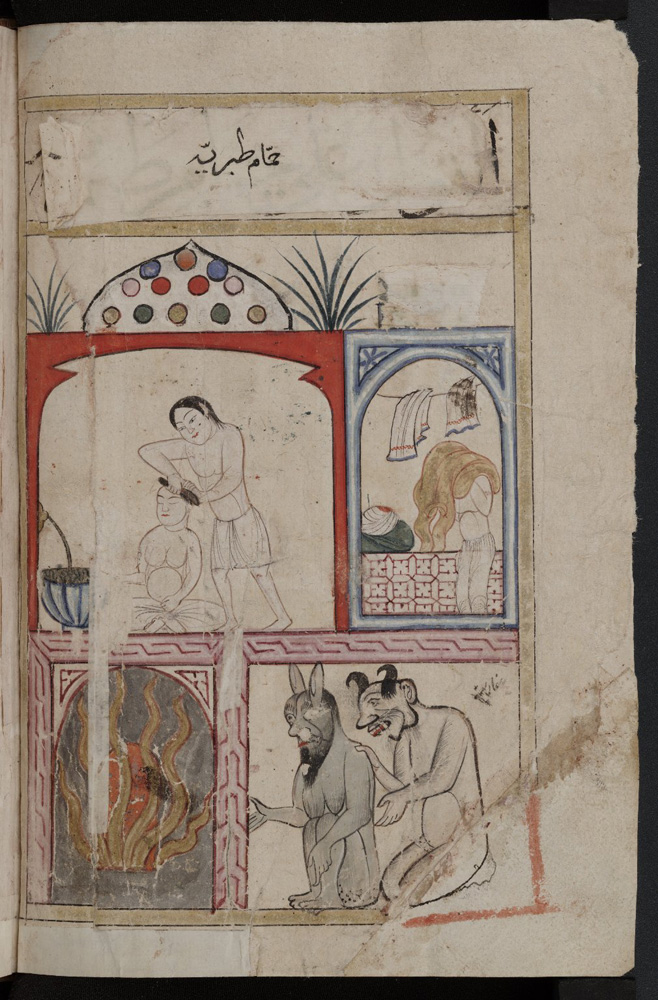 time management, a central issue in industrialization
Babbage: clock = regulator of time
industrial world-knowledge ==> importance of the division of the history of the earth into equal periods of time
![planet, cyber, robot species, transform, interface, partial digestion, moon, 3�*�'�1�G� (�.�*� [source: The Transformers The Movie 1986]](images/ajayeb/0182.jpg "--> e
planet, cyber, robot species, transform, interface, partial digestion, moon, 3�*�'�1�G� (�.�*�
[source: The Transformers The Movie 1986]") information drive (a drive *to save as little information as possible about something*)
information drive (a drive *to save as little information as possible about something*)
(Latour's) oligopticon: special places where the micro-structures of macro-phenomena are crafted, local activities become a “bigger” issue (such as parliaments, courtrooms, offices), where different strands of “macro-social” phenomena are weaved
-they see much too little, but what they see, they see it well (=/= total surveillance of panopticon)
![pidgin minimal unambiguous message telegraphic code dubious literacy [source: dailymaverick.co.za]](images/ajayeb/0179.jpg "--> e
pidgin minimal unambiguous message telegraphic code dubious literacy
[source: dailymaverick.co.za]") watch (from 1800 to 1820 at least 100000 clocks and watches were produced every year)
watch (from 1800 to 1820 at least 100000 clocks and watches were produced every year)
“clockwork ocean” with waves and cycles of salinity as “balance wheels”
(Bowker > Graham Burnett > Fontaine Maury)
![Babur ajayeb [source: Babur-namah, Mughol miniatures, c. 1520]](images/ajayeb/0018.jpg "--> e
Babur ajayeb
[source: Babur-namah, Mughol miniatures, c. 1520]") }==> imposing a **temporally mediated qualitative difference between the creator and created** (instantiated on the factory floor and in nature) --> creators stood outside regular space and time (=/= situated knowledges)
}==> imposing a **temporally mediated qualitative difference between the creator and created** (instantiated on the factory floor and in nature) --> creators stood outside regular space and time (=/= situated knowledges)
(19th century) scientific work = imposition of a representative framework of regular space and time on social and natural time
(science was and still is) making society confirm to the same spatiotemporal representational framework it was/is “discovering” in nature (---> go to the #scientification of christian genesis in Nolan's Noah film)
*imposition of a regular spatiotemporal representational framework* = (Bowker's) [*]convergence (a key aspect of synchronization): a cosmology (inspired by factory production) of nature and humanity--to make science, art and politics converge more and more towards the same goal, to introduce to them the notion of change, progress, succession, continuity, life, submit them to the same law (of constancy and uniformity)
•in astronomy: (1836) “the return of the comet of Halley at its predicted time has been remarked with intense curiosity and satisfaction by astronomers, and by the public. this has now become a regular and well ordered member of our system” (=/= ajayeb)
*representational framework of temporal regularity* ==> one can read backward into the past and forward into the future (--> # sequential palindromic time)
--> tale of the real archive : tale of stasis [==> “violent care”: preservation of current species and the imposition of stasis] : single law : (the fable of:) “perturbations and oscillations providing noise that true understanding would filter out”
![Eocene mammalian selves self minor celestial impact world now time species storytelling [source: Esther van Hulsen]](images/ajayeb/0052.jpg "--> e
Eocene mammalian selves self minor celestial impact world now time species storytelling
[source: Esther van Hulsen]") fable of industry:
fable of industry:
•how humanity had gone from being initially weak to currently king of nature : “industry = second nature”
•art submits to science
•industry recognizes science for its regulator
![time scale model [source: Nick Strobel]](images/ajayeb/0063.jpg "--> e
time scale model
[source: Nick Strobel]") chaotic spacelike, lacking direction and granularity
chaotic spacelike, lacking direction and granularity
working of childhood marked by staccato syncopation (=/= regular rhythms)
![fire rigs darkness black box fossil beyond list [source: Sina Seifee]](images/ajayeb/0029.jpg "--> e
fire rigs darkness black box fossil beyond list
[source: Sina Seifee]") machine regularizes “man”: processes synchronizing him to industrial time
machine regularizes “man”: processes synchronizing him to industrial time
mechanical uniformity became the “natural” state of affairs
Facebook within the spirit of industry --> “under the [spirit of industry's] influence, people will begin by grouping themselves more naturally [...] people will come closer together, mass according to their real analogies and according to their real interests [...] the same ideas will circulate in all countries [...] uniformity of costumes [...] the same needs, a similar civilization, will develope everywhere [...] without confusion or violence, relations both as complex and as easy, as peaceful and as profitable as may be” -Charles Dunoyer
![ajayeb form tiger animal snake [source: Cambridge Online University Library]](images/ajayeb/0024.jpg "--> e
ajayeb form tiger animal snake
[source: Cambridge Online University Library]") ufs (unidentified flying subject)
ufs (unidentified flying subject)
ufo
arguments about rates of change = about facts of change
![Eocene mammalian selves self minor celestial impact world now time species storytelling [source: Esther van Hulsen]](images/ajayeb/0061.jpg "--> e
Eocene mammalian selves self minor celestial impact world now time species storytelling
[source: Esther van Hulsen]") eternal, unchanging present
eternal, unchanging present
train traveler looking out the window
a Newtonian world of abstract qualities size, shape, quanity, motion
==> space out of the window of a moving train: a new kind of geographical representation, abstract and regular
![wonder child animal ocean assemblage species camera media photography spiderman leg strange [source: lolzhumor.com]](images/ajayeb/0156.jpg "--> e
wonder child animal ocean assemblage species camera media photography spiderman leg strange
[source: lolzhumor.com]") (a problem in management:) “time had conspired with capital to annihilate space
(a problem in management:) “time had conspired with capital to annihilate space
@Sana
[a ‘second nature’ being created] railway (+ telegraph) ==> commodification + communication
![optic visuality system Enlightenment measurement phenomenon [source: physics.kenyon.edu]](images/ajayeb/0006.jpg "--> e
optic visuality system Enlightenment measurement phenomenon
[source: physics.kenyon.edu]") in our trip to Rivage with Marialena we were in terested in signs in the built landscape, the “second nature” in the nature of Rivage, which were “concrete embodiments of the environmental partitioning that made farming possible”
in our trip to Rivage with Marialena we were in terested in signs in the built landscape, the “second nature” in the nature of Rivage, which were “concrete embodiments of the environmental partitioning that made farming possible”
a heterogeneous collection of lived spaces and histories
a heterogeneous collection of lives and spaces
![natural history museum Isfahan Esfehan wunderkammer visualization animal [source: commons.wikimedia]](images/ajayeb/0181.jpg "--> e
natural history museum Isfahan Esfehan wunderkammer visualization animal
[source: commons.wikimedia]") why translation must be a monopoly (according to railway):
why translation must be a monopoly (according to railway):
you need centralized bureaucracy and effective monopoly in order to operate with efficiency [...] you could not have every train running on its own (loca) time ==> (Bahn railway map =) a representation that permit efficient operation --> *an absolute time and annihilated space*
(industrialization -->) railway/railroads --> basic accounting techniques used by American business enterprise (into the 20th century)
==> infrastructural technology: organizational form (accounting techniques, reports, etc.) synchronized with its own impact on the world (regularizing it) providing both a ***material and metaphorical implusion*** (to order its forms of inquiry/activity)
![firefly condensed precision prisma poesis cartography refraction [source: wikimedia]](images/ajayeb/0160.jpg "--> e
firefly condensed precision prisma poesis cartography refraction
[source: wikimedia]") @apass monday reading
@apass monday reading
means of new infrastructural technobody ==> technoscientific representations ==> (dual process of) commodification (railway) + representation (abstract space-time)
--> “you need to be able to represent the world in a *coherent and standard* form [~ databases] in order to run railways [or program language operation] and deal in commodities
increasingly less well-defined boundaries --Serres--> we need analytic categories that allow us to account for the unified representational time and space applied to both bureaucratic and scientific work --(Sohn-Rethel)--> (relationship between) **commodity form and the process of intellectual abstraction** [-abstractness governs the whole orbit of commodity form]. when commodity is up for sale, it is by definition not to be used; it exists in a kind of “frozen time” outside the normal flow of time. it moves in an abstract spatiotemporal world (~= “second nature"[==> cognitive faculty of conceptual things] =/= concrete world of “first nature”)
*import* the ideal abstraction basic to greek philosophy and to modern science
![Teguise Guatiza image sym life poesis poiesis biomic Haraway [source: wikipedia]](images/ajayeb/0170.jpg "--> e
Teguise Guatiza image sym life poesis poiesis biomic Haraway
[source: wikipedia]") systematizers
systematizers
![lens beauty decoration science telescope embodiment aesthetics ornamentation divine rich care attention encode decryption value meaning mystery [source: Galileo Galilei Objective lens, Padua, late 1609 n a frame made of ebony and ivory - Istituto e Museo di Storia della Scienza, Florence / astronomy2009.org]](images/ajayeb/0125.jpg "--> e
lens beauty decoration science telescope embodiment aesthetics ornamentation divine rich care attention encode decryption value meaning mystery
[source: Galileo Galilei Objective lens, Padua, late 1609 n a frame made of ebony and ivory - Istituto e Museo di Storia della Scienza, Florence / astronomy2009.org]")
![constellation category [source: NASA; ESA; G. Illingworth, D. Magee, and P. Oesch]](images/ajayeb/0041.jpg "--> e
constellation category
[source: NASA; ESA; G. Illingworth, D. Magee, and P. Oesch]") nested series of regions
nested series of regions
synchronic extension --> “trace” back records in past: indian empire preceded edgyptian preceded persian preceded western. a second world, Europe, is contained within larger world (~= european union) --> (fable of the “step by step”:) man has step by step, broken with this natural asian world, and constructed, through industry and trial a world informated by liberty [--> my german orientation course, “that is why refugees are coming here"]
![image projection forest light table round multi-media performance security system representation hack child Linux interface predation [source: Jurassic Park movie 1993]](images/ajayeb/0113.jpg "--> e
image projection forest light table round multi-media performance security system representation hack child Linux interface predation
[source: Jurassic Park movie 1993]") fable: history as the tale of struggle (~ liberty against fatality)
fable: history as the tale of struggle (~ liberty against fatality)
(glorious) race into the future
![animal pig wolf dog nature ajayeb matter becoming articulation people [source: Harmen Jansz. Muller ca. 1540 - metmuseum.org]](images/ajayeb/0072.jpg "--> e
animal pig wolf dog nature ajayeb matter becoming articulation people
[source: Harmen Jansz. Muller ca. 1540 - metmuseum.org]") temps
temps
•time
•weather
(i have been working against:) “the irrelevance of the past for a purified real present (which Bowker underlines in Lyell's work)
![technology dictionary encyclopedia navigation rhetorics [source: Le Larousse pour tous: nouveau dictionnaire encyclopédique 1907]](images/ajayeb/0132.jpg "--> e
technology dictionary encyclopedia navigation rhetorics
[source: Le Larousse pour tous: nouveau dictionnaire encyclopédique 1907]") syllogism صغرى کبرى
syllogism صغرى کبرى
soghra kobra
senility kohulat
![cosmology world [source: https://fineartamerica.com/]](images/ajayeb/0049.jpg "--> l
cosmology world
[source: https://fineartamerica.com/]") **database
**database
(replacing syllogism) principle of the *division of labor* --> simultaneity of groups (of people) --> “the succession of acts of which a single act is composed, is the same thing as the succession of diverse works necessary to arrive at a result which is nevertheless single.” (this) succession ==> division of labor
“there is not context only text” --> when you get to Paris, upbringing and race are irrelevant to a person's actions. contemporary humanity would move completely outside the flow of narrative time
![ajayeb animal leopard [source: unkown]](images/ajayeb/0021.jpg "--> e
ajayeb animal leopard
[source: unkown]") 1830s geology
1830s geology
history: a science of singularity and secular change
earth: records of catastrophic events that affected the body terrestrial (much as political events affected the body politic)
(Lyell + Buchez + Michelet ==>) (reconfigured the world from) a *tapestry of tales*[~= ajayeb] --to--> random access memory/archive [RAM]****
isotropic spatiotemporal analysis
![Qazwini ajayeb fish mermaid [source: Princeton University Library]](images/ajayeb/0020.jpg "--> e
Qazwini ajayeb fish mermaid
[source: Princeton University Library]") glitterati
glitterati
glitter + literati
(framed people: made fashionable and beautiful)
Lyell's time:
1- time: passive container --> attempt to give a chronology to the history of the earth, to trace its origin or deny that there is any evidence that it has origin
2- time: process --> attempt to pick out certain types of changes that are invariably associated with the history of the earth at any age [--> RAM] and are thus in a sense a feature of time itself
![rigs diagram moon finger Sa'di yar fish nakhshab reflection [source: Sina Seifee]](images/ajayeb/0005.jpg "--> e
rigs diagram moon finger Sa'di yar fish nakhshab reflection
[source: Sina Seifee]") Bowker reading consistant patterning in Lyell's writing, finds that in his work in each disparate quotes that Bowker cites:
Bowker reading consistant patterning in Lyell's writing, finds that in his work in each disparate quotes that Bowker cites:
•the part: (is take as) varying, liable to be created or destroyed
•(=/=) the whole: immutable and eternal (just like Buchez's society)
}--> fable of ‘nature as a whole’
[==asserting==> that no hybrid had ever achieved a permanent niche on earth]**
that nature keeps a check on the whole process by organizing flora and fauna into “nations”
[==asserting==> nothing can survive long outside its nation]** (=/= cyborg)
“cycle” of years <--> a region
a climatic great year <--> earth over time
“revolutions” of the earth's surface <--> species change
![Delphinus surgeon monster marvel encyclopedia curiosity human animal nature figure fish [source: On Monsters and Marvels by Ambroise Paré 1510]](images/ajayeb/0133.jpg "--> e
Delphinus surgeon monster marvel encyclopedia curiosity human animal nature figure fish
[source: On Monsters and Marvels by Ambroise Paré 1510]") industrial revolution, reaching its peak as Lyell was writing
industrial revolution, reaching its peak as Lyell was writing
--> the stillness, the ***ineluctable equilibrium between creation and destruction*** (=/= other facts available to Lyell's contemporaries)
(fable, a powerful myth still stalking our collective discourse today:) that human time was going faster now than it ever had in the past --to--> give humanity a privileged position within the geological record
(a different time for geology)
![sky destiny logic influence inflow intra-action environment [source: tumblr]](images/ajayeb/0122.jpg "--> e
sky destiny logic influence inflow intra-action environment
[source: tumblr]") **[clockwork mechanism]
**[clockwork mechanism]
how geology in the 19th century shaped our contemporary ideas of database
-(earth is an archivist, but a bad one, it is up to the geologist to pull together information -->{ earth creates false records --> humands create false records through mudging the earth's annals with mules, hybrids, and monsters --✕--> geologist can read between the lines ==> true record of stasis)
the earth's archival technology + efficient use of information technology
astronomy was in the 19th century the science of regularity : all the apparent perturbations in the earth's orbit were reckoned to be embedded in cycles of varying duration --> universe = effectively clockwork mechanism
(for an archivist [~ Lyell]:) earth = special kind of clock, an *hourglass*
(astronomy + geology -->) (a contemplation of) the regular clockwork mechanism that seemed to govern both the heavens and the earth [+ Babbage: judged that human history was in its underlying tendency equally regular] ==> ***first and second nature converge onto a timeless present and an anisotropic flow of time***
*anisotropic: having a physical property which has a different value when measured in different directions. (wood is stronger along the grain than across it, or anisotropic filtering in computer graphic rendering at oblique viewing angles)
-varying in magnitude according to the direction of measurement. (electron scattering is anisotropic) ~-> palindromic time
*isotropic: having a physical property which has the same value when measured in different directions. not varying in magnitude according to the direction of measurement
(my project:) **picture of earth sciences**
(--> stories of macrocosm in Olearius)
picture of earth in 1830s:
earth itself as a kind of large information storage device not a very efficient one, but still remarkable -->> the inefficiencies of the storage device could be mitigated (as Beaumont and Lyell pointed out) by redundencies in the recording process -->> these redundencies could be perceived through efficient use of the new transport infrastructure (steamboat, train, etc.) -->> then geology would converge with astronomy in calling forth a historical time as regular and perfect as that of the clockwork solar system (hymned as an accurate clock)
}-->
“archival process ~= a natural technology” --> from natural to ideal: archive being mediated by technology marked by clockwork regularity
==> “earth = clock” (associated with the triumph of industrial society, because it ran like clockwork [---> go to german pünktlich punctuality]) --> industrial time writen into Lyell's geology: two methods of factory production *the division of labor* and the *parceling up of time into regular units* are both writen into time that Lyell created for the new discipline of geology
--> factory & geology were the precisely the same problem: *organization of time*
census
statistical record-keeping, a central technology for a modern state
statistical thinking
(this is Lyell in Bowker's research on memory practices in sciences:)
through a linguistic metaphor, Lyell endeavored to explain the apparent asymmetry between past and present. this metaphor brings out the peculiar centrality of humanity in Lyell's geology and thus the centrality of human society to his problematic
idea of the ‘book of nature’
(Lyell's logic) --> we humans have access only to a limited and random grammar of the ‘book of nature’ ==> *burden of proof* lies with those with thier set of *past causes* to explain the past
[!!]
Lyell's geology is a kind of bookkeeping device that allows the storage of vast amounts of information by sorting them into a kind of filing cabinet of different kinds of events (=/= ajayeb)
(his work revolving around an understanding of archives)
Lyell's “economy of nature”
principle of division of labor into the profession of geology + into the economy of nature }==> cumulative reports in a stateless present (=/= situated knowledges) ==> calculus of regularity out of apparent chaos and old time
true language of geology
(from a) groundwork --> contemplation of more general questions --> complicated results -->{ indefinite lapse of ages --> the existing causes of change
(?Marialena contributing to) earth's archive
scriptural authority (=/= rigor)
halcyon future
ایام خوب گذشته ayam-e khub-e gozashte/ayande
when the center of calculation is in place, there is no need to move
past --> knowledge developed catastrophically, and analysis were framed in terms of catastrophes
present --> knowledge develops uniformly and analysis are framed in terms of continual steady change
Buchez --> science would be the agent that converged both human and natural history onto isomorphic time*** [fantasy of Star Trek]
symmetry between the past of the geological discipline and of the earth
[title]
Freud's penis
inscription of records onto skin
the changes humanity has brought are (not of physical but of a) moral nature
strange tale! --> it is the bestial part of humanity fitting into the economy of nature, whereas civilized humanity operates in a different dimension to nature ==> creating the temporary appearance of an anomaly in “nature's book”
[title]
*the time of the good record keeper*
time of God
sybarites (an urbanite addicted to luxury and pleasures of the senses)
sycophants (=/= a public informer)
incalculable, irrational past seems to Lyell full of noise and cacophony irregularity
memory ensconced in books (~ filtered memory, rational memory, part of the archive with its very clear point of origin in printing) freed us from instict and brutality [---> go to TED talk ‘big history’ by David Christian, fable of printed record and progress of humanity tale]
(Bowker > Babbage:) until the invention of printing, “the mass of mankind were in many respects almost the creatures of instict” --> “flood of light over the darkened intellects of their thankless countrymen”
(the spirit of 19th century embodied in Babbage) making the ***act of making information*** such a key variable:
(print rational/archival memory ==>) new space and time ==> (need for) regular working of the machines of nature and the world : *regularization of time and the distribution of tasks* [--> a mythological operation]<== infrastructural work:
•developement of computing (+ machineries)
•division of labor
Buckland + Babbage ==> complete knowability of the Book of Nature
information and database theory (in genomics --> a core science of our time)
archive ==(is central to ‘thinking about’ & ‘writing down’ of)==> objects being studied
information explosion of the early 19th century + new ways of describing the past
“locality of each geologist will be the terrestrial globe” (--> locality of Olearius)
heroic age --> everyone constructed complete systems (that are thrown up and down in cataclysmic succession [!]) [--> question of artistic research]
...relics of the animate creation of former ages [--> science special effects, museum of continuity,]
[title]
indifinite space as filled with worlds...
colossi
earthquakes
floods
storms
tranquil variations
“second nature”:
•(from) past
•analytical constructs of extended present
[title]
***an irregular past and a totalizing memory***
(‘chaos’ characterized of/for archive ==> human nature)
moral duty as humans [!!**] --> to recognize stasis at the heart of disorder **** (--> an ancient fable, archetype) *apperceive[~ perceive in terms of a past experience, accumulative perception] synchrony in the midst of diachrony[~ look for historical changes/roots in languages]* + to sync ([*]synchronization: to bring social and natural time into a unified form <--through-- production and storage of records)
@Marialena
the metronomic story
the mnemonic story
***spatializing time***
(for humanity) going out in space, to India, to the Orient, or within France to Brittany or the Pyrennees, was going backward in time (~ mapping technique ==> position of “humanity” out there nowhere --> anomalous, moral, short term [--> “impact” of Star Trek crew(~ a cult of people who have unlocked the secret of life and the universe) on the worlds they visit])
==> faceless scientist working in a vast and effective machine (--> Haraway talks about the same)
new memory practices
•***lie at the heart of our ways of knowing (both ourselves and the world)***
•they skew our available ontological space
it seems our contemporary memory practice is highly prosaic [~ german?] (=/= baroque)
[***mythological dimensions of new memory practices:] (*there is a compelling connection between the information revolution as an economic fact and as a statement about the nature of universe:)
19th century rationalization + bureaucracy (==> dramatic new information-processing and communication technologies) ==> today's institutions = **to oppose entropy** @apass
DNA ~= global economy --> nature of existence & new technology synchronized
(--> a history of science as successive decentralization of human) ==> ***eschatological (base of) information revolution*** : every material structure or energy flow (@Ali's pot carrier) could be used/seen to carry information
--> (mediated in 19th century:)
nature of the universe --to--> nature of humanity --to--> organization of economy
information mythology [~ “information” can travel anywhere and be made up of anything ~ “everything is information"] = interface between the social and natural worlds
}==> ‘a general statement about the nature of information' = 'a general statement about the nature of the universe’
(Bowker:) the new memory modality was at root an economic process of ordering social and natural space and time so that “objective” information can circulate freely [==> democracy, science]
==> package the world + make it deterministic
--✕--> (we must) make information historical (again)*
...................................
Avital's work has concerned itself [...] with the fact that technology is irremissible. Mary Shelley projected this view of technology with her massive, monumental, commemorative work on the technobody, which was the nameless monster. The problem with (or opening for) technology is that no one is or can stay behind the wheel, finally, and no one is in charge. And the way she has tried to route and circuit the thinking of technology--indeed, in a posthumanist frame--exposes the extent to which it belongs to the domain of testing.
the contiguous neighborhoods of broken experience and rerouted memory
the myths of liveness
[my] problem with television[/news] is that it exists in trauma
-trauma undermines experience and yet acts as its tremendous retainer
*trauma: a memory that one cannot integrate into one's own experience, and as a catastrophic knowledge that one cannot communicate to others
the black-box of talking survival
Robocop: highly complex cyborg (who came equipped with memory traces, superego, id, and--ever displacing the ego--a crypt)
court's frame-by-frame analysis of video --> recording and human memory @Ali
...................................
which ‘well-defined terms,’ *qualities of persistence*, object repository, and identifier resolvers am i using in ajayeb.net?
the performance of digital objects (and identifiers) (not treated as a simple binary property)
*(to retrieve) human- and machine-readable information*
persistence of cited objects (in ajayeb.net)
[*]persistence: a prediction about an archive's commitment and capacity to provide some specific kind of long-term functionality
which objects in ajayeb.net are:
•strictly unchanging
•subject to correction
•subject to significant update
[Calvert naming strategy]--> an approach: to invent a term (a portmanteau word واژه مرکب از دو واژه) or choose an existing word that is unusual enough (rare, archaic) to make the reader hesitate to jump to a conclusion about its meaning *** [i used a farsi word in english: zolmat, pir, tarof,]
nothing is permanent --> we call some things/objects/identifiers naively nuanced “persistent” or “not persistant”
(important -->) ** of course, it is not a thing that resists change, it is the provider of a thing that resists or, more precisely, controls change **
“reproducible science needs citations” <-- what is my ajayeb relation to this?
(i am modifying some of Calvert's term:)
[*]identifier: an (always breakable) association
[*]actionable identifier: an identifier that can be acted upon by widely available interpretive systems --?--> [*]queryable: effectively leading to a story
[*]content: abstract substance ‘usually’ found in strings
[*]history: a list of (not always all the) versions, (a human-readable document that describes the change?)
(ajayeb.net must always help users) guage the persistence commitments and abilities of repositories and archives <-- element names, values, and precise semantics are in flux
*content variance* in ajayeb.net
(how did i or didn't perform/stage setting user expectations in my apass representations of ajayeb.net)
--> (question of) *objects that grow*, identifier assignment policy, content moves away (varies) from its original state
(any) content change ==triggers==> generation of new object identifier
finite, indefinite, lifetime, subinfinite
content in the presence of versions
(Calvert's defining “content” without using the term “meaning”:)
[*]content: abstract substance, found in such strings as writing, speech, images, and music, (=/= form, =/= style)
content that includes an actionalbe id string:
•extraversuioned, offering no direct actionalbe access
•introversioned, version is opaque, shyness?, good for longevity, bad for inferring provenance منشاء
found in the wild
found in ajayeb.net:
•constructed content reference
•scholarly web
•standardized query strings
•the question of landing page --with--> typed links navigable by software
how ajayeb.net performs analysis and prioritization of its own service definition?
how ajayeb.net translates its politics into metadata[~= machine-readable persistence statements]?
which “well-intentioned but untested” set of terms are used and addressed in ajayeb.not?
...................................
[(gendered, racialized, politicized, colonial,,,) narratives of innovation]
(i tended to this field with ajayeb [عجایب المخلوقات: a context of pedagogy and librarianship] -->) library and information science : technologically intensive profession (<-- also many other professions)
علوم بايگانی <--> علوم کتابداری
(my performance and literary interest:) *librarianship and teaching are both professions that resist commodification because they rely on embodied labor and personal interaction*
*people-centric work* (like library science and education)
quantitative =/= qualitative
measurable =/= descriptive
(objective concepts)
--> (Calvert reading) the ostensibly qualitative, measurable, and hence objective concepts of competition and competitiveness stand in contrast with qualitative, descriptive concepts of both “culture and collaboration”
to open up some of the ‘literature of’
(Calvert working on) the implicit notion that competition and innovation are a natural fit --> the “measure, controlm and automatic” rationality of US-style economic competition
difficult to commodify
difficult to describe
not taking apparent differences (between men and women, human and animal,,) to be timeless, necessary, or inevitable --> descriptive =/= prescriptive (descriptions not intended to be prescriptive) --> *to historicize and denaturalize concepts (of competition, innovation,,)*
Bowker + Leigh Star > Calvert: *things perceived as real are real in their consequences*
market competitiveness has a plethora[~ excess, افراط ,ازدياد] of measures --✕--> profit: the seller-centric proxy measure of consumer interest
“our idealized notion of competition as a generator of innovation black-boxes a host of processes for competition, including unfair practices, externalizing costs, marketing, deception, and deskilling.”
(our idealized notion of:){ competition ==> innovation }--black-boxes--> (a host of) processes for competition:
•unfair practices
•externalizing costs
•marketing
•deception
•deskilling
•
individualistic and social Darwinist overtones
[*]inovation: a form of wishful thinking that aims to bring about the desired transformations without the associated costs in time and human effort (Suchman & Bishop)
(‘labor-intensive artistic work’: noninovative creative work; deepen the density of curiosity;)
capitalism continuously applies new technology designed to fragment and deskill labor, so that labor becomes cheaper and subject to greater control (Wajcman)
(sometimes) obsolescence is created through minor redesigns of consumer commodities
“let's sell more” ~-> undesirable consequences for human rights, global trade in rare metals, and toxic waste disposal
[*]technological determinism and optimism: the belief that the present social arrangements and technologies were the inevitable byproducts of historical developement, and that any problems entailed in our technologies and their production processes can be eliminated with further technological innovations
competetiveness and the technological *savvy* implicit in innovation are themselves markers of contemporary masculinity --> “the enduring force of the identification between technology and manliness is not an inherent biological sex difference. it is instead the result of the historical and cultural construction of gender” (Wajcman)
a big part of the problem is that women's technological labor (=/= ghost busters) is culturally invisible --(Katie King in her research on writing technologies argues)--> (a metonymy:) when technologies are reduced to singular, stable, self-contained devices [~ Star Wars] =/= assemblages
[dichotomy of “enforcement =/= destruction” Star Wars either or: if you are not destroying it you are enforcing it]
![map cartography trajectory unknown figure diagram composition [source: Al Istakhri, Kitab al masalik wa l mamalik, Book of roads and kingdoms]](images/ajayeb/0162.jpg "--> e
map cartography trajectory unknown figure diagram composition
[source: Al Istakhri, Kitab al masalik wa l mamalik, Book of roads and kingdoms]") problems that cannot be conceptualized in terms of measures and endpoints, or which involve holistic, qualitative solutions, will be at a disadvantage for selection
problems that cannot be conceptualized in terms of measures and endpoints, or which involve holistic, qualitative solutions, will be at a disadvantage for selection
(Cowan shows) the developement of new household tachnologies did not free women from the domestic shpere. rather, it allowed women to enter the paid labor force while leaving the gendered division of labor in the home untouched.
(makes me throw up -->) large literature of self-determination theory (~ showing people are more creative and happy when their work allows them to be autonomous, related, and competent) + reward systems cultivating competitive environments
[*]autonomy: self-willing, volitional, being an agent in the action =/= being a “pawn”
spheres where processes and outcomes have been the name of the game (in feminized fields of education and librarianship)
labs (such as laser developement) that require collaboration with other labs
trading zones: a metaphor for understanding how cooperation between researchers enables new scientific paradigms --> Galison
*the development of this or that research looks like a continuous trajectory, but the trajectory was actually discontinuous and ruptured. that fact that we have invented or discovered something makes that developement seem inevitable, but things could always have turned out some other way* --> Cowan > Calvert
competition is not a guarantor of innovation, our cultural belief in it can obscure other explanations for innovation --> for example (Wylie showing:) (archaeology's enshrined belief that) male-centered hunting activities dominated prehistoric caloric intakes ==✕==> other hypotheses for the transition to agriculture --✕--> women's leading role in the development of agriculture--arguably the most significant innovation in human history--could finally be detected
[bids for status by denying the feminized and second class aspects of library work] --> ***the labor of care is at the core of library work*** --> *teaching, like technology, is always a relationship, and that relationship is undergrided by the labor of care* (--> affective labor is literally vital to the successful delivery of other kinds of services)***
the ways women are called on to manage their and other's feelings <--✕--> technology is positioned in out culture as rational and precise and therefore (masculine and) unemotional [--> look at the film Lucy]
successful education and mentorship depend on this skill, which, like household labor, is difficult to account for in “competitive” economic analysis
**articulation work**
the labor necessary to make technologies fit together seamlessly --> Leigh Star
(my work begins in) information systems may leave gaps in work processes that require real-time adjustments, or ‘articulation work,’ to complete the processes
(my research: through ajayeb i have been busy with learning to “make friends” with both technologies and theories)
every system is an assemblage --> Calvert applying Haraway's insight and think of technologies as significant prostheses ==> [*]librarianship: a work that (primarily) hooks up people with their technologies
librarians articulate technologies --> they help people adapt technologies
librarian's articulation work is both technological and affective =/= competitive
(in techno-capital) supressing labor costs ==> deskilling
deskilling and de-professionalization under the intertwined guises of competitiveness and innovation
an example of deskilling:
-Haraway: “to be feminized means to be made extremely vulnerable; able to be disassembled, reassembled, exploited as a reserve labor force, seen less as workers than as servers; subjected to time arrangements on and off the paid job that make a mockery of a limited work day; leading to an existence that always borders on being obscene, out of place, and reducible to sex. deskilling is an old strategy newly applicable to formerly privileged workers.”
education has been difficult to comodify, and remains labor intensive =/= innovations in online education ==> creating inroads in the deskilling and commodification of teaching labor:
•course curriculum --> course content
•teaching --> delivery
*video technologies + internet ==> face-to-face interpersonal relating to be captured and reused --> new depths of commodification
*internet technologies can be used to provide rigorous, asynchronous learning and mentorship, or they can be used to decrease labor costs, but they cannot do much of both simultaneously(? --> question @apass)
Calvert: [...however,] for competition--[or any good/bad object we are working on] to be a useful strategy, it has to happen in a larger context of cooperation and collaboration
(for example the notion of “future” has to happen in a larger context in which different futurities for diverse communities is thinkable)
method <=={
+ sensitivity to the historical moment (multiculturalism, extreme changes in the meaning of ‘global,’ etc.)
+ an assemblage of tools that are ready to hand (theoretically driven, are pleasant and effective to use, etc.)
+ embody an ethical commitment to -->
◦emic: the values and meanings of those who are being studied
◦etic: within a way to explore the conventions, standards and infrastructures that both constrain and enable their experiences
Leigh Star
•qualitative methods
•lateral thinking
•poetics of infrastructure
•[*]boundary objects: examines assemblages of humans and things, and how things that exist in more than one community of practice are used in performing cooperative work
the role of practical knowledge in organizational life
sensitivity of an ethnomethodological orientation
(apass's) intellectual capital (is not centered in their official document repositories and databases, rather is in the largely undocumented ideas, insights, and know-how of its members: Lilia, Pierre, Nicolas, Joke, Steven, Michele,)
exigencies of work
****much of knowledge often remains embodied in the practice
commonly shared through conversations and stories among small circles of colleagues and work groups --> local vernacular --convert--> other forms ==> other members of the organization can understand & *act upon* together
Sina --> richer comprehension of socially organised work practice into the process of engineering technological systems
Calvert --> her work is about the enduring qualities of the book and how its resistance to commodification enables this thing we call a public library.
she is interested in developing library-appropriate research methods for thinking critically about old and new technologies
-we naturalize the way technological infrastructures make ethical decisions for us =/= producing methods/ethic that allows librarians to mandate characteristics in developing technologies which both preserve librarians’ prerogatives to make (necessary visible) ethical judgment calls <-- Calvert
جعبه--"containers” continue to dictate the name of the game (for the immensely diverse patronage of the public library)
...................................
bilingualism
different languages (farsi and arabic in ajayeb) refers to different value systems and to different lived experience
...................................
[Ahmed]
(complaint ~=) diversity-work = data-collection
we learn about the damage we cause, of how causes are understood as damage
...................................
my old background (in computer sciences):
•www.joelonsoftware.com (Joel Spolsky runs a company which sells bug databases, “FogBugz”)
•wiki.c2.com
•“Structure and Interpretation of Computer Programs”
computational process
abstract beings (processes*) manipulate other abstract things (data*)
--> a pattern of rules (program*)
programming: *metalinguistic abstraction* [--> engineering design] : building a mini-language to express a problem, using a fixed computer programming language (on a given hardware) to construct a new language that enables describing (and hence to think) the problem --> using:
•primitives means of combination
•primitives means of abstraction
--> representation of data and control (<~~ individual bits of storage and primitive machine instructions)
+ using the given hardware to erect systems/utilities for the efficient implementation of resource-limited computations
distinction between “passive” data and “active” processes =/= Lisp
(procedures and data are just abstractions, they are not really distinct) --> programming language should have methods for combining and abstracting procedures and data
means of abstraction: by which compound elements can be named and manipulated as units
modularity --> localized part of the system
<== perception of the system
•objective: viewing a large system as a collection of distinct objects --> concerned with how a computational object can change and yet maintain its identity
•streamous: information that flow in the system --> delayed evaluation
(for example) a bank account: has state in that the answer to the question “Can I withdraw $100?” depends upon the history of deposit and withdrawal transactions
object decomposed into computational objects (each with their own time-varying local state variables) --> model
object programming: model real-world objects with local state by computational objects with local variables --> identify time variation in the real world with time variation in the computer --> implement the time variation of the states of the model objects in the computer with assignments to the local variables of the model objects
--✕--> (how?) model a time function
stream: delayed (infinite) list
stream programming:
•different abstractions such as: map, filter, accumulate,
•transformations of lists
•sequence manipulations without incurring the costs of manipulating sequences as lists
•tadriji incremental computation
random: statistical properties of uniform distribution
object-orientation: polymorphic abstract data types =/= relational data model
Building Abstractions with Data
how to use:
•primitive data (numbers)
•primitive operations (arithmetic operations)
building abstractions by combining data objects to form compound data <==> *to increase the modularity* of (our) designs ==> to increase/enhance the expressive power of our language
data abstraction:
*technique of isolating* (the parts of a program that deal with) how data objects are ‘represented’ from (the parts of a program that deal with) how data objects are ‘used’
versioning
garbage collection
...................................
the question of “what [✕] can learn from [Y]?”
Calvert on Mestiza consciousness
library and information scientists
consciousness of the borderlands [~ in between categories, creative/annihilating forces a person living borderlands must struggle against]
***contradictory impulse for *hording* & *sharing*
categorizing, naming, describing --> power-laden practices we cannot do without
each *schema* reveals its priorities, legitimizes/delegitimizes, renders visible/invisible the knowledge it contains/excludes
(Foucault:) library: (places that preserve) discourses that one wishes to remember and keep in circulation [--✕--> Anand's jinn temporality and genealogy of human memory]
mestiza --> hybrid way of knowing/acting/living, as “none of the above”
what is hybrid and impure may be monstrous (in the epistemologies of power) and may experience *hightened visibility* (~= scrutiny, study, problematization, pity)
“orphans of infrastructure” (Leigh Star)
locked in a duel with the oppressor
lived experiences of marked classes
(in each duality pair, one is called “the consitutive outside” [subject/object, male/female, etc.]) --?--> switching polarity ==> valorizing feminine over masculine, black over white, nurture over nature, emotion over reason
crossing of cultures
*which collectivity does the daughter of the darkskinned mother listen to?*
(while i was in apass i had a shift of attention to) the *labor of knowledge work* (in collective digital flesh life)
media ~= knwoledge form
in media arts studies i learn to ask which cruicual material limitations have been radically eased in a digital era --> impulse to hoard/share + constant tension with the epistemological work of categorization and classification (--> database) + (ongoing) feminization of the field
the library and information science knowledge --> intense expertise required to enact it =/=!? art expertise (a category of works that are expertise-free)
(gift of Marx, Foucault, Lorde, Haraway, Leigh Star in) *understanding subjugated epistemologies*
(Lorde) master's tool dismantle the master's house? = can the technologies and epistemologies that have been used to organize thinking about the world in one way succesfully uproot that way?
“recovering multivocality”
رسوب
*enact residuality
*residual (of transformations [--> sometimes wiping away previous techniques for dividing and describing, and substituting another set of categories that don't easily map to the first ==> eliminating the residuum of the old order --> case of ajayeb? --> can we make overlaps and hybridities of old/new categories? ~ *residual categories*: affective-epistemic content that often go unclassified. Calvert: *affect* is too thin, too subjective to calcify into a category. it abundantly uses its categories in a way that offers a kaleidoscopic shuffling and reshuffling of the items***)])
*residuum
categories overlapping, non-hierarchical (“animal” + “livestock”, etc.)
truthiness
melting pot
actions (filled with verbs)
nouns (both living and nonliving entities)
*score of recognizable historical era*
using:
•filmic techniques (animation, montage, time lapse)
•affective techniques (sarcasm, intimacy)
how can we address aspects of apass's exceptionalism?
(with its things: characters, colors, doings, values)
*historical/cultural specificities of apass*
enlightenment inheritances:
•quest for universality
•
apparent seamlessness and universality with the veneer روکش of helpfulness ==> purity, deny multivocality, hide the residuum produced, and exclude hybridity
--> (pulling the carpet of familiarity out from under users:)
to replace ‘familiar generic conventions’ (~ universal) --replace-with--> a “universal of local application” (~= residuum)
(we rely on) [*]words: value-laden components of language that also serve as categories and moor لنگر us in the symbolic, to effect the transformations of the collections
labels ~-/==> power and oppression epistemologies <== *organizing logics* (that remain invisible when when we change the words or subsitute new sets of categories)--> that is why i am reluctant with only changing the metadata @Pierre: using metadata to manipulate the organizing apparatus ==> versions of residuality (?)
...................................
[working on apass milieu data model, summer2018]
c.r.i. (“collective research interface”)
--?--> a pathological collage
discrete object (of problem [who, when, how,]) interface
--> refering to something outside c.r.i. (outside the digital model)
face (slider) --> object monster
(?what is lost at) linking the symbolic space of data-model to the qualities of the researches of participants [which are relational, procedural, and emotional]
s.s.s. (scroller, slider, still-life)
discourse =/= valorizing information
Pierre's fables:
•“nonviolent way”
•“not by chance ...”
*Apologue*
research --> data flow
sieve --> nodes in/of residual
internal categories:
•stickiness
•zoom
•cheat
•persistence
•repetition
•(vulgar)
•
}==> topology:
1. ramp
2. nest
3. skew
ramp: sequential, one dimensional, ‘sliders’
nest: fractal quality, JSON, hierarchical tree, ‘comments’
skew: verb act, streching, ‘2D field picker’
(slider: marking everything)
semantic in flux + persistence
object repository + identifiers
feedback --> quasi object --> structured knower --> data
#workshop in apass 2018 Summer
...a series of data models that was produced during a three days work session in a.pass May 2018.
The aim was to create a “filter" for the artistic research projects of each participants, in order to train in making meta-linguistic abstractions (on a given computer hardware) to construct a “thing” that enables describing the problem of Building Abstractions with Data, to increase/enhance the expressive/descriptive power of the languages we use. It addresses the question of machine/human readability in the digital imperative of computational world we are inhabiting, with the particular case of a.pass artistic research environments for advanced performance studies.
•interested in computational literacy (including data-collection, librarianship) as part of our *diversity-work* and our *articulation-work*
•interested in different languages (english, computer, non-sign languages, etc.) refers to different value systems and to different lived experience
•interested in the *labor of knowledge-work* (in collective digital flesh life)
•interested in shifts in topology (the ongoing reworking of bodily boundaries of each of our research practices)
•
TERMINOLOGY:
*articulation-work: the labor necessary to make technologies fit together seamlessly
*diversity-work: a kind of work in which we learn about the damage we cause, and of how “causes” are understood as “damage”
*librarianship: a work that hooks up people with their technologies
*data abstraction: a *technique of isolating* (the parts of your mini-language that deal with) how data/info objects are ‘represented’ from (the parts of your mini-language that deal with) how data/info objects are ‘used’ (---> i addressed this in my fable workshop in a totally different epistemology)
*model: your object decomposed into *computational compound objects* (each with their own time-varying local state variables)
(representation of data and control over data:)
*modular: localized part of the system that are produced by the perception of the system
*objective: viewing a large system as a collection of distinct objects. concerned with how a computational object can change and yet maintain its identity
*streamous: information that flow in the system. its evaluation is delayed. infinite list
*metadata: machine-readable persistence statements
*digital interface: discrete object of your “research problem” that refers to something outside the cri (outside the digital model)
*topology: a (proposed) body-plan to investigate questions of *connectivity* and *boundaries*, in order to find out what remains invariant as a result of transformation. this will direct us to propose (well-intended but not tested) *transversal objects*.
to be able to propose: in the culture of each pad+participant+research what connects and joins, what delinks and disconnects.
PRACTICAL:
we want to find out how cri's “filter” translates its politics into metadata
and
what happens in linking the symbolic space of data-model to the (relational, procedural, emotional) qualities of the researches of participants
we will work on the block's opening week feedbacks and process them in this diagram:
feedback --> quasi object --> structured knower --> data
(or technically:)
semantic in flux --> persistence statements --> object repository --> identifiers
(Tuesday, Wednesday, and Thursday are spent on the creation of “quasi objects”)
i propose some (well-intended but not tested) internal categories:
•stickiness
•zoom
•cheat
•persistence
•repetition
•vulgar
(i will describe them later)
and these categories produce three topologies:
1. ramp
2. nest
3. skew
(this is a maneuver to replace the question of ‘strategy’ to ‘topology’, the first act of making quasi-objects)
ramp: sequential, one dimensional, ‘sliders’
nest: fractal, serializable, arborescent, ‘comments’
skew: verb-active, streching, ‘2D field color picker pointer’
each is “queryable” in different ways and propose different difficulties
each of them addapted from an existing technologies (range sliders, commenting, color pickers)
each embeds one of: colors, doings, values
slider: marking everything with decimals
comments: hypertextualizing
field picker: spreading
}--> they are all milieu-makers
ramp --> arc of necessity
nest --> mosaic divisions
skew --> chromatic/luminous effect (of mixture)
and also:
•to address (in a longer term) how apass performs analysis and prioritization of its own service definition?
•to address (in a longer term) historical/cultural specificities of apass
•to address aspects of apass's exceptionalism (its characters, colors, doings, values)
REPORT:
Geert
zoom / biger picture
perform a zoom
Geert and Michael knowledge zoom-level
Geert's strech-work
which cheats
vulgar: direct, =/= suffisticated, =/= nice(in a classical sense), =/= institutional code [--> a cheat], everyday, good taste, context?!!
suggested topology: skew --changed--> nest (tow branches answering yes and no to: “is he cheating?”)
Leo
stickiness ~ residual (left overs of impression), we couldn't find little objects, litte stickies
zoom is tooooo wide, megacategories, “fermentation” is a different zoom level
cheat --> perception/intention, value of non-doing ?, ‘order is cheat’, ritual ==> heal/cope
vulgar: ritual of popular knowledge, =/= social acceptence, communicating emotional needs, guilt on behalf of the vulgars,
suggested topology: skew (with 4 axioms: negativity, positivity, passivity, ritual)
Caterina
sticky: difiicult to remove categories, dirty, quality of trape, almost negative, like honey as an intermediary sticky for other objects to become sticky
zoom: Latina candition macro, ass rincles micro, herself, change of lens is what matters not the zoom level, the macro of the term culture itself
cheat: against the rule of community/aggreement, always cheating the system, against the game, bad relation to the game, lazy relation, faking?
vulgar: ordinary, insultive, perjurative, of the “people”, (Geert:) a marking always coming from above, what television does: non-actual + spectacle, (Elen:) immoral, not original, not elegant, thinking in terms of the ‘same’, group forming, non-individual, twards mass formation,
suggested topology: nest
Eszter
polarized lense
confusion / being confused is ‘cheating’
stickiness absent
suggested topology: nest (with two branches: naive & political leader)
Goda
nothing sticks anymore therefor we go to swamp to stick to relevant objects
swamp as archive (refuge from the capitalist) =/=? cheat
constructing ‘bad example’ (?) --> role model
zooming in losers of capitalism
X-ray kind of lens into the opacity of swamp
(her) treasures in the swamp [--> epistemological buried objects]
criticizing how capitalism zooms for her irrelevant objects
buffoon --> vulgar
suggested topology: skew (the skew is a plain around the edges, gets deeper in the middle, and a narrow way up in the center: the exit)
Elen
presence of the working of subconscious ==provokes==> etymology
very sticki “hell yea!"s
affirmative, sometimes technical knowledge
something sold (“self”) with something morphic on it (“apparition” or ‘surat’ in farsi)
suggested topology: ramp
Hoda
cheat: sharp radical formation, playing ambiguity
totalizing vision lense (“if then all...”)
“because i asked i could feel”
anti-psychological
suggested topology: ramp
Katinka
makeover slider
vulgar: makeover show, e-bay
statements not touching her, something else is sticki object: sympathy?
slider: stack
suggested topology: ramp (makeover)
Nassia
stick: something bodily, heat, sweat, property of objects
zoom is the opposit of body
gaze inside + anatomy
cheating: on people negative / on systems positive
suggested topology: ramp
Laura
osmotic = french kiss
administered (by machine) body
the good example
beauty is invested in...
the (unchanging) core of the cuttle-fish
popular = vulgar
suggested topology: skew (regimented floor plan)
Maurice
cheat --> joker, fool
cute: getting off the leash of institution
bear blurs what...
“but I am just...”
bribe economy --> honest and human
suggested topology: nest
...................................
[title]
archives of open desire
...................................
#drawing exercises in built environment (with Sizek + Mathews https://culanth.org/fieldsights/1542-methods-for-many-anthropocenes-with-andrew-s-mathews)
1. pick a charismatic building/statue/object on your built environment, and draw a form of it, inviting to identify details of the object that reveal aspects of its history or use today
2. compare drawings and use the drawings to tell stories about the object and its use or importance to life in that environment
3. invite to reflect on the ways that drawing infrastructure can reveal processes at multiple temporal and spatial scales
discussion questions/writing response questions:
•Which features of the structure stood out, and what do these suggest about the processes of its creation and use?
•How has its infrastructure changed over time, and how are these changes evidenced in the built form itself?
•How does your structure relate to others in its immediate vicinity, and in what ways do relationships between structures help reveal social relations?
•What traces of past events are embedded in infrastructure or its memories, and how can we render these traces present?
drawings has to do with the incompleteness of knowing and representing
indeterminacy at ‘the same time’
(?in which locations you can get a good) human response to:
•slow processes (soil, geology, plant form)
•fast processes (plant seasonal behavior, weather, human responses to all of these things)
*drawing as structured wondering/wandering*
use of the *dramatic* as method --> to entertain multiple worldviews
to maintain irreducible complexity and to recenter historical processes as central to understanding contemporary politics
(history and drama)
-facts as enacted and performed before audiences (--> tradition in science and technology)
**knowledge is always performed, staged, and enacted** <== my work on ajayeb
how to tell the dramatic stories
...................................
notes from Sofia's seminar on documentation
the questions i brought home with Kobe:
the ontological relationships between law and art, who protects who? what protects protection? --> which material discursive practices make the ontological boundaries of “protection”? (specially today investigating this term is more urgent in a world saturated with toxic vocabularies of security.) the figure of protection transforms the subjects of knowledge and knowability --> look at how the judge was talking about art
(question of) the production of subjectivity (of the judge himself as an active knowing agent and the dead-master as the phantasmatic place-holder of meaning)
this is related to: (question of) responsibility and individuality --> influences and efforts of the work. two interesting moments of genesis occurred:
1- in the court “his work” (Beuys) was mysteriously created
2- also when Olga got a phone call from the ministry of culture, “her work” was mysteriously created
--> both the court and the phone call are mystic producers of the subjectivity of the artist dead or alive [#this needs more investigation]
(question of) the production of significance and difference
look at the speech-acts of the judge in the case of Beuys. which nuances of difference are generated, estated, established, and propagated? we can study every syllable of the judge's speech-act. the judge goes from one fable to another: fables of significance, fables of influence, fables of impression, etc.
boundary-making practices in our shared struggling world
the idea that art “starts” and “stops” somewhere
zeroing the artworks ecosystem
when is the moment (or how the moment can be marked) that the judge becomes able to say “OK, I don't know.” or “I am opinionated about this art. Let's bring an expert.”
and beyond that, I am wondering, like that judge, when myself standing in front of an artwork (or any work) how i am able to say “I have an opinion, or, I don't know”, “i need expertise in order to look at this”?
questions of: essence (in art), subjectivity production, protection,
with Vincent
(?what was the) notion of “everything is kept here” in his work
(?why and how) his storytelling was all about design --> his stories of responsibility and factuality
how and why in our artistic practices, production of responsibility and factuality is hold in the terms and services of design and designer that is busy with building enhanced and efficient communication networks historically rooted in the geometries of modernist project?
(?what is the artist's) busy-ness with design --> related to the fathers of correction (?) and proper address
who (and why) wants to look at which past with lenses and geometries of the violent grids of the forefathers of modernist design?
--> ontology of document: an artifact with a specific layout and design
design has to do with the proper address (?) which is (always) about the proper witness (?)
(in the case of Vincent) do you agree with the amerindian know-how that “a good designer is a dead designer”?
(?what was the) proper affect of history (that his work was creating)
through the aesthetic of old and antique video projectors his colonialism belonged properly to the past --> (question of) the production of the proper witness
the architecture and flag of BOZAR plus his notion of design, are they interesting and necessary ways of forming kinship and properly distanced history?
Vincent “knew” his distance to the past (--> do you smell a problem?)
in which clock he is looking at time? which time machine he is handed to or placed in? who/what is making his time model?
also, which segment of your practice is temporalized? this means also which part of your practice stands out of time?
with Olga
regards of the question “what are an artwork's boundaries?” and it's intersections with documents, lists, and reports
for Olga:
document = evidence
research = mourning
(mourning as the passionate and demonstrative activity of expressing the state of loss or deprivation of a certain object for a certain subject, and demand for its revival or memorialization)
what is the feeling of the document?
*document is a story that (usually) silences other stories*
where our powers to provoke care (could/should) come from (if not from document/evidence)?
is document (in its form and feeling) the best way we have at our disposal to provoke the care of the generations? ...to mark each other with the mark of the care?
putting the narrative into proper sleep
casting the names
-artist has turned herself into a mnemonic device --> suggesting “amnesia” as her context
-artist has become a reminder and (therefore) her audiences have become memorizers
(question of) memory and remembering --> the idea of ‘literal remembrance’ in her performance, re-membering, literally bringing back the “members” of the Kurt Jooss company into the present of her audiences
-the problem with her remembrance is that “there is something that is important to remember” regardless of the person/subject who remembers
indisputability of the Green Table for Olga
the artist has chosen to protect The Green Table's meaning and message (due to her political and ethical commitments [for world peace?]) in a sense her subject of research remains unresearched, her values unevaluated, her moral settlements settled
how can she become interested in decomposing her research-bodies of The Green Table?
can we remain critically ethically responsible in thinking about the “meaning and message” of our subject of study and still be able to decompose it in interesting serious ways? (yes yes)
questions of: thinking, reminding, remaining,
Sofia's documentation
she asks “what is document today?”
-what was document yesterday (that is not anymore today)?
-how the agency and meaning of docu is (or is not) mutating in time?*
-what is beyond the question of documentation and preservation? --> *durational aesthetics*
-is document a limited way of asking questions about what we do and our relationship with time and duration? [you never know what the present brings into the future.]
what art cannot say that document can? “truth”?
when truth was invented where was document standing?
is document today a mere effect of technologies of inscribing?
why we are not talking about “file”?
(---> go to the ontology of evidence and files in X-Files TV series)
is ‘file’ the bedrock of reading today?
document assumes, constructs and promises its own labor of reading
? document is that which reads as referent, truthful, evident, economic value, , ,
Femke, with multiple understanders of the blended, blending world
the question of the metaphors of the body
manuality
manual understanders
for her “the point of origin” is at stake? --> the “ground” is at once desired and disarticulated for the sake of an idea of situatedness --> politics of positioning
placement, world, Dasein, fall
in CG bodies are articulated in differential vectors, not “grounds” --> does she want to ground the body?
she was mobilizing the metaphors of: body, ground, falling
how is she falling? in which historically contingent practices of grounding is she grounded, building her discourse?
ontology of the variable --> (question of the) figure of variation
her work with the partners of crime, getting in the front line and frontiers of CG working and practical metaphors
...................................
Sofia's textual machine, switching between binary values of faire contract --> staying with the polar syntax of ‘you’ and ‘them’
-how the rotating axis of her machine is able of creating breaks in the syntax of the contract?
-(for her machine: “understanding = an act of application”) --> how new forms of *understanding* could change the ways we might achieve fair societies? and not merely changing the order of sentence to visualize and objectification of unfairness and precariousness of the employment economy, in the exegesis of the writen contract. what would it mean to install an understander (taking a risk), for Sofia, and not a reversal syntaxer (making aware)?
-employer and the employee as different “species” with their different “natural” tendencies to fuck with one another? --> zero-sum game
-the question of symbiotic relatedness (--> psychoanalysis) =/=? contractual relatedness
...................................
to emphasis on the contingent and the contextual
the process of becoming researcher (of science and technology studies : inquiry into the politics and practices of knowledge-making)
vignette (sketch, a brief literary description, narrate scenes from familiar activities)
the question is not ‘how can we care more?’ (as predetermined set of affective practices) rather: **what happens to our work when we pay attention to moments where the question of ‘how to care?’ is insistent but not easily answerable** (‘care’ as an analytic or provocation)
-Kenney
...................................
Manoto TV station program “sher yadet nare” شعر یادت نره respond to the questions of translation (from the UK produced program “Don't Forget the Lyrics” into an Iranian contemporary popular media culture) and memory practices (archival memory act performance pop quiz show mixed with consumer culture TV broadcasting)
...................................
*cognitive companions* (--> coordinating multiple agencies characteristically)
-tiny clay token sheep were enclosed in clay envelopes with markings indicating what was inside (*molding and inscribing clay* was the favored sensory technology for making in Mesopotamia 5000 years ago)
•maybe your makings involves “true writing” that companions preferentially with language
•maybe your makings involves spinning plant and animal fiber and feeling, tying, and untying knots
•processual affirmative re-writings
•systeming meditations
•context-sensitive pushback
•operational closure (of a system)
•fluctuation, entrainment, blocked synchrony
•
[Katie King use of a term, how she shifts it from mechanism to affect:] [*]stigmergy: feeling of being in among and as the self-organizing bits that are system-ing (=/= a method of communication in emergent systems, mechanically defined as “indirect coordination” self-organizing termites and ants or flash mobs or political action)
@apass: how do you provide different *undisciplined ways of envisioning* new kinds of environments, artifacts and practices? (entangle design, science, fact and fiction, boundary objects, system-ing, [*]design: ***making things that tell stories*** [=/= telling stories])
(my encounters with) ajayeb's vibrating particularism
[*]website, talksite: play, trial and error, permutation and mistakes (none of it innocent or exemplary @ERG's website) ==> *cognitive reassembly*
-->{relations between developers and users to create and work out a technical interface ==> communicative tangle}
transmedia story (with its origins commercial and suspect, often entangled with social critique and social panic ~= conditions of making knowledge today; we knowingly or without reflection, gather and pin together such stories across media...)
-you can't take *citation pools* for granted
-how we will take what each other says
companion gatherings (do not exactly cohere or consort well) ==sometimes==> violation of standardization (that some believe is more equal)
(companions need to) [*]learn: emergently sensitize and attune among new cognitive and political circumstances (in and as their very moments of unknowing, when ethical and moral sortings are properly in flux)
(with) Bateson's negative sensitivities to systems, and with Katies King, I keep discovering just how literal is our many being-ness in multiply embedded sorts of biomic sympoiesis
{[*]lecture: feeling-in-the-mouth system, (the word-as-world inhabited by) alternate and overlapping peoples, memories, attunements, citation pools, histories, communities of practice, knowledges, ocean and freshwater “edges"}
{?can i propose (Katie King and Sandoval's) “oppositional consciousness” instead of (Mouffe's) “agonistic pluralism"}
responses, abilities, infrastructures, distributed embodiments,
[*]traumas: intensities crowded with affiliations, loyalties, essential truths
(Bateson > Leigh Star > Katie King) *transcontextual* (transcontextual circumstances: moving from one context to another, one world to another, one set of knowledges to another) ==> [*]boundary objects: workaround things, concepts, processes, even routines that permit coordination, sometimes collaboration, without consensus (non-conscious and conscious)--local, supralocaling, and global in material topologies in which spacetimenatureculture may be mixed, developmental yet transtemporal, (they don't create boundaries) *they work to keep boundaries from getting in the way of collaboration* [~=? sleep-walking: ignore or even miss that there are boundaries about, or honor boundaries = differences that should be honored without being stuck there]
---[can i suggest ‘enfolding’ instead of ‘sympoiesis’ for artists?]
****ajayeb: my transcontextual habitat**** [--(Katie King)--> sites where people, objects, animals, ecological processes, academic restructurings, and scales of injustice unfold, enfold]
‘to feel family and parent memories as our own’ --> a skill that intertwines historical and personal biography (sometimes trauma) as a feature of *memory encoding*
[*]autopoiesis: a notion, a theory of cellular organization, that makes a fold in history --> reformulating an orientation into an ‘experimental epistemology’
*memoir animated word-worlds worm-holed* (~= my lecture-performances, Katie King's talksites --> speculations gathering with stigmergy, recursive paradox, and a sympoiesis of boundary objects)
#my project: redesigning ajayeb's “writings” among dispersed, diffracted, and emergent methods of attention
-to redesign “aboutness” (as nonrepresentational : recursive relational agency of/about reciprocities in worldly processes)
-to redesign fiction of writing (khipu)
-to redesign @apass archive --> records of how things have happened, with whom, when, with what informational needs (instead of abstractions layered up), sometimes as agencies, sometimes as (in Sandoval's terms) oppositional and differential consciousness, (boundary objects) storing and performing our details and affects and memories
punitive parsimonies of explanation:
•over-simplications of complex systems
•pressures for social critique
•to travel as social panic
•retreat to political loyalties (<== confusion overwhelm cognitive schema)
•retreat to political belonging in search of trust
•
(more boundary objects:) many sorting apparatus reframings at varying grains of detail each savoring textures of disciplinary and other precisions amid noncoherent and materializing logics
(constitutive, agential) **cuts are connections**
-to minimize damage and maximize flourishing
differential details --in--> “us” --in--> Bateson's living patterns --in--> starfish's invertebrate radial symmetry --in--> redwood cloning timelines --in--> recursive epigenesis --in--> mechanism and structure in a segmenting egg --in--> human affiliations of power and state and love...
[*]differential consciousness: systems justice sensitive to multiple contexts, *politics of attachment*
@apass's environment (mix of communities of justice and of practice):
belief and disbelief, memberships and belongings, triggered and assembled
****to commit to a well-defined structure of identity for one hour, day, week, month, year**** (=/= Manning)
+ transform that identity according to the requisites of another oppositional ideological tactic (if reading of power's formation require it --> that's how i became more iranian in Europe)
•differential: instantaneous change of one quantity relative to another, a quality that differentiates between similar things (==> derivatives) =/= different
اخرت eschatology
study of end-times [--now--> climate change, global restructuring, ]
-humans are often precariously enduring on the planet
(Cuban Missile Crisis...)
-when urgencies (become too predictive) ==> less sensitivity to the unanticipated --> (Seba's “save the world” =) all too human desires for control or for moral prescriptions
with Katie King --> *systems justice* requires something much more complicated
•we have to work with our extended being
•find out new things about it
-how can we go beyond human intention and systems of control?
-we need, and there are, many ways to minimize damage and maximize flourishing
(*systems humans participate in and do not control*)
(? am i part of this) “we” and “us” gathers sympoietically these boundary objects storing details and affects
the fable of “if it's about everything it is about nothing” --> no!
sharpening focus =/= narrowing focus
workshop for thinking
•with objects
◦moved around
◾in visual play
to take your imaginations along other things
•so their worlds layer and enfold and map out and crochet together
◦so that can be sensed and worked on
(?what are) our helpers in apass:
•companion imaginations = our collective animalities
◦such imaginations have worlds that layer and enfold and map out and crochet together (--> systems humans participate in and do not control)
•our complex personhood
•our distributed being
•objects we take as cognitive companions
•our significant otherness honored in on-going attentions
•new learnings
•new materialities
•
(?what are our) methodology of companioning with things
...................................
what is happening to me: attention to knowledge making practices (in the context of a literary pleasure)
*sharing = making*
*communicating = making*
clues --for--> contexts --shapes--> how we will take what each other says
(Katie King > Anzaldua:) who and what facilitates such movement among worlds?
home = domination + domestication + love
Katie King:
•why science fiction matters?
•how cultural studies helps us make SF meaningful?
interactive possibilities of media art, commercial production, mass culture
SF = effect of defamiliarization
(problem with Star Trek is that it is over familiar)
Janet, from a lesbian utopian future (death by disease of all the men)
Jeannine, from an alternate present (US never entered WWII)
Jael, where “War Between the Sexes” has become deadly literal
Joanna, the author of the book, Joanna Russ (in a shimmering joking literalization has enfolded into her own story)
my ajayeb studies --> *cultural studies: how cultural products are part of cultural processes* (=/= what makes an art work good) --> getting around the term “art”
-mysteries, romance novels, movies, (bestiaries,) all of them deeply commercial forms of entertainment and often produced in complicated technical collaborations [--> and that's what makes them interesting (=/= simple single authorships)]
-genre, formula, (style, fashion,) are intrinsic to the ways these products are produced and the ways they are enjoyed
genre --> subtle shifts possible across many repetitions (=/= something that happens only one time)
premodern literary forms (bestiary) --> structural variations + their pleasurable effects
fandom (collectivities of fans): venues in which high intensities of engagement and collaboration occur --> social and collaborative, (writing) reengineered with various apparatus, [pre-internet Trekkers:]
•...audio tape each episode and listen to the voices over and over in my bed at night, until I had the dialog memorized
•wrote long letters about each episode several times a week, coast to coast, analyzing each in great detail, and writing out particularly memorable bits of repartee
•
--> SF media fandoms (=/= SF literary fandoms), first really organized around Star Trek in the late 60s, early 70s and increasingly international, have tended to be dominated by female fans
[*]poaching: how fans and fandoms appropriate commercial products for their own informal uses
*commercial exuberance* <== media franchises (<-- take advantage of the structure of multinational corporations [film and tv production, book, music and video publishing and distribution, theme parks, theaters, book stores, and so on. tie-in novels and coffee table, graphic novels, toys and games, other paraphernalia such as telephones, t-shirts and porcelain plates, music, commercial internet sites and catalog buying, and even scholarly works] + xeroxed fanfic, fiction written and self-published by fans,)
Star Trek = commercial media art =/= “art for art's sake”
-commercial media art is pleasurable precisely because *one instance of it is always insufficient in a very palpable way*
‘not enough’ ==> interactive & an on-going --> multiply collaborative process (across media)
= processes: people engage in varying degrees and forms of intensity and with varying collaborative possibilities -->{fandom: an interactive engagement that is culturally ambiguous =/= ‘society that values property,’ or ‘unique creations by single artists'}
(such media is) inspirational exactly because *so much is left out*, so much invites elaboration
•gossipy pleasures
•extratextual information
•many layered joke
•alerting the refrain of male friendship
•
like other kinds of SF Star Trek also often does replicate the very aspects of culture and society we find at the root of a range of social injustices, racism, sexism, homophobia, and others
Star Trek, understood by cultural studies, is complexly contradictory, full of progressive possibilities + structures that shut down such possibility
--study--> cultural sites of struggles for power and for competing visions of justice
Kirk speaks Spock's funeral address and movingly says: “his soul was the most human.” --> “human” simultaneously creates unities across races and nationalities (as a universal term for courage or compassion), just as it also valorizes and makes superior the species “human” ==> new inequality between humans and nonhumans
![cosmology world [source: https://fineartamerica.com/]](images/ajayeb/0034.jpg "--> world
cosmology world
[source: https://fineartamerica.com/]") ...................................
...................................
wmst601fall10.blogspot.com Katie King
zoo spelled backwards
http://www.ediblegeography.com/cross-species-dining-an-interview-with-natalie-jeremijenko-and-mihir-desai/
Jeremijenko @Sarah
edible lures
bio-amplification that happens through the food web
the New York of...
the Brussels of...
(there is always) the Tehran of X [trees, dogs, rats, moms, thugs, etc.] (=/= the X of The Tehran)
approach: targeted drug delivery --> doing focused interventions =/= treating the whole system
links of how *shared interdependent transsex* [shared rearrangement of sex and re/production] is unfolding
-responding to this rearrangement not through fear of the eco-catastrophic assumptions
*shared interdependent* =/= dependence, independence
prefix -sphere =/= -scape
bioscape --> life and energies (not necessarily “alive”) in relation to an imperfect spherical earth, but also its relations to multiple other possible planes, elements, assemblages, and processes (beyond the biosphere)
(jetscapes, oilscapes, foodscapes, microwavescapes, surveillancescapes, mountainscapes, sunscapes, waterscapes, etc.) -Kier
you could love in a goose's world ==> you are *goosomorphous* (~ producing a goose body & being produced yourself by a new identity --> a not-attributing anthropomorphic love)--> *anthropomorphic: to add new definitions to what it is to be a human being*
[*]anthropo-zoo-genetic practice: practice of domestication, by adding new meanings to X, and new identities that provide these new meanings
“Lorenz is articulated by the setting he created. The setting is articulating new ways of talking, new ways of being human with nonhuman, human with goose, goose with human...” -Despret
de-passion knowledge ==> a world ‘without us’ ==> a world without ‘them’
*impoverished: a world of minds without bodies, of bodies without minds, bodies without hearts, expectations, interests, a world of enthusiastic automata observing strange and mute creatures --Despret--> **a poorly articulated (and poorly articulating) world**
•autological subject: discourses, practices, and fantasies about self-making, self-sovereignty, and the value of individual freedom associated with the Enlightenment project of contractual constitutional democracies
Sven, Maarten,
Isabel for whom sex is disseminated
•genealogical society: discourses, practices, and fantasies about various social constraints and psychic assaults on the autological subject by various kinds of inheritances
“liberation denied, liberation achieved” -->
•both visions dependent upon an all-or-nothing approach to social change
•both visions dependent on vision and an unexamined allegiance to the concept of change
...at the self-proclaimed centers of freedom
--Katie--> *how do we know social change when we see it?*
when ‘eye candy’ begins to describe a range of visually induced consumer pleasures
theoretical apparatus:
space-plus-time (space + time) =/= spacetime
-the additive understanding of “+” pictures time and space as two geometric planes that intersect =/= ‘spacetime’ there is no need to explain how they come together, because nothing stands between them
“a woman's survival depends upon calling people into classification”
“...hair-trigger judgments about gender lead to romance as well as lethal exchange.”
...................................
Verran in her work with Yoruba (West African) and Yolngu (Aboriginal Australian)
=/= thinking of numbers used in enumerating the real world as helping us to work relation ==> numbers (and mathematical objects) as cognitive tools
elements of schooling --> learning to use mathematical tools
*can number be considered as an inventive frontier in social, cultural, political and moral life?* --Verran--> *number = materialized relations*, enumerated materiality
people having kin relations
people are relations (in an embodied sense + semiotic in the sense of expressing a formal relation [for example wife/husband])
example:
•in river water --> taking numbers as semiotic = to identify numbers as the formal relation unity/plurality
•in working markets --> numbers enact generalizing iconically in the whole/parts mode
--**--> numbers as particulars, in place and time, in situ, realized in specific practical ways
Platonist account of number
intuitionist account of number
instrumentalist account of number
Iranian accounr of number
(Verran's rhetoric --> the term) semiotic (an opaque term, both vague and highly technical) + material modifies
(Verran not refering to) [*]semiotic: the summoning up the baroque complexity of French structuralist and post-structuralist thought, and alternatively the specific categorical proposals of Peirce's philosophy and its offspring, american pragmatism.
the paradox of worlds as already/always meaningful, recognizing that doing worlds as knowable (whether by science or by trading) or for that matter through Yoruba, or Yolngu knowledge traditions --involves--> engaging with the world as it is here and now --accepts--> *studying ‘forms of life’ and ‘language games’ as complex clots of signs and collective actions*
--Peirce--> numbers can be:
•iconic (icons are deeply coconstitutive with clots of collective actions that generate entities)
•indexical
•symbolic (symbols and their objects enact a relation of supervenience امر غير مترقبه, objects are accepted as affecting and effecting their signs but not vice-versa)
--> degrees of reciprocal co-constitution of signs and collective embodied and embedded actions in which objects come to life
--Verran--> ethnographically found forms of the workings of signs
(depending on) how one understands ethnography ==> names work as icons, indexes, or symbols
removing the stigma of Yoruba number as primitive
numbers as working indexically or symbolically --> for examine: are being used to represent the ecological health of Australia's creeks and rivers, lakes and billabongs
difference between these relational forms:
the first thing we need to know about a number is whether:
•it takes the one/many form (potentially containing unity within the plurality of a many) [cardinal number --> conserve value]
•the whole/parts form (having plurality contained within a unity) [ordinal number --> conserve order]
(in) shape-shifting between:
one/many form
whole/parts form
symbolic/indexical mode of semiosis
indexical/iconic mode of semiosis
}--> number works in inventive ways
thousands of Australians regularly attending their streams with bottles, thermometers, and pH meters, peering at tiny creatures they have scooped up with a net, trying to identify what they are and count their numbers
(the slogan) “you can't sustain what you haven't measured”
numbers so enthusiastically generated by volunteers --also--> contribute to constituting water as commodity, expanding possibilities for ‘doing business with water’
cordon sanitaire --> consistency must be quantifiable
two databases, separate institutions and websites, is counter-productive in a project assembling and disseminating information on the state of the nation's water resources?
@apass
...................................
patterns of behavior
forms of style
--emerge--> ?
(Rai researching the materiality of the ecology of sensation of mobile phones in India helps me to think about Iran telegram media)
new ecology of sensation ==> patterns
perspectivalism: (history of) the dominance of representationalism in the engagement with a living multiplicity at stake
each image has:
•a certain duration
•at different scales of perception
•a non-coinciding resonant unity (a unity-in-multiplicity)
•*mutating affect =/= representation*
•potential occasions for a perceptual event (that exceed their actualization) =/= mise en abime
•pointing the capacities of perception in multiple direction
•strike you as potential events in gradients of textual vision, haptic and mutating accross senses
•excessive information that calls for another diagram of bodily capacities
•where a machinic phylum becomes sensitive to certain forces
•
an ecology of sensation meeting its cliche:
•Bollywood meets graphic novels at the back of a rickshaw
•Agra's Mughal-era oriental(ized) stone work turning topological and dimensional (less or more racist? --Rai--> to what extent is the question relevant to what it does?**)
•Ferris wheel on Juhu beach
•the weighting machine at the local station
(Rai + Keenan --> give me) new resources for imagining justice and democracy
all habits are preindividual : where the subject and population meets
photographs (photoshopped life) ==enable==> a hauntology to emerge in the viewing subject
a priori conceptualism =/= a practice of perception that is involved in the emergence of ecologies
like Rai's photos, the image assemblages that i am making are experiments in perception given the ecology of sensation that i am working through
--> attempts to produce an affect that resonants with a conceptual and bodily reasoning =/= philosophy
my telegram collection <== (Stengers) we do not know a priori the difference between what we must take into account and what we can ignore
(for you, X is deterministic, as are the questions that describe it)
[*]emergence: the appearance of the unanalyzable totality of a new entity that renders irrelevant the intelligibility of that which produced it
...................................
Ticineto Clough
media technological developements ==> (often and perhaps necessarily) put the transformation of being and the transformation of knowing out of sync with one another
why Hollywood concerns me:
•reconceptualization of labor from the cinematic mode of production to the affective mode
•the colossal projection of cinema as a guarantor of a culturally uniform memory
relevant for artists too (they cannot ignore this) --> to rethink the ontological grounds of knowing [and representation] (in the wake of) deprivileging or decentering human perception and cognition (and reconcider these artistic tools and episteme:) sensation, affect, matter, energy
*digital media technology is being redefined in terms of a subtraction of human perception as the presumed center of being and feeling* @apass
(media understood in terms of) *nonanthropocentric affect* --> affect = transition, gateway, passages between dimensions ==> ‘everything = media’ (~ entities can feel or whose vibrations can be felt by other entities)
affect --> [*]media: contractions of forces of the world into specific resonating milieus
**mediation = modulation = (vibration =) intensifying or deintensifying rhythmicities and forces, below and above human perception**
[*]human perception: assemblage of measuring that is irreducible to human agency or human agency alone ==> “non-conscious phenomena”
-this is Barad pointing the way to an epistemology put in terms of measuring that affects as it renders effects
(i need to work on such specific epistemology for ajayeb)
(ajayeb's speculative reals --> speculative grasp of what exists outside human knowing =/=) correlationism: impossibility of a world without human knowing
(one of our obligation today is) [nonapocalyptic] ***recognizing a world without us*** (<-- this is what we must imagine and not “our future” @Pierre)
[by] making use of poetic, affective, rhythmic processes of resonance (--> Sarah's fermentation concert, Sina's popup book)
}==rethink==> *media technologies = technologies of measure*
sensual mathematics
rethink the digital in terms of the “numerical dimension of the virtual”
the potential for mutation immanent to the numerical code itself
(indeterminacies understood in terms of) new processes of quantification that recognize the “full densely packed zones of information that are the intensive surrounds of zero and ones
Clough - Goodman - Parisi
*question of knowing = a politics of capacities* (that crosses every scale of matter/energy)
=/= interpellation and determination of the subject
=/= identity politics (politics of difference)
control society = collection of dynamic quasi-subjects (constituted by a grear number of variables) =/= collection of subjects of right (constituted by the partial alienation of their natural rights to the sovereign)
[*]population only reveals probabilistic regularities once considered at the mass level (=/= collection of controlable subjects)
(in both terms of capital and governance) *modulation and mutation are operative in relations of power* (---> go to Campbell)
[*]publics: addresses of communicated affective states (=/= subjects of discourse about and argumentation over narrative knowledge with truth claims)****
--> matters of vitalizing information
*digital technologies have been fundamental to the deterritorialization of the relationship between individual and collectivity* --Terranova--> (digital technologies through provisional capture and dissemination of affect ==>) constitution of publics
[*]biopolitics: a matter of distributing affective capacities unevenly across population (--> is volatile)
***distribution of affect reshapes society*** --requires--> to restore discursive argumentation (over narrative and its truth claims --> *narrative = a form of truth claim*)
(#telegram with Rai, we need more analysis of... in terms) *ecologies of sensation*: media assemblages with emergent properties that impel new tendencies, new forms of attention, new forms of intention, new forms of distraction, new forms of habit, new forms of practice
*politics of intervention: a matter of entering in the middle in order to *modulate* ~= (Rai's) counter-actualization (~= criticism): moving down from the extended, back to the intensive or potentiality (not merely a deconstructive practice, but) an ontologically oriented practice, a performative intervention brining a change of speed, rhythm, vibration --> politics of vibration (Pia's method)
media technological developement ==deploy==> (which?) ontological and epistemological implications
to give criticism more specificity and width
measure and media technologies
...................................
(Rai) [hacking jugaad practices] they operate within and against the plasticity (both neural and spatial) of India's “smart cities”
-feedbacked assemblages of affect, matter, policy, culture, biology, perception, value, force, sensibilities, practices, and discourses
-sensorial, algorithmic, material, and territorial makeshift infrastructures enabling digital cultures in India today
cultures of pirated workarounds (jugaad) in digital technologies
emergent digital cultures
stratified data
*hacking empiricism: a self-reflective practice of linking a problem to both its ecology of sense and sensation and to its processes and dimensions of change*
•empiricism --> pragmatic experimentations in becoming other
•[*]hacking: (informalized workaround practices) inchoate unvollständig movement of workaround, informal (disorganized), extralegal, democratic, subaltern, collective repurposing of found materials shifting ecologies from relative stasis to absolute flux, at times and usually in the interests of narrow class segments, in innovative and “game-changing” ways
ecologies of workaround practices
...subaltern and autonomous sensibility imprisoned and controlled by forms of monopoly and habituation
...nodes of algorithmic capital
traverse and exceed
islamophobic co-branding of Israel and India
marketing and hacking of digital cultures
social practice / hacking
pragmatic, ad hoc, networked approach (to an obstacle)
sufficient reason proceeding through intuition as much as probability
**what workaround repurposes our relation to technology and technique itself? <--Rai-- collective experiment in pragmatizing in mobile ecologies
heterodox political economy of contemporary digital capitalist control + its parasitical and autonomous pirate kingdoms (Sundaram > Rai)
Foucault --> ****knowledge was not made for understanding, it was made for cutting****
entrepreneurial capture of digital cultures and their hacking (in India)
-what is the force, sense, and value of the habituation (of CG hacking, of pragmatic experimentation habits)? --Sina--> (question of) passage between affective states
-(how can we?) better diagram through connecting relations and functions of force, value, and sense in (pirated & corporate) contemporary digital media infrastructures
(how to understand effectively the knots of) ***technoperceptual*** (becoming, relations, assemblages, habituation)
negotiating the digital (irreducible to capitalist strategies of value capture ~ resistance form)
the ecology of sense and sensation that jugaad events [technical animation CG] operate through (and happen in) *requires specific pirate infrastructures*
Rai's jugaad --affirm--> becoming through a counteractualization of the infrastructures of postdigital cultures
strategic narratives of acts of consumption --> sources of new productivity
(Ris's notion of) ecological: process-oriented historical materialism
interpretation by thinking --through--> assemblages of action --through--> assemblages of thought
collective practices of habituation
([Rai's] methodology of) *affect-as-capacity* --shift--> the focus of attention away from language (discourse and representation) toward habituated and emergent sensations in historically specific media assemblages
transformation of telecommunications in colonial and postcolonial South Asia
(Guattari's) assemblage: a prepersonal practice, a kind of style, a creative mutation that binds an individual or a group consciously or unconsciously
...................................
*traveling the bibliographic among knowledge worlds*
(Katie making a) multimedia bibliographic essay *with an argument* --> working out a practice of *transdisciplinary inspection*
(@apass, a few index of evaluation for such practice:)
•*how well it learns and models how to be affected or moved*
•*how well it opens up unexpected elements of one's own embodiments in lively and re-sensitizing world*
•(what are) *its possibilities for immersive play among sensations and platforms amid media technologies*
•(what are) *its ways of participating in multispecies learning or self-organization across ecologies
•(what are its capacities for) *mattering without owning the action* [--> play]
transdisciplinary connections have been made on the basis of *play*--between: psychiatry, mathematical, logic, linguistic, histories and evolution of communication, ethology, biophysics, cybernetics, natural history + game industry, fine arts design, education, semiotics, animation, new media, children television, system collaborations
--play--> restructure and intermesh, are recruited in nationalisms, economies, political life
}--Katie--> ***what sorts of politics might allow us to scope and scale among these, to “play” with our own consciousness?***
culture industries
questions
-what does it take to be an intellectual actor across knowledge worlds & a trustworthy member of only some? @Jassem
-[what is] to practice knowledge beyond your control? @Lili
-[what is] to sift among forms of evidence requiring tools you do not have? @Lilia
-[what is] to be required to rank, evaluate, assess results of rules you have not played out (yet)? @Sana
Katie > Bateson's *double bind*
--clue--> meanings and causes of schizophrenia (--> may speak to various conditions of biosocial systems today)
(questions at using the word schizophrenia:)
-what of the sexism of those laying blame on the “schizophrenogenic mother”?
-what of the possiblity of gathering evidence for the effects of expressed emotion in family systems of those with possibly linked to bipolar disorder? (--> that is my problem with Eleanor's stuttering as aesthetics)
double bind: (super confusining) transactions, entire system of layered contradictions mobilized over a range of communication channels
•somthing is prohibited, punished (at one level of meaning or abstraction *within a particular communicating channel*)
•something else is required (at another level) that is impossible to effect if the prohibition is honored
}--> [this] happens over and over again ==until==> such *double bind patterning = (becomes experienced as) “reality”*
***they all deal with (some edges of) double bind:
•religious practices
•entertainment
•game design
•learning
•
intolerable conditions ==> creativities
(when crucial context markers distinguishing [one from another] become unrecognizable, contradictory, or fraudulant ==>) “abusive practices ~= challenging practices”
--> (terror & possibility are on the edge in double bind experience =) ***transcontextual confusion*** (<-- requres transcontextual gifts one may or may not have...) @apass #feedback: urgent appropriate response
--Bateson--> double bind patterning = intense:
•contradictory (two order of messages each of which denies the other)
•unvoiced (making explicit checks of context impossible, inappropriate, meaningless)
“(there is nothing to determine) whether a give individual shall become a clown, a poet, a schizophrenic, or a combination of these” --> we deal with a genus of syndromes (most of which are not conventionally regarded as pathological) [~= art work]#feedback
•those life is enriched by transcontextual gifts (--> Elen)
•those who are impoverished by transcontextual confusions (--> Ali)
}--> for both there is a “double take”
a falling leaf or the greeting of a friend is not “just that and nothing more”
(taking from Bateson, Katie -->) play with this range of terror and possibility --(with + through)--> (individual & biosocial) *consciousness: reflection + recursion* (at the edge of apprehension) = environments of being : context, pattern, layers of abstraction, storytelling all have material effects and provide *materials for agency*
[*]play: metacommunicative media*, a double consciousness (in which the player is well aware of the artificiality of the play situation) [=/= immersive fallacy: the idea that games get better and better as they become whatever that thing “more real” is ==> implications for the meaning of: rigor, representation, evidence, method, assessment]
(animal and children learn to play --learn-->) there are some ways *play self =/= everyday self* & [they learn] to perform this separation in interactive cognitive and social communication *forms of not* : they amuse themselves by performing the communication “this is not it”:
•the puppy nips, but not hard enough to injure --> violence? not. --> the nip actually hurts a bit
•the teen kisses in spin the bottle, but not the person they like the most --> sex? not. --> the kissing blush and stammer
•my body is reacting as if i am in danger, but really i am in front of a computer --> reality? not.
•
}--> double consciousness
(Katie > Bateson) *play creates its own commentary in itself about itself as an intense and pleasurable interactive dynamism* = metacommunication: communicative + neurological + hormonal
***good signaling skills make nonabusive play on the edge of double bind possible***
(skills of) transcontextual movement without falling apart
finding out:
•which bits are active
•which bits are context
•which bits can be made explicit
•which rules are perceptible
•which distributed embodiments, cognitions, and infrastructures are in play
(these are the skills needed for the kind of game we play in apass)
playing/gaming (now covers): gambling, economic game theory, game art, design, learning, role playing, system theory --> *playing with our distributed being* [Katie's accounting for digital]
-what the hell are my hormonal plays? (not always including another person)
(for Haraway [*]wording:) game of cat's cradle (across a range of transmedia) pictured, described, metacommunicated, performed, extended, *relayed*
(my image assemblages: writing:) techno-organic polyglot polymorphic wiring diagrams
to pattern
to relay (passing something along, relaying =/= sharing)
to perceive multiform
rewarded by dopamine
triggered by pleasure, anticipation, yawning fields for memory [--> my ajayeb study], learning and unlearning, tenacious addictive repetitions
tools: drawing, role playing, gaming, writing, critiquing, reviewing, costuming, songwriting, singing, webby community building, techy arts, fans advocating their interests in films
--> shaping environments and contexts for imagination and cognition
*wording: a practice of displaying + crafting worlds, of sharing + enjoying expertise, of noticing tiny details of connection and similarity amid the tweaks and frissons of alternative shadings across many intertextualities of association, history, genre, care*
in interface
what was obvious to one was mystery to another
what was trivial to one was a barrier to another
how do you reply in terms that are alien to you?
@apass
*actual materialities of distributed thinking* <--among-- infrastructures of:
•publication
•media
•conferences
•scholarly communication
•research results and processes
•
elegant parsimonies of explanation
clever bodies at the edge of apprehension (Despret's Clever Hans Effect)
an interative agency (Katie calls) *learning to be affected* =/= “mearly the effect of...” ...ولی اون فقط داره
odor kit
a device organized in a careful pallete of small differences
learning to be affected --entails--> a dynamic trajectory by which we learn to register and become sensitive to what the world is made of
body parts are progressively acquired --> world counter-parts are being registered in a new way (= my ajayeb studies)
*acquiring a body: a progressive enterprise that produces at once a sensory medium and a sensitive world [---> go to Captain Marvel 2019 film]
what sort of project of multiplicity is transdisciplinarity?
what sort of double consciousness might it array in which political economies?
(Bateson's) distributed being = we don't end at our skin
***what does it mean to say to any particular group of people that we do not end at our skin?!***
what sort of boundary object is this “skin”?
(Keeling > Katie) a book is a wormhole --into--> transdisciplinary universe
*lyricism of surplus*
“the end of the world... work with me”
agencies of valorization (of pricing, of valuing, of mobilizing labor) : political economy of acquiring body parts from the skin's edge
*agencies of capital: worldly processes of economic systems articulating and distributed among, but not reproducing the powers of the state, or of community, family, or nation*
+ other agencies:
•sensory-motor apparatus and affectivities
•thinkings and memory-images distributed across people and media
(sometimes) layered double-bind systems ==> numbing out
queerly valorized --Keeling-->
if Pam Grier is a locus of desire for both heterosexual males and for lesbians such as Lesbian Avengers’ lesbian prtygoers, then her presence on The L Word [TV series] is another way the series seeks to bring these populations together in a shared project of value production
phenomena: topological reconfigurings/entanglements/relationalities/(re)articulations
ongoing reconfis of world ==> = agency =/= attribute
national agendas for innovation and economic positioning
which surplus populations will be enrolled into which kinds of institutions for knowledge work becomes an element of global academic restructuring
restructuring: politicizing funding + ...
intellectual double bind of having:
1. to address many diverging audiences simultaneously under the threat of survival
2. to author knowledges as merely one of multiple agencies with very limited control
==> *posthumanities*
(partial and highly distributed) authorial and receptive agencies --require--> affective labors -->
•sifting among authoritative and alternative knowledges
•clarifying affiliations
•inspiring trust
(Ahmed's material feminism) @apass
whose material was this?
which generations of feminisms were implicated?
which details were necessary to name others carefully?
what contexts were backdrops for which founding gestures?
affective labor (in apass): frustration, forgetting, unfairness, intensity, ethics, hope, carring attention to detail
[let's not] be quite so willing to deposit our hope in the category of “the new”
objects become sticky
objects become full of affective value
critique
(in apass i have been experimenting with the) effects of reducing complexity
(i am aware of both) the hard work of elegance in explanation & of essentialism in critique
-strategic openings and closings of “black-boxes” (full of memory)
wir
(Katie --> one must wonder) who is being evoked by this ‘we’
to what extent this ‘we’ functions to interpellate the reader into a community that shares a common horizon? (@Sven and Chloe bookshop)
which side, which knowledge world, in what spacetime are ‘we’ on, inside and outside of, bonding and othering?
*tacit forgetting* =/= resolution
**what sorts of boundary objects value irritation?** @Leo
(my irritation in apass with tacit knowledge, spiritualism, Vivero, Manning, process philosophy,,,)
Katie accounts for Ahmed worries that Barad's mattering and some othe black-boxing speech acts are only caricatures of whole arguments, of whole (disciplinizing?) archives, and that they are not conducted at the proper grain of detail, “not attributed to somebody”
attention (in time) -->
•narrow the range of possibility of -ism(s)
•alter the grain of detail ==> *differential focus*
ajayeb.net: an intellectual infrastructure assemblaged and stacked (extensively scaled, intensely scoped) =/= disciplinized archives of references (a knowing that linkages exist and can be assumed and must be consciously made explicit as “new”)
•my “=/=” set the focus of lens unsed in examining --> alter the grain of detail (deliberately and dismissingly) --> a “we” is needed --to--> pull back --to--> include alternate knowledge worlds
ajayeb.net/bibli: bird's-eye view of the bibliographic growth
mobility and detachability of “nots” provoking frission
@ERG's new website: what if the worlding here needs to scope and scale along ranges of detail, indications of shifts from one knowledge world to another assemblaged through boundary objects?
-who gets to say in which knowledge world?
routinized rhetoric about feminism
apparatus: open-ended practices
****(ok yes) “we honestly believe that there are no positions that are epistemologically superior to any other” --but--> at the same time [Katie and i totally] argue with and try to overthrow those i don't agree with****
neutrality (<-- moral commitment) =/= relativism: forswearing claims to absolute epistemological authority
(learning from Katie) my technique in ajayeb study --> i brazenly detach words from their original context and mobilize then all together for my own irritating purposes [...] i both reduce and add to the complexity (of globals and locals)
**(my play:) double or multiple consciousness ==> [*]ajayeb: growing boundary objects
**(my project in apass:) to be curious and value how claims to epistemological authority operate and how comparative relativism can be accountable + can i irritatingly passionately disagree with
democratization of oppression (?)
reading across the media sustains a depth of experience that motivates more consumption
...the economic logic of a horizontally integrated entertainment industry
#telegram iran (commercial world of entertainment)
material examples of *stacked realities* cascading over various media and technological platforms with differing degrees of interoperability and standardization --Katie--> *transmedia stories* (inevitably commercialized)
integrationism
revolutionary action
supermacism
separatism
anarchism
political defense
redefinition of the human
to intervene in and democratically refocus social and psychic powers --> place-based ecological activism: self-consciously identifying and producing invigorating political and cultural planetary geographies
ethically augmented and affected cognitive sensorium
variable and sensitized tactics and ethics of “democratics” --Sandoval--> meta-ideologizing: functions both within and against ideology
@Leo?
(my work on ajayeb is aimed at:) old and new media collide ==Jenkins==> *convergence culture* --inhabited-by--> those who learn how to play with media, information, visualization, and who live among and produce hypertexted or relational and relative materialities
preemptive
proleptic
prophetic
(the way i am using the term) queer: to learn to be affected by the political economies of knowledge worlds
(my art in lecture and performances:) *to play with our own consciousness* --Katie--> to curiosly work at the edge of “this is not it”, [bits that are] some activated and activating across the tacit and the explicit
(no to) idealization
(no to) disillusionment
(Katie asks) *****which “we” gathers, locating inside of worlding processes, as elements in reorganizations that “we” matter in, but do not control?*****
(the game we play in artistic research:) *transcontextual movement witout falling apart*
[in apass people do] sensitized transmedia knowledge practices
...................................
origin of computing goes back to 19th century insurance industry: modern elimination of risks
social theory of data science
1820s (Babbage’s) difference engine
right at the industrial revolution: division of labor (for Babbage was the highest human achievement)
==> welfare state
the state protects and promotes the economic and social well-being of the citizens
we are living by the rationality of insurance industry (==> operating our lives by technologies of information and computing)
[we can live with it differently]
logic of progress is not the issue, logic of acceleration is the problem
(idea of) frictionless economy ==> must go faster and faster
discourse of stasis =/= how to explore change?
not preserving endangered species, but preserving the possibility of change
desks are information technologies
Bowker > Sina: every critical work (today) must include the centrality of data (and calculation) in our lives
(from premodern) *describe the world* [bestiaries] --to--> (modern necessity to) *calculate the world* [recognizing a calculated world --> my interest in Olearius]
...................................
(Cameron's image of) Terminator: relentless unidirectional progress [that you can't negotiate with] (~= modernity) ==> destruction of cultures and communities --> destroy ourselves
how to live with Terminator = how to live with modernity --> postmodernity
(in the film the Terminator is finally terminated by a determined woman using rather old-fashioned technology)
absolutely will not stop
inside: hyperalloy combat chassis, microprocessor controlled, fully armoured, very tough
outside: living human tissue, flesh, skin, hair, blood --> controlled by a clinical logic: *it cannot be reasoned with*, it cannot be bargained with
its metal skeleton rises from the ashes and carries on with its mission. the skeleton too is chopped to bits, the individual bits come to life and continue with their goal
(for Sardar) modernity is the conceptual equivalent of the Terminator (incepted in European Enlightenment: modernize traditional cultures and relentlessly lead mankind, screaming and protesting, by the nose towards a progressive utopia)
modernity ~=> (witnessed, if not caused:)
•death and elimination of numerous cultures
•destruction of countless communities and histories
•disappearance of hundreds of valuable animal and plant species
•transformed arable land into wastelands and deserts
modernity: the official culture of the world
(Nietzsche, Heidegger -->) it is not possible to think our way out of modernity with the philosophical system of thought and language supplied by modernity
--> Vattimo's (bad) philosophy of crisis:
•history
what was traditionally referred to as “history” is now perceived as having broken down into an infinity of “histories” that can no longer be (re)combined into a single narrative governed by a central theme
(today:) history = a kind of writing
•progress: *something qualitatively different from what precedes it* (a forward movement in history) --✕--> [now:] welf established technique (of such masters as Foucault, Deleuze, Derrida, Lyotard and Baudrillard:) to deconstruct rational metaphysics in order to open it, to rewrite it and thus to lay the foundation, in terms of a Marxian-inspired historicism, of new truths for a postmodernist thought
•(Vattimo's use of) nihilism as weapon to attack notions of ‘truth’ and ‘reason’ (in western metaphysics) ==>
◦‘logic = (just another kind of) rhetoric’
◦‘truth = will to power (by those who claim to be seeking truth over those who are being addressed by them)’
◦‘science and technology = dominating metaphysical systems’
--✕--> (eliminated any) possibility of a dialogue with cultures that are truly other as the rational metaphysics of science and technology
(the idea of) plurality of cultures and discourses must become a basic premise of postmodernist thought ==> widespread and widely pluralistic religious revival [+ excessive indulgence in relativism]
(the meaning of) morality and principles of justice in a postmodern world: [democracy's western ethos:]
•recognition of human needs
•courage
•solidarity
•justice
•prudence
•(virtue of) participating in rational discourse
(Sardar's reading:)
•stating the obvious with a sense of grand discovery is an essential postmodern disease
•what modern science and technology, free market economy and multinational corporations are doing in the name of freedom, justice and fairness
--> despite wonderful sentiments, and all the arguments for justice and equify, we end up with more of the same
(problem of the East with) modernity: a European cultural construct based on specific historical legacy and condition, and its basic goal has always been to shape science, politics, arts, morality and the world according to its own image and inner logic
+
much of postmodernist thought is a sitnilar European construct and continues the old programme in a renewed attempt to justify neomarxism or new brands of liberal humanism
-what is a a genuine, radical departure from postmodernism?
religiosity: that which transcends the world (can be expressed in Fascism, Communism, Nationalism, Scientism, Aestheticism, Nuclearism, or in several other secular religions)
[*]secularism: a dishonest kind of religiosity***
(mark of out time:) *necessity of recovering our sense of oneness with nature* <-- our total alienation
[?my artistic research is the very expression of] (Griffin's) postmodernism : a new relationship with the past (and the future) <-- postmodernism acknowledges, appreciates and wants to learn from the wisdom of traditional societies ~= neoconservative religious fundamentalism =/= constructive nihilism
[the strive for a new ‘enchanted science’ (=/= sacred science) that] overcomes the separation between truth and virtue, value and fact, ethics and practical necessity
(Falk's) Disneyland postmodernism:
•abstract affirmation of a holistic harmonious future
•homogenized uniformity (based on a colonizing logic and westernization of the globe)
•reinterpret science and natural reality as confirmatory of a spiritual grounding for human
•holistic possibilities of encompassing conflict
•***postmodernism as an expression of the privileged status of the West***
*greek gnosis is the Terminator in its guise of mystic* (which provided the Enlightenment with its springboard and modernity with its mission to subjugate non-western cultures)
arrogance and authoritarianism are intrinsic in both Greek rationalist and mystical thoughts:
•Socrates --> worshipped reason and was an arrogant and obnoxious man who enjoyed ridiculing ordinary folks
•Buddah --> worshipped nature and produced a totally authoritarian system of thought (as have most philosophers in western history who have appealed to nature for ethics)
new postmodernism's value:
•ecological wisdom
•grassroots democracy
•personal and social responsibility
•non-violence
•decentralization
•community-based economics
•postpatriarchal values
•respect for diversity
•global responsibility
•future focus
*modernity is based on a fundamental value-idea --> secularism (a value whose opposite cannot be chosen as value)*
...................................
importance of scale
archive --> scale of the infinite
...................................
*history of knowledge [in my work on ajayeb] = dream of knowledge (present in the mind) of the people who are not anglophone =/= history of science*
inside and outide the mental map of the historian (of science)
SDzVaBj492s
Daston on *disciplinary neurosis* of the history of science
all timelines are maps (are chronologies, are provincial)
most drawings are maps (are charming)
[Sina:] ****can we have (imagine) science without modernity (not coming right after it)??**** <-- my research question (to separate the bond between science and modernity? to flow the curiosity in that direction)
{ the idea of “science created the modern world + western global dominance” (=/= everyone else) }==> “understanding of modernity = understanding history of science”
(one of rare moments that) european middle ages is conflated with the whole of middle east civilization, as pre-Newtonian (in the eyes of W. Rostow)
--> cold war (maneuvering for the alliances of the newly decolonized nations)
--> all the ways of knowing that were not included in the current Anglophone and Francophone definition of “science = the natural sciences in English only in mid 19th century” =/= elm علم, Wissenschaft
**there is no culture without (its own implicit systematics of) knowledge**
•epistemological hierarchy (even without the display or existence of *epistemic culture* [dedicated to the persue of knoweldge] --> yet put pressure on communities of learning ==> ideas & practices, for example alchemy was court science par excellence)
•social hierarchy
•rational who can practice them why
(Daston:) the stuck of hands-on knowledge shoots up and then metaphysics plump it --> persue of knowledge becomes collective (with different pressure points)
for many cultures [including Persian]:
•the philology (grammer) is the queen of the sciences
•the stricing prevalence of *dispute: intellectual discourse staged as agonistic duel --> (most of our) ***intellectual life is conducted as polemic***
...................................
the more you study an environment the less your inheritiability of that environment will be (?)
...................................
history: study of past as it it commemorate in traces (textual, physical, etc.) =/= [ajayeb studies =] memory studies: subjective commemoration of the past, collective forms of commemorations (for example the name of streets, or monuments, or unconscious way of navigating in Tajrish square, etc.) --> present in oral interviews
•how the past has been enlisted emotionally, politically, communally,,, (in various causes: construction of autobiography to the construction of national myth) [==> objectivity does not make sense in memory studies]
•it includes (not only that which cab be documented, it rather) includes an element of the subjective : how people feel about what happened in the past, how they reconstruct events of the past but also narratives =/= what happened in the past --Daston--> objectivity (among histories:)
◦cross-checking of sources
◦(19th century technique of) “reading against the grain”: try to discover, from the surviving sources, from what perspective they were written (what historical context they were embedded in) = “critical reading” from the stand point of all of one might say “the illusions of memory” which might cloud an objective impartial records of events (not accepting the narrative that place value in the source) [=/= my work on ajayeb]
◦securing evidence (---> go to archive) : intersection of objectivity with study of history
(since 17th century) memory has been essential to our conceptualization of what does it mean to have a self --> why we are so concerned with memory damage ceases (alzheimer, etc.)
husod3oqLds
many time when we define (say “what X is”), what we are doing is to how to make a term more precise, to make something *artificially operational*
...................................
*sciences of the archive*
depend on longed lived collections
(since 16th century, as we know it) modern science's epistemic goal: *predictive accuracy* =/= *to elevate certainty* (the case in medieval Latin Europe)
books (past discoveries) & instruments (future discoveries) interspersed --when--> they both belong to the same practice ==> library
(Goethe:) search nothing beyond the phenomena
...................................
Morris
movement of commerce's subject (=/= walking of the Parisian flaneur)
plaque's morbid sentimen --> evades the reduction of signs to mere reference
[*]public art: the art of a world bifurcated by capital --tending--> *monumentality: an exaggerated literality + excess of scale (incapable of irony)
(of image -->) textuality: something lurking off that bids us engage the ambiguity
metonym
critique: (analogy of) a movement toward the outside
a grammatical negative can never efface what it attempts to contradict
a call for judgment hides in the defensive gesture
criminality: departure from (or failure) to recognize a law
new violence
•violence against the sovereignty of local subjects
•violence against an internationalized regime that increasingly claimed exclusive sovereignty for itself
...................................
ethnography of capitalist crisis (a project on:)
•the politics of [*]transparency: the ideological pointing stick by which the market has appropriated for itself the function of regulating the state (where it was the function of the state to regulate the market)
•how capitalism ([Morris] in Thailand) disguises itself as mere monetization
•how money's total and totalizing meditations have come to be experienced in the contrary idioms of immediacy and eternal present-being
•
([i am] learning with Morris) ethnography of crisis
-how capitalism in Thailand disguises itself as mere monetization
-how money's (total and totalizing) mediations have come to be experienced in the contrary idioms of immediacy (and eternal present-being)
-rhetorics of transparency and visibility (conceived in aesthetic domains)
(narcissistic act of) teletechnic encompassment
*spirit mediumship*
[auratic threshold of representation]
(the nationally renowned spirit medium) Chuchad, flamboyant media savvy
daguerreotypy: a demonic receiving device that had the capacity to retain and thereby diminish the photographed subject's substance
(in Thai) kaan thaay [taking, wasting] ruup [picture]
•Thai word for photography
•concomitant transformation and discharge
--✕--> spirit practices were brought into conversation with the mass media
•conceptualized largely in terms of atavism and/or residue (repressed orgiastic impulse buried)
•(located on the periphery of) the *nation's geo-body* [=/= state's formed public]
(from the perspective of rationalist Buddhist orthodoxy [and in the case of iranian superstitions, Holakouee خرافه khorafe] -->) mediumship: (imagined as) a temporal interruption of the nation's modernity
communist occult practices
emasculating magic
phantasmatic triad of nation, religion, monarch
mediums = state's other
[today]
•identification between the local and the global (facilitated by transnational communication systems) compete with those of the nationalism
•*market-based discourses of civic politics in the anticipation of being seen from afar by a multinational media audience*
•
mediumship reborn as...
•circulating along with its own images
•part of an endlessly proliferating series (=/= double of a lost original) in which it merely seeks to be legible as an image of its displaced self
[a figure many artists today want to be: spirit] *medium* (profession of epiphanic discovery) --transmitting--> paranoiac messages --prophesying--> boundary penetration (originated with the state)
(revolution reduced to) the status of mise-en-scene
bourgeois democracy
market-based discourses of civic politics
simulacral space of the new mediascape
(Chuchad's promise of authenticity -->) violent authenticity of an exposure in which mediumship's representations would be renounced --> *techniques of the performance themselves become the object of performative inscription*
history of religious legitimacies
populist conservative monk --> religious sermon in the format of emphatically dialogic, using vernacular forms and local dialects to disseminate [--> content remaines deeply orthodox in its valorization of the foundational texts + its ritualist inscription]
+
medium's anti-ontological discovery
~=>
either there is nothing to transmit or there is no means of transmission = silence or white noise
Phra Phyom --> embodiment of fame itself, a bastardized auratic presence that is always arriving (~ imminent without specification)
-what drew these people to this performance?
(seeking the) ambivalent pleasure (not without violence) of having a secret unmasked
acolyte
to ensure a line of vision between the medium and his audience
broadcasting device = recording device
authorship --(displaced by)--> a logic of *tracking of traces without a subject* (<-- reduction of representation and inscription)
modern mediumship ~= [*]automatic writing: (most associated with surrealism, in Western contexts) the writer seeks to merely transmit his or her unconscious thoughts and, in the process, to disavow the notion of authorial agency... [it marks a more general transitional moment in the history of representation --Morris-->] ***the production of meaning ceases to be a function of writing --> actuality or facticity becomes the primary object of inscription***)
confessional performances
denunciation of possession performance
untranslatable utterances [**increasing performance of untranslatability, glossolalia غريبه گفتارى --> contemporary spirit possession performances ==> the truth of the spirits in the mass-mediatized world is not referential and certainly not universal --✕--> the truth of the spirits centers on questions about the difference between noise and information]
mediums embrace technology
mediumship proliferates
mediums and the media provide each other with metaphors
(mediums seek to escape the relationship altogether) in forms of ecstatic nonrepresentation or absolute renunciation
Chuchad cutting his tongue --> disavow disavowal
“[...]he rendered himself voiceless, and the only sounds he could make were those of exhalation and inhalation: sounds of the body as machine”
...the crowd gasped and then repeated --> confused awe & automatism
[a fable:] “Chuchad placed the tongue on a piece of white paper, and the blood quickly diffused into the fibers. For a moment it appeared as though the tongue was writing a blunt, indecipherable hieroglyph. Chuchad then held the paper to his mouth so it was covering his face and pressed the tongue back into its original place. This time, he seemed to be rewriting, or rather, writing in reverse, and the glyph was inscribed on the tongue as though the tongue had been transformed into paper and the paper into pen. Thus did writ- ing make speech possible. The medium pulled the paper away, folded it carefully, and then, with only a little blood reddening his lips, began speaking.” (Morris)
•tongue excision = performative repudiation of mediumship
•voice = the vehicle of a simple exteriorization
•[*]fable: staged risk in the form of a bad example ==> “object of transmission = the truth”
•[*]confession: a mode of accession or conformity to the message
in Buddhism of premodern cosmologies --> a domain of natural signification where there is *a pure identity between signifier and signified*
auxiliary hell جهنم کمکی
[a fable:] scrutiny ==> (meritorious beings:) people in question become miraculously equipped with memory
recorded on luminous jewel-encrusted gold tablets
quaint traditions عجیب و جالب
(i am learning from Morris how not to) reject the cosmology as a symptom of superstition or a relic of bygone times
ubiquity alone is inadequate to demonstrate relevance
(in the story of Yama) in the evildoer's case, speech is not the mere instrument of truth: it is both a symptom and a cause of sin
where the law rules ==>
•there is no difference between *object* and *sign*
•there is no difference between *speech* and *voice*
the language of truth (personified in the speechless child) =/= corruptions of human utterance : {truth's silent ideality =/= sin's “over-naming"}
mediumship's representational function: transmission of a referential truth + repeated registration of the mere technique of its transmission
(Chuchad's) instrumental “writing”
(like Chuchad, many performance artists are today) inhabiting the era of ***technique's fetishization*** = (Heidegger's era of) technology
occult returning in the guise of transparency
nationalized discourse of modernity: (oppositional terms of) science =/= magic
redolent of... حاکی
when *observation* (propelled by desire =/=) become a form of *attention* (propelled by labor)
[Morris > Kittler on “discourse network” of Freud, Simmel, Rilke:] writing = an exhaustion that endlessly refused to end (=/= miniatures of meaning)
--> “writing is nothing beyond its materiality” and people who practice this act simply replace writing machine ==promis==> *mystical union of writing and delirium*
(from) actual magicality of script --to--> the representational capacity of inscription --to--> a deployment of writing in the mode of mathematics (bureaucratic list poetry)
incorporation of technologies of mass mediatization into the language (and performance of possession --by--> the discourses of lost tradition)
-what kind of mediation is (not simply the inscription of its technique, but) a renewed transmission of meaning?
**the fantasy of a return to meaning**
[Morris submits that] (direct marketing ~=) *pyramid schemes* are the economic counterpart of *mediumship*
= the mode of retailing in which the function of distribution and resale (and indeed the movement of capital) is masked in the *rhetoric of directness*
•[*]directness: withdrawal of an infrastructure of mediation into the person of the distributor + مستتر کردن occulting of technique in the very moment of display
•[*]pyramid scheme: a structure in which retailers recruit more retailers --> (mainly serves the interests of) multinational entities parading as local entrepeneurialism
grotesquely functionalized room
abandoning the ontology of mediumship (for...)
putatively unmediated truth (of...)
magic's metamorphosis entailes a repetition
([Morris analysis of Chuchad:] a medium becoming) a middleman disavowing the mediations that he performed in order to produce the illusion of value, or meaning, or truth
•working only in the repression of its own operations --> truth-effect of marketing
--> *the market can substitute for magic*, the media can be itself, the very nature of money (its abstractions and its generality) can compensate for the differences it effaces
*rhetoric of asian family*
occult network: networks that are not publicly disclosed
(in environments that are believed not to operate as an open economy --> economies are dominated not only by particular families but by the logic of family [exclusive and unassailable ties between small communities])
=/= rationalization of local economies, market liberalization,,
•anachronistic imaginary of transnational capitalism and the racialized family (of asian nations) --> idealized
•metaphorical ruse of kinship's discourse
•*neocolonial fantasy concealed in the dream of immediacy* --> Amway: theologically informed market liberalism--pursuing a noiseless world where feedback is impossible
confessional disclosures of new capital
rhetoric of transparency
mediumship's (enthralling) dramaturgy of disclosure
(Morris asking) what else is transparency in the massified world? a mediation so total that it has become invisible (?)
...................................
•to challange them
•to break with their own gesture
•to inherit from them
*Socrates --> alleged epistemo-sociological enquiry ([the tradition of] asking people what they know and how they think) --Savransky--> (hallmark of social sciences today:) *ethics of estrangement*: ‘becoming estranged’ from the realm of appearances made available by direct experience in order to ‘gain access’ to a realm of facts and causes**** ==Whitehead==> *bifurcation of nature*: a mode of understanding whereby experience only discloses that which is apparent, whereas the ‘relevant’ factors in the process of knowing the world must always lie, and be sought, somewhere else
*=/= Alice in Wonderland
*=/= Cinderella [--> harem girl, hallucinating with animals, not becoming a psycho (angry), arrested]
*=/= William James: inquiry is about **the way some people cultivate an expertise**, **how they hesitate**, **how they think**, **how they complicate a problem** [#feedback] (for example)
◦*religious experience: to address his questions to the ones who know, the ones whose expertise could help him learn something new and often unexpected --> passionate, even if problematic, experience of living in a world where God matters*
◦*emotional experience: with theater actors, who know about creating, discriminating, disclosing, and sharing emotional experiences*
***from whom should we inherit our practices, and how?***
learning from Despret's *anachronism* (her field philosophy)
اشتباه در ترتیب حقیقی وقایع
(heritage of Socrates) form of epistemic and ethical bifurcation ==> search for hidden causes (underlying the conduct of actors)
Socrates's “you think you know, but actually, you don't know and you don't think” ==created==> ***[1]a device that inhabits thinking and produced only mental paralysis***
--✕--> (Despret:) investigators rarely ask the question of how the people they interview might be interested in the questions addressed to them
*relevance = adventure*
there are many examples of how a piece of abstract knowledge that looked like devoid of any imaginable consequences came to matter (acquired an importance nobody would contest)
-relevance may be lost in translation
*ecology of dynamic and fragile patterns of relevance, of modes of mattering for oneself and for others (Savransky)
[*]relevance: a sense that there is value beyond ourselves (something that is not ourselves, matters) --Stengers--> (daring to connect the) speculative + ethical + practical
(risk of) to renounce *knowledge as a right* + embrace *knowledge's achievement as an event*
[title]
(ego engineering)
***[2]device of anonymity (“to protect people”) ==> distributes expertise, and builds induces performs an asymmetry of roles
•the imperative of deontology
•(can be) a regime of insult
“you, the refugees” --> an anonymous mass marked with **an identity that they had not chosen, and from which they cannot invent themselves**
risk of disclosing
risk of separating
risk of isolating
risk of making people talk while silencing
risk of stealing the words
risk of of drawing the words out from the speaker
risk of retying the secret to its etymology [secretus: to separate, to isolate]
(what we like to think about in apass) to reflect on what anonymity can produce in other research situations
[instead of asking “what the body does/produces?” =/= what Sina's body does for the spider in his room? what Ninja Turtles body does for Iron Man? what anonymous refugee body does for Xiri? what Jane Fonda body does for Laura? etc.]
***anonymity ==> identity***
(the position of “subject” in an investigation is created by erasing the name)
•“feel free to say anything you want” or “speak without fear" = your words will have no consequences
•they are always at risk of putting people in situations where they are unlikely to be interesting & unlikely to be interested
Despret's interview where an exchange really meant something =/= Mette's notion of nothing means anymore except the absurd gesture that announces meaninglessness of itself
inquiry = experience & experimentation, *testing & putting into continuity an ensemble of experiences*
Kimiavi in his film The Garden of Stones, his subject by the very fact that they are now part of the conditions of the environment in relation to which investigator develops skills, desires, knowledge or science
|
*inquiry: set of transformations that the very process of inquiry imposes, concrete and existential transformations for the objects studied just as much as the inquiring subject --> (Kimiavi's) logic of creative experimentation =/= logic of logic of discovery
|
*creative dimension (of every fieldwork):
•(it may) take the form of a device that sparks the creation of thoughts
•(it may) transform the relationship between the enquirer and the one she is addressing
•(it may) disclose some dimensions of the situation that were not visible or felt
•(it may) completely redefine what people actually docile
•
positivist sociological approach: to discover a reality already given, already stabilized + procedures asserting this stability + questions wanting to be neutral + a large and distributed sample + a modest investigator: who disappears behind the strength of the data (Haraway)
[*]inquiry: studies what it creates while studying it, and the changes it provokes (<-- we know this in art, @apass)
-can i no longer develop knowledge behind the back of those that i have questioned (my mother...)?
apass, #feedback
it is up to them to make the connection between what they think and what determines their particular way of thinking
summoning =/= mimesis (@Marialena)
@Pierre (from) critical analysis --to--> pragmatism
***we do not think or act “because” of social determination, but rather “with” them*** ~= better Cinderella (learning pragmatism from Cinderella: how to think and act with the evil sisters?)
amateur: the one who develops an expertise, a love, a taste [--Stengers--> dare to taste =/= dare to know]
Leibniz addressed his inquiries to the ones who know, because they have cultivated a particular relationship (of the amateur) with the very issue he wanted to learn about (=/= to address inquiries to the ones who know by virtue of being a mere authority)
•Leibniz proposed that woman should be addressed about the most important problem, that of the love (appropriate to give God) [...] because they are competent in the matter
•Leibniz = the master of abstraction --made--> [*]abstraction = a politeness of thought**♥, [*]politeness = a constraint on creation**
•****(why ask women about love? because) [*]woman: the ones who refuse letting a duty to ‘speak truth’****
--> a real interest in thinking about and with love (=/= “school of love”)
when you do *field philosophy* --Despret--> [*]field: a field-to-be, a milieu, a collective, a situation =/= field as something that preexists our inquiry
(how in apass i did field philosophy and field inquiry --> i made many times) situation-becoming-a-field (where you can learn something) needed:
•imagination
•tact
•daring
•opportunism
•humour
•
Despret > Claverie on pilgrimage with the Virgin of Medjugorje
she offered to those whom she addressed the most unexpected mode of response
she became interested in the very sophisticated way they think
(=/= social scientist's need to determinate the causes of something [designates it as an anomaly ==> impoverishing the object of study] --> asking “why people believe?” or “how can we explain such an odd thing as people believing in a supernatural being?”)
(she explored and learned with people how they think -->) ****how they take care of what matters for them with thoughts**** --> takes the form (in the pilgrims experience) of [*]hesitation: a sign that identifies that thought is occuring & this thought is taking care of something that matters [---> go to Attar Tazkirat al-Awliya]
forms of hesitation:
•openly contradictory alteration of positions
•a critical position (the apparition is not there)
•a position of belief
•using semantics or syntactic devices that introduce ambivalence
--> Claverie learns to hesitate with them
--Stengers--> ecological practice: a practice that takes into account the fact that the inquiry participates in the ‘milieu’ of those it addresses --> *the practicioner is herself taking care of what matters with thoughts and learns to create (what Despret would call) the relevant *milieu of thought*
Matrix world: “consumer victim =/= resistant hacker fighter” and nothing else
if you are a student of ghosts --> you are competent in sensing the taste of ghosts
{ancestors ate too much salt ==> descendants desire water}--> *intersubjective nature of remembering*
-[Despret > Kwon] true human desires are not those of an isolated individual. it is the individual who feels the desire, whereas the origin of the desirem, like the spirit's phantom salt, may be with someone else, for it is in the presence of this other that the water becomes salty --> ***the desire to remember can be a desire that rises somewhere between the past and the present***
-agencement: the act of commemoration responds to a desire, so one cannot choose whether it emanates from the one who is remembered or the one who takes charge of remembering --> the desire to be remembered & the desire to remember hold together [=/= giving ontological priority to the imagination of the living]
what can i learn from Tehran's bestiary, from my mother, from unusual old iranian fables, from telegram animals?
•let myself be instructed by the events that my inquiry creates
•let myself be called by the enigma that will guide me inmy understanding of events
*to be instructed ~= honouring the problem ~= following it up & letting oneself be led by it --> Alice Wonderland chasing rabbits
****questions do not call for explanation or elucidation, questions call for creation**** ~= [*]riddles: the beginnings of stories ==> set those who are summoned by the enigma to work in a particular way: “what manner of living will make it possible to understand these riddless?”
riddle: key + guide
(speaking trope saying senses -->) tropisms =/= meanings
trope = affects that magnetize you
forces that pass through you and steer you
what should i do with ajayeb? = what kind of meaning is requested of me? ****what is my obligation to the meaning i am seeking?**** [=/= Mette's work]
...................................
to bring to BOZAR project with Goda into my interest in geo-feminism
the question of naming, of taxonomy --> a way of being into connectedness
[*]ajayeb studies = **how to inherit natural history otherwise**, how to think about natural history, embracing other (than western) heritages of natural history that enlarges the world for us and the ones we are living with
plantation system:
1. radical simplification, elimination of whole categories of players (in systemic encounters)
2. radical substitution, whole domains (plant life, animal life, human labor system in interaction with animals and plants and microbs) are substituted
==> radical break of connection to place
==> release of numbers : value added processes based on the management of numbers
to look at the planetary shape of some of our problems
-scene = condition of...
scenography --> ‘scene’ is a visual spatial way of thinking about what makes the ‘condition’ of something
...................................
(Calvert on The Nature of Difference book @Quinsy)
rise of population genomics
•efforts like Human Genome project --> refusing to afford a genetic basis for race categories
•tools to identify “deep ancestry” (indicating a geographic origin in prehistory)
postracial politics
recreational genomics --mutating--> “race” out of 19th century concept of “blood quantum” that imperfectly signals complex tribal relatedness and membership
(purchasers of) **genome = book of life** ==> racialized and medicalized subjects
*mutated racial discourses*
renaissance of race categories
science has the authority to establish truth claims that scholars in the humanities must reckon with
humanities scholars may avoid a scientific debate because:
1- they feel out of their depths interpreting scientific data
2- they resist scientific authority in response to well-documented instances of scientific exploration of people of color
3- they may have surrendered to science the work of settling matters of fact, keeping hermeneutics and textual matters for themselves
science and technology studies --> *tracing objects through the practices and discourses that produce them as settled matters of fact, made, but not made up*
(tracking) social and legal arrangements ==producing==> race
***science is coded as the interpreter of nature in western discourse*** --> that is why i have to study science in my research on bestiaries
Hammond + Herzig on how scientific practices across disciplines describe and create what thereby becomes *naturalized difference* (=/= describing the nature of difference itself)
(learn from Hammond + Herzig -->)
source material --> organize & comment --sustain--> argument
+ questions that point the reader to discoursive moves and modes of attention of the author (=/= Quinsy's ملانقطى pedantic exploration of racism)
(politically correcting the popular understanding of race =/=) to show the unsettled and ongoing nature of the debate. [asking readers] to track the rise and permutation of various features of the argument
[asking Captain America --anatomical-->] “in what larger political, economic, and social contexts might ears, noses, index fingers, or brains hemispheres attract attention as reliable signs of racial difference?”
some wrong ideas:
•adaptation to new environments signals evolution (~= degenerating groups would eventually cease to exist)
•high mortality rates could signal problems in work and living condition
•sexual dimorphism thought to be a component of degeneration
•“more often than not, the views of society have shaped science rather than the other way around. in this instance, it may be time for science to reshape the views of society.” [<-- scary!]
•
to start with political agenda (good or bad) and fit evidence to that
political correctness (~ a social interest)
dogged persue of truth
*science's power to beguile اغفال imagination* (for example genomics testing to discover and reveal “truths” about unknown ancestry)
}--> (a post World War II and post-holocaust aspiratoin:) *the allure here is to finally prove we are all the same under the skin, or at least that we have more in common than we had liked to admit* <-- another project for making race matter, but differently
(Quinsy urgently need to learn) how not to be conversation stopper
Bland + Doan's Sexology Uncensored
...................................
scope of information science --> [*]document: organized physical evidence
new digital technologies renews old questions and also old confusions between medium, message, and meaning
document
ordniary information storage and retrieval system?
bibliography:
•collecting
•preserving
•organizing (arranging)
•representing (describing)
•selecting (retrieving)
•reproducing (copying)
•disseminating
•
(of documents)
early 20th century --> documentation adopted (in europe) instead of bibliography
[*]documentation: a set of techniques developed to mange significant (or potentially significant) [*]document: any expression of human thought (beyond written texts)
~-> *novel form of signifying objects*
objects bearing traces of...
*if you are informed by observation of it, you are looking at a document*
document: any material basis for extending our knowledge which is available for study or comparison
*capable of being used for:
•*reference*
•*study*
•*authority*
1951
document: evidence in support of a fact
any physical or symbiotic sign, preserved or recorded, intended to represent, to reconstruct, or to demonstrate a physical or conceptual phenomenon
--> viewed with access to evidence
=/= (concerned with) text
document =/= ajayeb's text object [--> pop-up book]
(object) (document?)
star in the sky no
photo of star yes
stone in river no
stone in museum yes
animal in wild no
animal in zoo yes
Briet's rules for determining when an object has become a document:
1. there is materiality
2. there is intentionality
3. the objects have to be processed (they have to be made into documents)
4. there is a phenomenological position (the object is perceived to be a document)
indexicality: *the quality of having been placed in an organized, meaningful relationship with other evidence --> gives an object its documentary status* [<-- for who and why is this useful?]
modernist mentality:
•scientific management
•standardization
•bibliographic control
--as--> complementary and mutually reinforcing bases for achieving progress
spiritual movement of anthroposophy --> cognitive aspects of the medium of the message
==> document: repository of an expressed thought + spiritual character
1963
document: micro-thought on a flat surface (fit for physical handling, transport across space, and preservation through time)
cultural anthropology --> “material culture” --> onject as document
artifacts contribute important evidence in the documentation and interpretation of experience
artistic research = aesthetic object + signifying object
semiotics
information sciences
Barthes --> object-as-sign
there is always a meaning which overflows the object's use
text: patterns of social phenomena not made of words or numerals
[signs have to be treated a something invented]
*social construction of meaning* ==> viewer's perception of the significance and evidential مدرکى character of documents ==> “relevance” is now considered to be situational and ascribed by the viewer (in digital)
}<== the property of being a sign is not a natural property <== ***property is given to objects***
Wikipedia: all signifying objects (points to) ~~> forensic aesthetic: all evidence = signifying فوری (easy + immediate) =/= aesthetic object فرار (volatile)
object in evidence --> offer it as evidence by the way it is arranged, indexed, presented
its manner --> in arranging material so that someone may be able to make use of it as new evidence for some purpose (=/= finding material that already is in evidence)
what is a digital document?
--Buckland--> becomes more problematic, unless we remember the path of reasoning underlying the largely forgotten discussions of Otlet's objects and Briet's antelope
**documenting the antelope** =/= ajayeb
antelope: Ethiopian word for the elusive unicorn
...................................
Calvert
technobibliocapital
librarians cannot hope to really change how people seek knowledge in libraries (they are not *information awareness office* ~= news agency)
will to knowledge --manifest--> in a massive electronic data processing project
[*]library science: a set of practices for producing knowledge in subjects --> *producing subjects through knowledge production*
patron: certain kinds of subjects (=/= citizen), consumers with an abiding market rationality and an interest in individualist private space
enmeshed in practices of classification, circulation, collection
technology + libraries + capital
•capital: social, political, economic, and other relationships crystallized in things, including books and libraries
•biblio: libraries, books, knowledge
•techno: technologies (both silicon-based and not) that make producing, storing, and reproducing knowledge possible and efficient
technology and capital shaping library practices [and animation of animal practices? --> emphasize animal geography]
(legacy of bibliography and book collecting) 1930 --> library practice centered on the development of bibliographic standards emphasizing procedures for identifying and indexing authors and tides
(21st century) democracy of texts, collaboration with autodidacticism and public education, is now giving itself over to the *circulation of commodities*
**the subjects produced through 21st century librarianship are customers and consumers** (who seeks content =/= knowledge)
new librarian --> new freedom of information --> free market (in the form of atomized particles of “microcontent” allowing free-floating information to be freely accessed via computers and networks, without the censorious mediation of embodied librarians)
libraries --> techniques for ordering (~-> discourse of standardization)
(shifting) ways the library has operated alongside the state as a disciplinary & ideological apparatus
•18th century --> national library
•19th century --> new techniques for ordering, discourse of standardization and order (in the library) + searching and retrieval external to the mind of the librarian
•19th century --> [emerging understanding of the role of literacy in worker self improvement ==>] public library <==> a project of nation, citizenship, democracy, self-betterment, universal education + concurrent with a serious reconstitution of hierarchies of access to books
•late 19th century --> paternalist financial auspices of Andrew Carnegie (who funded 1689 library buildings) for the explicit objective of the self-education of
workers and immigrants --purpose--> acculturation and assimilation
•Paul Otlet --> universal decimal classification 1899
•late 20th century --> dreams of intelligent computers and objectivized information science : (from) library school --to--> school of information management systems
•
}--> *schematization efforts* --> (20th century) library science (continue producing itself) as a cooperative venture of flourishing information [triumphant rationalism]
•standardization
•automation
•propagate
•expand
(in the name of) democratization & civil rights
library ==contribute==> to the civic sphere:
•providing the information
•providing *behaviors* necessary for appropriate citizenship
library ==> classification system (DDC) --> general knowledge organization tool
late 20th century neo-liberal rationality ==intensify==>
•moral directive for self-betterment (as workers)
•reorienting the relation of subjects (toward the state and the social) as one of consumership
+ shift in the definition of knowledge
technobibliocapital --> (new era of) ordering texts & subjects
[*appreciative =/= affirmative* <-- learning from Calvert, we can be appreciative but not affirmative]
[to be critical =] ****not to:
•dismiss X (by thinking of it as) composed entirely of domination [<-- @apass, Pierre] ~= to laud something as a timeless ideal
•evoke a sense of relief that we have X that are free (of power relations, freely available to all, and filled with free-flowing information)
}--> historical + present + future-looking formulations of X
•reverence for libraries of long gone days...
•accolades مراسم اعطای منصب شوالیه for librarians as heroes...
•libraries as the saviors of the people...
•as just another manifestation of government intrusion (paternalism, library: robust civilizing apparatuses, an ideal philanthropic gift)...
--Calvert--> **libraries are potent resources with vast possibilities for creating the worlds we inhabit** -->[*]library: (collectively produced ~ both collectively funded and collected from many sources) vibrant sites of knowledge generation + of power (for those who generate knowledge through libraries in turn diffuse this knowledge through other places and other people)
without a robust definition of power ==Calvert==> librarians have been unable to see or articulate how libraries have been in the service of disciplining subjugating power (a power that is productive not just for readers but of readers)
..weak appeals to market freedom
...................................
service-dominant logic = an enframing act --> a way of framing the world (which like all logics) chooses what to include and what to exclude from its frame of investigation and theory --Campbell--> how it enframes the world
marketing history --> (delineated between) “material (raw) resources =/= immaterial (dynamic) resources”
resources-assets-capabilities
(in math)
operand: passive objects that are manipulated (3, 5)
operator: specific actions that act upon operands (+, x)
importance of the operand resource
-the relative role of operand resources began to shift in the late 20th century as humans began to realize that skills and knowledge were the most important types of resources
operand resource: (raw material and land) an act is performed on them =/= operant resource: (technologies, knowledge, skill) those employed to act on operand resources
}--> a conceptual separation with roots in Greek philosophy:
•Plato: “material embodiment = distraction to true knowledge”
•Descartes: privileging of mental life over physical matter
==> we inherit this style of philosophy (in the west) that values formal abstract objectless thinking as the standard canonical way of knowing the world
--> *information age*:
•endorses the pre-eminence of the immaterial and disembodies (mind, skill, mental life) over the material and embodied (brute matter, physicality)
•celebrate a *culture of demateriality*
•
=/= object oriented philosophy:
•Heidegger's theory of tool-being
•Latour's displacement of the human proposed by the actor-network theory
•Merleau-Ponty's sensual phenomenology
•
(continental philosophy + analytical philosophy in West -->) **philosophies of access** to the world : they assume that the human-world gap is the privileged site of all rigorous philosophy
interest in human access to objects [--> correlationism: if things exists, they do so only for us] =/=? interest in objects
(in marketing literature)
•operant resources:
human sophisticated
cultural strategic
active dynamic
agentic immaterial
specialized intelligent
relational primary
*infinite*
--link--> to notions of progrss and achievement in contemporary society
•operand resources:
inhuman machine-like
basic stuff
functional physical
inanimate raw
inert less important
secondary lesser
tangible subordinate
*finite*
service-dominant logic {
•operant --> infinite --> human's skill
•operand --> finite --> world's material
service-dominant logic ==> a cut (“=/=”) --> operant resources will take these sluggish raw inherently secondary materials and act on them to whisk them into something valuable
--Barad--> every act of observation makes a “cut” in what is otherwise an indissolubly unauflösbare entangled natural-cultural universe : *every new way of observation cuts open new logics ==> undermines what is known + what can be known*
[*]operand resources: resources which require action to create benefit
--✕--> crucial scenarios where operand resources (forests, sea beds, topsoil) require the opposite of action (unused or underused) in order to create or maintain (their intrinsic) value
*value-in-use: somthing is assessed according to the use a consumer has for it
*value-in-underuse --> (tourism's) deserted beaches, unspoiled countryside, uninhabited ruins
for example brand management implicitly leverages the concept of *value-in-underuse*
brands are often valuable for the very fact that they are underused : when their use is confined to small communities, enabling them to maintain their cultural capital (exclusivity or authenticity)
*vlaue-in-context: value is conceived as something that is collectively co-created by multiple actors
for example in service-dominant logic an operant resource like *brand vlaue* is one which is externally-based and dynamically determined in the context (cannot be own by a single actor) --> *consumers might co-derive affective cognitive social value in creating the brand but economic value that accrues as a result belongs entirely to the brand's shareholders* [--> issue with fandom]
for example *affective value*: when vlaue lies in the general sentiment of a networked group of actors
(in marketing's theory of value creation) the *role of the consumer* in the value creation process is now explicitly recognized and articulated (incorporated) through compelling concepts such as cocreation, coproduction, *prosumerism* [an individual who both consumes & produces]
@apass collaborative environments
[consumer research]
recognizing the ways in which consumers and consumption are both productive and value-adding
Holbrook's topology of consumer value
value is active = when it entails physical or mental manipulation of an object
value is reactive = when things are done by a product to the consumer (objects act on consumers to create value)
xxxxxx
...................................
Hayles
(to take) a problem-based approach --> taking a problem and looking for solutions =/= investigating problematics (<-- humanities [and art])
what are the reward structures in artistic research? (the way a work is recognized and validated by the field)
postliteracy
the future of human & the future of writing are entwined
meaning = resistance
to be human = to resist techno-language
an informed scientific-literate and humanistically educated public ==> democracy
...................................
(mass media) cultural standing (and standard) of live performance
paradigm of televisual <--✕--> digital
(Auslander historicizing) liveness --> historical (=/= ontological)
ideology of authenticity (in live music)
at the level of cultural economy --> theatre (live performance) =/= mass media
...................................
[why is contemporary art so reluctant to describe our experience of digitized life? --Bishop-->] digital ~= code (inherently alien to human perception) --> a linguistic model
Guy Debord --> (*physical and the social were pitched against the virtual and the representational* ~ “subjective =/= technological” -->) social relations today are not mediated by monodirectional media imagery ==>
•favor intersubjective exchange and homespun activities (cooking, gardening, conversation) with the aim of reinforcing a social bond fragmented by spectacle
•desire for face-to-face relations against the disembodiment of the Internet
•retro-craftiness
•fiddly collages
•tapestries
--assert--> subjectivity (+ tactility) =/= impregnable surface of the screen
reformatting
transcoding
modulation of preexisting files --> selection strategy ~~> meaningful recontextualization (of existing artifacts)
paranoid will to connect what cannot be connected
subjective rationales
arbitrary systems (=/= established taxonomies)
vernacular forms of aggregation --> everyone with a personal computer today has become a de facto archivist (storing and filing thousands of documents, images, and music files, + porn)
analog in appearance + digital in structure
...................................
eschatos: furthest, last (in Greek)
theological anthropology --> the theory of the person
?how eschatological attitudes changed over time + how they hovered over human experience
millenarian expectation
?how year 1000 was perceived
•preoccupation with the time of Christ second coming
•natural and political disasters and upheavals --sign--> denouncement of sacred history
medieval = fear + passion (+ expectation) ==> eschatological imagination
escapology: significance of immanent (catastrophic) future history
calculations of the end
demand for reform
monastic analysis
discourse against an identifiable moment of apocalypse
•antichrist
•whore of Babylon
•angelic pope
unfolding end of history [humbling of the mighty] + justice for the inarticulate (oppressed) [exhalation of the meek]
apocalyptic speculation about the enclosed unclean people of Gog and Magog
mystical response
spasmodic irrationality
the fate of the individual at the moment of “personal death” --> guilt culture (fear of damnation ==> life = ritual preparations for dying)
deathbed demons
hell in art
religious anxiety
mechanism of social control
(from) collective --to--> individual
(from) temporal --to--> atemporal or beyond time
(from) stress on spirit --to--> sense of embodied or reembodied self
(shift from) tamed death: a death expected and prepared for, experienced in community --to--> personal death: the moment of death as decisive accounting for an individual self
purgatory: in-between time and space
afterlife --> the concept of the (embodied) human person
somatomorphic: separated soul imagined as bodily
ordinary piety -->
•significance of physical death
•spiritual value of somatic phenomena (namely suffering)
the sense of an ending hovers over all spiritual writing in the middle ages
eschatology of:
1. resurrection: a sense of last things that focuses significance in the moment at the end of time when the physical body is reconstituted and judged
[<-- arise from traditions with a much less immanent sense of “last things"]
--emphasis-->
◦time end
◦person embodied
◦humanity collective
2. immortality: the experience of personal death is the moment of judgement
3. apocalypse --> (coerces) **what matters is the here and now** <-- implying a political payoff
==> inflect and deepen the literature (description of plague, visions of heaven and hell)
}--> three eschatology differ:
•what is the person fundamentally
•fate collective or individual
•how and whether time marches
•where the end is located
•
medical eschatology
eschatology (in the west) is perhaps the most paradoxical (and inconsistent) aspect of religiosity
(traditions in which) earthly experience is a moment in an eternal dreaming
Islam, Judaism, Christianity are brooded over by the sense [*]last things: a sense of the end [soon or distant, individual or collective] contradicts itself (explodes itself) <== *it looks for a moment that gives significance to the course of time by finally denying (erasing, ending) that to which it offers significance* }<--- western european middle ages utilizes and deepens this multifold and contradictory tradition (=/= deny, impoverish)
(three types of awareness:)
1- significance of dying and afterlife --> space time of personal collective destiny
2- apocalyptic time -->
3- eschatological imagination -->
purgation
purgatory time
•do pottery while you are in purgatory
•learn ice-skating while you are waiting in zamharir
•
{personal drama of death <--> progressive unfolding of collective history}--> ultimate disposition for individual soul and body ~~> the notion of ***bliss after torment***
torment: individual glimpse of the end
Augustine --> the imperfect but not reprobate
suffering: means of salvation (of we join the agony of Chris on the cross)
pain in this life : inevitable accompaniment to the corrupt body whose weakness and rottenness are indication of the approach of death
an era of exile --promise--> a new exodus from human failure and corruption
[title]
beautitude
Bernard's heaven
painted embodiedness of the blessed (<-- problematic + powerful)
out of time heaven in which the soul is already body-shaped --> somatomorphic selves before judgement
apocalyptic moment --> self-referentiality: when the author reflects on the limits of their knowledge and expression
(all) eschatological texts (poems) in some way reflect their status as fiction --assert--> their nature as mediating and contingent
xxxxxx
Trans-ing xeno- unsettles the oversimplified Others necessary for the production of stratification and disallowance, without in the process destroying difference and the ethics of encounter.
the ontological primacy of centers in general
the refracted image
myths of belonging as an anthropocentric narrative, one is worthy of personhood if she is placed in home.
[in the political and fantasy practices of the most inheritors of traditions of white (or not-white, the actual color is not the point) settler colonialism and its ecologies, the introducing species--including ourselves--are always bad --> the extraordinary practice of disavowal (of the ‘creatures of the empire’ #Haraway) --> inheriting the notion of ‘belonging’ and ‘not-belonging’ (in this tradition) disavowal is almost the only way you can “keep” belonging. and one of the ways you practice disavowal and belonging is to exterminate the other (feral pigs, etc.) who “really” don't belong.]
•(which) *practices of belonging* (are not part of (whose?) dreaming?) --> they always turn up in family stories {feral =/= pest}
•how various kinds of species can and cannot get on together?
•who should be killed and lived-with?
•(who exists only under the) categories that come from the cunning of recognition [categories of the traditional, of the subsistence food (ma'ash معاش), of the enacting of a culture in view of tourist public,]
•managed belongingness
In Jean Genet's portrayal of dusk (quoted by Minh-ha 1996:101-102), he captures the ambiguity of this transitional time in the expression ‘entre chien et loup,’ between dog and wolf, that is, a time of day when one cannot be distinguished from the other, and he also describes it as ‘the hour of metamorphoses when people ‘half hope, half fear’ that a dog will become a wolf’ (our emphasis). This quotation exemplifies the ambiguously ‘unheimlich,’ [...]
security is never secure enough
Jesus knocks at your heart's door
(history's or pig's) happy ending
absence of ambivalence (in animals)
conditions of admission ---> artistic, sexual, natural *selections*
tickets to power-holding cliques that control the resources
phantoms of non-destruction
or
phantoms of ‘constructed adequately’
pausing dogs
mixed messages
who is wanted for dinner?
the moment when the message is finally received --> tech, magic, ethic, morph
poetic historiography
pivotal reading of ancient Greece --- out of day-dream fantasy
[Rickels]
*beauty is interested in action
(pure) beauty re-lingering on primary narcissism, that's why beauty must be administrated, in proper doses.
(my) animal-findings and fairy-tale associations
if dogs communicate through their trainability cats redirect lines of communication through play. the dog waits and watches, the cat looks and looks, which when is your turn to be looked at, can be therapeutic or unnerving.
meeting the cat half-way
[Ingraham]
the house, passed over in history, brings with it a great many dangers
architecture (never touches the object) is enchanted with object discourse
...all of us have been asked to “instrumentalize” architectural [or art] theory according to a particular building
material given a structure
...................................
Q & A ?, interactivity, swarovski party, servants and robots interacting with foreign bodies --> feeling at home? excited... --> disco without bouncers and borders without border check, spaces you can seamlessly in and out, labyrinthine
i am generating some vocabularies
parsite and parasitical, not all of them are predatory like the wolf
(Karen Barad)
With all mirroring practices, biomimcry has built-in optics on the geometry of distance from what which is other.
(Irigaray)
surprise (to be new): not yet assimilated or disassimilated as known
our attention to that which is not yet (en)coded
...................................
(something to consider, regarding the pigs and wolf story, also an interest for performances that happen in closed space;) there is a standard account that says ‘interiors’ and ‘interiority’ are linked, that the articulation of interior physical space enabled the development of certain kind of (initially bourgeois European) sense of subjective life--as something sheltered and enclosed.
=/= interiority (subjectivity) is linked to the exterior [Sennett]
O-- still in the 15th century (when sex and sleeping was not veiled under curtains) there was no correlation between the notion of privacy and the interior
O-- in the mid 18th century (among European bourgeoisie) a new ideal of domesticity appeared which dictates a new interior space --> separate room separate functions, segregation of domestic activities
O-- Rousseau: in the shelter of private domestic space subjectivity is set free (--> a different kind of subjectivity (one which guards the self, something to be protected from the outside) is enabled by the development of the division of labor in interior space) [this is not merely architectural, it is also something about the clothing people wore: wearing different clothes in family or in the realm of strangers. houses became warmer]
(Simmel's) “urban subjectivity”: street physical over-stimulation ==> wearing a mask, you show nothing to people, you are not there. and behind this mask there is the feelings you are having, and these sensations behind the mask are your subjectivity.
it is a reaction to being exposed to difference and complexity
the subject is divided: neutral on the outside / stimulated in the inside
(i don't want to become a camera)
observe (without interacting)
observational cruising
[the standard account:] interiority ~= reflexive detachment, reflexive withdraw
social media and exteriority
...................................
Sennett, “3rd world” SPeCo62Mz2Q : condition in which centralized space or distributed communication networks are missing
-a public space that is officially organized
*parks: open space that are reserved for the public: “where informal economy wants to be but is banned”
*public space: (@Selma on st.open project)
(21st century) modern thought <-- *two traditions of thinking about public realm:
1- as a dialogical condition (of exchange, of political engagement) --> Arendt & Habermas; --->{a communicative immaterial space} : “more talk ==> more agreement, common understanding” ---[dialogic & immaterial]
2- as a space of spectacle --> (goes back to 19th century) Baudelaire's ‘individual passers-by’ watching something on the fold (--> [old Greek idea of spectacle:] “unfolding of narrative.” a bad idea of ‘how people should be physically in space’ for example, a landscape architect that creates a scenography in a park ==> a witness in a scene, watching as spectator from out of a situated identity in the world), (not so new) urban sensibility and urban subject matter; criticized by Guy Debord; --->{a theater with performers and spectators, a very physical understanding of public space, ---[dramatic & material]}
3- inclusive =/= integrative
many of the differences (culture, class, religion, etc) that cities contain can't be reconciled ---> how can I talk to you and not pressing a point of integration, rather inclusion? (where people feel provoked to integrate, integrieren, an inherently passive condition)
-always more parallel activities that don't form a spectacle only but are also productive
---[inclusive & synchronous]
***(in the public realm:) integration <~-> spectacle
public spaces must be much smaller =/= gigantism of dramatized power of the politics in large scale public places
small ==> intensity (--> this i learned from Julia as well, create small spaces to show our art-works to each other, the intensity of that moment generative of desire)
(most public spaces have been designed by powers that want to use the very size of the public space as way to *dramatizing their own power*)
•public space inspired by power
•public space inspired by wealth
•
the “stop” as an architectural project itself (@Selma)
we argue, in our project st.open, that there should be many activities going on at once in public space, that public space should be synchronous, productive as well as spectacular
...................................
*the way we concentrate has a deeply historical character*
Crary
looking at opera or television or driving,
we are in a dimension of contemporary experience that requires that we effectively cancel out or exclude from consciousness much of our immediate environment
Crary: how western modernity since the 19th century has demanded that individuals define and shape themselves in terms of a capacity for “paying attention”*** --> disengagement from a broader field of attraction for the sake of isolating or focusing on a reduced number of stimuli
{ our lives = disconnected patchwork of stats }<== dense and powerful remaking of human subjectivity in the West over the last 150 years
the so-called crisis of subject disintegration is diagnosed as a deficiency of “attention”
attentive norms and practices ==> modern distraction
imperative of concentrated attentiveness within the disciplinary organization of labor, education, and mass consumption
+
ideal of sustained attentiveness as a constitutive element of a creative and free subjectivity
a cultivated individual gazing (~ Jassem) on a great work of art or nature
+
a factory worker concentrating on the performance of some repetitive task
--> institutional constructions of a productive and manageable subjectivity + purified aesthetic perception
["+” : inseparability]
==> experience of subjective autonomy (for example in Jassem)
+ ambivalent limits and failures of an attentive individual
19th century emergence of new technological forms of spectacle and recording
...set of terms and positions that cannot be construed simply as questions of opacity
vision is not an autonomous and self-justifying problem
(we have to rework the) forces of specialization and separation that allowed the notion of visuality to become the intellectually available concept that it is today
(we should do that with all our ready at hand concepts)
what is the genealogy of attention in Persian subjectivity?
•an embodied subject is both the location of operations of power and the potential for resistance
•vision is only one part of a body capable of evading institutional capture
social economic representational shifts and practices
visual/auditory culture
...richer and more historically determined notions of “embodiment”
spectator culture is not founded on the necessity of making a subject ‘see’ (Crary)
rather, individuals are isolated, separated, and inhabit time as disempowered.
counter-forms of attention are constituted as other temporalities and states (--> my lectures, reverie)
for Crary, “perception”: a way of indicating a subject definable in terms of more than the single-sense modality of sight
•fundamental absence at the heart of seeing
•impossibility of the perception of presence
•impossibility of an unmediated visual access to a plentitude of being
•
historical obliteration of the possibility of thinking the idea of presence in perception
*attention: simulation of presence, a pragmatic substitute in the face of its impossibility
atemporal nature of perception
? direct perceptual access to self-presdenceex
(newly) designated “pathologies” of attention and creative, intensive states of deep absorption and daydreaming
(subjective conception of vision ==>) *attention: the means by which an individual observer can transcend those subjective limitations and make perception ‘its own’ [&] the means by which a perceiver becomes open to control and annexation by external agencies***
interrelated problem of perception and modernization
Crary's development of the issue of attention is to question the relevance of isolating an aesthetically determined contemplation or absorption
general problem of perceptual synthesis and disintegrative possibilities of attention
optical verisimilitude
attention --> tension --> possibly of a fixation, of holding something in wonder or contemplation, in which the attentive subject is both immobile and ungrounded
how can something originate in its opposite?
Nietzsche
sudden emergence of model of subjective vision (in the 19th century)
complex and contingent physiological makeup of the observer ==> vision is rendered faulty, even arbitrary
reality maintenance
aftershocks of apperception
failure of a capacity for synthesis of conscious thought (named dissociation) became linked in the 19th century with pathological psychosis
this label (of pathological disintegration) was evidence of a shift in the relation of the subject to a visual field
*synthesis
•for Bergson: bind with creative forces of memory
•for Dilthey: creative forms of fusion specific to human imagination
•for Nietzsche: endlessly creative and metamorphic and not constitutive of truth
the rise of psychological explanation within epistemology
Kant saw perception crowding in upon the soul
for Külpe attention was the very condition of thinking, consciousness not in the mercy of external impressions
the importance of attention to the conception of subjective time in Augustine and Husserl
(curiosity triggered by) wonder for Descartes
in 18th century:
-‘unified’ operation of mental life
-force of a sensation
-an effect of an event external to the subject
--✕-->
in 19th century, attention: an essential but fragile imposition of coherence and clarity onto the dispersed content of consciousness
running in the park, a motif of selfhood, of individual freedom, finality of the possibility of soul from the enduring experience of active, willed effort in relation to the body
==> moi: a repository of self-initiated (mental physical) activity and free will
-running in park/city: a priori believe in the self
-your experience is yours
•attention
•judgement
•memory
•perception
•mediation
apperception --> nature of intuition --> (a mobile and dynamic) conception of will --> motor activity
19th century:
attention = will
character = unity
attention ==> mind --{attention is plainly the essential condition of the formation and development of mind}, systematic acquirement of knowledge, for the control of passions and emotions
--> powerful accounts of the nature of human subjectivity
practical or knowledge world of objects (the berlin naturkunde museum)
attention became part of the dense network of institutional discourses/practices around which “the truth of perception was organised and structured”
not part of a “regime of power” rather part of a space in which new conditions of subjectivity were articulated
19th century reconceptualization of attention: inevitable fragmentation of a visual field, an activity of exclusion, of rendering parts of a perceptual field unperceived ==>
1. attention as expression of the conscious will of an autonomous subject, as free choice, part of that subject's self-constituting freedom
2. attention as a function of biologically determined instinct, shaped our lived relation to environment
3. attentive subject could be produced and managed through the knowledge and control of external procedures of stimulation: technologies of attraction [--> formative component of a modernized mass visual culture (in the West): strategies of engaging an attentive spectator: comedians smirking at the camera, gesturing conjurers in magic film --> a cinema that displays its visibility, rupturing a self-enclosed fictional world for a chance to solicit the attention of the spectator; Gunning 1990]
Hegel's understanding of attention as “the beginning of education”
(rationalizing possibilities of) psychometrics
a site of quantification
==> subjective operations of repression and anesthetization ~~--> Freud
the model of an attentive human observer
compatible with technical conditions, insignificant “interior” faculty, a set of effects that could be measured externally
(technological transformation of physiology and psychology in the 19th century, development of electrophysiology --> cultural history of electricity)
behaviour with a historical structure: a behaviour articulated in terms of socially determined norms and is part of the formation of a modern technological milieu
1879, Wundt's psychology laboratory in Leipzig, one of the practical and discursive spaces within modernity in which human beings “problematized what they are.” Foucault/
(Wundt's account defined attention [= will] as one of the highest integrative functions [---> go to #integrative in Sennett], its essential role in producing an effective unity of consciousness)
part of the cultural logic of capitalism demands that we accept as natural switching our attention rapidly from one thing to another --> (capitalism as a) regime of reciprocal attentiveness and distraction
conceptualizer of a new economic and social space based on the quantification and distribution of energy:
•Wener von Siemens
•Lord Kelvin: globalization of telegraphic communication and subsequently in the commodification and marketing of electric power (in England) [telegraph: a world of anonymous, decontextualized information; moved history into the background and amplified the instant and simultaneous present/person]
•Edison: transition to centralised corporate capitalism (in late 19th century): his role in the emergence of a new system of quantification and distribution, a system for transmission and reception as abstract processes, ways in which a space of consumption and circulation could be dynamized/activated --> social field of individual subjects could be arranged into increasingly separate and specialized units (of consumption)
“Edison was a holistic conceptualizer and determined solver of the problems associated with the growth of systems” (Crary > Hughes)
Edison is paradigmatic: *the indistinction between information and visual images, and the making of quantifiable and abstract flow into the object of attentive consumption. his grasp of some of the systemic features of capitalism (in 1880s and 1890s) underscores the abstract nature of the products he “invented”. his work is inseparable from the continual manufacturer of new needs and the consequent restructuring of the network of relations in which such products would be consumed* --> other participants in the same historical project of perpetual rationalization and modernization: Steve Jobs, Bill Gates, Andrew Grove, etc.
(kinetoscope and phonograph logic:) the structuring of perceptual experience in terms of a solitary rather than a collective subject --> today's computer screen as the primary vehicle for the distribution and consumption (of electronic commodities)
(late 20th century) management of attention <-- capacity of an observer to adjust to continual repatterning of the ways in which a sensory world can be consumed
@Hoda
ADD
dubious classification of an attentive deficit disorder --> durability of attention (posed as [implicitly] natural function) as a normative category of institutional power
-social construction of illness
-now ADD is not linked to any weakness of the will
-in adults: any economic shortcoming or social insecurity is now understandable in terms of a failure to apply oneself attentively to the ideologically determined standards of performance and “achievement”
--> in a culture that is so relentlessly founded on a short attention span, on the logic of the nonsequitur, on perceptual overload, on the generalized ethic of “getting ahead,” on the celebration of aggressiveness, (Crary poses that it is nonsensical to pathologize attention in this culture, a double bind, in which the individual is caught between subjective dislocations of modernization and imperative for institutional discipline and productivity)
(Miller @Zoumana) ...the unconscious as part of a system in which ‘automatic’ behaviour was reciprocally intertwined with the changing needs of conscious activity, including attention. in contrast to the custodial Freudian interpretation, many 19th century psychologists saw the unconscious as “actively generating the processes which are integral to memory, perception, and behaviour. its contents are inaccessible not, as in psychoanalytic theory, because they are held in strenuously preventive detention but, more interestingly, because the effective implementation of cognition and conduct does not actually require comprehensive awareness.
Darwin: a certain kind of reactive attention was believed to be an essential part of human biology, systematic response to novel stimuli (visual, olfactory, or auditory)
-an attentive observer might appear motionless
-an ideo-motor network of forces --> that which immobilizes
(the structural psychology of) associationism (theories of knowledge)
institutional discourse
techniques of the subject
attention (~= will) ~/= consciousness
(noncoincidence of attention with consciousness)
<-- modern shift to semantic and semiotic frameworks of analysis
(from epistemology --to--> hermeneutics : Mallarme, Nietzsche, Peirce, Wittgenstein, Heidegger --> the question of how a subject is provisionally constructed through language and other systems of social meaning and value --> termination of various analysis of consciousness --> epistemological crisis
observer (once understood in terms of the essential subjectivity of vision) ==> attention became constitutive (and destabilizing) component of perception
unmediated givenness of sense data --✕--> cognition
community of interpretation : a shifting and intervening space of socially articulated psychological functions, institutional imperative, and a wide range of techniques, practices, and discourses relating to the perceptual experience of a subject in time --> forms of exteriority in modernity's account of perception
eschatological dream of 19th century : “to make this knowledge of man exist so that man could be liberated by it from his alienation, liberated from all the determinations of which he was not the master” --> one made of man an object of knowledge so that man could become subject of his own liberty and of his own existence
-Foucault
exercise of a sovereign and attentive will [we see this in Olearius] --> claiming subject's self-possession --> conscious organizer of that perceptible world --> master
(Nietzsche:) “i am free” ==> “he must obey” }--> the inward certainty that obedience will be rendered -->{ *exclusively: (the unconditional evaluation that) ‘this and nothing else is necessary now’
co-presence of the world (can never be guaranteed [by scientific psychology])
<== attentiveness is continuous with distraction, reverie, dissociation, trance,
@apass, work on attention is so interesting because it is part of the history of modality of contemplation about processes and activities of the body
the neo-Kantian legacy of a disinterested aesthetic perception --desire--> to escape bodily time (and its vagaries)
•(Hume's) artist: someone in whom “nature has forgotten to attach their faculty for perception to their faculty for action” (<-- sounds familiar? “free” artistic perception)
•(for Roger Fry:) “imaginative life” is about contemplation disconnected from the possibility of action (=/= instinctive reactions to sensible objects and their accompanying emotions ~= animal)}--> a bad fable
modernist art: *timeless perception* [formal conditions of the possibility of vision, pure form operates as a principle of structure, Krauss outlines how temporality is excluded] =/= mundane or quotidian forms of seeing or listening [the object bounded by its contours, spurred/hated by modernism]
whenever we try to look at or listen to one thing for too long the attention (containing within itself the conditions for its own disintegration) inevitably reaches a threshold at which it breaks down[<-- a game i used to play as a child, playing with attention and distraction, mutating myself into a state of trance or autohypnosis, absorbed, diverted, nebulous =/= socially adaptive subject] --> *perceptual identity* (of its object) begins to deteriorate (& paralysis of will?) [_that is why in spectacle visual regimes the duration of perception must be regulated in short intervals]
attention is thermodynamic : a given force could assume more than ine form
partial sleep <--> abnormal fixation
(i am cautious at every turn to capture my own) *experience of distraction* is part of ajayeb studies. because it has to do with modes of attention and its persian history
perception is a dream
(an account of) [*]modernity: a process of fragmentation and destruction in which premodern forms of wholeness and integrity were irretrievably broken up or degraded through technological, urban, and economic reorganization
==> a “decay” in the capacity for perception [<-- to be careful in working for ajayeb not to romanticize (elitist and regressive fantasy of communal relations in) premodern modalities of looking/listening as richer, deeper, or more valuable :
modern urban life as “swift and continuous shift of external and internal stimuli” =/= premodern's “slower, more habitual, more smoothly flowing rhythm of the sensory-mental phase"]
(sensory mental schema)
understanding of distraction within a larger deterioration of experience
-distraction (not as a product of decay or anthropy, rather) as a mean to overcome bankruptcy of bourgeois aesthetic (late 19th century):
•Benjamin: absorbed contemplation purified of the excess stimuli of modernity
•Adorno: distraction as regression: perception that is “arrested in the infantile stage” =/= “deep concentration”
•Rilke: authentic attention as precious and rare survival of the lost ideal of artistic absorption in work now exiled to the margins of mechanized and routinized world
•Rodin: gazing of the handworker
-
}--> “reception in a state of distraction”, (<== absorption is psychologically grounded perception) =/= Crary arguing that attention and distraction ceaselessly flowing into one another on the same continuum (of social field)
[tales of understanding]-*
•what are the cognites of ‘contemplation’ (in german or farsi)?
the theological resonances of this latinate word --> contemplation: viewing/considering with continued attention; going into the temple, into the sphere of the holy, into the deep roots of things, into their creative ground
(to oppose) contemporary modes of distraction
modern forms of interiority, absorption, psychic isolation
Riegl's dream of a world in which art would be inseparable from an imaginary democratic harmony of individual and community (=/= harem)
collective attention (central attentive mass audience, 1900) : cinema
rational attention: attention linked to thought, one's telescope on object
(for Nietzsche:) attention: possibility of an absorption ==> forgetting --> life-affirmative }--> “focusing on the present moment”
final virtue of modern man: *presence of mind* --Nietzsche--> necessary part of the (cosmopolitan) individual's functioning within a modern world of economic facts and qualities --> ready at response to the machine, affinity with the technical, athletic political (#integration tale)
--> the (serious) modern soul is directed towards the news, focusing on the present, to employ the moment (#presentism #past-studies)
•fable of “to be at the present moment”
•fable of “to adapt yourself”
perceptual acceleration of modernized social field (work + leisure) ==> new *cosmopolitan individual* (who receives signals from many fars and nears, equipped to ‘attend’ to messages and participate in their circulation ☆ #facebook? --> diffuse anxiety of the other-directed person : gyroscope --> radar)
Arendt:
modernity: fabricating rendered meaningless =/= contemplation: beholding the truth
‘life = being’ ==> ‘contemplation = truth’
Heidegger --> characterization of Greek's primordial self-disclosing look ==> makes presence possible + glaring predatory look --of--> modern subjects = objects of conquest
dystopian story: a promising outburst (always of human) activity [such as science or exploration or artificial intelligence, etc.] that leads in the most deadlines sterile passivity [such as alien predation, industrialisation of mind, global contamination, etc.]
(theatricalization of scientific mistake in the Handmaid TV series: scientific human progress failing ==> abolishing the distinction between private and public consciousness }<-- optics of narcissistic scepticism <== psychological shock of the temporality of process)
19th century: Schopenhauer's early grasp of the link between attention and perceptual disintegration
(for Schopenhauer: [cognitive chaos of] cultural modernity:) temporality ==> subjective anguish
[title]
the timing of intellect
(how come usually intellect does not have time? leaps out of time)
(chaotic successiveness of) perceptions are rendered intellectually coherent --(Schopenhauer)--> (unmotivated movement of the) will holds them together ~= body: will's most immediate objectified form
}==> (modernism's) looking: a purified perception suspended from time and the body's economy
telegram, Facebook
extremely heterogeneous mixture of fragments of representations of every kind constantly crossing one another
-ceaseless pulsing and animations of the body --> temporality of the bodies in Tehran
--✕--> possibility of subjective reflection (in a Cartesian sense) & association of discrete elements
distraction <--suggesting--> sublimation
(from Descartes to Kant) consciousness/cogito = ground of knowledge and certitude (= self-present subject) --✕--> (Schopenhauer recognizing) ending the unquestioned foundational priority of consciousness ==> attention (emerges as a problem)
broken attention
(idea for video documentation: a lagging mirror attached in front of the camera's lenses)
(a fable)
looking out the window
perceive a landscape
light of consciousness
distribute over the landscape
then i try
to apprehend a single tree branch
the consciousness that the rest of the landscape was deployed then fades
diminishes into associational debris
into disappearance of representations
real nexus of psychic life
permeated colored enlivened feelings
distribution of feelings
the gradual unfolding
efforts of attention
are forms of volitional activity
impulsive energy to individual imagery
permit them to fade away
therefore, the tree branch, the window, is a process
Dilthey
in Peirce:
[*]attention = anti-optical act of selection [=/= (in traditional epistemological thought) singling out a contemplative object], “the power by which thought at one time is connected with and made to relate to thought at another time”
--✕--> *firstness: self-immediacy, absolute presence (before synthesis and differentiation) ~ nonreferenciality (=/= perception, attention consumed/constituted in time ~= continuous quantity = *secondness)
using a more act-oriented term “thought” instead of “consciousness”
dissociation
anaesthesia
hallucination
multiple selves
--James--> temporal model of mind: ‘stream’
(=/= scenic model of mind)
[this was part of a larger institutional field in which scientific psychology generally was abandoning ‘elemental’ conceptions of consciousness in favour of operational or functional models]
==> observer: an artist confronted with the primordial chaos of sensation --> (ethics of) overlapping common choices (made of autonomous subjects [--> you can see James seeking to lessen the shock of recent works in science and psychology for an American middle-class readership])
(William James:) irreducible plurality of experience ==> (think in terms of) fluidity and immobilization
my work is usually unformed and informal: a speaking properly in terms of irradiated strata, an aggregate
emergence of increasingly powerful technologies and institutions that would determine and enforce *externally* the objects of attention for mass population --> history of cinema
•disciplinary framework: it is the aim of the teacher to fix the attention of the pupils --> habit of attention becomes amenable to the will of the teacher
attention was an indispensable component of the “normal” and “rational” subject of the late 19th century industrial society, yet had a disturbing proximity to “pathological” and “irrational” effects.
-Crary
Simondon, mold & modulation
Deleuze, on fold
by the end of 19th century attention became an inadequate simulation of (an Archimedean) point of stability from which consciousness could know the world [rather] it opened to flux and absence (=/= perceptual fixity, certainty of presence) ==> subject-object scattered provisional existence
(extreme model of a) *technology of attention* @Zoumana [spiritism, *action at a distance* --> curse, ,]
hypnosis --> unsettling outlines of of a subject whose makeup could evade both intellectual and institutional mastery + precariousness and malleability of (what had been thought of as) consciousness
hypnosis adjacent to attention?! intense refocusing and narrowing of attention + inhibition of motor responses
focalization: concentrating one's attention on some specific object
sustained looking at a single point (i used to do as a child) ==> dramatic reorganization of consciousness
Crary in his book, Suspension of Perception, shows how high science and peripheral pseudoscience never had clear-cut distinctions in the 19th century. that there were a complex and shifting relation of mutual exchange between the “luminous” physics with a huge range of other “darker” ideas about ‘action in a distance’ enacted in spiritism
@Zoumana
hypnosis & suggestion --> automatic processes (inferior, more instinctual, continuous with animality), “mental decapitation” =/= ration elicit patient with conscious participating will power [--> Star Wars will of the weaker and less independent, powerful natures exercise over weaker ones, jedi --> strance states (of the weaker ones): being instrument of undisguised power --Stengers--> deviant types of behavioural control]
(hypnosis still being researched on but) ideologically could not be acknowledged as a constitutive part of human sciences
==> (stigmata of critical position [@Ali; follow it in Marxism]:)
volitional human action modified by external forces
Ali's tacit appeal to state secret, military secret --> importance of low-level effects of suggestion and influence in contemporary global culture (Ali's interest)
the role ‘suggestion’ plays in a society of communication --> the effects of:
•fashion
•mimesis
•mass psychology
•media-related contagions
+ influences of all kind ==> “oblige” us
}--> the assumption that attention can be controlled for specific ends
(over a hundred years) underpinning institutional strategies has been the position that *human subjects have determinate psychological capacities and functions that might be susceptible to technological management*
attention has been both: strategy of control & locus of resistance and drift
(by the end of 20th century) the attentive subject is part of an ‘internalization’ of disciplinary imperative --> individuals are made more directly responsible for their own efficient or profitable utilization
Foucault's society of discipline
Guy Debord's society of spectacle
(Guy Debord's) *spectacle: a development of a technology of separation*, [multiple strategies of isolation] --> (capitalism's restructuring of) society without community
+
(Foucault's) [production of] docile bodies ~{ body = political force }
+
(<== Weber's) inner isolation of individual [<==> capitalist modernity]
management of attention is masscultural forms has to do (less with the visual contents and much more) with a larger **strategy of the individual** }-->
spectacle:
[--✕--> looking at images]
----> (construction of conditions that) individuate, immobilize, separate subjects
}==>
attention --> operation of noncoercive forms of power
(Crary:) optical/technological objects --> arrangement of bodies in space (--modernism--> techniques of separation)
television + personal computer --> anti-nomadic procedures (that fix and striate) ==> rendering bodies controllable and useful + simulation of choices and interactivity
--> (Williams: a technological and logic of) *mobile privatization*
(through the assessment of the works of Deleuze and Guattari, and now popular narratives) the relation between human and machine is based on internal, mutual communication, and no longer on usage or action (~ human operator linked to a machine as an exterior object) [~/=? companion species]
irresistible imperative of communication ~~--> continuous effects of control
panoptic techniques & attentive imperatives (function reciprocally)
classical power:
•repression
•ideology
•
modern power:
•normalization
•modulation
•modelling
•*information that bear on:
◦language
◦perception
◦desire
◦movement
--> by way of microassemblages
(= *subjectification*)
-the shape of absentmindedness in my performances is skewed by the attentive imperative of modern subjectification? something unfocused, **something folds back against itself** =/= “processing” a stream of heterogeneous stimuli (in film, radio, television, cyberspace)
-my audience felt an uncomfortable sense of their own inattentiveness (in my performances of the experience of dissociation, of temporality incompatible with capitalist patterns of flow). what is they are asking me is to give a stream of heterogeneous stimuli --> ****how temporality is inhabited****
to diffuse (societies of spectacle) into (a single) integrated society of spectacle (==> separate, isolated, but not introspective individuals)
(film and television in competition with) *daydream* --> a domain of resistance internal to any system of coercion [?]-->
(?is capitalism's contemporary arrangement allowing/playing an) oscillation between spectacular attentiveness and the free play of subjective absorption
~ info/telematic systems simulating the possibility of drift ==> modes of sedentarization
--> (Crary asks) how creative modes of trance, inattention, daydream, and fixation can flourish in the interstices of these circuits? @Sven ...amid technological forms of boredom ~ *modern boredom* [--> cognitive and perceptual synthesis. boredom is involved with the intensification of a sense of selfhood? ~~--> romantic (turned inside out?)]
*perception without awareness* (vilified in art and criticism)
--?--> automaticity: performance under conditions of divided attention
...................................
Manet: disengagement of perception from a model of interiority
Manet's painting discloses some of the important reconfigurations of the status of the observer (that had occurred by the middle of 19th century)
my Olearius video figuratively repositions the observing subject outside of the term of which system of vision?
world present to the subject in relations of reflection?
...three observers by the virtue of their unmediated, unobstructed self-presence
=/= *romanticism: (maintained) resistance to externality*
[compare Manet's balcony with Goya's painting Majas on a Balcony]
(Manet's palette corresponding to) the luminous wavelengths of a new technological lifeworld...
Manet dramatizing (but not lamenting) the evaporation of a cohesive world...
(finely assembled) architecture of solitude and separation [...] in a space of a newly modern individual autonomy
modernization of urban space --> (crucial component of the) regime of perceptual adaptability
diagram = optical system --?--> ocular [~ *rationalizable spatial account of vision*] --> vision as reflexive : property of a subject figured as a geometric point (=/= ambiguity and disorganization of intersubjective relations)
diagram --?--> coherence
(vison, it is not a coin with double sides, it is rather a labyrinth --Lacan--> desiring subject =/= point-to-point optical system)
*palpable immediacy of a modernized presence* (--> to grasp and inhabit it, then dissolution into self-absorption)
(?Sven plays with that) *nebulous obscurity of presence*
uncertain content of the interior
(in Manet:) attentive: fluctuating membrane, delicate pattern of folding and unfolding on to the world
--> rhythm of opening and closing (this “social dispersion of modernity” [--> impassive autosufficiency of the individual observer] has become part of European subjectivity, it is good[?!], and i miss it in middle east postmodernism)
Manet tentative splitting of:
•figural representational facts
•facts of autonomous pictorial substance
(--> now a European tradition)
(a movement towards “formlessness” very different than eastern chaotic imagination)
Manet's confident inattention to the object and its coherence
fastening together and grounding narrative content
[Manet (and many other 1880 painters) -->] problem of [*]realism: a question of tenuous relation between perceptual synthesis and dissociation
=/= question of mimesis
achieving a *reality-effect* ~= to hold something together, to “contain” things, ***to ward of experiences of disintegration***
(the reality-effect is processed and achieved differently in Iran. how? how iranian artists differ from the perceptual logic of modernity?)
([Elmira and Foad's] engagement with the) ambiguities of visual attentiveness
perceptual logic of modernity (: two powerful tendencies at work):
•*binding together of vision* {an obsessive holding together of perception to maintain the viability of a functional real world}--> sealed
•*dynamic of (psychic/economic) exchange* {dynamic of flux/dispersal}--> barely contained
(Manet's) faciality (a site of pictorial effect): casual amorphousness, a surface that no longer discloses interiority or self-reflection
(within 19th + 20th century modernity) face: (par excellence) the substance of expression of the signifier --(D+G)--> **capitalist faciality** (exists to serve a signifying formula): the means by which the signifier takes control, the ways it organizes a certain mode of individuated subjectification and collective madness of a *machine without any content* (Crary > Guattari)
-who returns to the more tightly bound order of faciality? when and why?
--> articulated hierarchy of socialized body
...relative integrity of the face --> a larger mode of conformity to a dominant reality
@Geert
(Deleuze and Guattari:) when head ceases to be coded by the body ==> ‘face’ () --> ‘body (+ head)’ [~ multidimensional polyvocal corporeal code] overcoded by what we call the Face
(////we have to escape the face and facialization!)
indication of bodies in my peers projects in apass:
-kinds of subduing and constrain necessary for the construction of an *organized and inhibited corporeality* (--> Laura's project)
-instruments of domestication
fixed pictorial (--> a holding action) --> social organization
study object of empirical sciences around 1880: perceptual field newly decomposed into various abstract units of sensation + related possibilities of synthesis
+ newly invented nervous disorders (hysteria, etc.)
--> (busy with) failures of the integrity of perception --> disassociated fragments --> (impairment asymbolias:)
*agnosia*: inability to make any conceptual or symbolic identification of an object ~ visual information experienced with a primal strangeness:
“perceptual field --✕--> pragmatic plasticity”
flat perception, no determination of depth object
}--> labelled as pathological [=/= my amazon project--was a form agnosia:
•resistance to consuming the world in a productive or social way
•rejection of habitual or conventional patterns of organized perceptual information]
-this is part of the phenomenology of knowledge***
desymbolization of perception --> Foad
{for Janet:} attention: power of mental synthesis (~ the power of subject to form new perception, to have memories)
{for Freud:} attention: dynamic activity of repression
“[a] society recognizes itself and its own positivity through the morbid and pathological forms it identifies and invents” (Crary + Foucault)
subjectivity: provisional assembly of mobile and mutable components --> attentiveness:
•conscious/voluntary {task-oriented, higher behaviour}
•automatic/passive {areas of habitual activity, daydreaming, reverie, somnambulant states}
(the state of) the seated woman
[19th century regime of facility]
Clark's “face of fashion” (= Manet's blanks), fashion would keep one's face from any identity (==> ‘the look’: public, outward, blase, impassive, not bored, not tired, not disdainful, not quite focused on anything)
impersonality -->(Benjamin's modernity:) public space in which, for the first time, individuals are systematically habituated not to return the gaze of the other [~-> “chi dadash!?” or “was guckst du?!"]
-for three centuries, the meaning of human face was explained in terms of rhetoric of language. in 19th century suddenly face occupies a precarious position: it is belonging to a human being as a:
•physiological organism
•privatized, socialized individual subject
--Darwin--> split status of face:
•symptom of an organism's anatomical and physiological functioning
•the mark of the success or failure of a process of self-mastery and control (in the social construction of a normative individual)
*face: (sign of a disquieting) continuum between the somatic and the social*
boarded on a trance
(Bachelard:) reverie: irreality function --> keep the psyche on the fringe of all the brutality of a hostile and foreign nonself (!)
--✕--> reality function --> adapt to reality: to manufacture works which are realities
modern flirtation: refusal and the withdrawal of the self are fused with the phenomenon of drawing attention to the self (in one indivisible act)
-Simmel
Poetics of Reverie (by Bachelard) @Eszter
how Sina works
(in my more recent works i play with) [no] enactment of visual mastery
[no] ocular potency
-my storytelling operates in a state of distraction, in which the stability of the story begin to erode ==> breakdown of normative attentive narratives --> the audience finds themselves in a trancelike state ==> condition for mobile and transient synthesis
-i mobilize a set of associative chains that are part of a libidinal economy (that i am part of) --> *exceeding the binding logic of the work*
effectively
cross-eyed figure
sees
if anything at all
(it is a disunified field)
with two
disparate optical axes.
into the eclipse mental
the environment grows dim
attentive subject --Ricoeur--> part of the open state of the universe of signs --> juncture of the erotic & the semantic
symbols, in their overloaded semiotic banality, is where the ruse of desire is expressed
(a diagram:) parallel lines --> a principle of nonconvergence --> the binocularity of vision is not united or synthesized on a specific plane or point --> a spliting apart : *unreconciled binocular disparity* (--situates--> difference and nonidentity within the midst of perception)
[=/= convergence (without which a normative attention would be impossible ==> world of focused clarity)]
...as if a single object is seen by two nonreconciled eyes
seamless modulation of normative attention into a dispersed distraction ==?!==> (reassemblage and rebinding into the) *repetitive laws of the unconscious*
...the image of conjugality and adultery simultaneously
-fixed position of limits
Bindung --> figuration of an adulterous liaison
[*]adultery (in the context of modernization): “a cynicism of forms,” merely another effect of a dominant system of exchange (circulation and equivalence)
Tanner
[*]infidelity: capacity to decompose oneself into the plurality of distinctly different essential tendencies, to detach the periphery from the center, and to make interests and activities independent of their integral interconnection [=/=? my work]
Simmel
in Duchampian terminology: (Manet's painting In The Conservatory) blossoming bride and bachelor enmeshed in a verdant anticonjugal machine of perpetual nonfulfilment
cultural corrosion of conjugality <== (one of) larger disintegration of premodern positions (of male and female):
•violent insertion of women into the process of commodity production
*labor and society assume a mass character ==> “women = mass articles” & lose:
•their “natural” qualities (female essence defined by the production of life)
•their poetic aura
traditional positions disrupted by the logic of exchangeability***
greenhouses in 19th century, extended the dwelling and bore witness to the expansion of the private sphere. greenhouse provided a place to stroll in all weathers
--> frozen temporality ~=> memory and history excluded =(congealed present)==> dehistorisized subjectivity
(fundamental) withdrawal of the possibility of *gesture* --Agamben--> part of the particularly modern failure of ethos, of character
[gesture <-->? ethos]
incapacitation: renunciation of *potentia*[~= capacity for being affected, any expansion of practical being <-- Spinoza]
smell of flowers = disintegrated product of their sexual metabolism <-- Freud
D+G becoming woman
*man: molar entity par excellence (=/= becomings are molecular), man constitutes the majority, the standard in which the majority is based: white, male, adult, rational ~ the average european, the subject of enunciation
@Leo
(--> problematized by Grosz ---> go to ajayeb.net/?q=Grosz%2BDeleuze%2BGuattari)
the perpetual self-invention of “free subjectivity” --defining--> modernity
cycle of decoding & recoding :
daring innovation --> hyperanxious self-consolidation --> renewed innovation --> ...
Manet =/= Caravaggio:
•intense optical contact
•tactile contact
•a reciprocal system of investment in the transactional nature of the encounter--infused with the interplay of the social, libidinal, and economic difference
hands as:
•expression of individual consciousness (in Caravaggio)
•instrument of active gesture (in Manet)
activity ~=? simulation of gesture
pointing index finger
confirmation of the impossibility of a direct perception, impossibility of an attention that was an immediate possession of its object (--> Sa'di pointing out to the moon and his lover...)--> every point of fixation is deferral
--✕--> (once?) functioned to denote a plane of transcendence
figuration of utopia --> simultaneous mapping out of death, absence, and finitude of historical subjectivity
Peirce's (nonoptical operation of attentive consciousness =/= Descartes) --> impossibility of direct intuition, of interpretive process
**cognition and perception could only occur indirectly**
index: exercising a real physiological force over the attention -- mesmerized into its particular object of sense.
= *everything that focuses the attention*, (everything that startles us into an index)
--> make something conceptually present which is perceptually absent
installed economy of attraction(/distraction) [in European cities, and its deviation in Tehran differences]
fashion works to bind attention onto its own pseudo-unity
against the living, fashion asserts the rights of corpse and the sex appeal of the inorganic
(Benjamin)
--> death drive
(supreme cult of the commodity:) fashion: a blossoming forth into a luminous apparition of the new
[==>? withdrawal from fashion = a strategy of freedom]
Adorno: in the age of growing powerlessness of subjective spirit vis a vis social objectivity, fashion registers the alien excess of objectivity in subjective spirit, which is painful yet all the same a corrective of the illusion that subjective spirit exist purely within itself. against its detractors, fashion's most powerful response is that it participates in the individual's impulse, which is saturated with history. (“Aesthetic Theory” p316)
(?what are my time's) rhythms of attentiveness
*mask: a means of mental survival
mask (of masculinity) --> the ability to keep a secret --> *all secrets are (at the end) sexual*
[]should our artistic practices comment or be continuous with the (emerging) world of consumer culture? #make a fashion magazine with Ali and Janina: excursion into the stultifying and emancipatory effects of the fashion commodity. discussion on: jewellery, decoration, women's bodies, show, travel, glitter, ----> kaleidoscopic decomposition and displacement of the glitter object
-Mallarme's La Derniere Mode
==> luminosity of a single object is lost amidst its indefinite reflections on the multiplied and fractured surfaces adjacent to it
*insubstantial world (of mode) aligned with (its own) sublime disavowal of the immediate* (, an emptiness and anxiety at the heart of this impossible presence --> “to be out of style = death”)
•its titular concept
•internal movement of its text
artisanal craft
(repetitive forms of:)
primal intuition of absence
transcendental signifier of religion
sacramental authenticity of antiquity
(for Nietsche:) decadence: perpetual adaptability of spectacular culture ~= (one loses one's power of) resistance against stimuli [--> this is Ali ]
=/= existing capacities for action and living
(obsolescence, not the business of the poet. Mallarme)
(the question of resistance is weak. we must ask what are the emergent forms of life caused by that? --> might be interesting for Hoda)
(apass's own hoped-for ritual civic theater of the future)*
attention sustained and enhanced by the regular introduction of novelty [...] means of simulating experiences of singularity and identity in the face of the processes of exchangeablity and equivalence
-Guy Debord
for the hysteric: objects are too present --> excess of presence make representation impossible
(for Deleuze history of painting has been about warding off hysteria*)
organization of perceptual binding and synthesis (taking place while Monet was working)
determined by
different libidinal setup
other category of perceptual dispersion
potential site of fixation
Freud (+ Klinger) --> inseparability of attention from dream process & aesthetic production
(Freud is testing) psychical energy = mobile attention
***observer = a kinetic seeing body set in movement*** (to glide along undeterminated social and durational trajectories)
place: that ordinary anxiety, the expectancy, the sublimated precariousness of a modernizing urban world in which the individual is adrift on a smoothed-out surface devoid of any markers
*origins of aesthetic sentiments*
of skating --> movement of the body pleasurable to self and associated with the consciousness of gracefulnes, as in skating: movement of a kind that bring many muscles into harmonious action and strain none
(Spencer, Principles of Psychology)
*the facts of the case
Sachverhalten
the detective, collector, consumer, and the fetishist (are same figures)
--> idea fixe
--> pathological disorders of attentiveness
[according to Freud] when attention isolates a particular content from a larger cognitive field, the act of dissociation can be the initiation of a productive process
[---> go to Sherlock Holmes]
Weltpanorama
a 19th century attraction: sweeping *comprehensive view*
stereoscopic peep show
a consumer would pay to observe a mechanized series of photographic images
Fuhrmann + Daguerre: illusory three-dimensional scenes whose reality-effects were augmented by concealed lighting and translucent painting
Kaiserpanorama <-- (a site [in which the *automation of perception* occurs] among many of) industrialization of visual consumption
~ a space in which the physical and temporal alignment of body and machine correspond to the rhythms of factory production (: the way novelty and interruptions were introduced into assembly-line labor in order to prevent attention from veering into trance and daydream. -Crary) this is common to:
•precinematic devices in 1880s
•cinematic devices in 1890s
--> (fragmentation of perception inherent to the apparatus presented in terms of) **a mechanically produced continuum that “naturalizes” the disjunctions**
(Crary asks:) by what logic of temporal sequence or spatial continuity does one move from the interior of papal apartments in Rome to the Great Wall of China to the Italian Alps in 120-seconds intervals?
[--?--> visual equivalence of political imperialism? slogans such as “Reisen durch die ganze Welt.” German colonialism of the 1880s --Sternberger--> “the views from European windows had lost their depth, becoming part and parcel of the same panorama world surrounding them and constituting a painted surface every where.” #Olearius; tourism + forms of visual consumption]
Muybridge's 1879 work on sequential photography ==> atomized field + not “truthful” syntax --> segmentation--opening--> onto an abstract order of continuities and uninterrupted circuits
...we are in a specific historical phase in the reduction of the time and cost of movement <==> circulating capital
}--Marx--> “capital by its nature drives beyond every spatial barrier” ==>
•creation of the physical condition of exchange
•creation of the means of communication and transport
•*eradication of space by time*
instantaneity of vision from which space is deleted
vision compatible with the smooth space of the global marketplace
uprooting of perception from any stable space-time coordination
the history of capitalism is the history of (effective operation of) overcoming obstacles of:
•anything with a permanent stable location (incapable of being inserted into circulation)
•anything that is part of a code (traditional or established pattern of behaviour, resisting deployment in networks of abstract relations)
(images productive of labor usually end up intermingling the representation of that land as a *tranquil earthly paradise*)
an image: self-evident presence of native workers on the coffee plantation; they remain invisible except as abstract components within flow of capital or as “naturalized” elements within an imaginary landscape
an image: workers gathering and packing beans under midday clouds; a fraudulently homogenous and static image of elements (bodies and land) which have become quantified and exchangeable, part of an unstable system *incapable of immobilization*. it discloses the antinomic coexistence of living labor power (with its irreducible existential temporalities) and the tendency of capital to “circulation without circulation time.” the violence and social devastation underlying this all over distribution of human being within the lush vegetation of an apparently premodern landscape...
(my period of abstract digital image glitch: play of machinic objectivity -->) Muybridge's 1870s photograph of The Horse Motion ==> “*to be outside of* a syntactical and semantic organization that supported historical narrative”
-the machinic objectivity in play does not stake out a subjective position from which a “this happened” or a sense of “having been there” could be authenticated’ [=/= my later lecture-performances]. they are instances of *combinatorial logic* in which the individual images, although ostensibly part of a linear sequence and syntax [--> the way Julia noted ‘adjacency’ in the way i was presenting my image series], have a (‘newly’ in 19th century) ***autonomous, floating identity.*** their immobilization and groundlessness and mutable temporality is also the condition of their detachment from any binding continuities or trajectories, in a *decoding of perceptual experience*[--> also relevant for Foad's ahistorical “intuition"]. {this is could be related to a deeper relation with my youth's reality and its perceptions =/= attachment to binding continuities and trajectories are central to my recent work****}
==>
•rationalization and quantification of movement and time (==> mechanization of the body)
•posing plural scattering of attention (--> Sina)
•possibility of unforeseen perceptual synthesis (outside of any disciplinary imperatives --> Foad)
Kaiserpanorama --> industrialized sequence of disconnected images
Muybridge's work --> repetitive but disjunct series
(Crary shows:) demise of the punctual or anchored classical observer begins in the early 19th century --> a new unstable attentive subject (with a *vision refigured as dynamic, temporal, composite*) ==> consumer/agent of/in synthesis of a proliferating diversity of reality-effects (~=> digital and cybernetic imperatives of our present time)
invention
dissolution
creative synthesis
...................................
antimony: contradiction between two equally reasonable statements
the antinomic character (of my conceptual schema: rigidity and banality, attention and disintegration,,, ==> *an object outside its logical control*
-charged with antagonistic forces, like Seurat, my lectures (since now 2018) negate a possibility of an attentive closure, even as it fervently attempts to generate its own internal formula for perceptual presence and unity. like Seurat's Parade de Cirque, it operates in a ceaseless play of disclosure and concealment. [is it time to change?])
Seurat preoccupation with nonspecific temporalities
(estrangement from) a dream of instinctual wholeness
harmonious sensory utopia
-my lecture-performances constitute a provisional realm of freedom for an individual observer [~ myself: a psychic, social, imaginary position called being an Iranian--] of a prismatic past, coinciding with a proliferation of discourse [~= shifting plurality of ‘centers']
--> dream of subjective freedom + effects of power
perhaps my work is inseparable from (the consequences of the emergence of) *models of subjective vision*
-use of optical mixture in my work.
how important is the retina (for any artist)? -->(the question of) the seeing body in all of its physiological density + ambiguous position of that body within conceptions of visuality
•chromatic or luminous effects on the body
physiological regime of visuality (beginning with Thomas Young and Goethe, developed by Johannes Müller, Helmholtz and others) =/= renaissance-based pictorial order
collapse of *camera obscura* model of vision --> emergence of *psychological optics*
1890s
construction of various nonreferential models of perception
+
pragmatic functions of an observing subject
--> status of vision and mind
--> nature and value of sensation
--> representation of social facts
central to many developments in the visual culture in the West in late 19th century: *questions of perceptual and cognitive synthesis*
Gestalt theory ==> essential primacy and ethical value of the ‘whole’ ~=> an observer who perceives organized structures, who is marked by innate form-giving and form-apprehending capacities --> an effort to endow human perception with an inherent meaningfulness, coherence, and even orderliness (amid its perceptual decomposition within 20th century spectacular culture) ~~-->[preparing for the perceptual logic of high capitalism:] it was not the attentive subject who identified form from a larger background, but rather the reverse, that “good” form had the capacity to produce attentiveness in a subject
(Gestalt theory was a dream of:)
the reciprocal affirmation of the unity of the individual subject & the unified object of perception
[--> bisect visual filed into: significant “figure” and insignificant “background"]
impression ادراک/برداشت =/= inference استنباط/استنتاج
(Peirce:) color is not an impression, but an inference
(the last kind of) “natural” sign available to a visual artist
Seurat (like many others around that time) was testing the limits and possibilities of an observer attentive to a heterogeneity and simultaneity of sensory data
[specifically:] how an irreducible plurality of luminous information could be organized and perceived coherently ... rearranged and made exchangeable
@Laura: *designated bodies* (are never permanent[!!?])
-is she actually busy with destiny and destined bodies? (for Laura:) design = destiny
-is she going to redesignate? how can she not? if she believes that the designated bodies are already on a fixed destiny or destination
[designate: appointed or made clear which place or direction spatially or figuratively. related to *design --> destine*]
early 1890s
the time when western science accepts the notion “that there might be several ways to represent the same fact” [--> elephant parable =/= situated knowledges]
1850s and 1860s
construction of models of the reflex functioning of the human nervous system --> nature of human response to external stimulation
dynamogenesis (~ every state of consciousness tends to realize itself in an appropriate muscular movement)
vision reformed in 19th century: nonoptical modal of attentive subject, not the one who sees, rather, the subject is the one who is susceptible to psychomotor induction
(what was once figured as visual representation are now) the abstract and quantified reactions of the body as a composite set of physical systems
--Fere--> instrumental relocation of vision (from a disembodied and punctual system of images) to an interplay of forces and motor reactions (in which representation is irrelevant)
[this is inseparable from the larger project of scientific amelioration of collective emotional hygiene of the 19th century]
--> *sensation: part of a sequence of events (in which the end point is not an inner state, such as: knowledge, cognition, perception, rather:) it is that which culminates in movement
some of the 1850s rationalizing ambitions (of widespread philosophical and scientific conceptualization of a fundamental relation between sensation and motor behaviour) indirectly informs Seurat's work --proposing-->{ sensory stimuli ==> motor expression (in the perceiver) }--> (the question of) **human response based on bypassing of conscious thought altogether**
(very important for iranian artists: the question of the *rational mind of an observer* and intellectual construction directed to that --> status of a conscious observer)
-producing effects involuntary in the observer
-(Foad and Sina engaging with an) exclusively optical consciousness of the individual human subject [--> can we go beyond that? to which philosophical sensual ethics of bodily awareness Foad and Sina are optically bind to? which anti-optical aesthetic positions are available to us?]
•Foad's neoimpressionist: implication of total organic resonance ==>{ from organic activity of perception --to--> transforming physical existence }
•Sina's Einfuhlung: mode of intense perceptual absorption in which lines and forms are experienced as catalysts for vitalization of the imagination
Seurat --> dream of a fully unalienated instinctual aesthetic gratification --through--> quantifiable and manageable economy of excitation (within an organized and controllable body)
biological romanticism
anxiety of overstimulation --> power of suggestion
attention --> Nietzsche's reality of drives --> Freud's libidinal body (=/= physiological body) --> *drives (=/= instincts) not tied to specific conditions of satisfaction, are subsumed to an open-ended ‘plasticity’ (susceptible to substitution)
drive constantly misses its aim
(for Seurat, Fere, Nietzsche:)
art = physics (=/= semiology) : the question of meaning in art was not about representation but a relation of forces --> for Seurat color was not something accessible as a sign to a sovereign gaze but was an interpretation made by the body
(both Seurat [in his painting] and Nietzsche [in will to power] have felt that there was) an extreme calm in certain *sensations of rapture* ~ extra retardation of the feeling of time and space --> the classical style is essentially a representation of this calm, simplification, abbreviation, concentration }--> (?Sina's paintings) logical and geometrical simplification <== enhancement of strength*!
a lot of artists are still busy with:
stimulus-response mechanisms
**techniques for the external management of aesthetic response** --> quantifiable emotional engineering
@Eszter directly
(the origins of this discourse lies in 19th century automatic behaviour and nervous response, nature of mass subjectivity and desire for social integration, and since Seurat in visual art)
[*]spectator: a being that is acted apon
(does the artist want the spectator “obey” a predetermined program of effects? specially in theater... even if we say this subject [hypothetical individual observer] is a creative inventive affirmative body --still--> presupposing **a subject that is a unity with a conscious will to be overcome** ~-> method)
putting a little onlooker at the bottom of my paintings -->? potential objects of techniques for the control and management of perception and attention
(what are Foad's such objects?)
}--> the question of *how a sensory world is dismantled, synthesized, and represented (~ my paintings) is inseparable from the problem of how a world of objects, individuals, and social relations (~ my performances) organizes itself*
what concerns Seurat (in different terms of color image or human figures) is a ***tension between cohesion and disintegration*** (--> that has been also my constant aesthetic concern)
--this is evident in my work:
[*my paintings busy with] questions of how diverse stimuli become tentatively “bound” into a coherent constellation
[*my performances busy with] questions of how contents referring to a social world are fused or integrated into a network of relations
(in my work) experimenting with:
•the unity of subjective experience (myself performing under influence, mad lectures, excessive synthesis, pathological and disruptive storytelling)
•integrity of social institution and processes (the loci and conditions of us coming together, space of art)
=/= social tranquility --> economic productivity
=/= social fantasy of “solidarity” --> health and functional unity, individuals transformed into “social beings”
in a way most of us artists unconsciously in some way in an utopian projection of a sensory wholeness and fulfillment
(dream of) fabricators of powerful imaginary social figurations
Durkheim and Seurat's question of social & sensory: from what viewpoints significant manifestation of organization become apprehensible
my paintings
•(unstatistical) distribution of isolated and categorized units <== additive principle of formal adjacency <-- (my belief:) depleted atomic relations [should] predominate beneath the spurious appearance of social concord [in my world: Iran]
}-->? holistic mode of association (=/= my performances) -->? desire for (modern forms of) cohesion (in the absence of inflexible forms [~ disintegration of the mechanical solidarity of tradition, religion, myth, consanguinity]) -->? wanting an *original solidarity* (---> go to the image of the ‘harmonious vision of industrial society’ in my early paintings, self-regulating landscapes of feedback loops --> *state of equilibrium* that i wanted to achieve in the painting not symbolically)
(i prefer *pseudo solidarity*)
emergence of aggregates
manifestations of complexities
(this is happening in)
late 19th century is also the age of attempting to validate a relatively stable and domesticated image of the dynamism and destructiveness of capital
modernity --> state of harmonious equilibrium --> interaction in relation of agreement and mutuality --> new set of moral imperative --> *solidarity*: the duty to become a “social being” (~ to become socialized in relation to a wide range of institutions)
anomie: breakdown of an organized set of connections and adjacencies, deranges a normally regulated flow of communication and feedback (=/= solidarity) }--> thermodynamic framework
anomie (used to be) a celebrated passage is when the individual worker is no longer the living cell moved by continual contact with neighboring cells (=/= now in late liberal capitalism anomie is the mode of labor)
anomie (in thermodynamic framework) describes a statistical distribution of elements in which insufficient contact or adjacency prevents the flow of messages our information within the system as a whole. systemwide increase of local zones of dissociation and disintegration <-- Durkheim
(Durkheim was writing at the time of) crisis of social cohesion within a transitional period ==> a systematic response was being shaped (foreshadowed in several of Seurat's major works) -*-*-*--> the making of a society whose effective unity was founded on the ubiquity of *spectacular consumption through mass media and technologies of illusion*
if *religion* was the key “collective representation” (in Durkheim premodern mechanical solidarity) --> *spectacle* was to become the primary simulation of cohesion and unification within 20th century modernity****
--> (Debord:) capitalism's solidarity: unity of subjects in their very separatedness
(Crary >) Seurat's entire visual output: [systematic movement between:]
•large engineered representation of social collectivities (~ crowds)
•images of isolation and separation
“[...]the unity of his optical aggregates was always an ephemeral subjective construction that never objectively modified the abstract and segmented status of his dots, so his assembling of provisional social aggregates never alters the obdurately insular character of their individual human character.”
Seurat stakes out a darker and more skeptical position than Durkheim about the possibility of *positive knowledge of “social reality”* --> his works are determined by a sense of **impalpability and evanescence of the social itself**
(what is my “sociology” in my works?)
{ great social catastrophes of the 19th century + accumulated bourgeois anxiety over the disorders of revolution (1848 and 1871) }==> (emergence of French 1890s of) “science” of sociology
let's stop mourning about the earlier model of political theater being displaced by by the modernized forms of spectacle (--> my critic on Kurzgesagt is outdated?)
(for Seurat:) *art work = solicitation of attention*
play of attraction and absence (in Sina and Foad's work):
a visual or performative work designed around the cancellation and suspension of what it promises
Seurat --> (Sina and) Foad's obliteration of the scenographic conditions of the work even as he simulates their persistence
Seurat --> my work has always been scenic, positioning its viewers before an apparently stagelike space [without orthogonal guides ==> assemblage of disjunct planner elements]
my (painting before and even more now) mimics a classical theatrical space, and (in play with that) at the same time it establishes an illusory world extending away from the spectator (collapsing that “stage,” dramatically sealing off possible avenues of entry into the work for our eyes) ==?==> a world related to the viewer's own point of view
deliberate archaism
(--> medieval mystery plays)
closed-off antiscenic space --> forms of popular display (shadow figure, puppet theatre,) that only simulate or evoke the “cube” of theatrical space
to be careful with *grid*
[*--stories that the grid tells--*]
(Crary > Krauss:) by its very abstraction, grid conveys one of the basic laws of knowledge: *punctuality* [---> go to apass psychological optics and image of knowledge incorporated in presentation of projects, #workshop on topology] --> the separation of the perceptual screen from that of the “real” world
[*]grid: (19th century) emblem of the infrastructure of vision --> becoming an increasingly insistent and visible feature of neo-impressionist painting
(~/= Crary is hesitant to characterize Seurat's flatness structurally as grid)
-tabular field with rows and columns making impossible a point to point (= punctual) relation between spectator and image
(Martin Jay:) two scopic regimes:
•metric and homogenous tableau loosely synonymous with classical space
•decentered and destabilized perceptual regime with its mobile and embodied observer
the evocation of a scenographic setup in Seurat (Parade de cirque) is a veil over the desiccated, nonhomogenous, and additive construction of the work
frontality and unity of framing (of “primitive” cinema...)
[?do we need to] (in an illusionist mode) satisfy the principle of unitary organization of the scenic space
(how should you be concerned with [public record] of your intellectual and aesthetic formations?)
Seurat's Parade de cirque =/= Leonardo's Last Supper
(Seurat broke free from Leonardo, and i should from Seurat)
both of these paintings are concerned with the revelation of a mystery:
•Leonardo: the mystery of Christian sacrifice as it coincides with a lucid apprehension of infinite extension
•Seurat: the “mystery” of the disenchanted and quantitative order of capitalist exchange (and its overturning of homogeneity and legibility of space)
witness to:
-holy communion -Leonardo
-rituals intrinsic to modernity -Seurat
in terms of orthogonal illustrated in Leonardo is precisely what Seurat dismantles in Parade de Cirque
the question of value
movement of abstract quantities
(transactional dimensions of Seurat's work)
lost transparency:
how the use of money within modernity transformed the social character of exchange ***from something interpersonal to an anonymous transaction*** at the distance (--> Reza's hold-up of values, the dream of interpersonal transaction and resistance of anonymity and distance)
[the problem that all artists have with money --Simmel-->] *a priori equivalence of price (for all commodities) ==> eliminate:
•deliberations and examinations of the buyer
•effects and elucidations of the seller
==> quick and indifferent economic transaction
“selling tickets”: accumulated social experience of separation = *depersonalized exchange* (--> that which many artists are dealing with as a problem)
--Gouz--> [*]capitalism: *disaffection of value* (the libidinal, the intersubjective, the semantic are completely divorced from the economic relation ==> economic sector =/= semantic affective investment)
Seurat's meditation on the emptiness of a modern relation of display and consumption
cost of admission at two different rates:
-Leonardo: head of Jesus at the vanishing point of the window opening onto infinite celestial space (--> regime of signs that possess intrinsic value =/=)
-Seurat: price tag, grid space (--> regime of signs that are symbols of value)
[*]scenic: determined by the position of an (depicted) observer
ubiquity of the subjective experience of “shopping” & its construction as spectacle
‘price tag’: (one of the vanishing points of modernity,) the draining away of the illusion of reference or stability
Poe's stranger itinerary, a paradigmatic articulation of modern loneliness
“at no moment did he see that i watched him. he entered shop after shop, priced nothing, spoke no word, and look at the object with a vacant stare.”
process of circulation and convertibility
simulation inherent in the literal spectacle inseparable from the “semblance”(~ price tag)
(Marx:) ‘price tag’: the symbol of itself
“only fleeting, a reality destined constantly to disappear, to be suspended, not to be count as a definitive realization but always only as an intermediate, mediating realization. [...] it exists, therefore, in so far as it remains in this constant movement [...] its reality is not that it is the price but that it represents it, is its representative--the materially present representative of the price, this of itself, and as such, of the exchange value of commodities.”
(we should ask the question of “symbolism” at each age again and differently)
(Brian Rotman:) an isomorphism (emerged in renaissance) between:
•vanishing point in visual representation
•use of zero in computation
•abstract money in economic exchange
[*]vanishing point: a figure of the coincidence of the transcendent & the empirical
[Panofsky: perspective as symbolic form: perspective in transforming the ‘ousia’ (reality) into ‘phainomenon’ (appearance), seams to reduce the divine to a mere subject matter for human consciousness; but for that very reason, conversely, it'd expands human consciousness into a vessel for the divine]
--> an infinity not only prefigured in god, but indeed actually embodied in empirical reality --> ****in Last Supper the miraculous becomes the direct experience of the beholder, in that the supernatural events in a sense erupt into his own, apparently natural visual space****
effects of vanishing point
(in all my image assemblages there is a system of fluid relations in which subjectivity is imagined [not in terms of coincidence with a quantifiable point of view])--> in every image and diagram subjectivity (~ identity and reference) is imagined in a system of relations @Eszter's binding order
zero
primal image of nothingness
•kabbalah
•the egg
•oroboros
•
my issue with contemporary ritual practices in the arts is that they are based the symbolic privileging of the معنوی noumenal =/= phenomenal
(rituals that artists practice today, Leonardo's Last Supper:) symbolic opening to a noumenal world =/= facade of appearance and semblance
(=/=? coalescence, knowledge and diversity work, etc.)
i can't insist enough (learning from Seurat) that the foreclosure of the noumenal world (the true world) is inseparable from the fragility and insubstantiality of the apparent world
(shabah az sanaat joda nist شبه و صنع)
a residue of an earlier social world (in which the sacred, the occult, and artmaking were much more closely tied together)
...Egyptian priest, medieval magus, Babylonian snake charmer, headsman or executioner,
suggestion of magician --> emblematic of a modernized order of spectacle --> mass management of attentiveness + its commodification : *rationalized magic of a technology of attraction* (that conceals its synthetic construction)
opposition of charismatic and bureaucratic domination
Weber's “routinizatiom" = castration of charisma (==> permanent institutional structures)
prophetic/oracular individual (has seen the extinction of his society) [==implying==> an unstable domination] =/= administrated and rationalized order of a money economy
priestly status of Elen in her performances implying an pathos and metaphysics of distance (and dismantling it?)
be careful with this liminal positions:
•activation of a broken collective memory
•imposition of modern oblivion on the other
presenting music:
socialized activity, indicating the *superficial appearance of a collective reception*
immediacy of an audience
“physicality of music making itself” --Leppert--> the sight of the body's labor to produce sound
19th century ideal of a musical performer as a quasi-sexual virtuoso
performing music --> suggestion of collective participation --evoke--> harmonic relationships and premodern mysteries [implicit in music and geometrical forms (even as they are collapsed into modern abstraction and the image of a fully administrated world)]
@Ali, KHM sound department
...remnant of what once might have the living Dionysian reality (of the antique chorus)
[...]